Q.25 Two dice are thrown simultaneously. The probability that the sum of the numbers obtained is divisible by 7 is (A) 1/t6 (B) “36 (C) 0 (D) 1/18 The probability that the sum […]
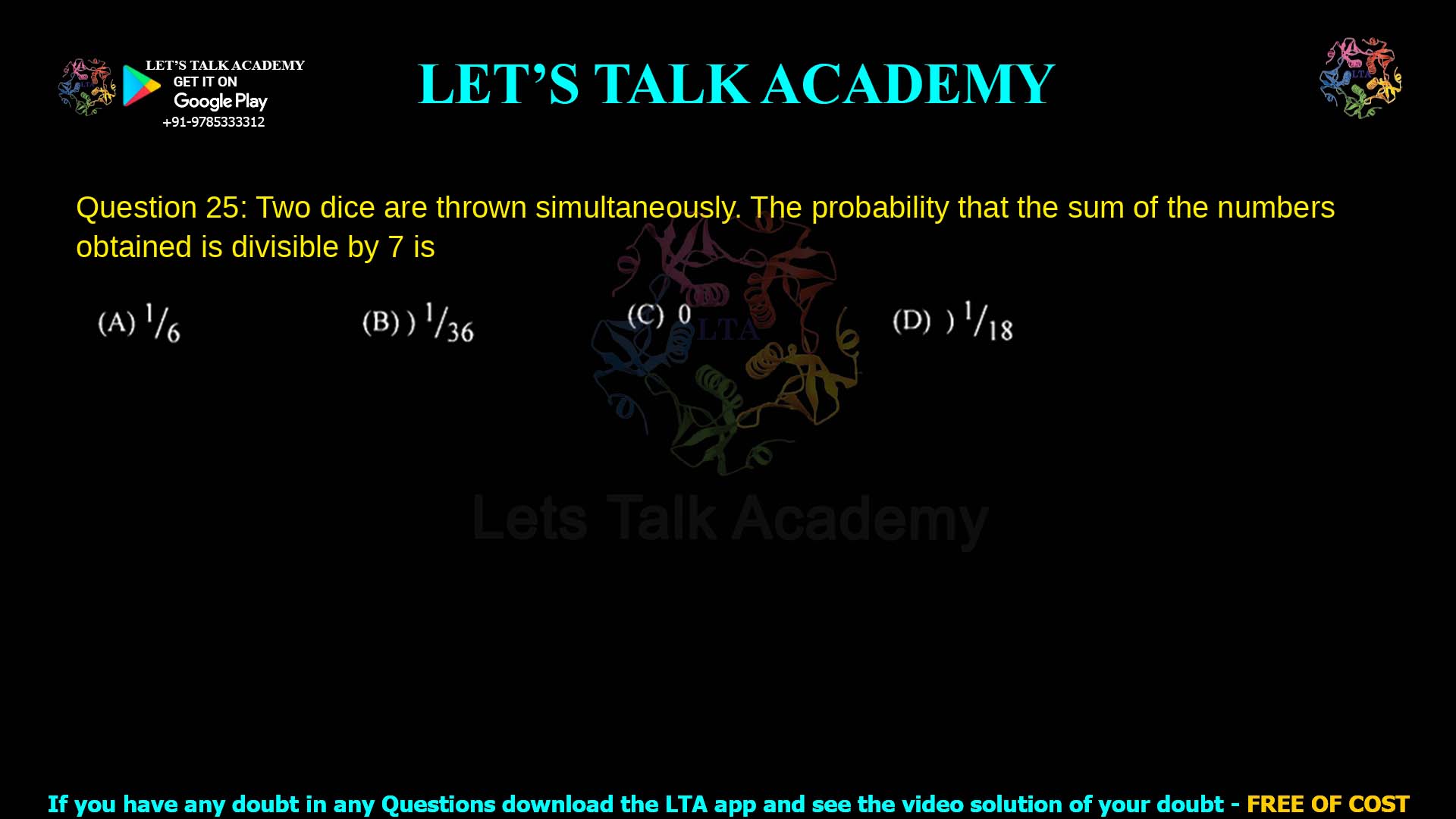
Q.25 Two dice are thrown simultaneously. The probability that the sum of the numbers obtained is divisible by 7 is (A) 1/t6 (B) “36 (C) 0 (D) 1/18 The probability that the sum […]
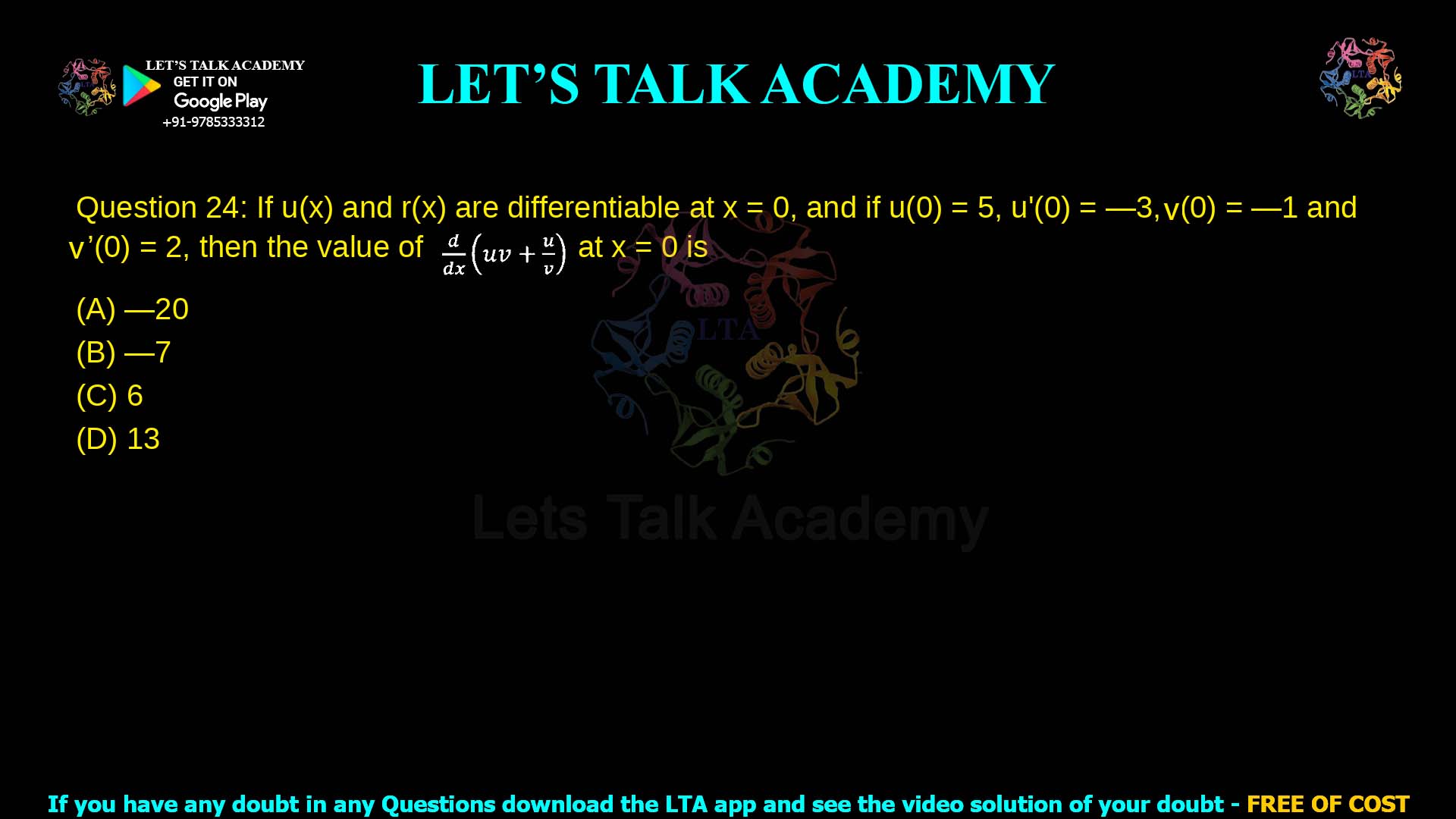
Q.24 If u(x)u(x) and r(x)r(x) are differentiable at x=0x=0, and if u(0)=5u(0)=5, u′(0)=−3u′(0)=−3, r(0)=−1r(0)=−1 and r′(0)=2r′(0)=2, then the value of −g(ur+t2)−g(ur+t2) at x=0x=0 is (A) −20−20 (B) −7−7 (C) 66 (D) 1313 SEO-Friendly Introduction To master calculus problems in competitive exams, understanding how to compute the value of […]
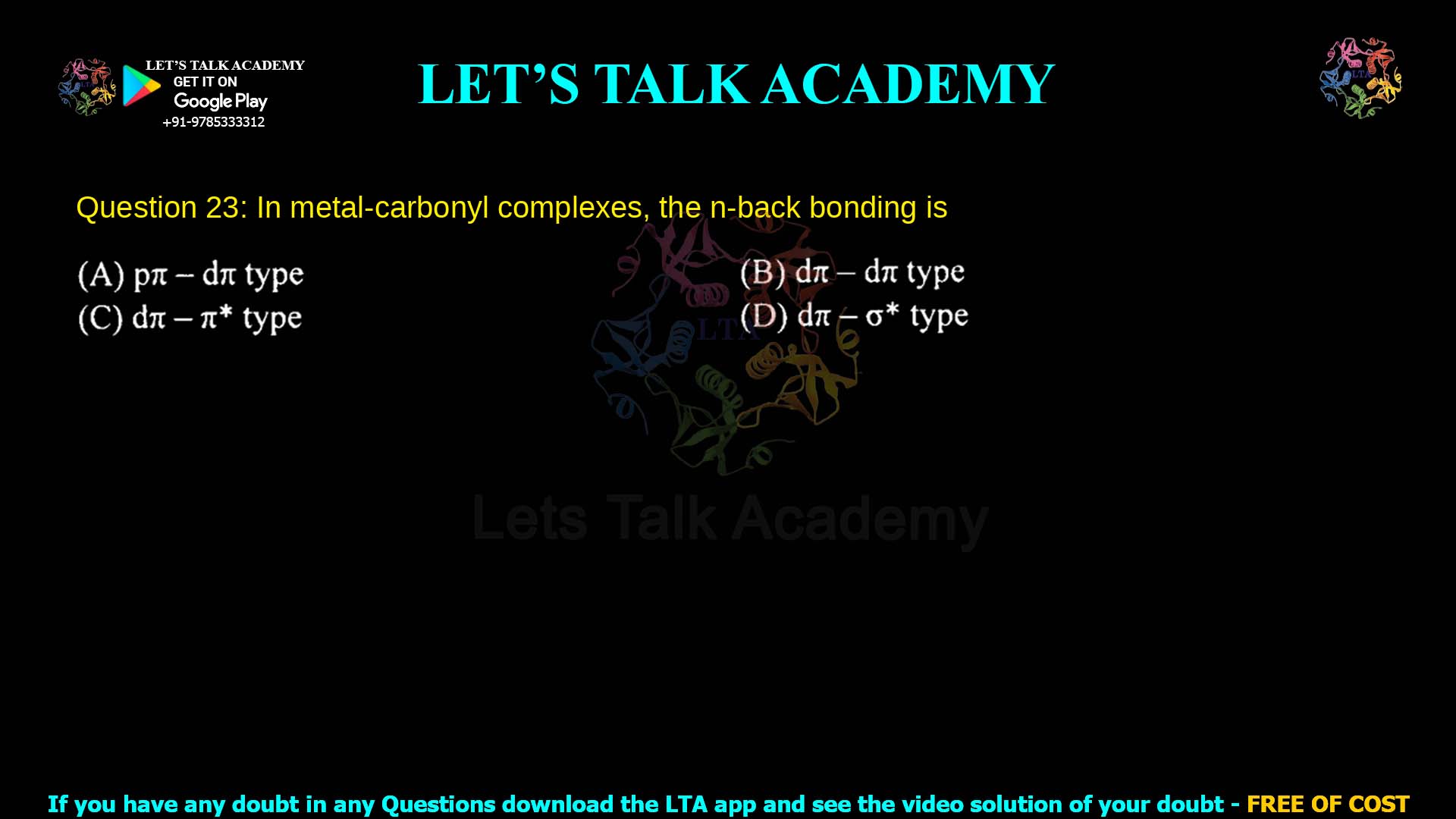
Q.23 In metal–carbonyl complexes, the π-back bonding is (A) pπ–dπpπ–dπ type (B) dπ–dπdπ–dπ type (C) dπ–pπdπ–pπ type (D) dπ–sπdπ–sπ type The correct answer is (C) dπ–pπ type. In metal-carbonyl complexes, π-back bonding involves electron donation from filled metal […]
![Q.22 For an autocatalytic second order reaction R → P, the rate law is [where v is rate of the reaction and k is the rate constant] (A) v = k [R] (B) v = 1 [R][ ] 1 (C) v = k [R]² (D) v = k [P]²](https://www.letstalkacademy.com/wp-content/uploads/2025/12/slide_22-14.jpg)
Q.22 For an autocatalytic second order reaction R → P, the rate law is [where v is rate of the reaction and k is the rate constant] (A) v = […]
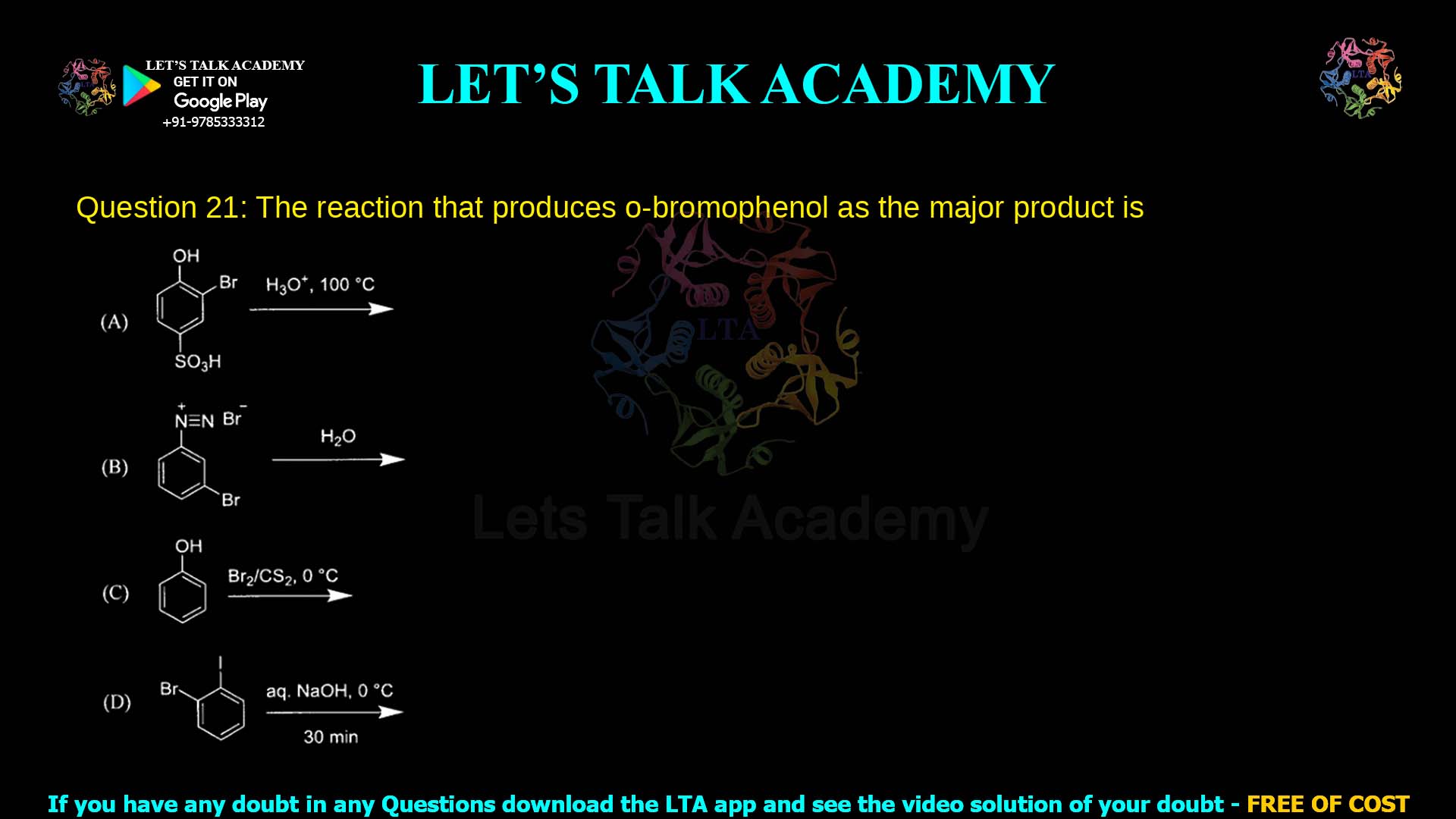
Q21. The reaction that produces o-bromophenol as the major product is The reaction that produces o‑bromophenol as the major product is option (A). Introduction Understanding which reaction produces o‑bromophenol as the major product […]
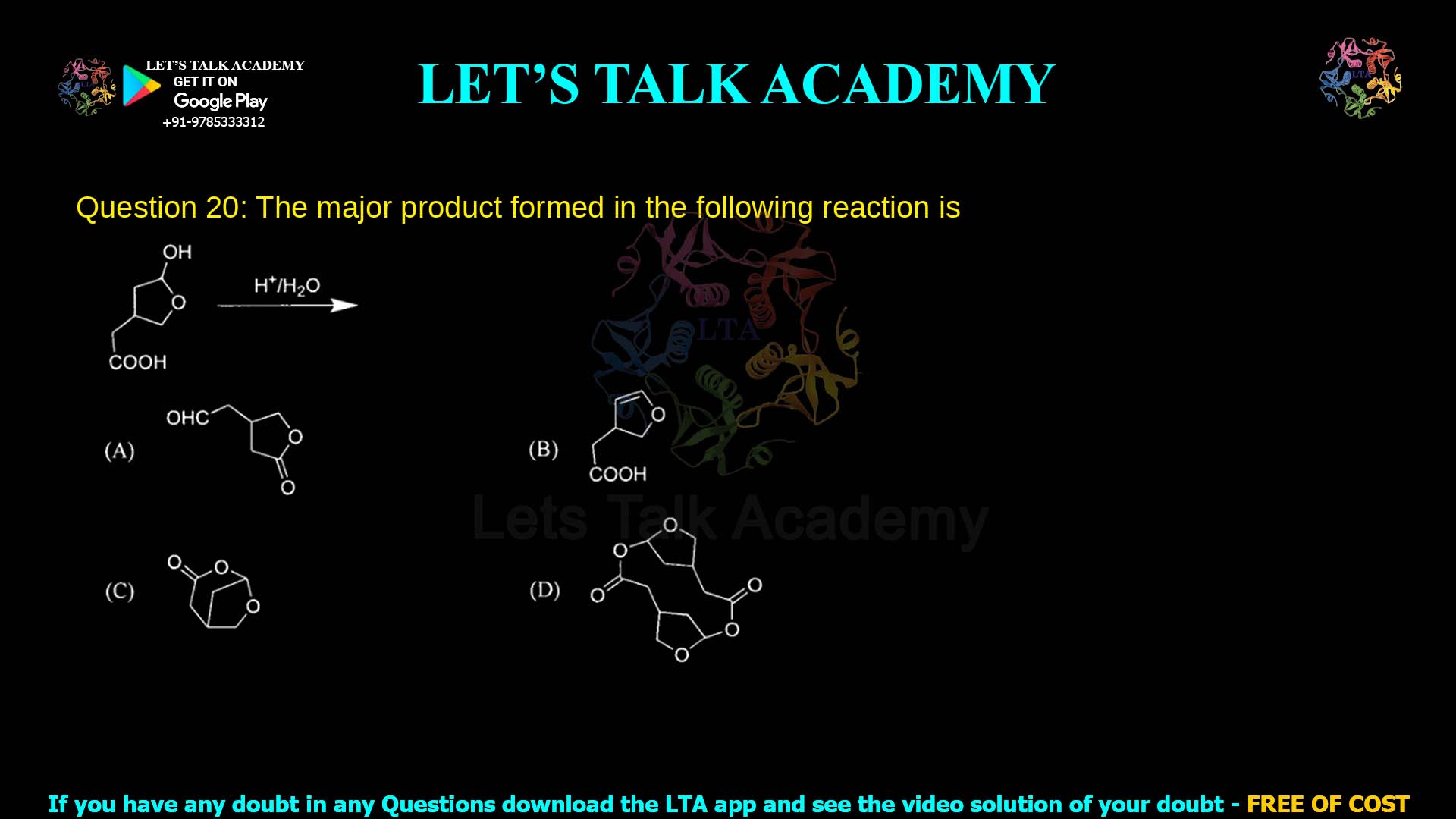
Q20. The major product formed in the following reaction is The major product is the five‑membered lactone (option C) formed by intramolecular esterification of the γ‑hydroxycarboxylic acid under acid catalysis. Introduction In […]
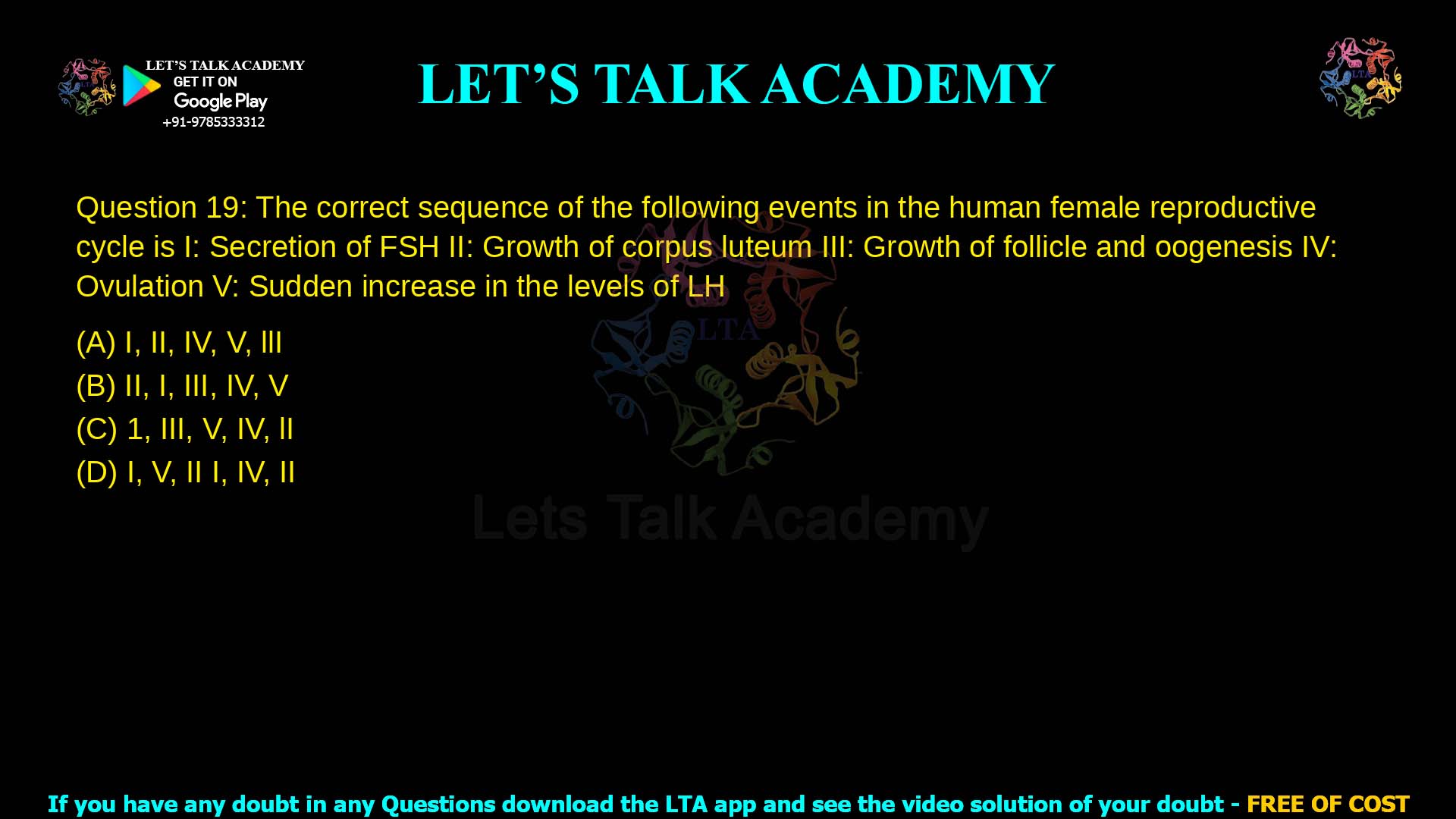
Q.19 The correct sequence of the following events in the human female reproductive cycle is I: Secretion of FSH II: Growth of corpus luteum III: Growth of follicle and oogenesis […]
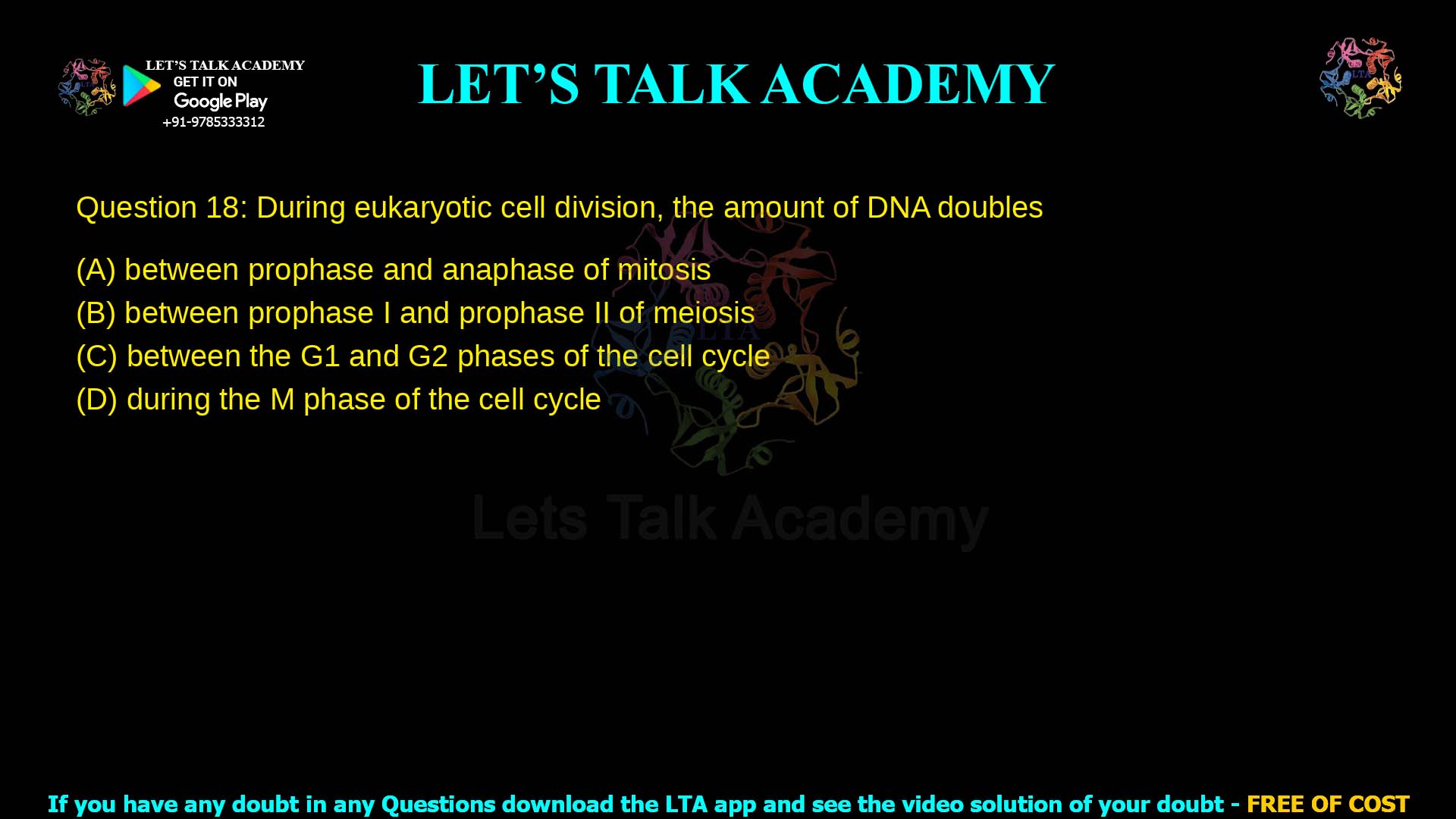
Q.18 During eukaryotic cell division, the amount of DNA doubles (A) between prophase and anaphase of mitosis (B) between prophase I and prophase II of meiosis (C) between the G1 […]
Q.17 The nitrogenase of diazotrophs (A) contains Cu‑S center and uses 12 NADH to reduce one N₂ (B) contains one (4Fe‑4S) cluster and uses 8 FADH₂ to reduce one N₂ […]
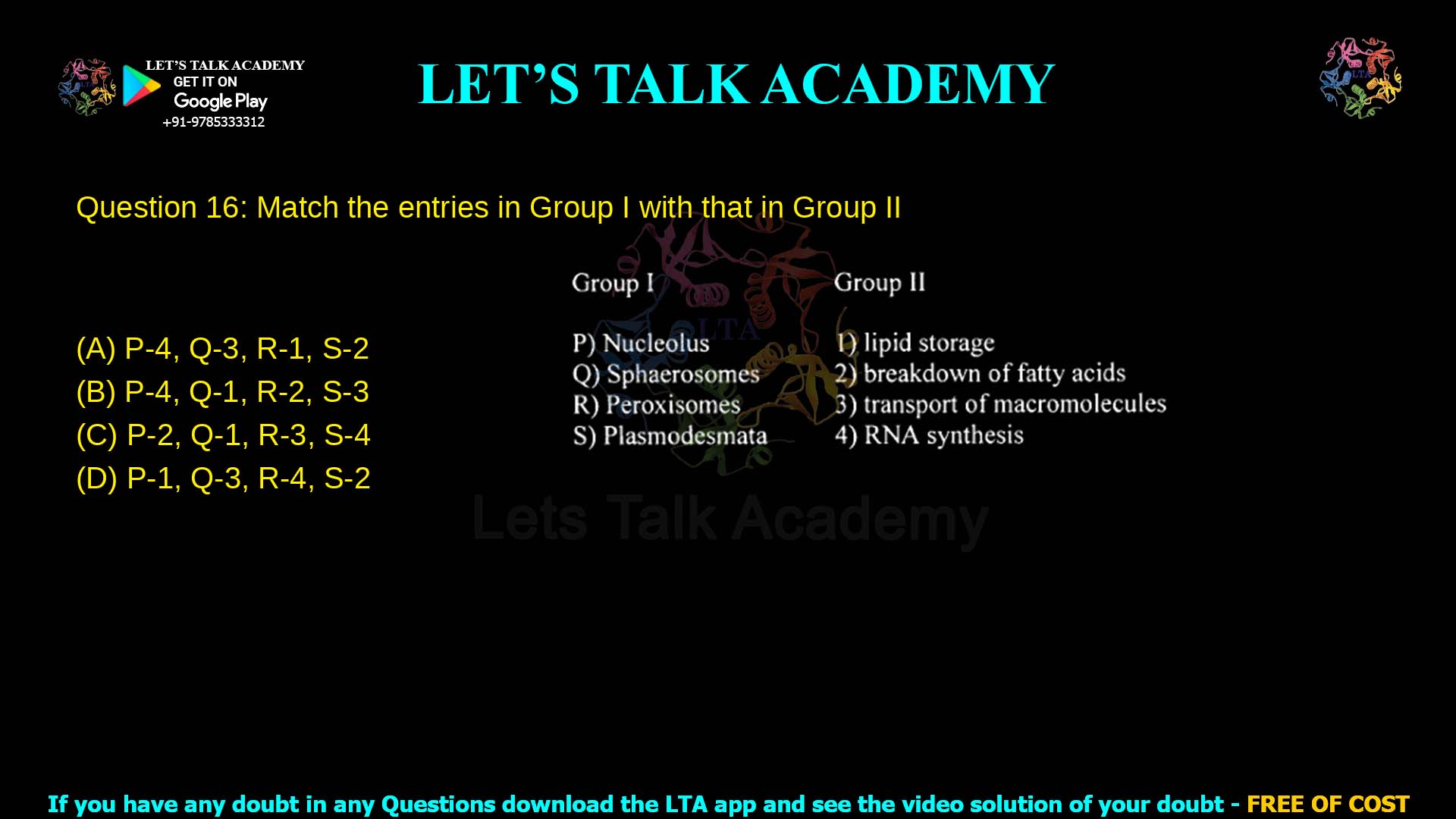
Q.16 Match the entries in Group I with that in Group II Group I P) Nucleolus Q) Spherosomes R) Peroxisomes S) Plasmodesmata Group II lipid storage breakdown of fatty acids […]


