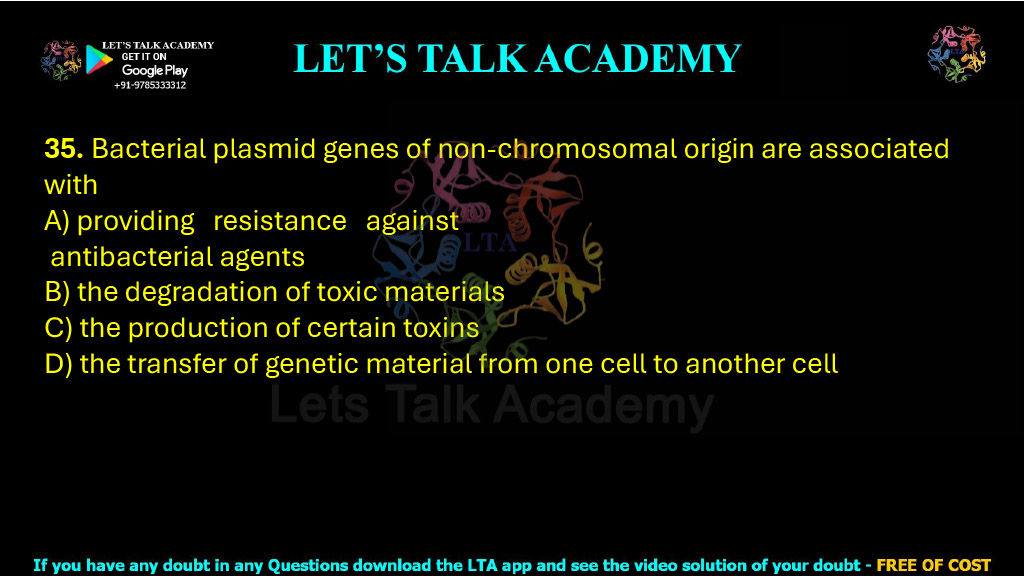
35. Bacterial plasmid genes of non-chromosomal origin are associated with
A) providing resistance against antibacterial agents
B) the degradation of toxic materials
C) the production of certain toxins
D) the transfer of genetic material from one cell to another cell
Bacterial Plasmid Genes: Functions, Types, and Biological Significance Explained
Introduction
Bacterial plasmids are small, circular, double-stranded DNA molecules that exist independently of the bacterial chromosome. Unlike chromosomal DNA, plasmids are considered extrachromosomal genetic elements because they replicate autonomously and are not essential for the basic survival of the bacterial cell under normal laboratory conditions. However, plasmids provide several adaptive advantages that greatly enhance bacterial fitness under changing environmental conditions.
Plasmids often carry genes that confer beneficial traits such as resistance to antibiotics, heavy metals, and toxic chemicals. Some plasmids encode virulence factors, toxins, or specialized metabolic pathways that allow bacteria to survive in hostile environments. Others facilitate bacterial conjugation, enabling the horizontal transfer of genetic material between bacterial cells. Because plasmids can move rapidly among bacterial populations, they play a central role in microbial evolution, antibiotic resistance, biotechnology, and genetic engineering.
Correct Answer
Correct Options: (A), (B), (C), and (D)
Detailed Explanation
Plasmids are highly versatile extrachromosomal DNA molecules that frequently carry genes beneficial to bacterial survival. Unlike chromosomal genes, plasmid genes are generally acquired through horizontal gene transfer and often provide adaptive traits rather than essential housekeeping functions. These plasmid-encoded genes contribute to bacterial evolution, pathogenicity, environmental adaptation, and antimicrobial resistance.
One of the most important plasmid types is the R (Resistance) plasmid, which carries genes encoding resistance to one or multiple antibiotics. These genes may produce β-lactamases, aminoglycoside-modifying enzymes, efflux pumps, or altered target proteins that enable bacteria to survive antibiotic treatment.
Many plasmids also function as degradative plasmids. These plasmids encode enzymes capable of degrading unusual organic compounds, hydrocarbons, pesticides, aromatic compounds, and toxic industrial pollutants. Such metabolic capabilities are widely exploited in environmental biotechnology and bioremediation.
Certain plasmids, particularly virulence plasmids, carry genes responsible for toxin production. Examples include plasmids encoding anthrax toxin in Bacillus anthracis, enterotoxins in pathogenic Escherichia coli, and numerous other bacterial exotoxins that increase pathogenicity.
Another important class is the fertility (F) plasmid, which carries genes required for bacterial conjugation. These genes encode the sex pilus and conjugative machinery responsible for transferring plasmid DNA from a donor cell to a recipient cell. This horizontal gene transfer accelerates the spread of antibiotic resistance and other adaptive traits throughout bacterial populations.
Therefore, all four statements correctly describe important biological functions of bacterial plasmid genes.
Explanation of Each Option
Option (A): Providing Resistance Against Antibacterial Agents
This statement is correct. R plasmids carry antibiotic resistance genes that encode β-lactamases, aminoglycoside-modifying enzymes, efflux pumps, and altered target proteins, allowing bacteria to survive antibiotic exposure.
Option (B): The Degradation of Toxic Materials
This statement is correct. Degradative plasmids contain genes encoding enzymes capable of metabolizing toxic chemicals such as pesticides, petroleum hydrocarbons, aromatic compounds, and industrial pollutants.
Option (C): The Production of Certain Toxins
This statement is correct. Virulence plasmids encode toxins and other pathogenicity factors that enhance bacterial infection and disease development.
Option (D): The Transfer of Genetic Material from One Cell to Another Cell
This statement is correct. Fertility (F) plasmids encode conjugation machinery that transfers plasmid DNA between bacterial cells through a conjugative pilus.
Why All Four Options are Correct
Each option describes a well-established biological function of bacterial plasmids. Depending on their type, plasmids may encode antibiotic resistance genes, degradative enzymes, virulence factors, or conjugation proteins. These functions significantly increase bacterial adaptability and evolutionary success.
Comparison of All Options
| Option | Plasmid Function | Status |
|---|---|---|
| A | Antibiotic resistance | Correct |
| B | Degradation of toxic compounds | Correct |
| C | Toxin production | Correct |
| D | Conjugative transfer of DNA | Correct |
Major Types of Bacterial Plasmids
| Plasmid Type | Major Function |
|---|---|
| R Plasmid | Antibiotic resistance |
| F Plasmid | Conjugation and DNA transfer |
| Col Plasmid | Production of bacteriocins (colicins) |
| Virulence Plasmid | Toxin production and pathogenicity |
| Degradative Plasmid | Breakdown of toxic organic compounds |
Functions of Plasmid Genes
| Function | Importance |
|---|---|
| Antibiotic resistance | Protects bacteria from antimicrobial agents |
| Heavy metal resistance | Allows survival in contaminated environments |
| Toxin production | Enhances bacterial virulence |
| Conjugation | Promotes horizontal gene transfer |
| Biodegradation | Breaks down environmental pollutants |
Applications of Plasmids in Biotechnology
| Application | Example |
|---|---|
| Gene Cloning | Cloning vectors |
| Recombinant Protein Production | Insulin production |
| Gene Therapy Research | DNA delivery vectors |
| Bioremediation | Pollutant degradation |
| Vaccine Development | DNA vaccines |
Biological Significance
Plasmids are among the most important drivers of bacterial evolution because they enable rapid acquisition of beneficial genes without altering the bacterial chromosome. Through horizontal gene transfer, plasmids facilitate the spread of multidrug resistance, metabolic versatility, and virulence factors across bacterial populations. At the same time, their ability to replicate independently has made plasmids indispensable tools in molecular cloning, recombinant DNA technology, synthetic biology, and industrial biotechnology.
Final Answer
Correct Options: (A), (B), (C), and (D)
Bacterial plasmid genes can encode antibiotic resistance, enzymes that degrade toxic compounds, virulence factors including toxins, and conjugation machinery responsible for transferring genetic material between bacterial cells. Therefore, all four statements are correct.


