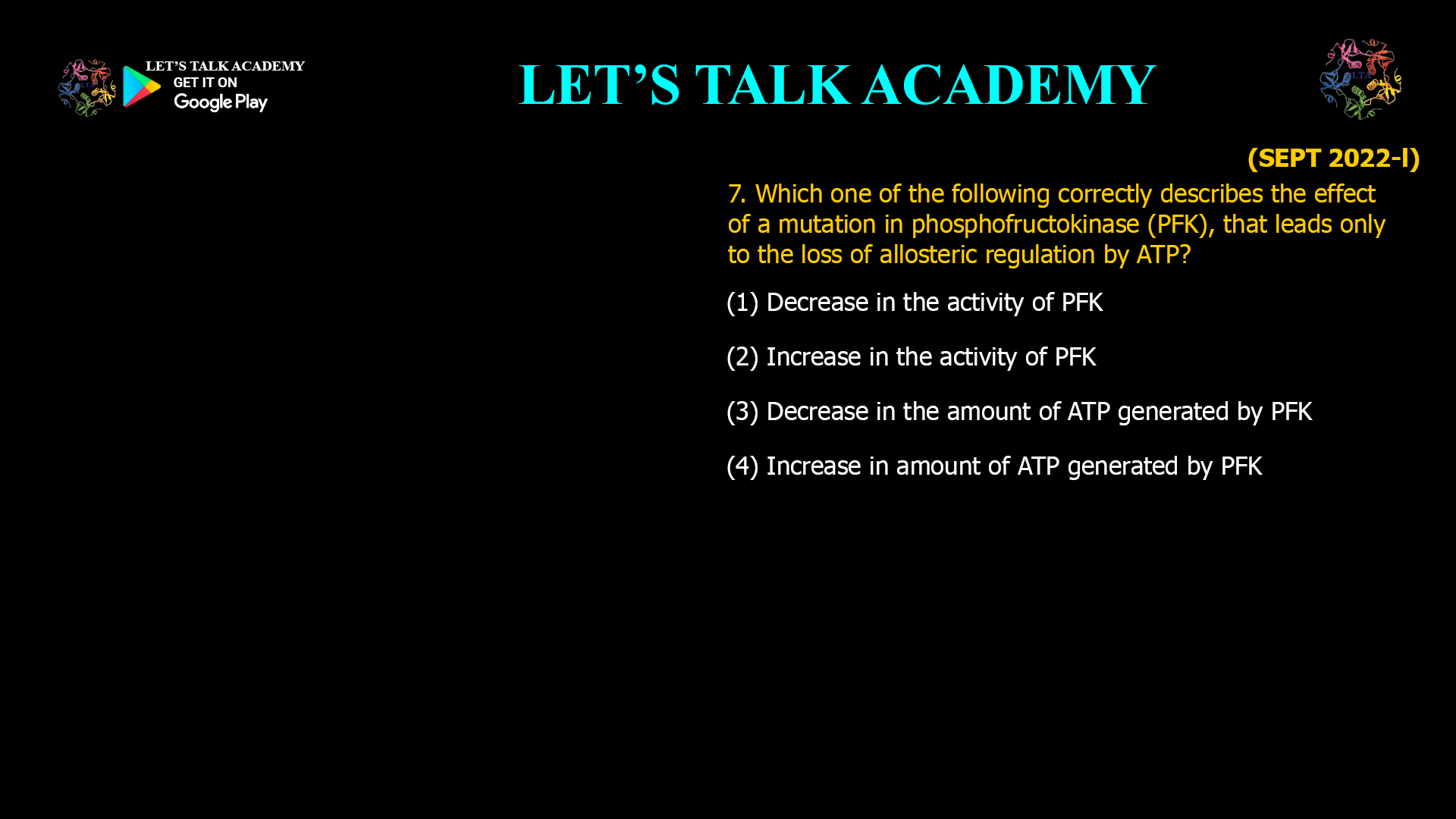
7. Which one of the following correctly describes the effect of a mutation in phosphofructokinase (PFK), that leads only to the loss of allosteric regulation by ATP? (1) Decrease in the activity of PFK (2) Increase in the activity of PFK (3) Decrease in the amount of ATP generated by PFK (4) Increase in amount of ATP generated by PFK

Effect of Mutation Causing Loss of ATP Allosteric Inhibition on Phosphofructokinase-1 (PFK-1) Activity

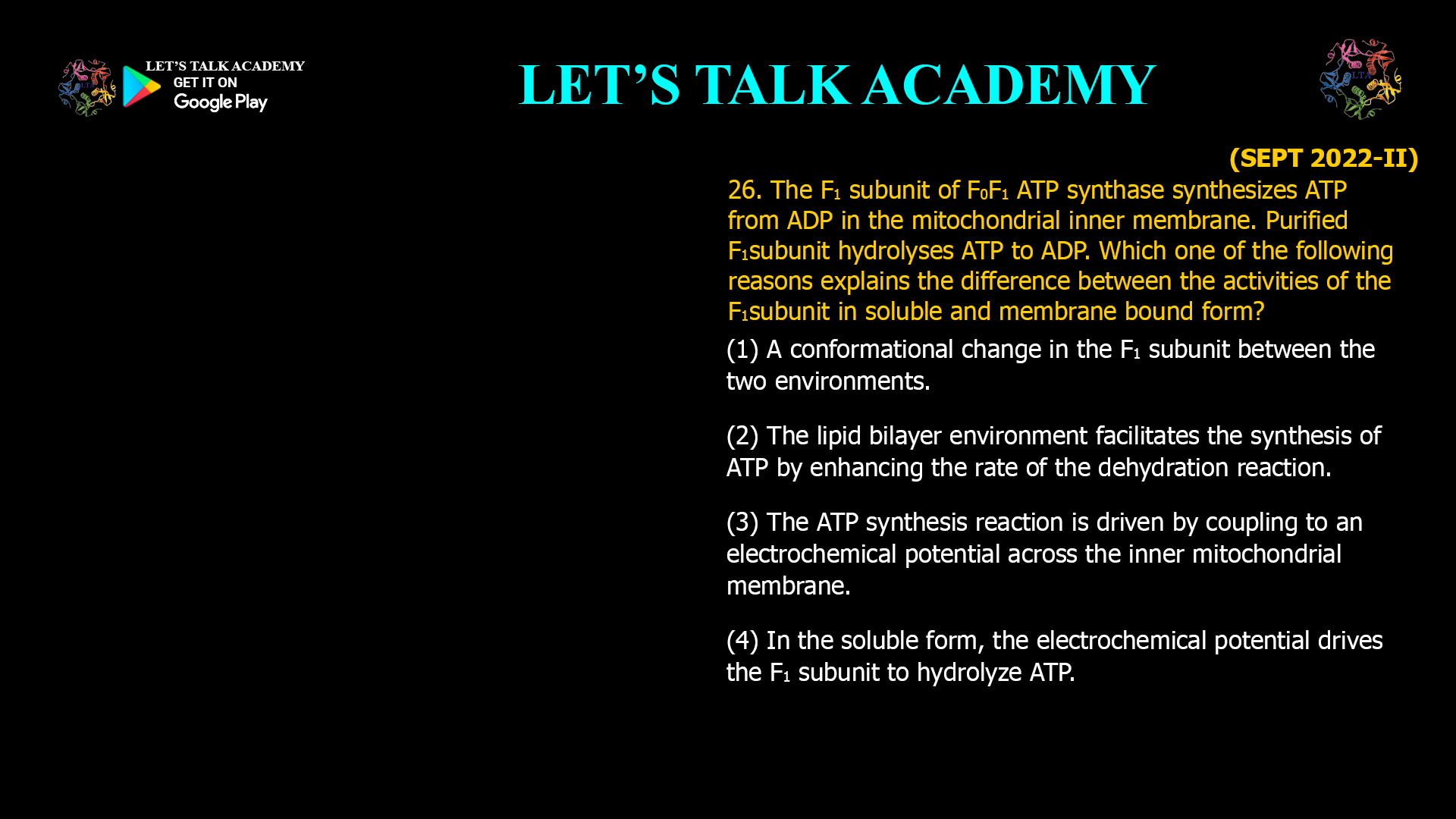
26. The F1 subunit of F0F1 ATP synthase synthesizes ATP from ADP in the mitochondrial inner membrane. Purified F1 subunit hydrolyses ATP to ADP. Which one of the following reasons explains the difference between the activities of the F1 subunit in soluble and membrane bound form? (1) A conformational change in the F1 subunit between the two environments. (2) The lipid bilayer environment facilitates the synthesis of ATP by enhancing the rate of the dehydration reaction. (3) The ATP synthesis reaction is driven by coupling to an electrochemical potential across the inner mitochondrial membrane. (4) In the soluble form, the electrochemical potential drives the F1 subunit to hydrolyze ATP.

Why the F1 Subunit of ATP Synthase Hydrolyzes ATP in Solution but Synthesizes ATP When Membrane-Bound

25. Which of the following represents the most oxidized form of carbon? (1) HCOOH (2) HCHO (3) CH3OH (4) CO2

Understanding the Most Oxidized Form of Carbon: Comparing HCOOH, HCHO, CH3OH, and CO2

24. At which one of the following electron transport chain complexes does Antimycin A typically inhibit the respiratory chain? (1) Complex I (2) Complex II (3) Complex III (4) Complex IV

Antimycin A and Its Inhibition of the Mitochondrial Electron Transport Chain: Focus on Complex III

23. Cyanide, a chemical warfare agent, is toxic because it: A. binds to the heme a3 in mitochondrial cytochrome C oxidase (in complex IV) B. inhibits electron transport and thus oxidative phosphorylation C. directly blocks mitochondrial DNA replication D. blocks the protein trafficking inside the mitochondria by affecting TIM and TOM channels Choose the combination with all correct statements. (1) A and C (2) A and B (3) B and C (4) A, B and D

Why Cyanide Is Toxic: Binding to Cytochrome c Oxidase and Inhibition of Electron Transport

21. Which statement is NOT correct regarding brown fat? (1) It is present in negligible amount in new born baby (2) It produces little ATP (3) It produces more heat (4) In Mitochondria associated with this electron transport chain and phosphorylation are uncoupled

Clarifying Misconceptions About Brown Fat: Which Statement Is NOT Correct?

20. A practical class was going on where the students were demonstrating ATP synthesis in vitro using active mitochondria. Some students added one of the following to their tubes A. Dinitrophenol (DNP), an uncoupler B. Mild acidification of the medium C. Glutilferone, that permeabilizes both the membranes D. An outer membrane permeable He quencher compound. Elila In which one of the above, ATP synthesis will be detected? (1) A (2) B (3) C (4) D

 Which Condition Supports ATP Synthesis in Isolated Mitochondria: Effects of Uncouplers, Acidification, and Membrane Permeabilizers

19. Rotenone is an inhibitor of the electron transport chain. The addition of rotenone to cells results in which of the following? (1) Generation of mitochondrial reactive oxygen species and block in ATP generation. (2) Block in ATP generation but no generation of reactive oxygen species. (3) Generation of reactive oxygen species but no block in ATP generation. (4) Permeabilization of the inner membrane to compounds which are usually not able to traverse the membrane.

Effects of Rotenone on Mitochondrial Electron Transport Chain: ATP Blockade and ROS Generation

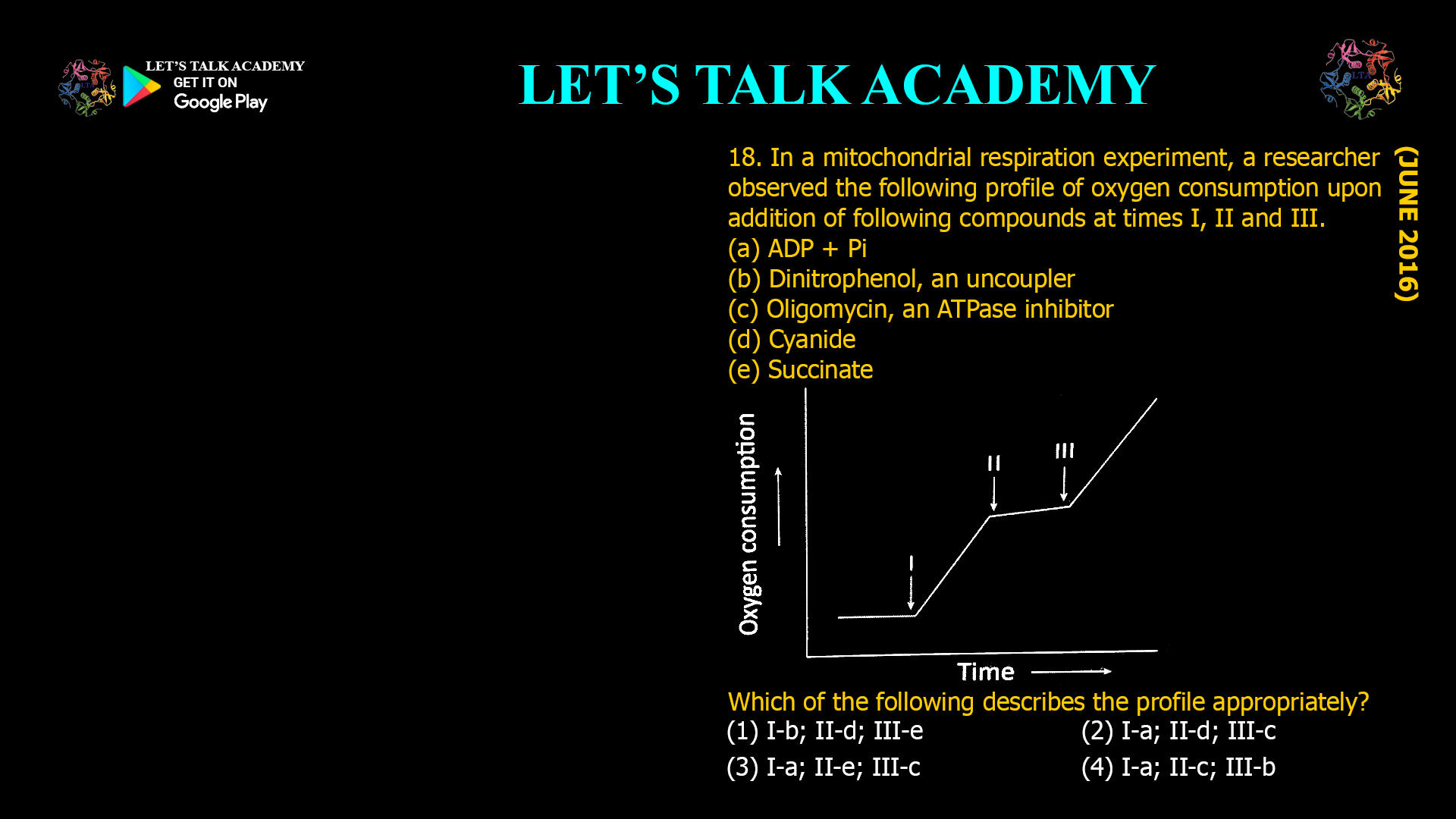
18. In a mitochondrial respiration experiment, a researcher observed the following profile of oxygen consumption upon addition of following compounds at times I, II and III. (a) ADP + Pi (b) Dinitrophenol, an uncoupler (c) Oligomycin, an ATPase inhibitor (d) Cyanide (e) Succinate Which of the following describes the profile appropriately? (1) I-b; II-d; III-e (2) I-a; II-d; III-c (3) I-a; II-e; III-c (4) I-a; II-c; III-b

 Understanding Oxygen Consumption Profiles in Mitochondrial Respiration Experiments

17. The respiratory chain is relatively inaccessible to experimental manipulation in intact mitochondria. Upon disrupting mitochondria with ultrasound, however, it is possible to isolate functional sub mitochondrial particles, which consist of broken cristae that have resealed inside out into small closed vesicles. In these vesicles the components that originally faced the matrix are now exposed to the surrounding medium. This arrangement helps in studying electron transport and ATP synthesis because: (1) it is difficult to manipulate the concentration of small molecules (NADH, ATP, ADP, Pi) in the matrix of intact mitochondria (2) in broken cristae, the enzymes and other molecules responsible for electron transport are more active (3) intact mitochondria are more unstable than broken cristae (4) purification of intact mitochondria is not possible

 Why Submitochondrial Particles Facilitate Study of Electron Transport and ATP Synthesis

Title: How Coupling of Reaction Centers Is Achieved in Oxidative Phosphorylation: The Role of Proton Pumping Slug: coupling-oxidative-phosphorylation-proton-pumping Meta Description: Discover how coupling in oxidative phosphorylation is achieved primarily through proton pumping across the mitochondrial inner membrane, linking electron transport to ATP synthesis via chemiosmosis. Oxidative phosphorylation is the fundamental process by which cells convert energy from nutrients into ATP, the universal energy currency. This process involves two tightly coupled sets of reactions: electron transport through a series of complexes and the synthesis of ATP by ATP synthase. Understanding how these reactions are coupled is key to grasping cellular bioenergetics. What Is Coupling in Oxidative Phosphorylation? Coupling refers to the mechanism that links the energy-releasing electron transport reactions to the energy-requiring ATP synthesis. Without coupling, electron transport and ATP synthesis would occur independently, and energy would be lost as heat rather than stored in ATP. The Four Complexes and Their Location The electron transport chain (ETC) consists of four major protein complexes (Complexes I-IV) embedded in the mitochondrial inner membrane. Electrons flow from NADH and FADH2 through these complexes to oxygen, the terminal electron acceptor. How Is Coupling Achieved? The key to coupling is proton pumping: As electrons pass through Complexes I, III, and IV, these complexes actively pump protons (H⁺ ions) from the mitochondrial matrix into the intermembrane space. This proton translocation creates an electrochemical proton gradient across the inner membrane, known as the proton motive force (PMF). The PMF stores potential energy in the form of a proton concentration gradient and an electrical potential difference. ATP synthase (Complex V) harnesses this proton motive force by allowing protons to flow back into the matrix, using the energy released to phosphorylate ADP to ATP. This process of using the proton gradient to drive ATP synthesis is called chemiosmosis. Why Other Options Are Not the Primary Coupling Mechanism Option Explanation Correctness (1) Making a complex of all four reaction centers While complexes are located in the membrane, they do not form a single complex for coupling. Incorrect (2) Locating all four complexes in inner membrane Location is necessary but not sufficient for coupling; coupling requires energy transduction. Incorrect (3) Ubiquinone and cytochrome C These are mobile electron carriers, facilitating electron transfer but not coupling ATP synthesis. Incorrect (4) Pumping of protons Proton pumping creates the proton motive force that couples electron transport to ATP synthesis. Correct Supporting Explanation from Chemiosmotic Theory Peter Mitchell’s chemiosmotic theory revolutionized understanding of oxidative phosphorylation by proposing that the energy from electron transport is conserved as a proton gradient across the inner mitochondrial membrane. This gradient then drives ATP synthesis. The proton pumping by ETC complexes is the fundamental coupling mechanism that links the redox reactions to ATP production. Summary Coupling in oxidative phosphorylation is achieved by pumping protons across the inner mitochondrial membrane during electron transport. This proton gradient (proton motive force) drives ATP synthesis by ATP synthase. Electron carriers like ubiquinone and cytochrome c facilitate electron transfer but do not couple reactions. The physical location of complexes is important but not the mechanism of coupling itself. Final Answer: (4) Pumping of protons

 How Coupling of Reaction Centers Is Achieved in Oxidative Phosphorylation: The Role of Proton Pumping

15. From the following statements: A. Biosynthesis of proteins and nucleic acids from precursors results in production of chemical energy in the form of ATP. NAOH. NADPH and FADH2 B. The spontaneity of a reaction in cells does not depend whether ΔG0 for the reaction is positive or negative. C. Both oxidative phosphorylation and photo-phosphorylation involve oxidation of H2O to O2 (D) Only chemical potential energy contributes to proton motive force in mitochondria. Which one of the following combinations represents all INCORRECT statements? (1) A, B, C (2) B, C, D (3) A, B, D (4) A, C, D

Identifying Incorrect Statements on Biosynthesis, Reaction Spontaneity, and Proton Motive Force

14. Among the following which chemical inhibits the mitochondrial electron transport chain- (1) Streptomycin (2) Nystatin (3) Azides (4) Penicillin

 Chemical Inhibitors of the Mitochondrial Electron Transport Chain: Role of Azides

13. Which of the following proteins acts as an energy transducer? (1) G-protein. (2) Bacteriorhodopsin. (3) Hemoglobin. (4) Heat shock protein.

Which Protein Acts as an Energy Transducer? Exploring the Role of Bacteriorhodopsin

12. Electron transfer from donors such as NADH and FADH2 to O2 occurs in (1) membranes of ER, chloroplast and mitochondria (2) chloroplast only (3) mitochondria only (4) organellar membranes which possess ATP synthase

 Electron Transfer from NADH and FADH2 to Oxygen: The Role of Mitochondrial Inner Membrane

11. Proton motive force during oxidative phosphorylation is generated in mitochondria by (1) exchanging protons for sodium ions (2) pumping protons out into intermembrane space (3) pumping hydroxyl ions into the mitochondria (4) hydrolysis Of ATP

How Proton Motive Force Is Generated in Mitochondria During Oxidative Phosphorylation

10. In prokaryotes, the terminal electron acceptor in anaerobic conditions are generally (1) Glucose, fructose, maltose (2) Fatty acids (3) SO42-, NO32- , S (4) Antioxidants such as Vitamin K

Terminal Electron Acceptors in Prokaryotic Anaerobic Respiration: Understanding the Key Molecules

9. Iron-sulphur clusters (Fe-S) are the key prosthetic groups that carry electrons in of the below EXCEPT. (1) NADH – CoQ reductase (2) Succinate - CoQ reductase (3) Cytochrome c oxidase (4) COQH2 - Cytochrome C reductase

 Iron-Sulfur Clusters in the Electron Transport Chain: Identifying Their Presence and Exceptions

8. NADH donates its electron to electron transport chain through primary acceptor (1) CoQ (2) FMN (3) FAD (4) Cytochrome oxidase

Understanding NADH Electron Donation in the Electron Transport Chain: Role of FMN as Primary Acceptor

7. In mitochondria the enzymes of electron transport chain are located at (1) Outer membrane (2) Inter membrane space (3) Inner membrane (4) Matrix

 Location of Electron Transport Chain Enzymes in Mitochondria: The Inner Membrane Explained

6. The site for oxidative phosphorylation in eukaryotes is (1) Inner membrane of mitochondria (2) Vacuole membrane (3) Plasma membrane (4) Thylakoid membrane of chloroplast

The Site of Oxidative Phosphorylation in Eukaryotes: Exploring the Inner Mitochondrial Membrane

5.In bacteria site of respiration is- (1) Mesosome only (2) Plasma membrane (3) Endoplasmic reticulum (4) Microsomes

Site of Respiration in Bacteria: Role of Mesosomes and Plasma Membrane

4. The process of photosynthesis which leads to formation of glucose from C02 and H20 is an example of (1) Oxidation (2) Reduction (3) Condensation (4) Fixation

Photosynthesis: A Reductive Process Leading to Glucose Formation from CO2 and H2O

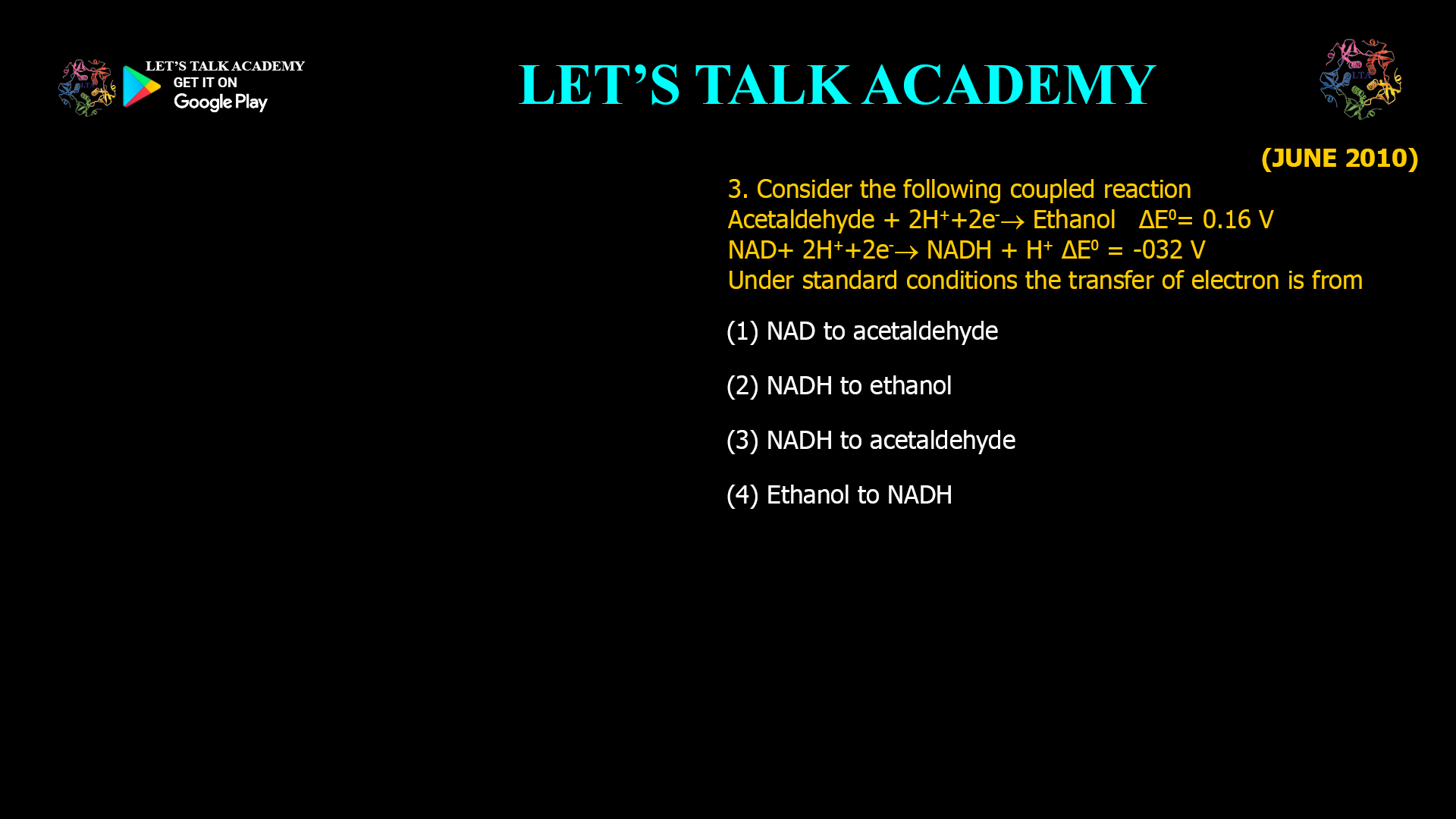
3. Consider the following coupled reaction Acetaldehyde + 2H++2e-  Ethanol ΔE0= 0.16 V NAD+ 2H++2e-  NADH + H+ ΔE0 = -032 V Under standard conditions the transfer of electron is from (1) NAD to acetaldehyde (2) NADH to ethanol (3) NADH to acetaldehyde (4) Ethanol to NADH

Electron Transfer in Coupled Reactions: NADH and Acetaldehyde Redox Potentials Explained

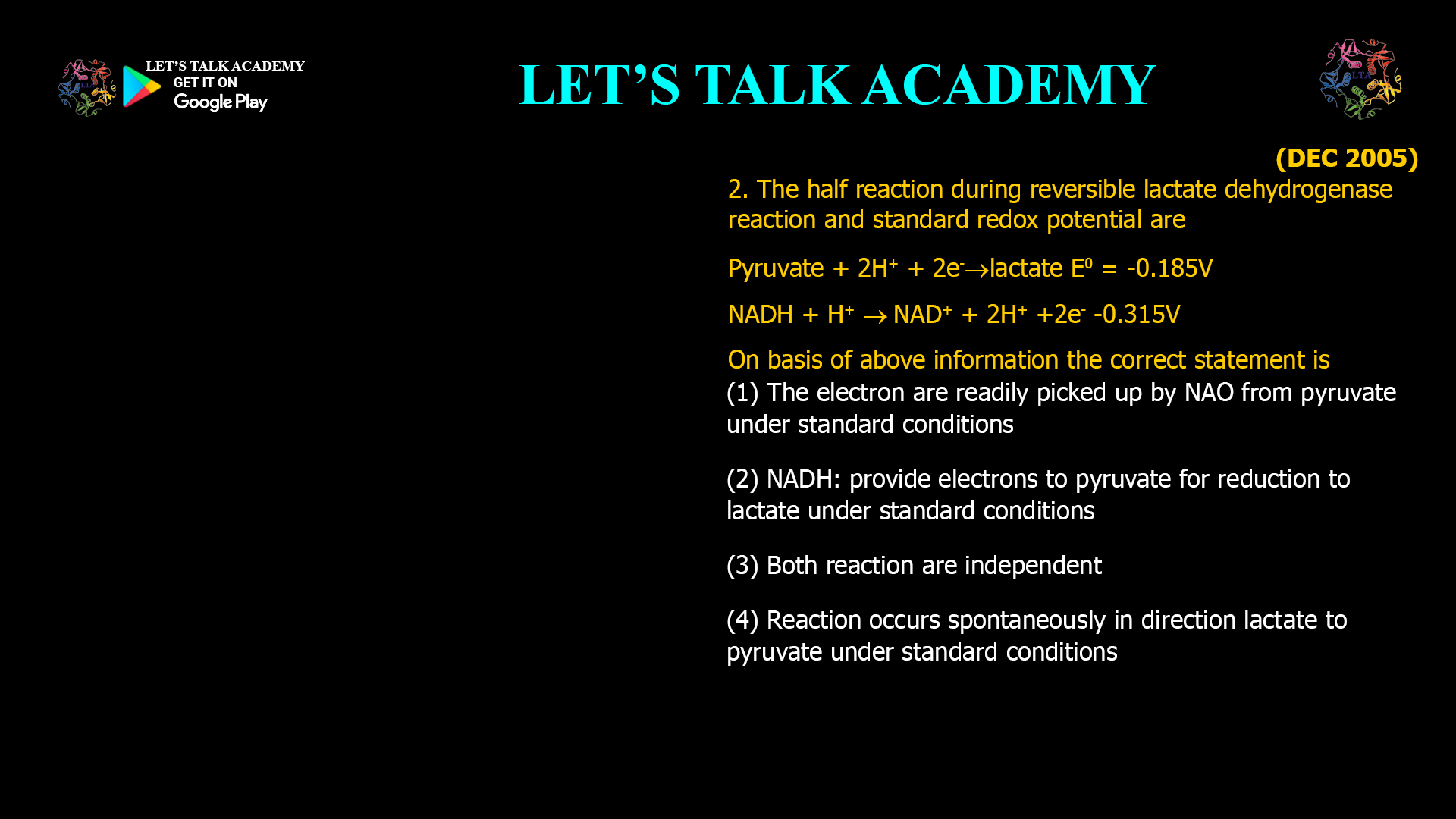
2. The half reaction during reversible lactate dehydrogenase reaction and standard redox potential are Pyruvate + 2H+ + 2e-  lactate E0 = -0.185V NADH + H+  NAD+ + 2H+ +2e- -0.315V On basis of above information the correct statement is (1) The electron are readily picked up by NAO from pyruvate under standard conditions (2) NADH: provide electrons to pyruvate for reduction to lactate under standard conditions (3) Both reaction are independent (4) Reaction occurs spontaneously in direction lactate to pyruvate under standard conditions

Understanding Lactate Dehydrogenase Reaction: Redox Potentials and Electron Transfer Dynamics

write a seo freindly artical with appropriate slug and title meta decripation write in 1000 words without giving REFRENCE LINk follow this command in all the further questions .

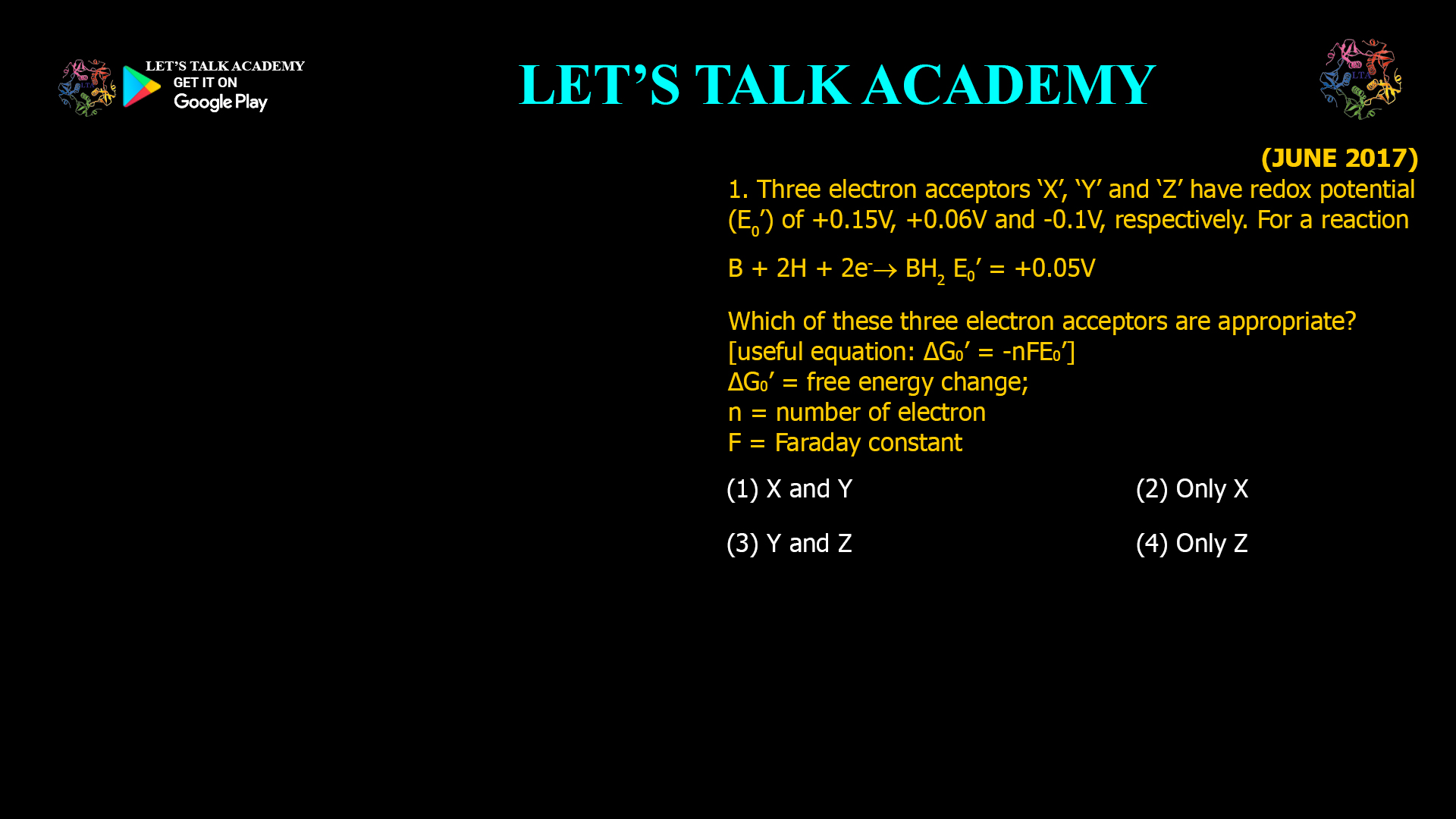
Choosing the Right Electron Acceptors: Analyzing Redox Potentials for Optimal Electron Transfer

Latest Courses