60. A predatory fish blows bubbles just before it approaches and stuns its prey. A student postulated that blowing bubbles is a socially learned behavior and is a not heritable […]
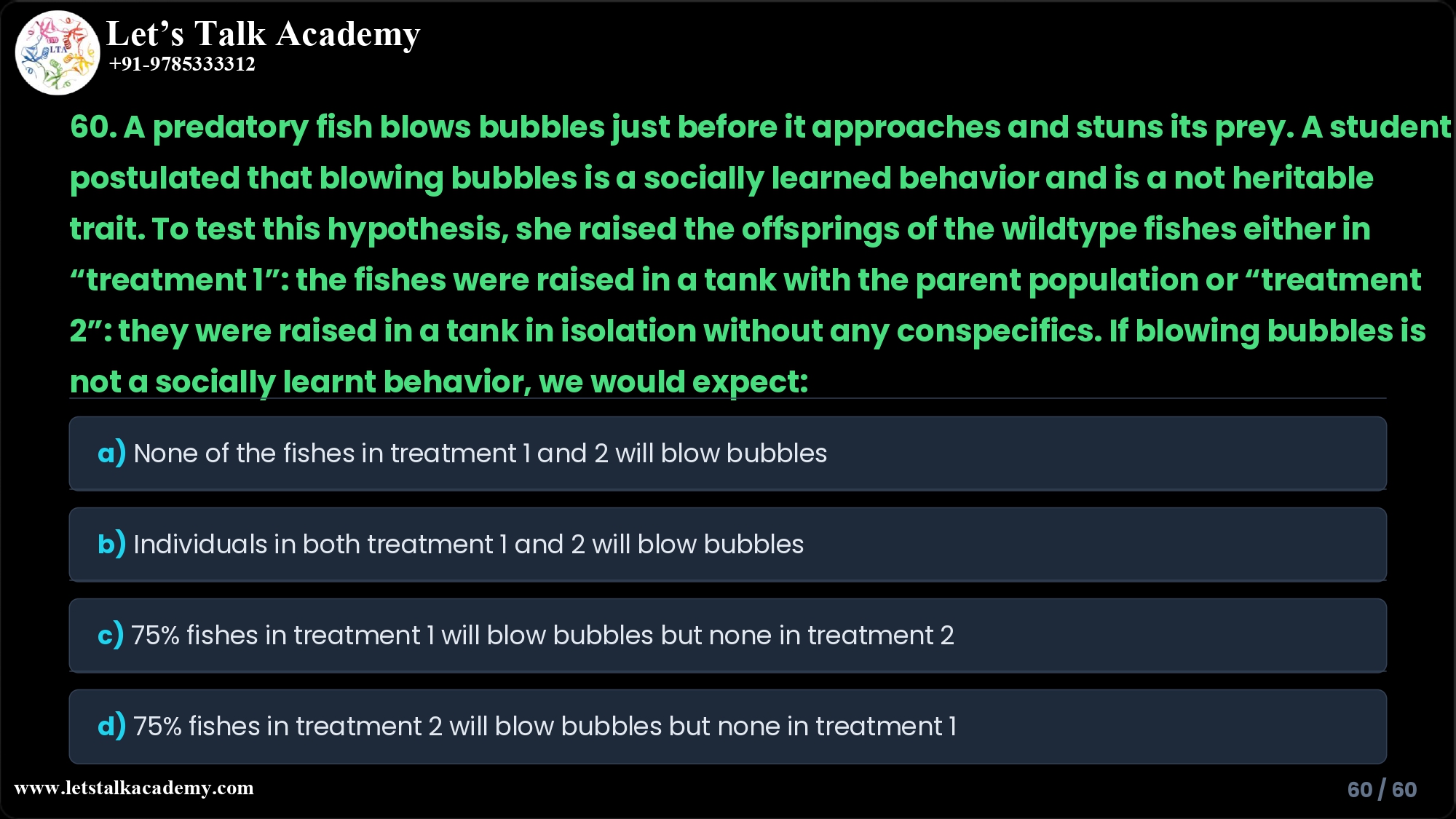
60. A predatory fish blows bubbles just before it approaches and stuns its prey. A student postulated that blowing bubbles is a socially learned behavior and is a not heritable […]
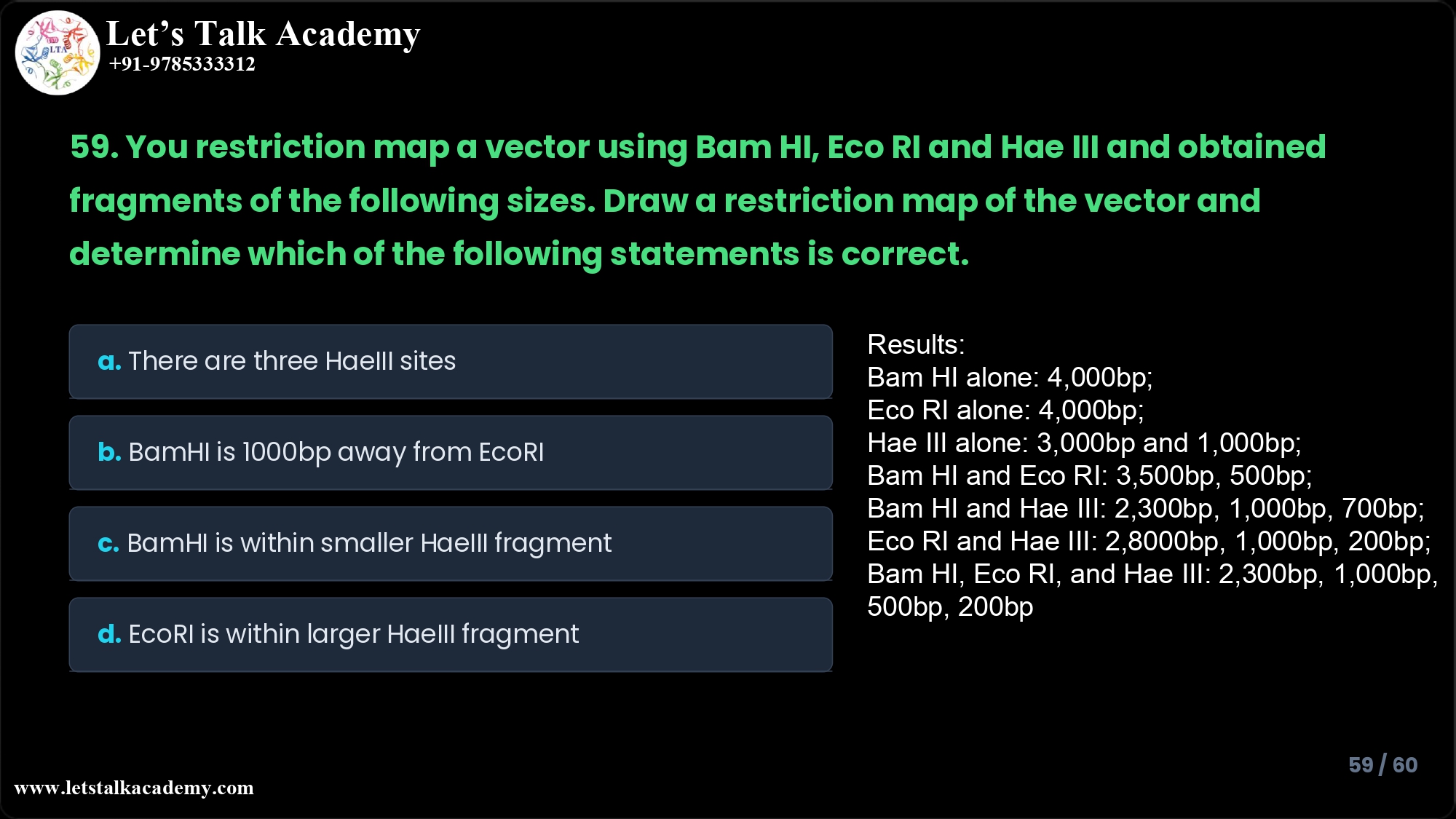
59. You restriction map a vector using Bam HI, Eco RI and Hae III and obtained fragments of the following sizes. Draw a restriction map of the vector and determine […]
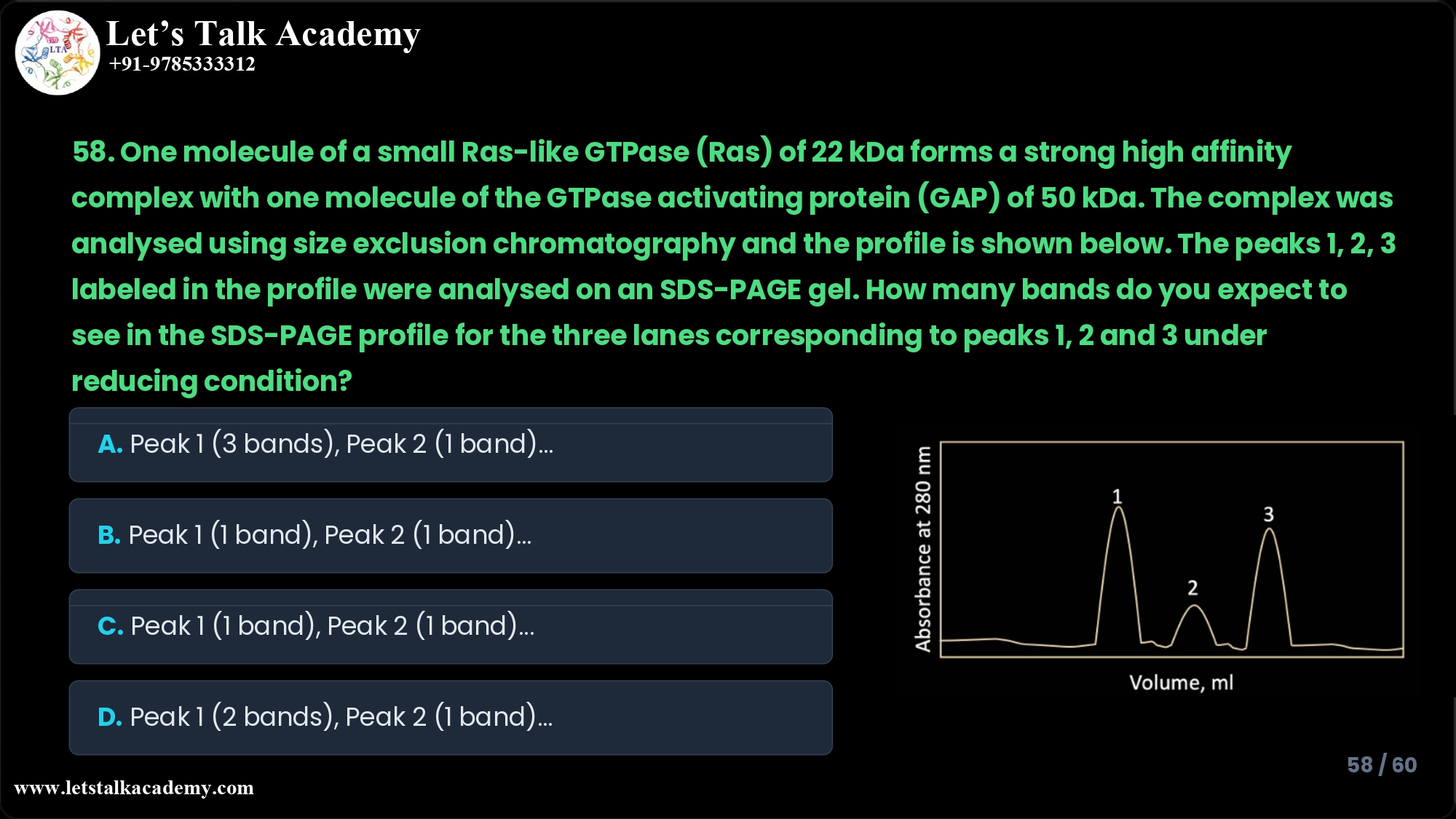
58. One molecule of a small Ras-like GTPase (Ras) of 22 kDa forms a strong high affinity complex with one molecule of the GTPase activating protein (GAP) of 50 kDa. […]
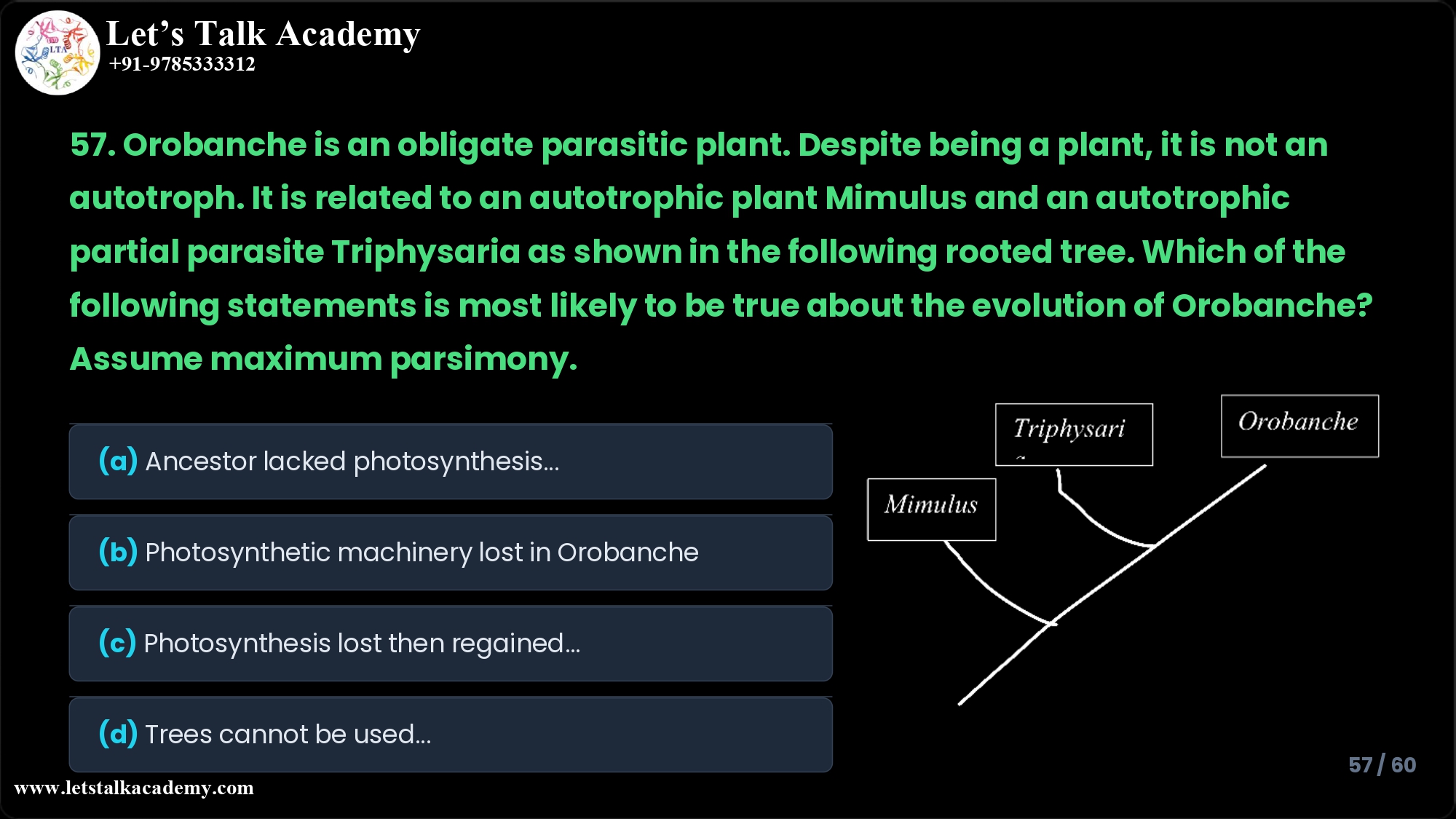
57. Orobanche is an obligate parasitic plant. Despite being a plant, it is not an autotroph. It is related to an autotrophic plant Mimulus and an autotrophic partial parasite Triphysaria […]
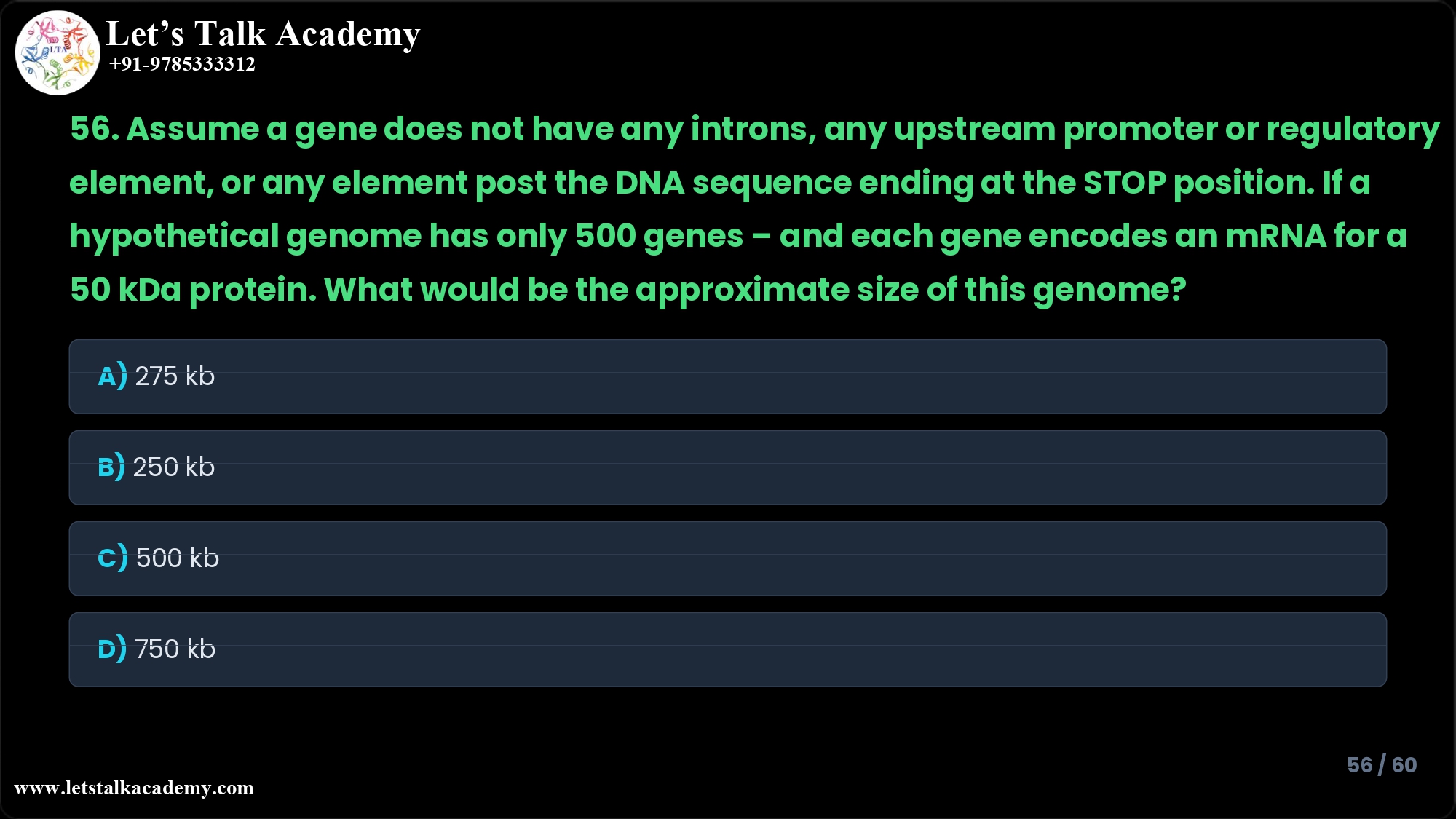
56. Assume a gene does not have any introns, any upstream promoter or regulatory element, or any element post the DNA sequence ending at the STOP position. If a hypothetical […]
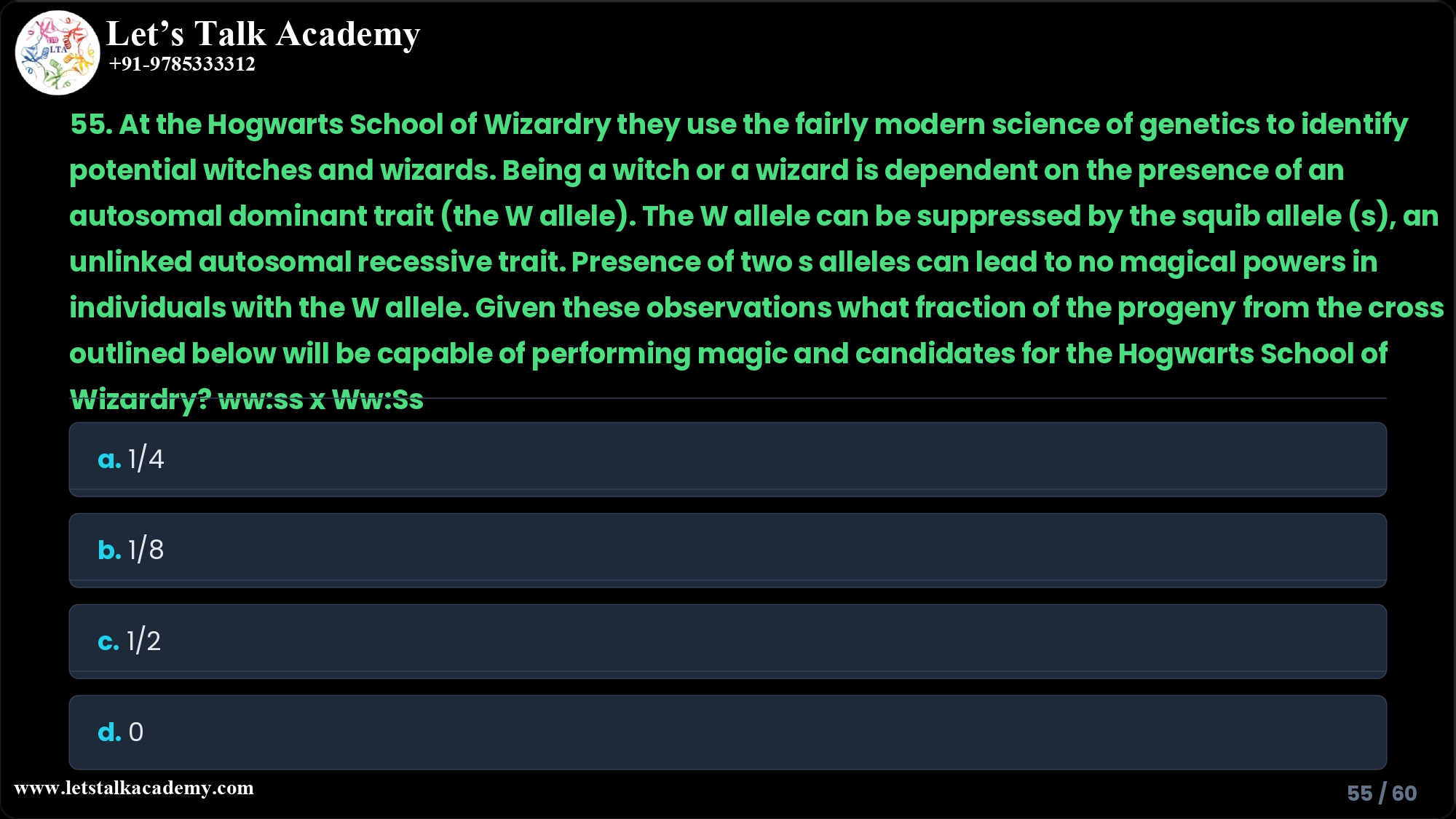
55. At the Hogwarts School of Wizardry they use the fairly modern science of genetics to identify potential witches and wizards. Being a witch or a wizard is dependent on […]
54. Bananas we routinely eat are seedless because A) They are naturally parthenogenetic B) They are triploid C) They are haploid D) Their fruits develop faster than the seeds Correct […]
53. In the euarchaeotic bacterium Pyrococcus furiosus the glycolysis pathway is modified by the use of ADP dependent glucokinase and ADP dependent phosphofructokinase. What will be the net gain of […]

52. Many biological processes are known to oscillate over time, which are represented by an increase in a molecular factor followed by a decrease, which continues over time. Which of […]
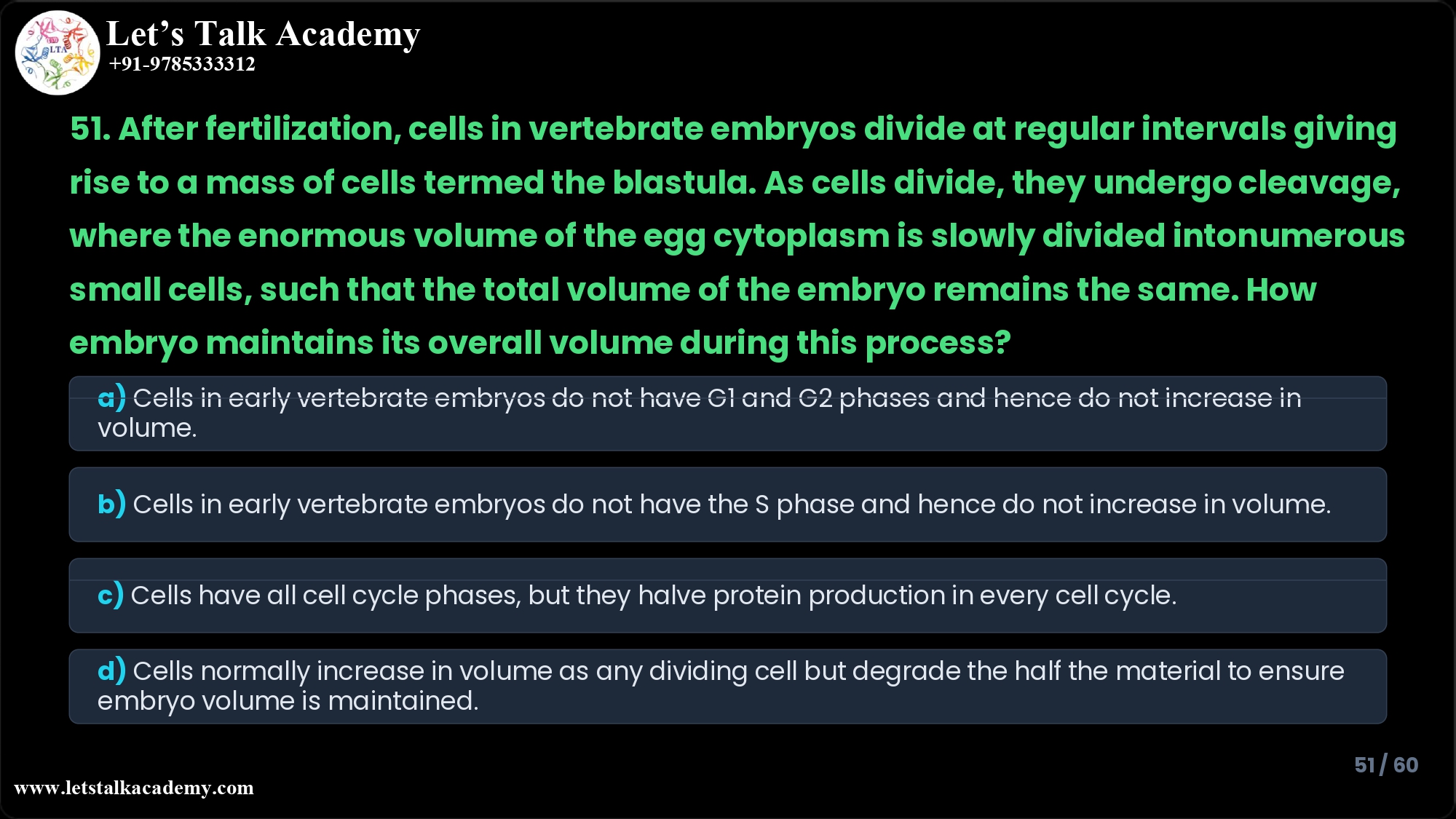
51. After fertilization, cells in vertebrate embryos divide at regular intervals giving rise to a mass of cells termed the blastula. As cells divide, they undergo cleavage, where the enormous […]


