7. Which of the following techniques cannot be used to quantify affinity between an enzyme and its peptide substrate? a. X-ray crystallography b. Isothermal calorimetry c. Surface plasmon resonance d. […]
7. Which of the following techniques cannot be used to quantify affinity between an enzyme and its peptide substrate? a. X-ray crystallography b. Isothermal calorimetry c. Surface plasmon resonance d. […]
6. In our body skin cells and muscle cells share the same DNA. Which of the following is true a. Although they share the same DNA, both have a different […]
5. Despite the large number of unique mutations described in the LDL-R gene that cause familial hypercholesterolemia, certain mutations are found in high frequency in specific populations, e.g., the 9.5 […]
4. How does an adaptation, such as better running speed, evolve with natural selection? a. Natural selection directionally produces better adaptation over time, gradually leading to better running speed. b. […]

3. The number of alleles possible for a gene is: a. 2 b. Infinite c. 4 d. 1 The correct answer is b. Infinite. A gene can have an infinite […]
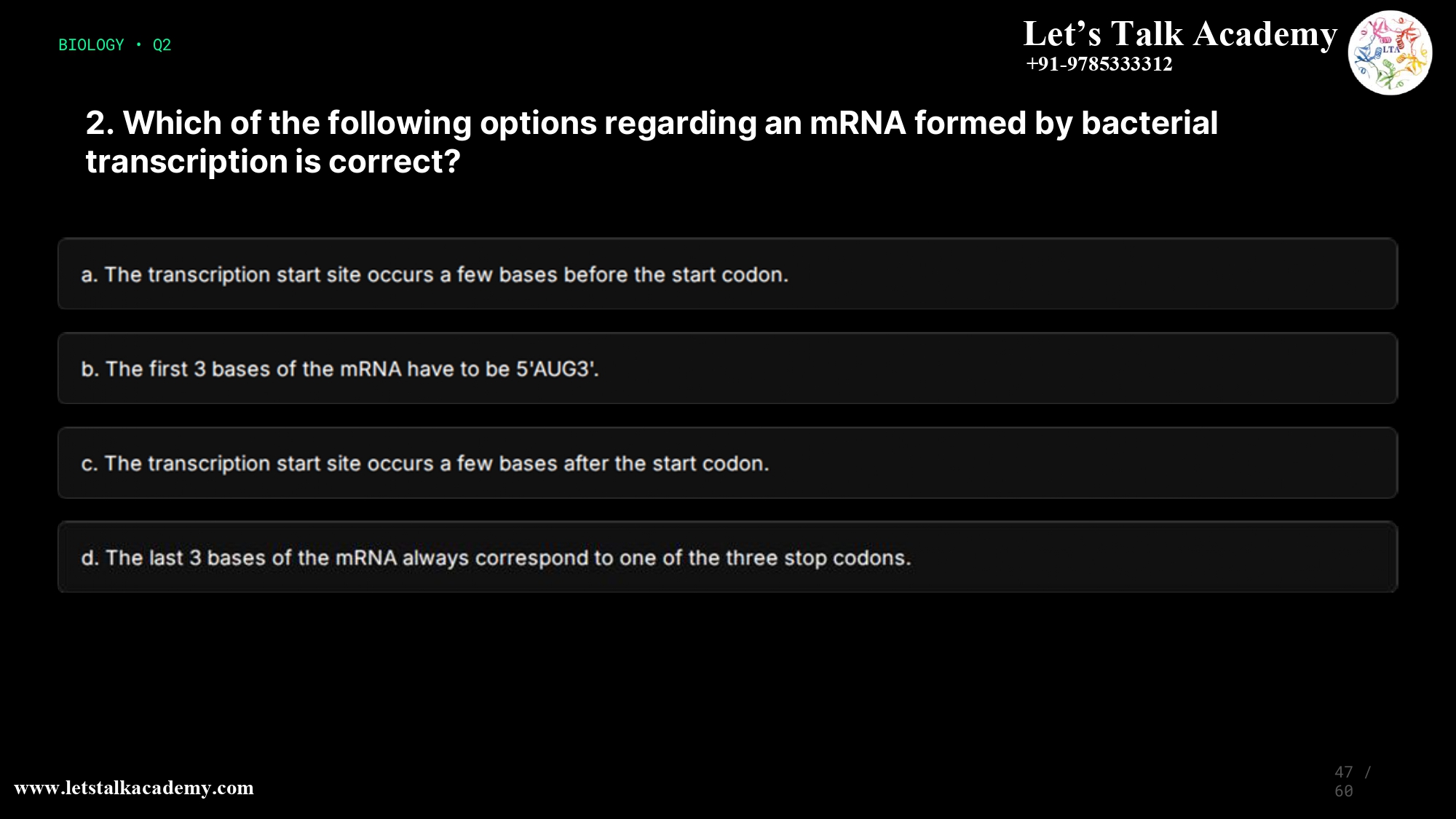
2. Which of the following options regarding an mRNA formed by bacterial transcription is correct? a. The transcription start site occurs a few bases before the start codon. b. The […]
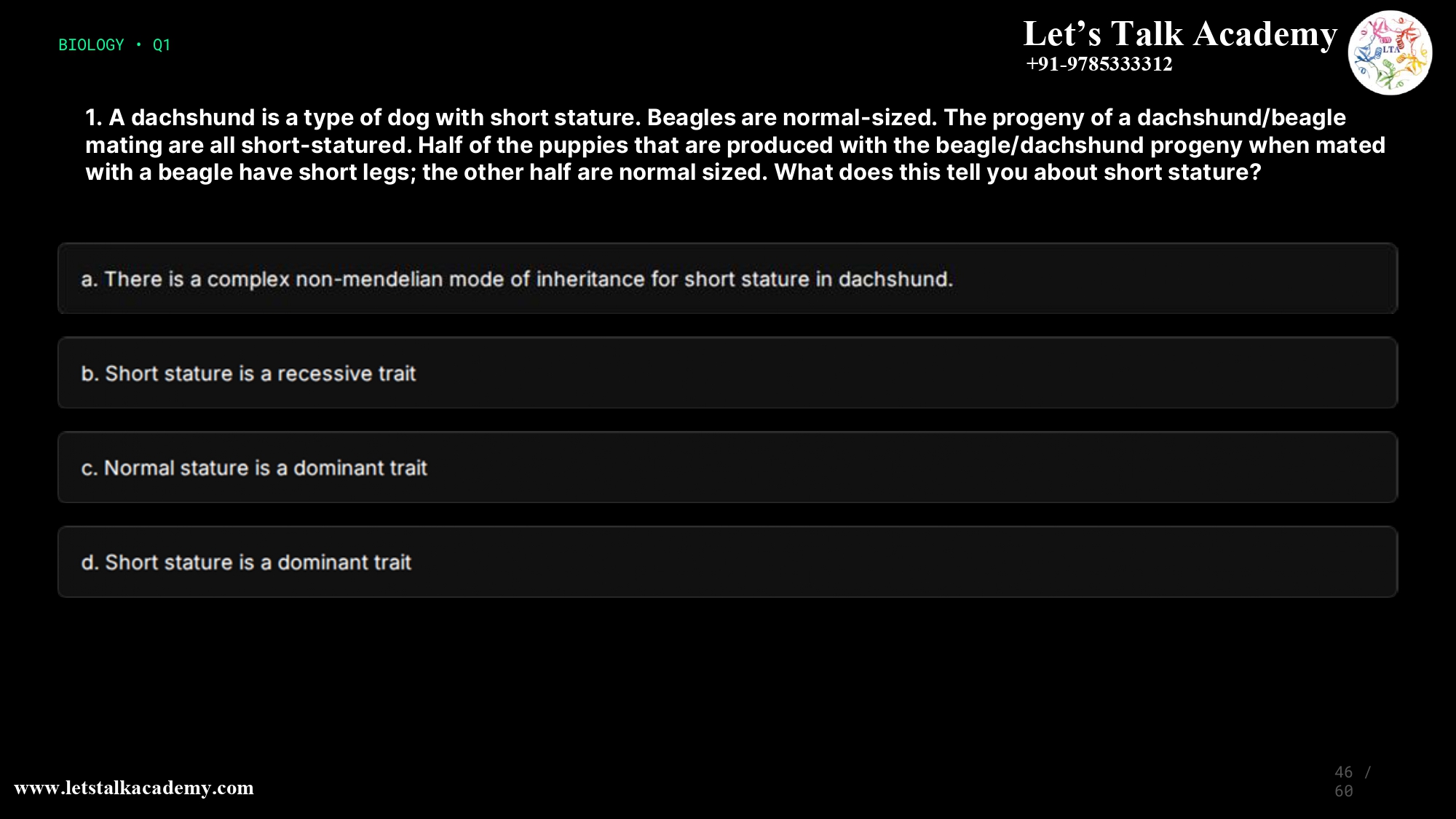
1. A dachshund is a type of dog with short stature. Beagles are normal-sized. The progeny of a dachshund/beagle mating are all short-statured. Half of the puppies that are produced […]

15. Some carbonated beverages are made by forcing carbon dioxide gas into a beverage solution. When a bottle of one kind of carbonated beverage is first opened, the beverage has […]
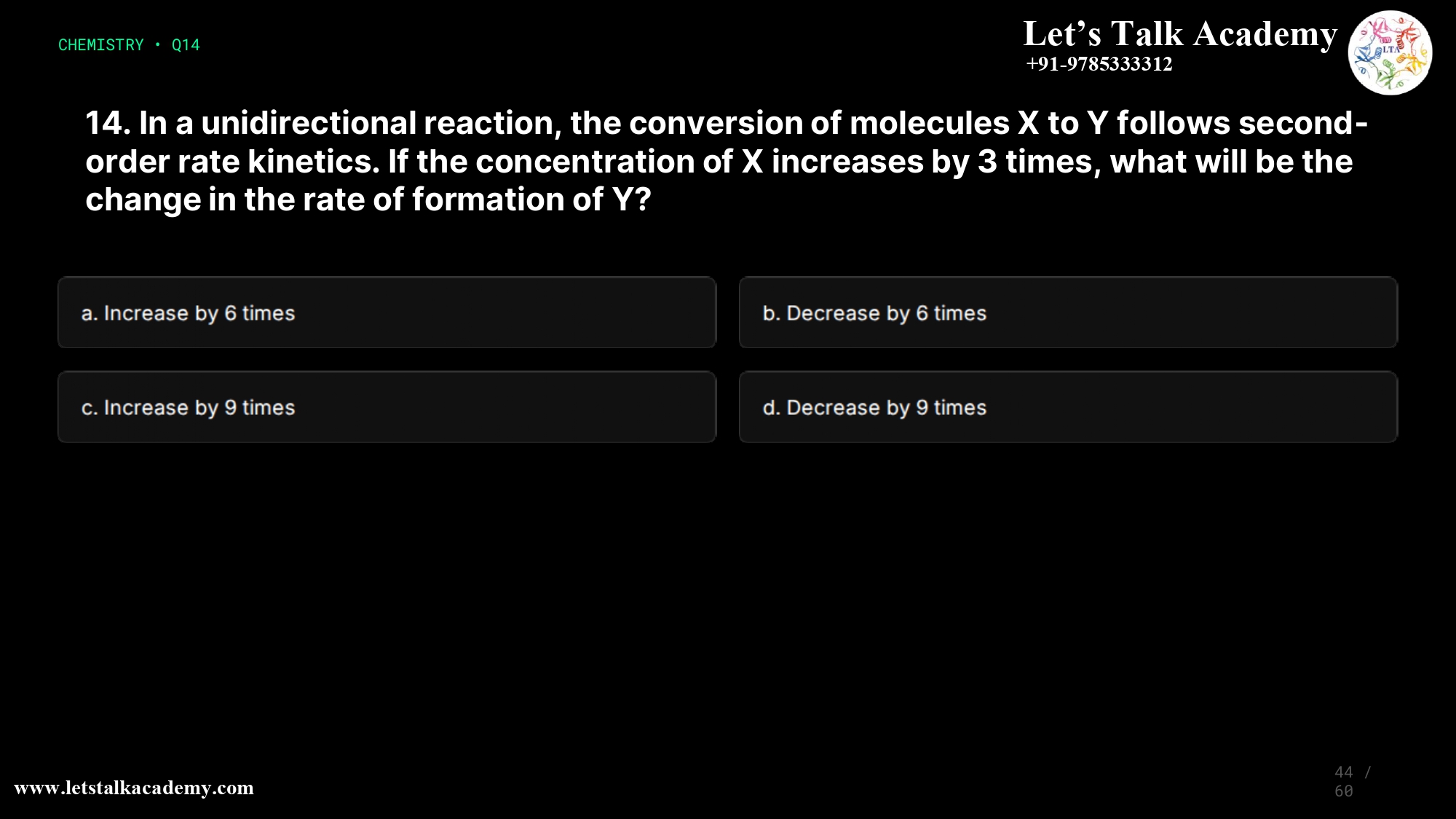
14. In a unidirectional reaction, the conversion of molecules X to Y follows second-order rate kinetics. If the concentration of X increases by 3 times, what will be the change […]
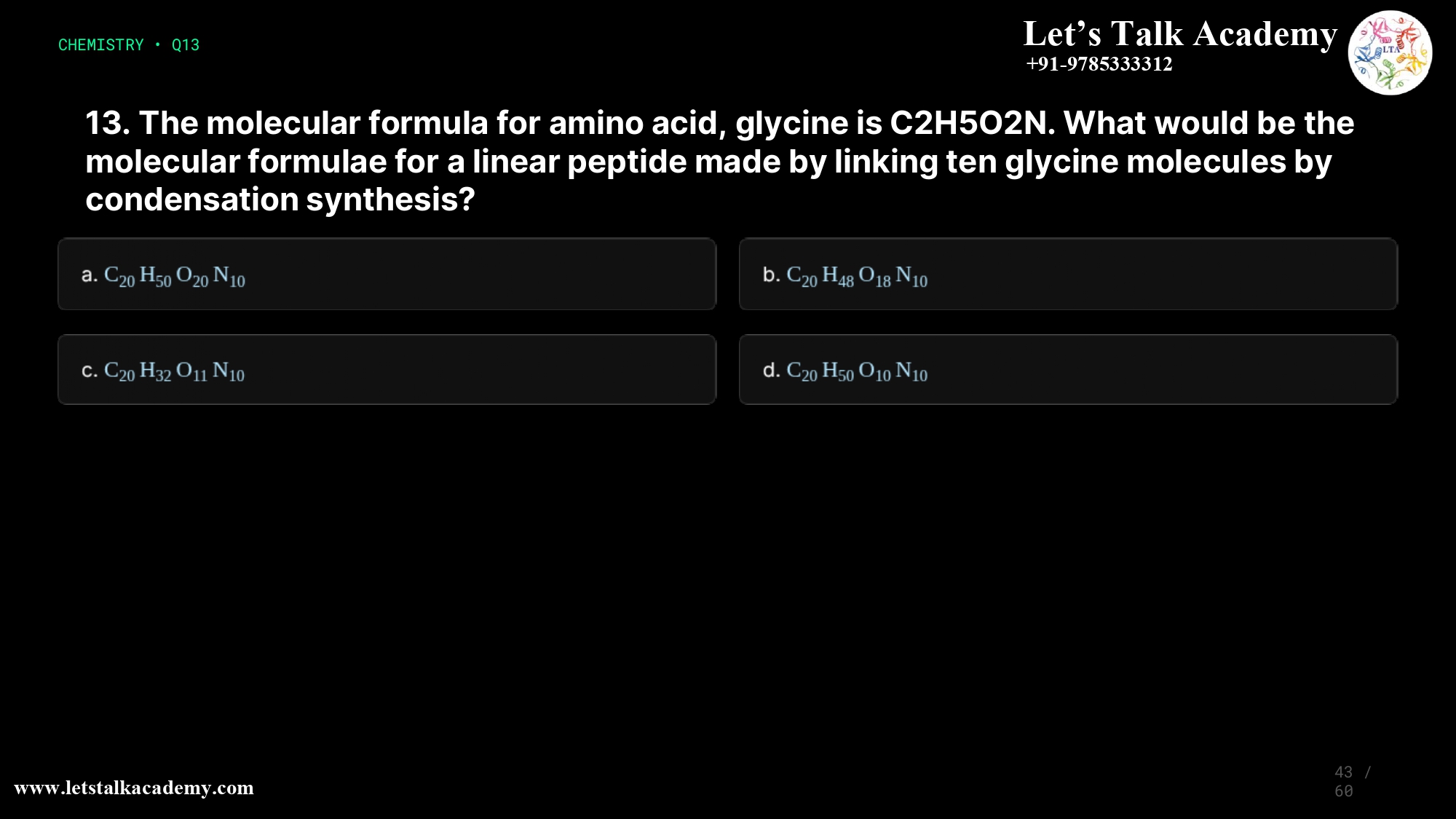
13. The molecular formula for amino acid, glycine is C2H5O2N. What would be the molecular formulae for a linear peptide made by linking ten glycine molecules by condensation synthesis? a. […]


