2. Arrange the following compounds in increasing order of C-OH bond length: Methanol, phenol, p ethoxyphenol a. Phenol c. p-ethoxyphenol < methanol < phenol: Wrong – p-ethoxyphenol cannot have shorter […]
2. Arrange the following compounds in increasing order of C-OH bond length: Methanol, phenol, p ethoxyphenol a. Phenol c. p-ethoxyphenol < methanol < phenol: Wrong – p-ethoxyphenol cannot have shorter […]
2. Arrange the following compounds in increasing order of C-OH bond length: Methanol, phenol, p ethoxyphenol a. Phenol c. p-ethoxyphenol < methanol < phenol: Wrong – p-ethoxyphenol cannot have shorter […]
1.An organic compound contains C, H and S. If it contains 4% Sulphur by weight, the minimum molecular mass of the compound is a.200 b.400 c.600 d.800 Empirical Formula Method […]
15. A car starting from rest accelerates at the rate R through a distance S, then continues at a constant speed for time t and then decelerates at rate R/2 […]
14. Consider a spherical bacterial cell which has a diameter 2 µm. The density of the cell is 1 g/mL, the dry weight of the cell is roughly 30 percent […]

13. Which of the following statements is correct about the energy required for spectroscopic transitions? a. Electronic transition>Rotational transitions>Vibrational transitions> Nuclear spin transition b. Rotational transition>Electronic transition>Vibrational transition>Nuclear spin transition […]
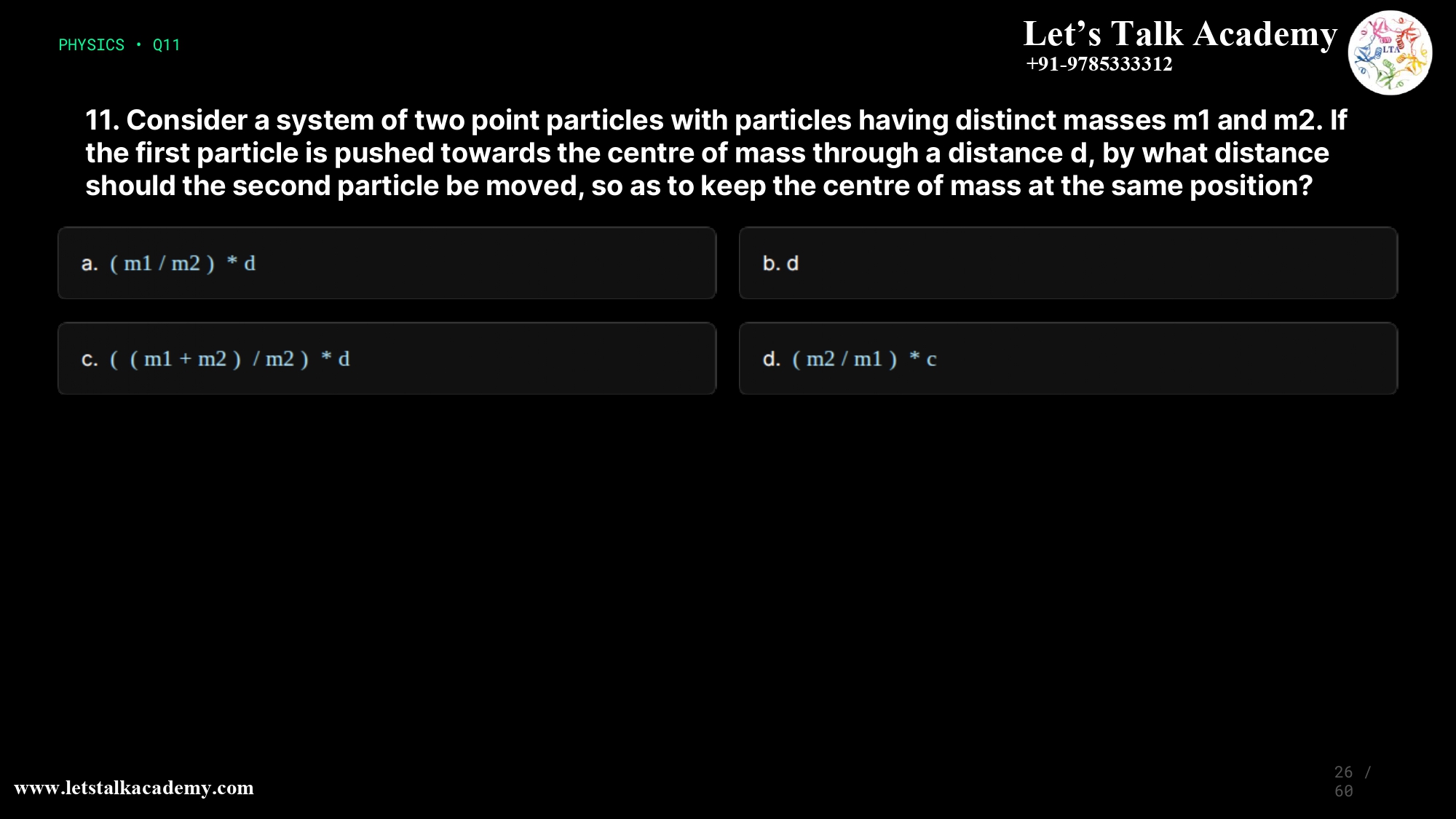
11. Consider a system of two point particles with particles having distinct masses m1 and m2. If the first particle is pushed towards the centre of mass through a distance […]
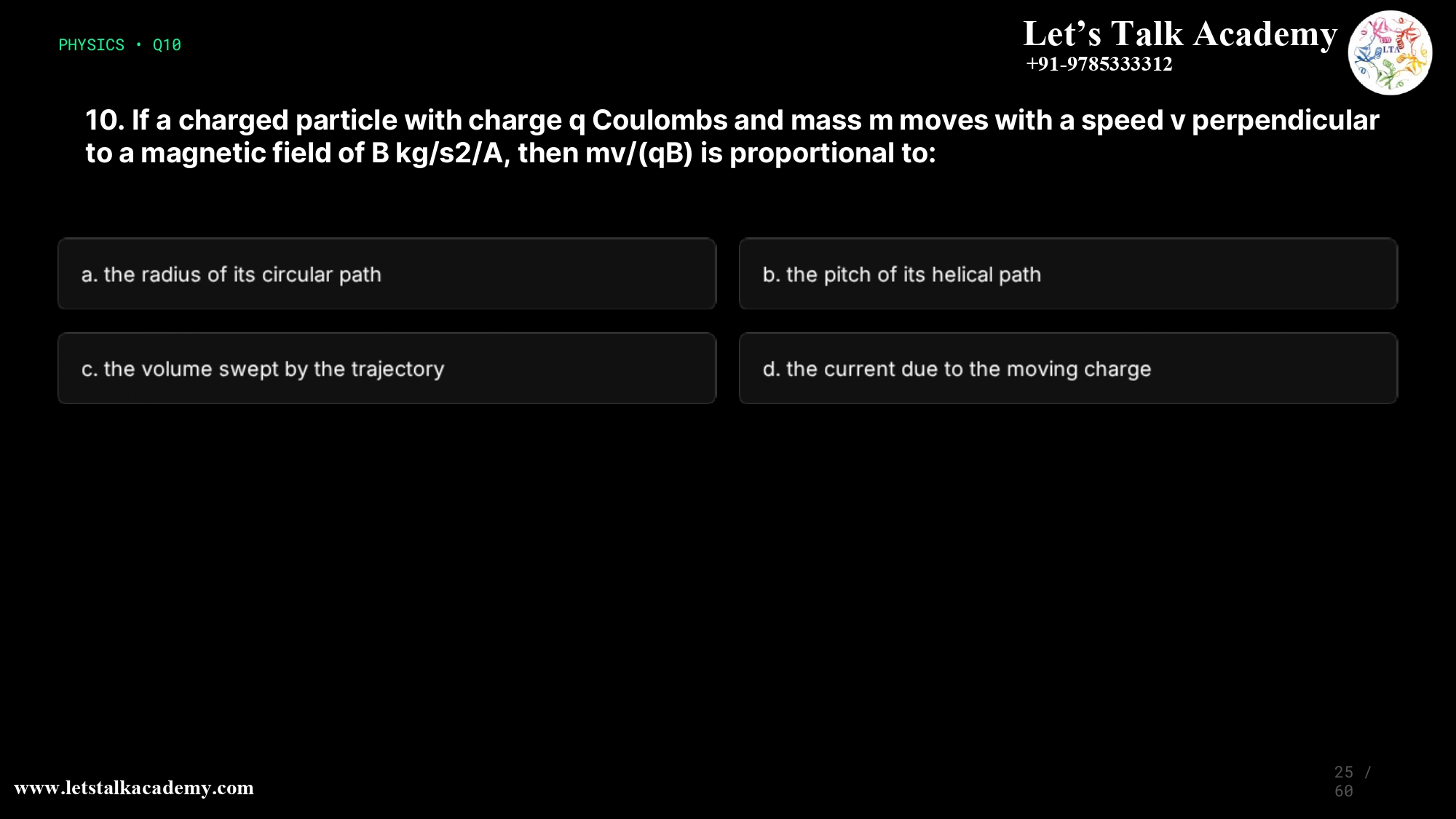
10. If a charged particle with charge q Coulombs and mass m moves with a speed v perpendicular to a magnetic field of B kg/s2/A, then mv/(qB) is proportional to: […]

9. Two wires are made of the same material and have the same volume. However, wire 1 has a cross sectional area A, and wire-2 has a cross-sectional area 3A. […]
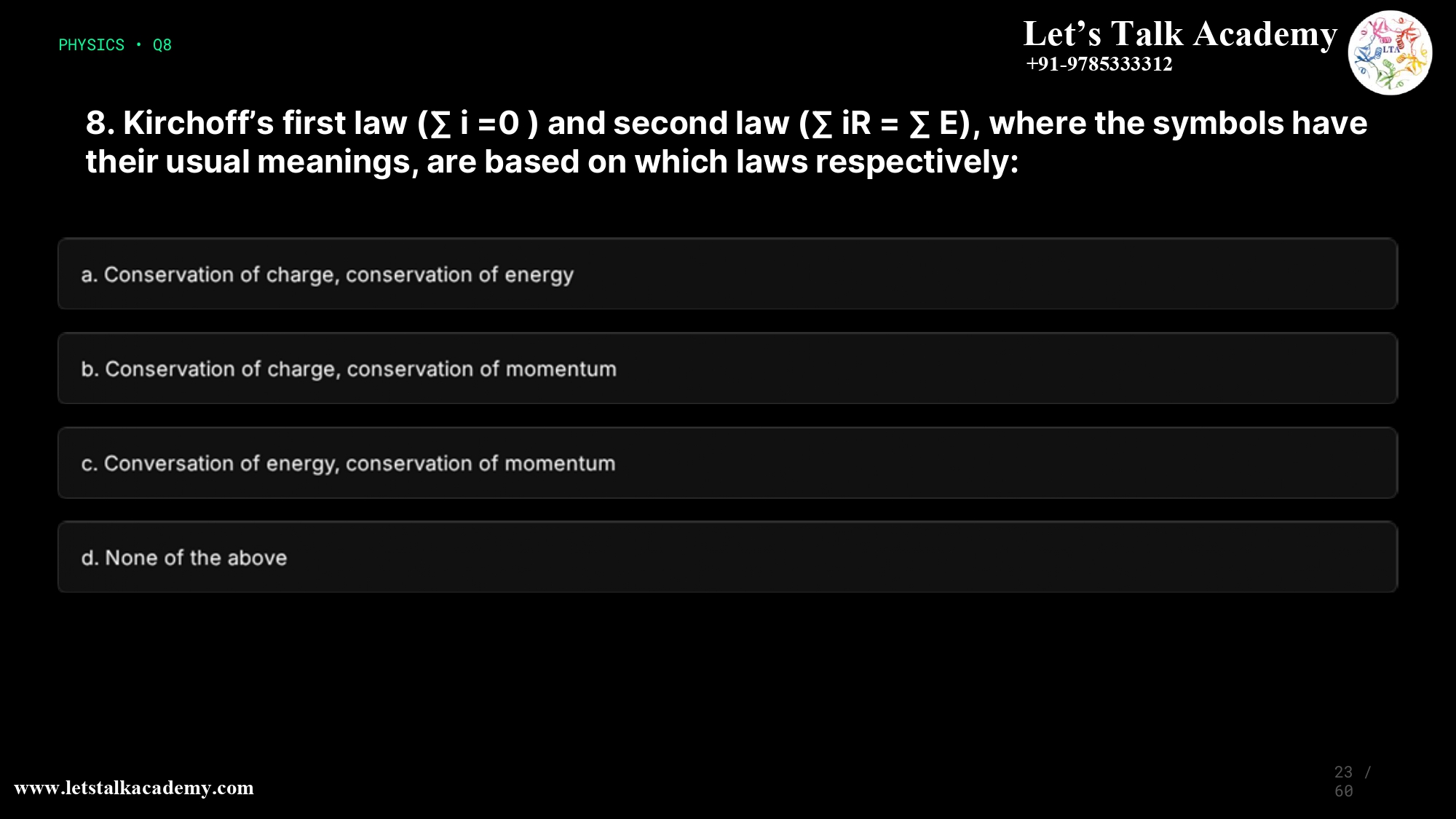
8. Kirchoff’s first law (∑ i =0 ) and second law (∑ iR = ∑ E), where the symbols have their usual meanings, are based on which laws respectively: a.Conservation […]


