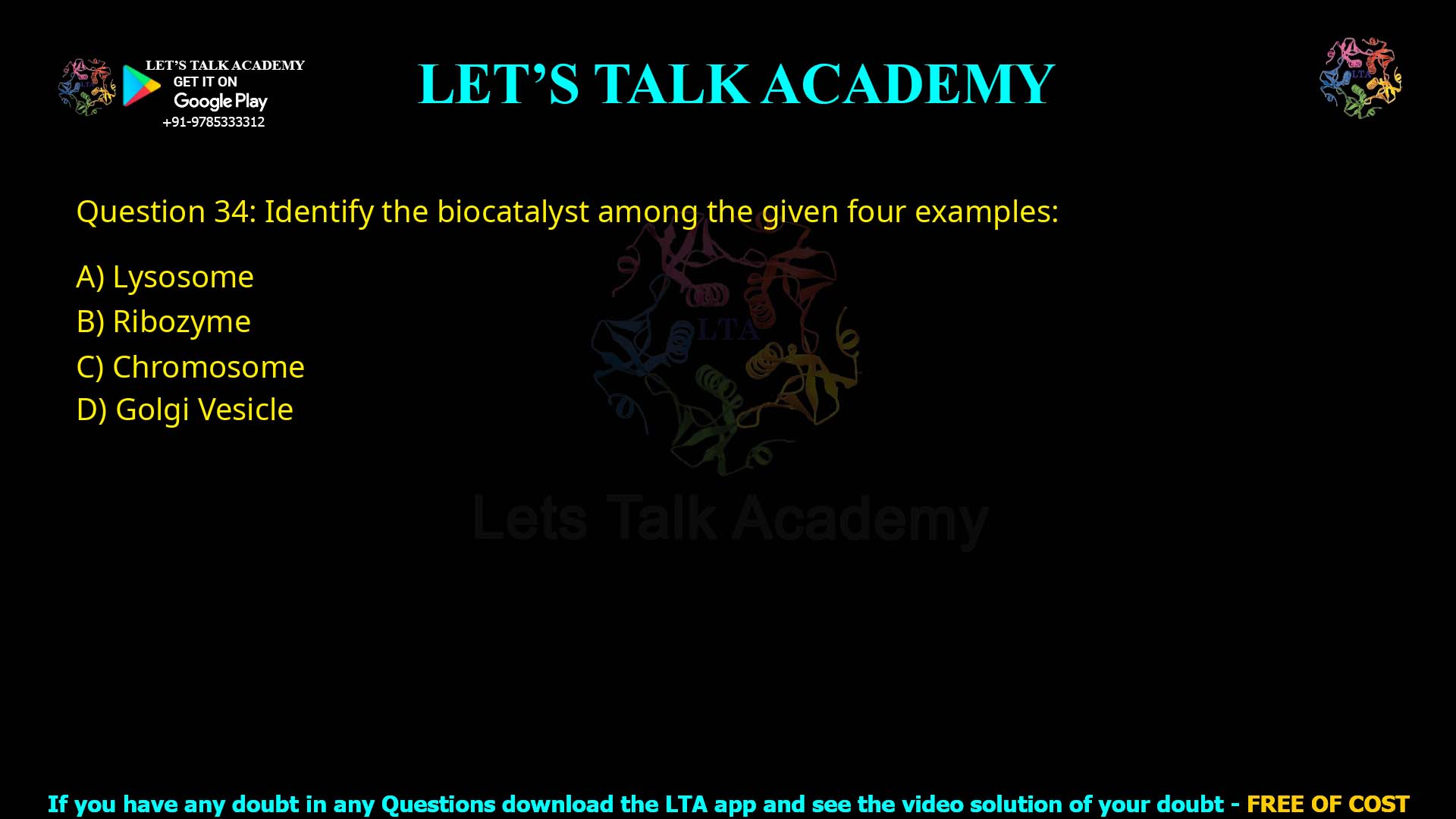
Q.34 Identify the biocatalyst among the given four examples:
1. Lysosome
2. Ribozyme
3. Chromosome
4. Golgi Vesicle
Biocatalyst Identification: Ribozyme as the Key Example
Ribozymes stand out as RNA-based biocatalysts that speed up biochemical reactions like protein enzymes. The correct answer is option 2: Ribozyme, essential knowledge for biotech and molecular biology exams.
Correct Answer
Option 2: Ribozyme.
Ribozymes are catalytic RNA molecules that accelerate reactions such as RNA splicing, peptide bond formation in ribosomes, and self-cleavage. Discovered in the 1980s, they challenge the protein-only enzyme paradigm and support the RNA world hypothesis.
Option Analysis
Option 1: Lysosome
Lysosomes are membrane-bound organelles containing hydrolytic enzymes for cellular waste breakdown. They house biocatalysts (enzymes) but are not catalysts themselves.
Option 2: Ribozyme (Correct)
These RNA enzymes catalyze specific reactions independently or with proteins, like ribosome peptidyl transferase activity. Their folded structures create active sites akin to proteins.
Option 3: Chromosome
Chromosomes package DNA for genetic storage and transmission during cell division. They lack catalytic function, serving structural and informational roles.
Option 4: Golgi Vesicle
Golgi vesicles transport, modify, and package proteins/lipids post-ER synthesis. They facilitate cellular logistics but do not catalyze reactions.
| Option | Example | Biocatalyst? | Reason |
|---|---|---|---|
| 1 | Lysosome | No | Organelle with enzymes |
| 2 | Ribozyme | Yes | Catalytic RNA |
| 3 | Chromosome | No | DNA packaging |
| 4 | Golgi Vesicle | No | Transport vesicle |
Exam Tips
Ribozyme questions test RNA catalysis knowledge; distinguish from organelles. Examples include hammerhead and ribosome ribozymes.


