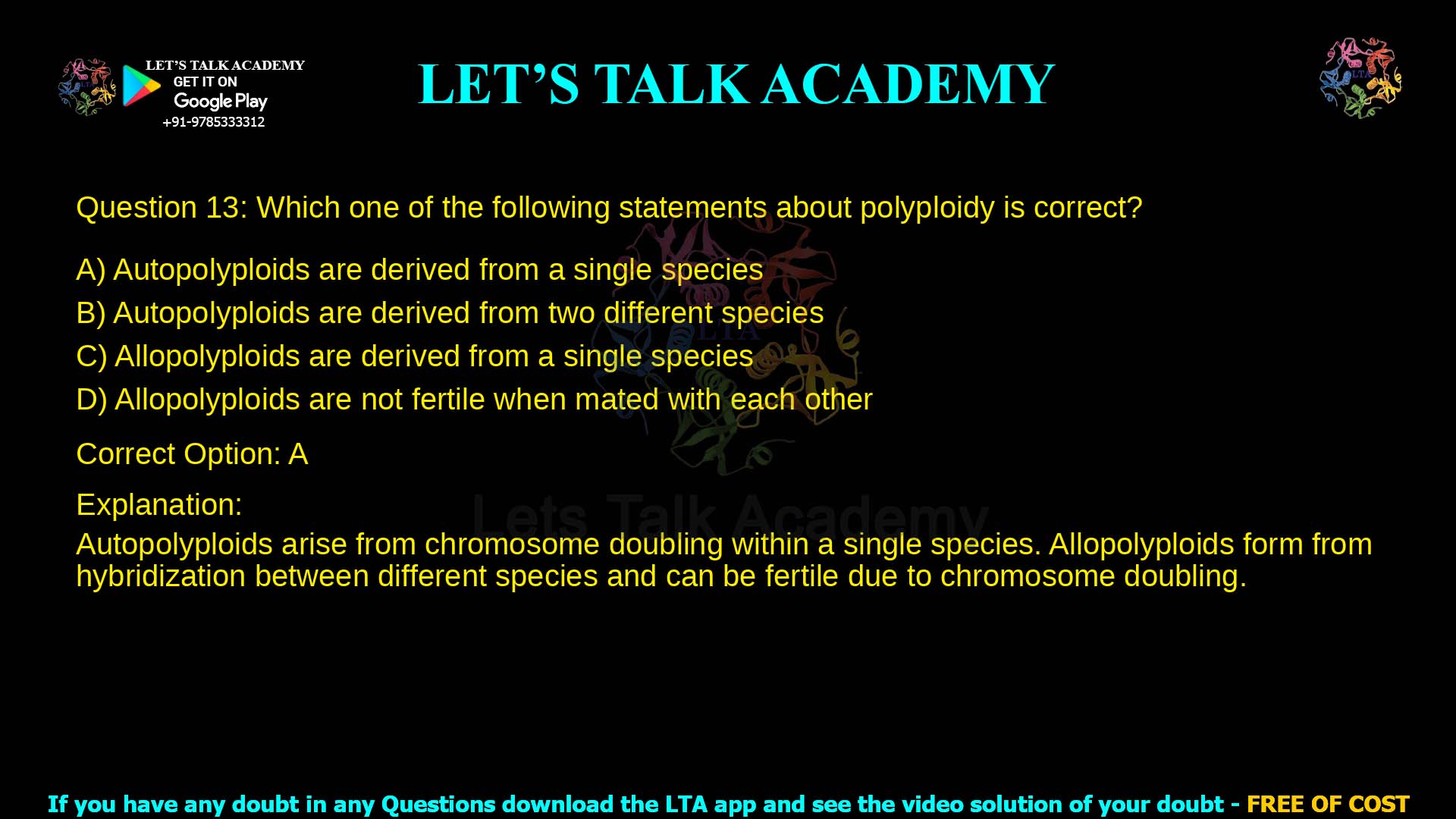
Q.13 Which one of the following statements about polyploidy is correct?
(A) Autopolyploids are derived from a single species
(B) Autopolyploids are derived from two different species
(C) Allopolyploids are derived from a single species
(D) Allopolyploids are not fertile when mated with each other
Correct Answer: (A) Autopolyploids are derived from a single species
Autopolyploids form through genome duplication within one species, while allopolyploids arise from hybridization between different species.
Option Analysis
Option (A) states autopolyploids derive from a single species. This holds true as they result from chromosome doubling in one species, like unreduced gametes fusing to create tetraploids.
Option (B) claims autopolyploids come from two species. Incorrect, since that defines allopolyploids via interspecific hybridization.
Option (C) says allopolyploids derive from one species. Wrong, as they combine genomes from multiple species, such as wheat from three diploid ancestors.
Option (D) asserts allopolyploids lack fertility when mated. False, as fertile allopolyploids like bread wheat reproduce successfully due to stabilized chromosome pairing.
Polyploidy represents a key mechanism in plant evolution where organisms possess more than two chromosome sets, driving speciation and crop improvement. Autopolyploids emerge from duplication within a single species, enhancing traits like size in potatoes. This CSIR NET-relevant concept contrasts with allopolyploids, formed by hybridizing distinct species.
Key Differences
| Feature | Autopolyploids | Allopolyploids |
|---|---|---|
| Origin | Single species (e.g., genome doubling) | Two+ species (hybrid + doubling) |
| Chromosome Pairing | Multivalents (homologous) | Bivalents (homoeologous) |
| Examples | Banana, alfalfa | Wheat, cotton |
| Fertility | Often reduced in odd ploidy; even ploidy viable | Typically fertile post-stabilization |
Evolutionary Significance
Autopolyploids boost vigor but face meiotic challenges, while allopolyploids gain hybrid vigor and novel traits, common in 15% of angiosperms. In agriculture, induced polyploidy creates seedless watermelons via autotriploids.
CSIR NET Exam Tips
Focus on origins: autopolyploids = single species duplication; allopolyploids = interspecific hybrids. Practice with examples like Triticum aestivum (hexaploid allopolyploid).


1 Comment
Vanshika Sharma
December 30, 2025opt A is correct