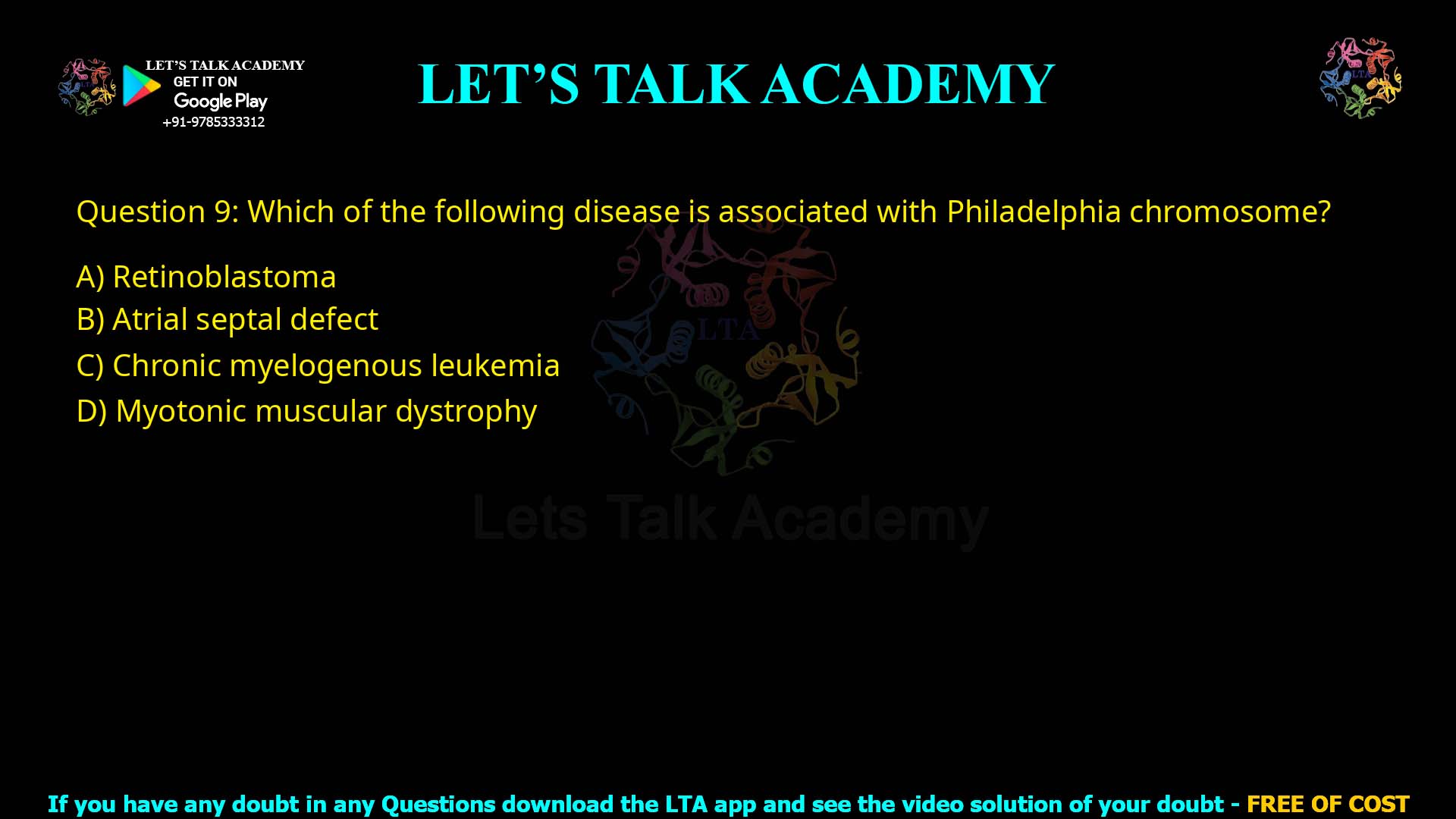
Q9.Which of the following disease is associated with Philadelphia chromosome?
(A) Retinoblastoma
(B) Atrial septal defect
(C) Chronic myelogenous leukemia
(D) Myotonic muscular dystrophy
Chronic myelogenous leukemia (C) is associated with the Philadelphia chromosome.
This reciprocal translocation t(9;22) creates the BCR-ABL fusion gene, driving uncontrolled proliferation of myeloid cells in over 90% of CML cases.
Option Breakdown
Retinoblastoma (A): Pediatric eye cancer caused by RB1 tumor suppressor gene mutations on chromosome 13 (biallelic loss). “Two-hit” hypothesis model; no Philadelphia chromosome involvement.
Atrial septal defect (B): Congenital heart defect from developmental malformations in atrial septum formation. Primarily environmental/genetic (e.g., NKX2-5 mutations); not chromosomal translocations like Philadelphia.
Chronic myelogenous leukemia (C): Defined by Philadelphia chromosome t(9;22)(q34;q11), fusing BCR (22q11) and ABL1 (9q34). Produces p210 BCR-ABL tyrosine kinase causing chronic phase → accelerated → blast crisis progression.
Myotonic muscular dystrophy (D): DM1 caused by CTG trinucleotide repeats in DMPK 3’UTR; DM2 by CCTG repeats. RNA toxicity mechanism; no t(9;22).
Introduction to Philadelphia Chromosome Diseases
Philadelphia chromosome chronic myelogenous leukemia represents the classic cytogenetic hallmark where t(9;22) translocation generates BCR-ABL oncogene in >95% CML patients. This fusion tyrosine kinase transforms hematopoietic stem cells, essential knowledge for medical genetics, USMLE, NEET-PG, and hematology research. Understanding its specificity versus other options clarifies exam questions on chromosomal aberrations.
Mechanism of BCR-ABL in CML Pathogenesis
The Philadelphia chromosome results from balanced translocation between ABL1 proto-oncogene (9q34) and BCR (22q11.2).
-
Fusion protein: p210^ BCR-ABL activates RAS/MAPK, PI3K/AKT, STAT5 pathways promoting proliferation, inhibiting apoptosis.
-
Disease phases: Chronic (indolent), accelerated (clonal evolution), blast crisis (acute leukemia-like).
-
Therapy: Tyrosine kinase inhibitors (imatinib, dasatinib) target BCR-ABL; monitor via qPCR for BCR-ABL transcripts.


