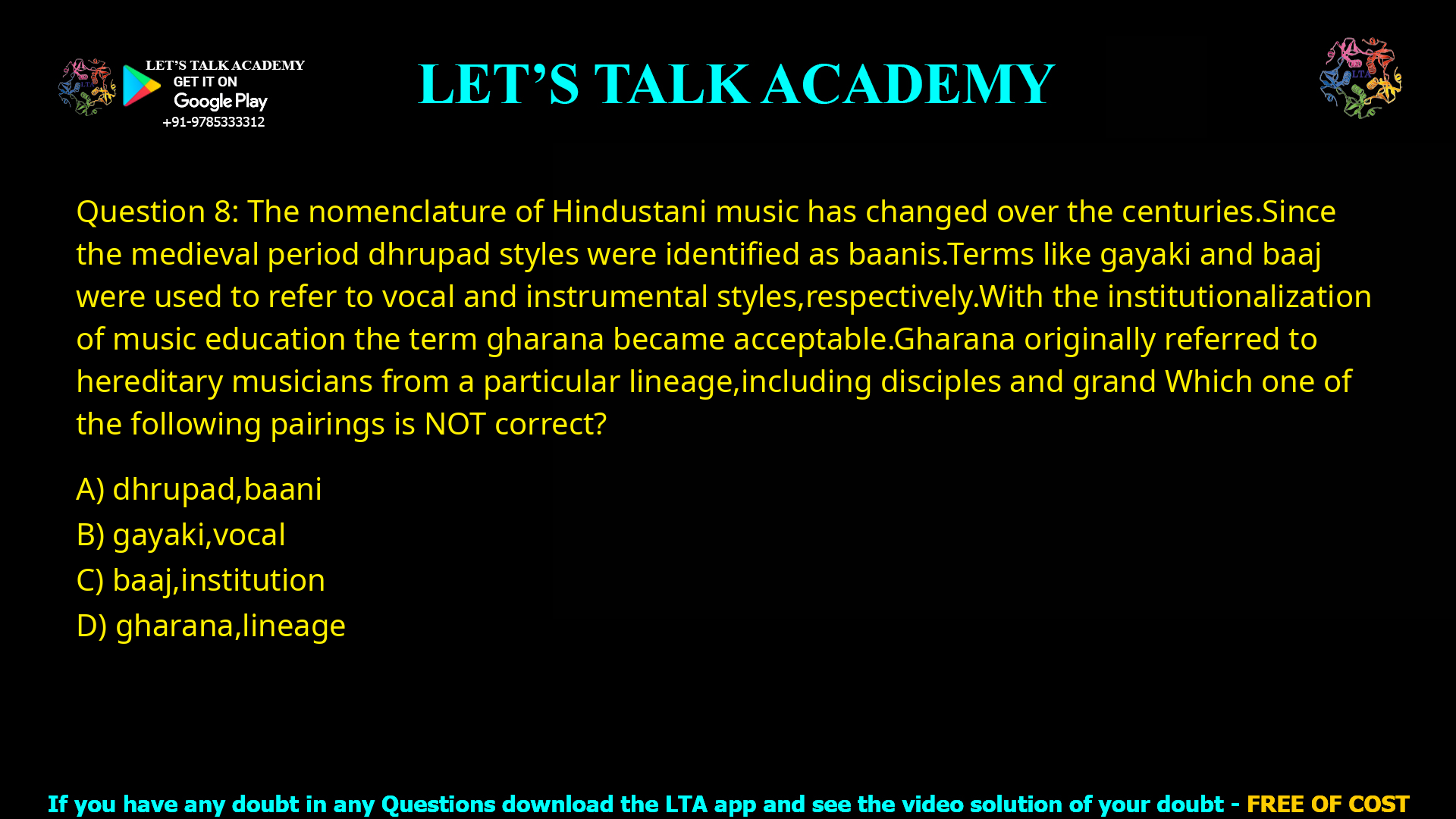
Q.8 The nomenclature of Hindustani music has changed over the centuries. Since the medieval
period dhrupad styles were identified as baanis. Terms like gayaki and baaj were used to
refer to vocal and instrumental styles, respectively. With the institutionalization of music
education the term gharana became acceptable. Gharana originally referred to hereditary
musicians from a particular lineage, including disciples and grand disciples.
Which one of the following pairings is NOT correct?
(A) dhrupad, baani
(B) gayaki, vocal
(C) baaj, institution
(D) gharana, lineage
Question Solution
This question tests your understanding of the historical evolution of nomenclature in Hindustani classical music, focusing on key terms like baani, gayaki, baaj, and gharana. The passage provides direct clues: Dhrupad styles were identified as baanis in the medieval period; gayaki refers to vocal styles and baaj to instrumental styles; gharana originally meant hereditary musicians from a particular lineage (including disciples and grand-disciples). We’ll evaluate each option against these definitions to identify the incorrect pairing.
-
(A) dhrupad, baani: Correct pairing. The passage explicitly states “dhrupad styles were identified as baanis” during the medieval period, linking the two directly.
-
(B) gayaki, vocal: Correct pairing. The passage says “Terms like gayaki and baaj were used to refer to vocal and instrumental styles, respectively,” so gayaki specifically means vocal style.
-
(C) baaj, institution: Incorrect pairing. The passage defines baaj as referring to instrumental styles, not institutions. This is a mismatch—baaj relates to playing style (instrumental), while institutions connect to later gharana formalization in music education.
-
(D) gharana, lineage: Correct pairing. The passage notes “Gharana originally referred to hereditary musicians from a particular lineage, including disciples and grand disciples,” confirming the link.
Answer: (C)
Hindustani music nomenclature has evolved significantly over centuries, reflecting shifts from medieval traditions to modern institutional frameworks. Key terms like dhrupad baani, gayaki, baaj, and gharana define vocal and instrumental styles in Hindustani classical music. This article breaks down their historical meanings, helping you grasp how Hindustani music nomenclature transitioned from hereditary lineages to structured gharanas.
Medieval Roots: Dhrupad and Baani
In the medieval period, dhrupad—one of the oldest Hindustani vocal forms—was categorized into distinct baani styles. Baani referred to specific lineages or compositional schools within dhrupad, such as Gunkali or Khandar baani. This pairing underscores the intimate link between dhrupad and baani in early Hindustani music nomenclature.
Gayaki and Baaj: Vocal vs. Instrumental Distinction
As Hindustani music diversified, gayaki emerged to denote vocal styles, emphasizing singing techniques like meend (glides) and gamak (oscillations). In contrast, baaj described instrumental styles, focusing on the “strike” or playing manner, as in sitar baaj or tabla baaj. These terms highlight the clear divide in Hindustani music nomenclature between human voice (gayaki) and instrument execution (baaj).
Gharana: From Lineage to Institution
The term gharana originally signified a “house” or hereditary group of musicians sharing a lineage, including gurus, disciples, and grand-disciples. With the institutionalization of music education in the 19th-20th centuries—through academies like those in Gwalior or Kirana—gharana evolved into formalized schools. This shift marks a key change in Hindustani music nomenclature, blending family traditions with structured teaching.
Common Misconceptions in Hindustani Music Terms
A frequent error pairs baaj with “institution,” but baaj strictly means instrumental style, not organizational structure—that’s gharana’s domain post-institutionalization. Famous gharanas like Agra or Jaipur-Atrauli preserve unique gayaki or baaj approaches, enriching Hindustani music’s diversity.
This evolution of Hindustani music nomenclature from dhrupad baani to gharana lineages offers insight into India’s classical heritage. Whether studying for exams or exploring ragas, mastering these terms deepens appreciation.


