

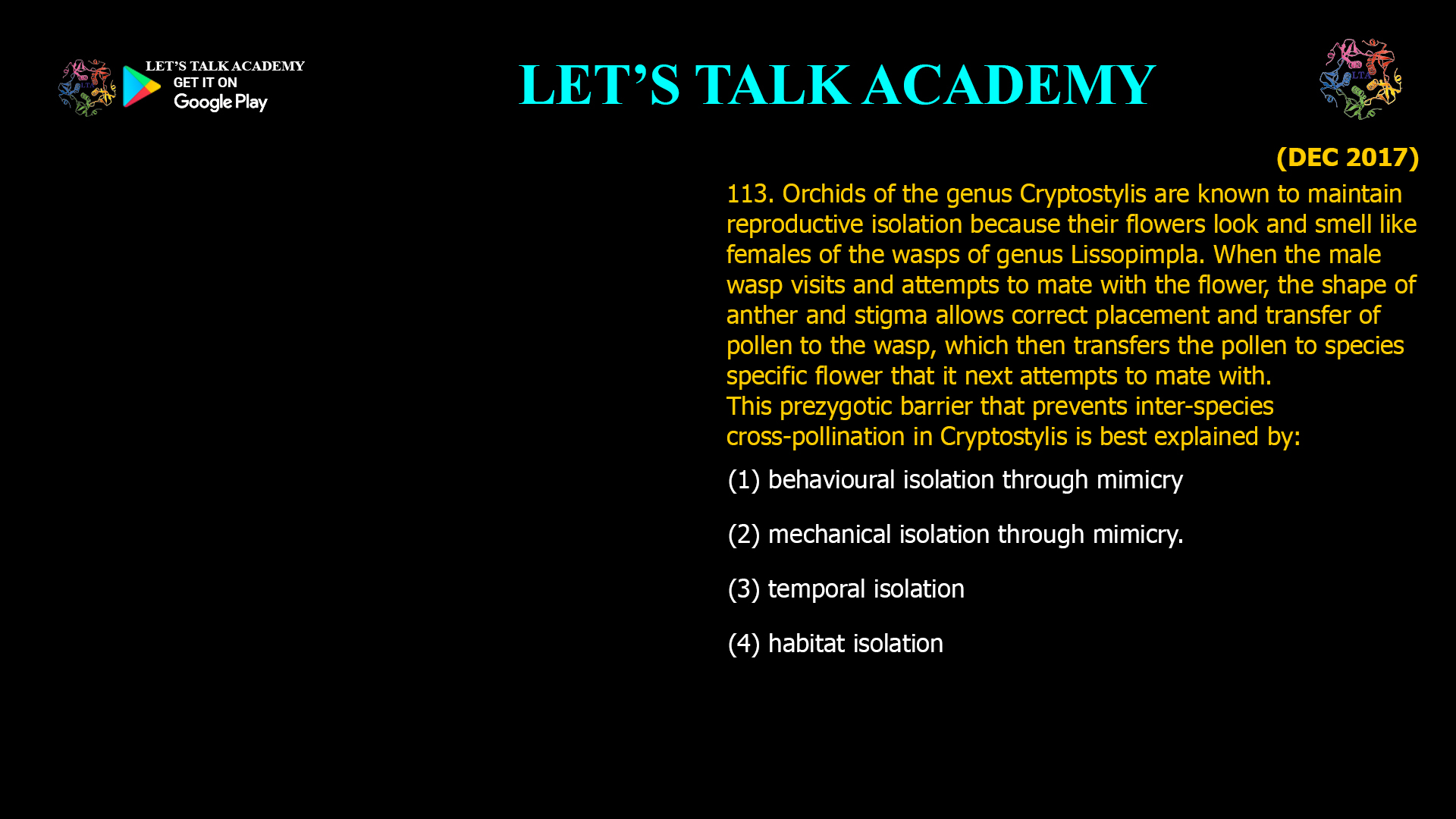
Orchids of the genus Cryptostylis are known to maintain reproductive isolation because their flowers look and smell like females of the wasps of genus Lissopimpla. When the male wasp visits […]
CSIR NET Life Science Previous Year Questions and Solution on EVOLUTION AND BEHAVIOUR
Orchids of the genus Cryptostylis are known to maintain reproductive isolation because their flowers look and smell like females of the wasps of genus Lissopimpla. When the male wasp visits […]

The following list represents two types of reproductive isolation (Column P) that can lead to speciation. Column Q represents the processes by which these isolations can occur. Select the option […]
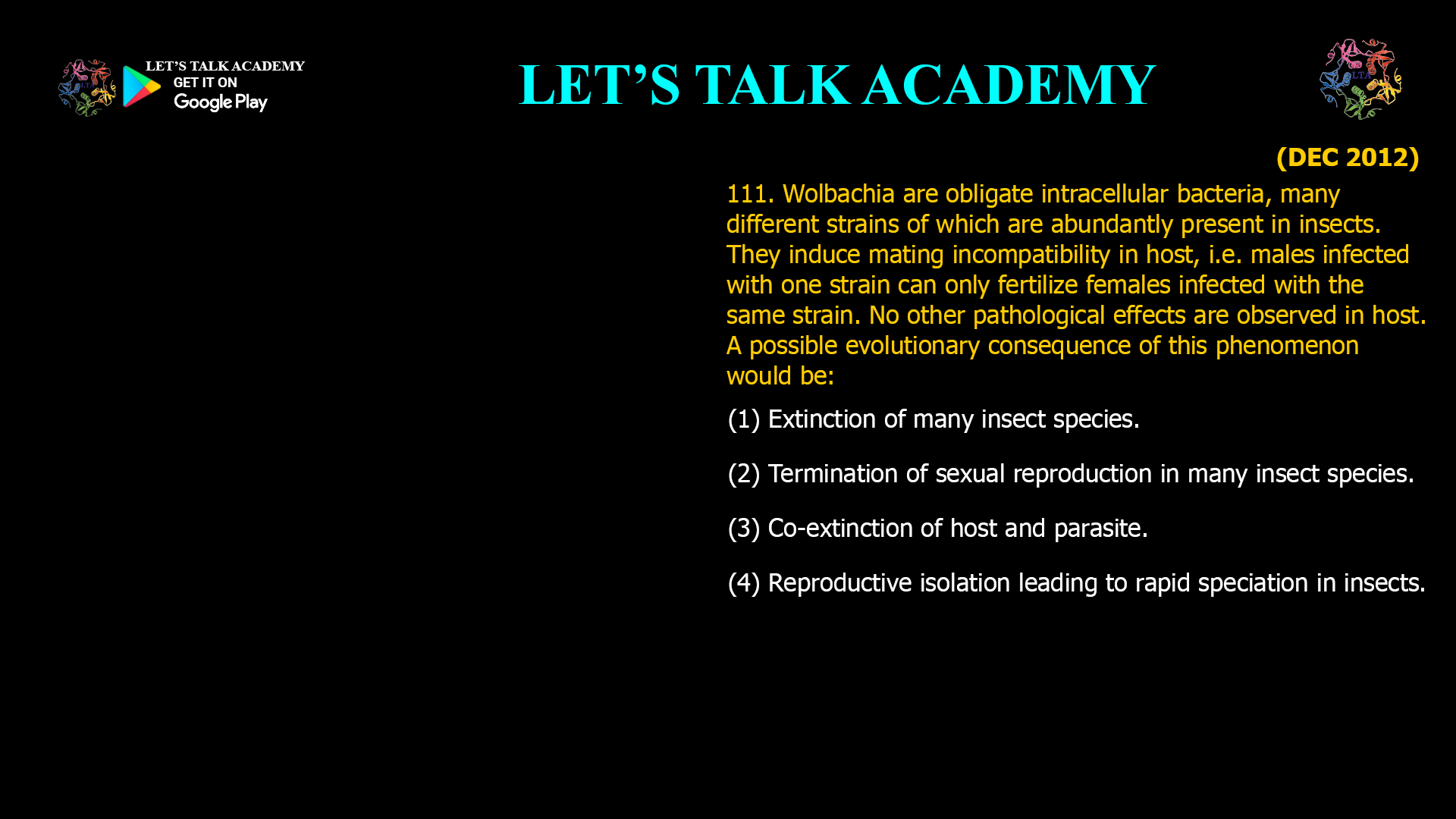
Wolbachia are obligate intracellular bacteria, many different strains of which are abundantly present in insects. They induce mating incompatibility in host, i.e. males infected with one strain can only fertilize […]
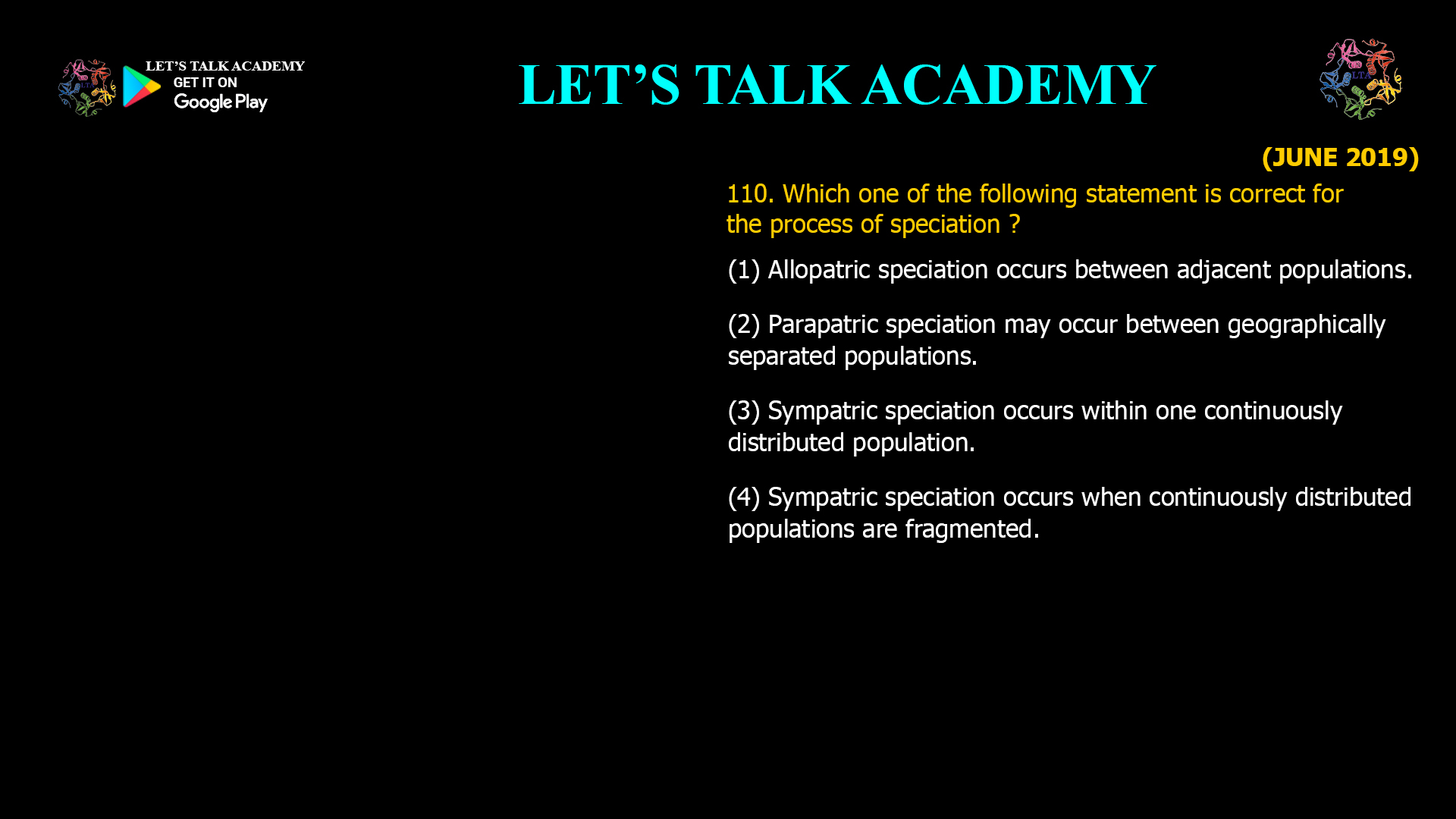
Which one of the following statement is correct for the process of speciation ? (1) Allopatric speciation occurs between adjacent populations. (2) Parapatric speciation may occur between geographically separated populations. […]

A species of grass grows around a mine area having patches of heavy metal contaminated soil. Some of the populations of the species grew selectively on the soil that was […]
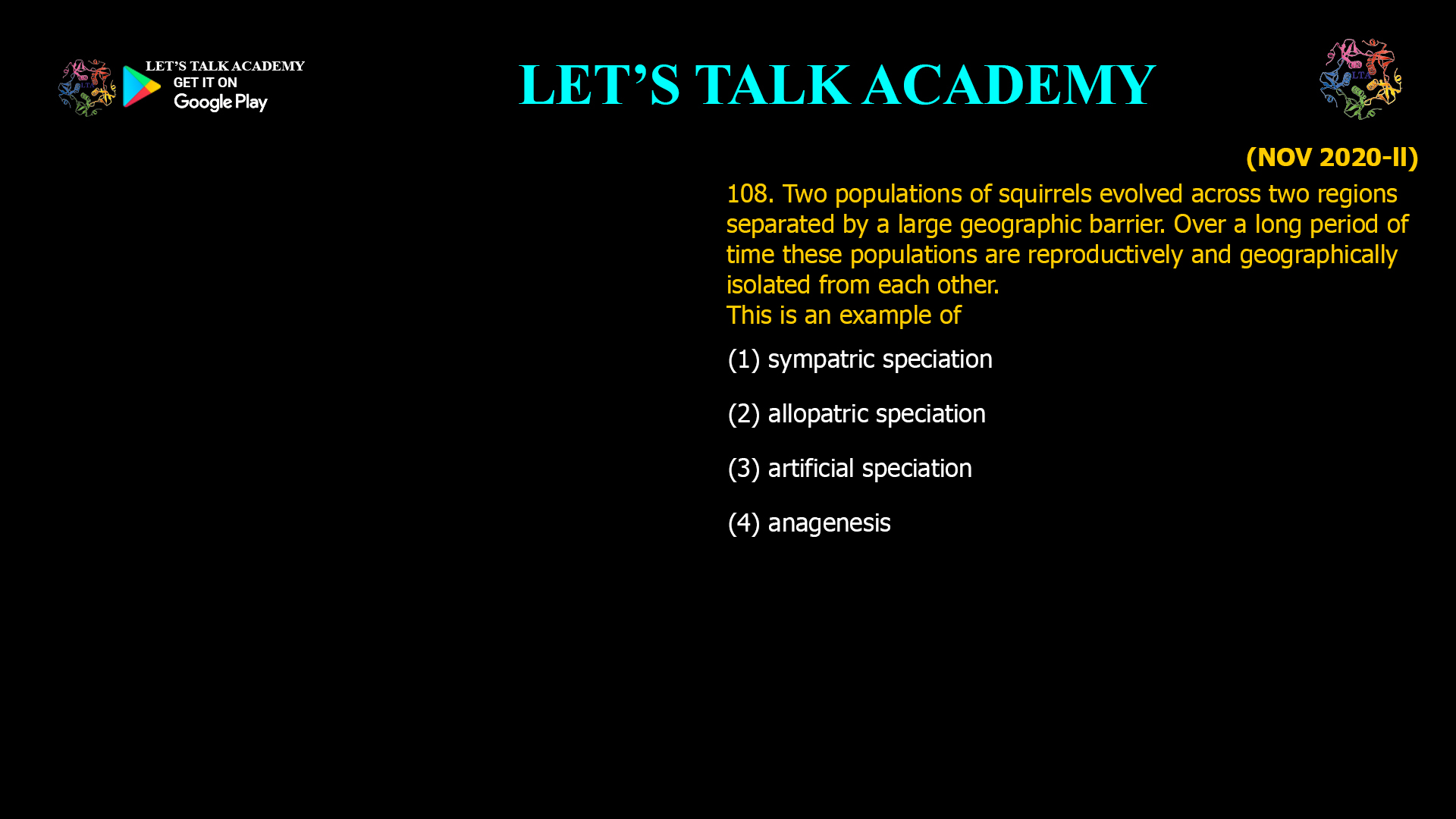
Two populations of squirrels evolved across two regions separated by a large geographic barrier. Over a long period of time these populations are reproductively and geographically isolated from each other. […]

The speciation in which a population splits into two geographically isolated populations experience dissimilar selective pressure and genetic drift is known as (1) sympatric speciation. (2) parapatric speciation. (3) peripatric […]

Which is correct explanation for sibling species? (1) Species which are morphologically different but can interbreed (2) Species which look morphologically similar but reproductively isolated (3) Species which are morphologically […]
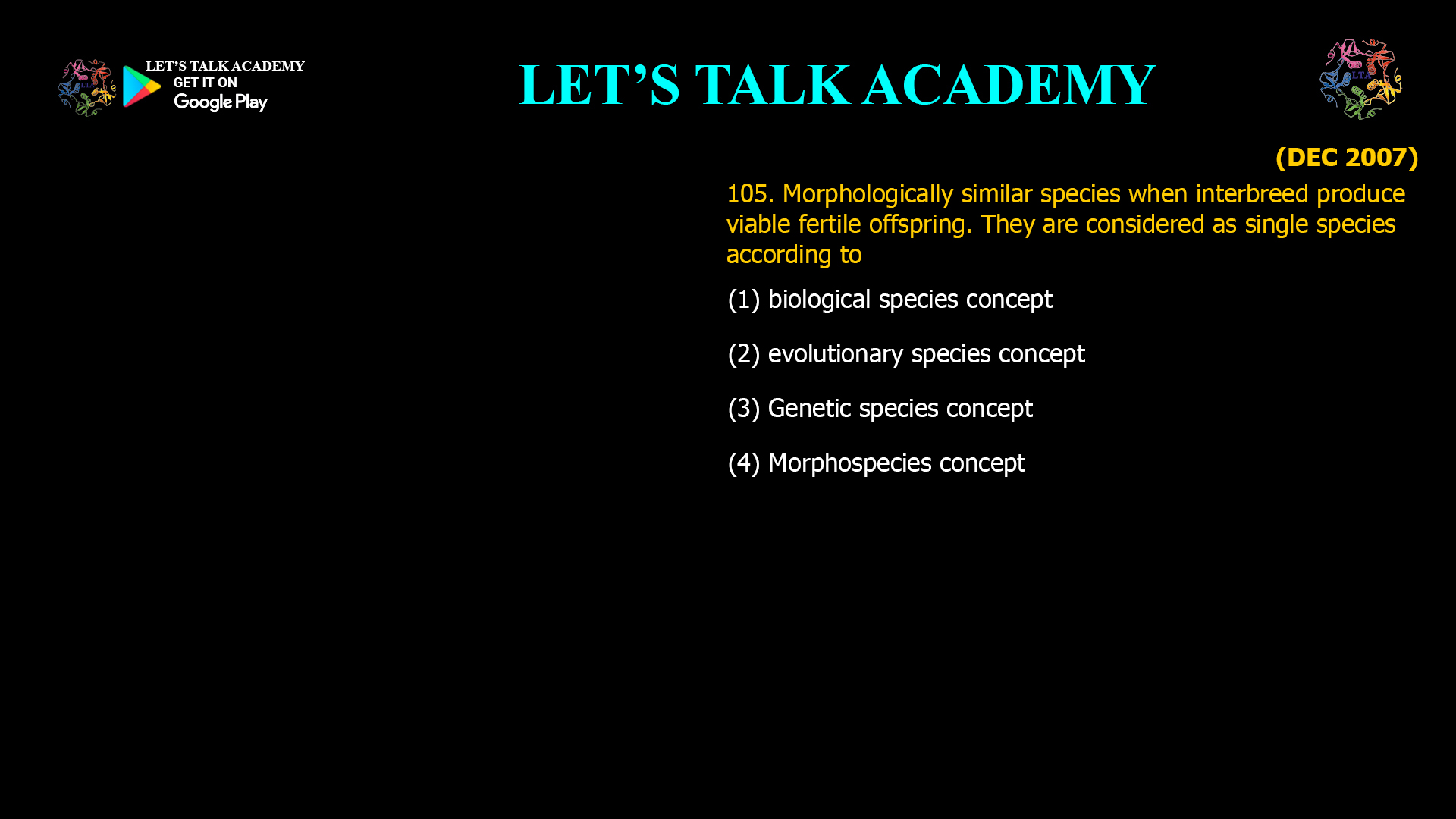
Morphologically similar species when interbreed produce viable fertile offspring. They are considered as single species according to (1) biological species concept (2) evolutionary species concept (3) Genetic species concept (4) […]
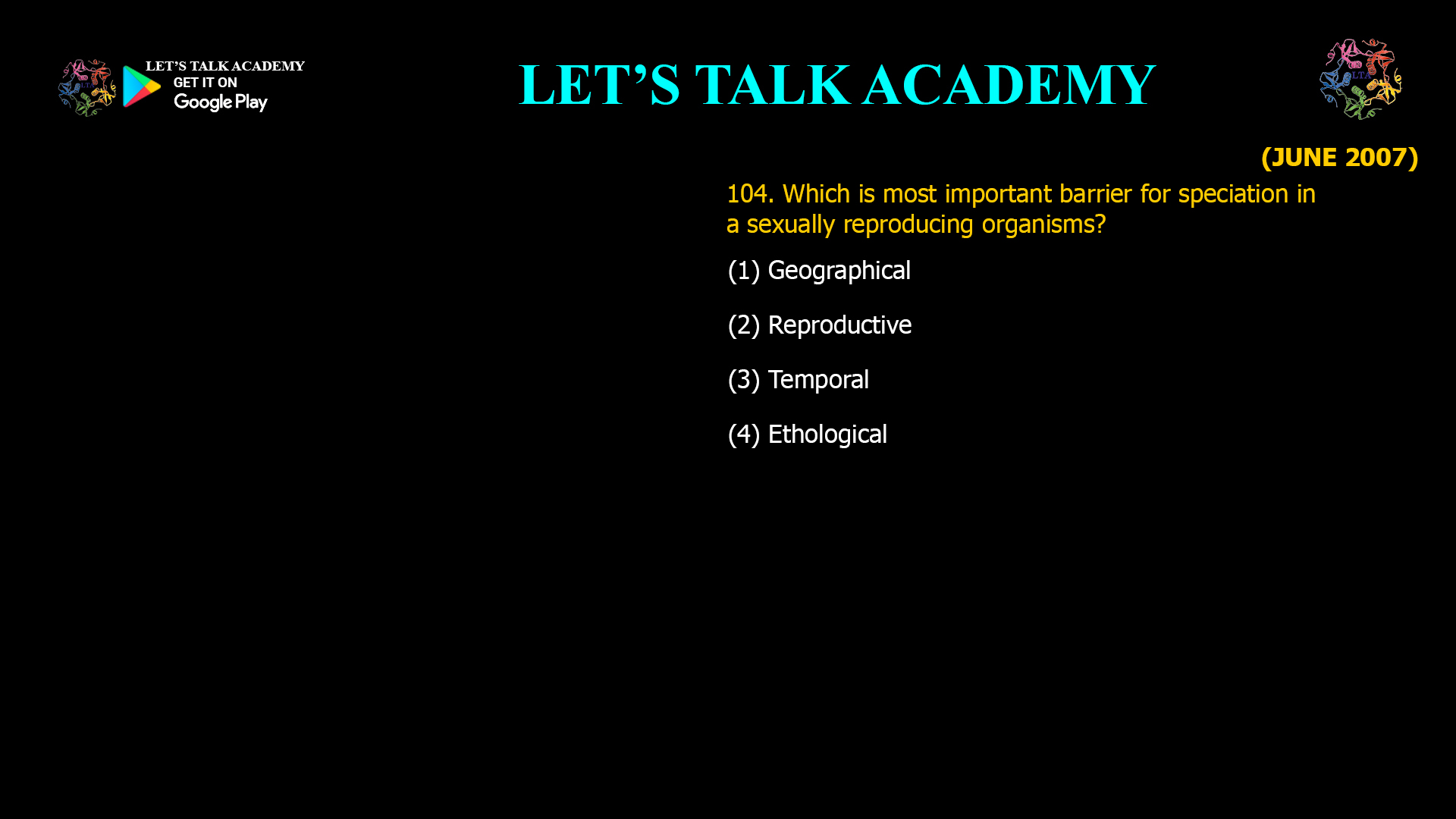
Which is most important barrier for speciation in a sexually reproducing organisms? (1) Geographical (2) Reproductive (3) Temporal (4) Ethological Speciation—the process by which new species arise—is a fundamental […]


