Q10.A classification system that groups organisms together based on the similarity of their observable characteristics is known as- (A) Phylogenetic system(B) Phenetic system(C) Phyletic system(D) Complement system Phenetic system (B) […]
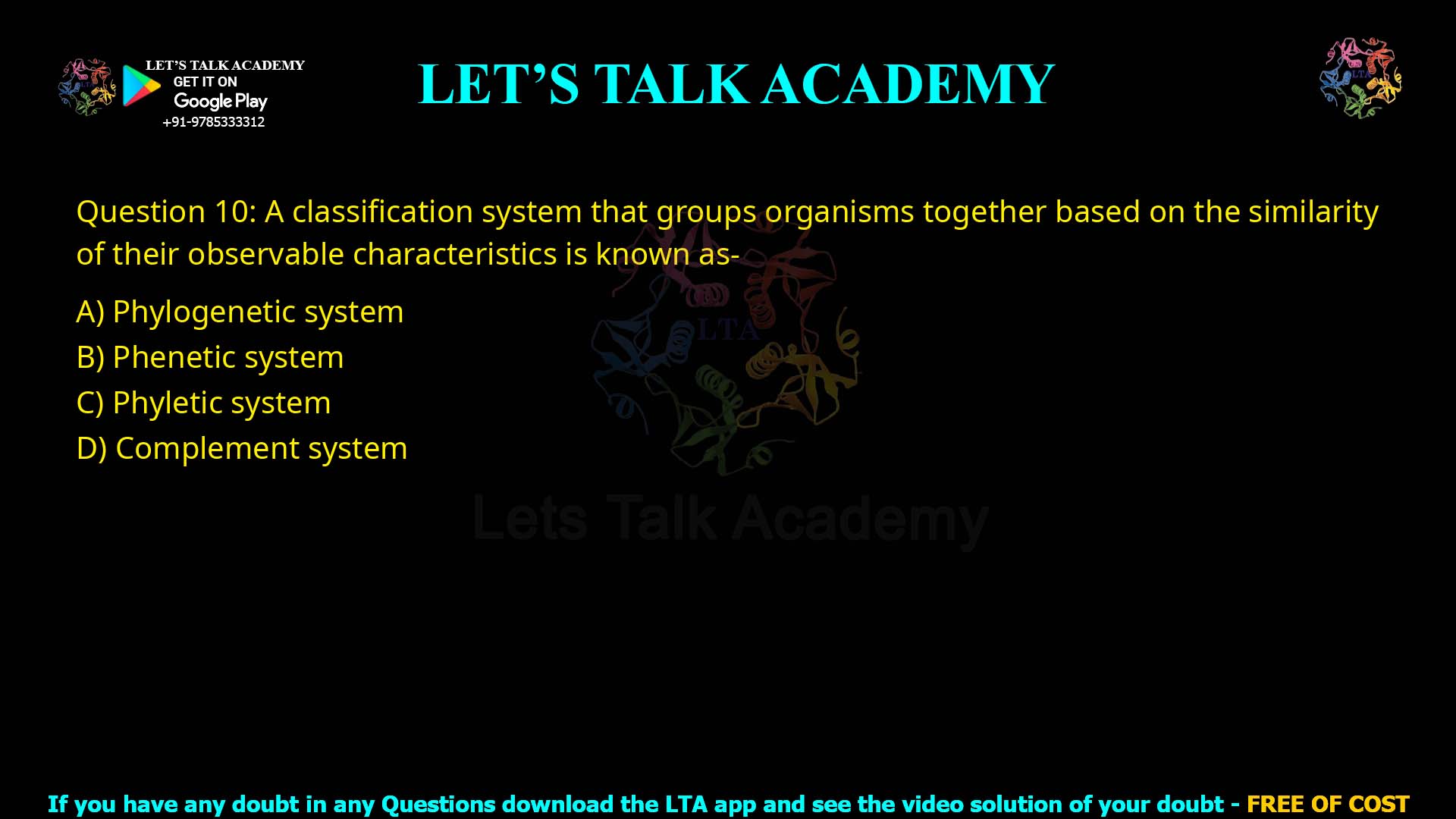
Q10.A classification system that groups organisms together based on the similarity of their observable characteristics is known as- (A) Phylogenetic system(B) Phenetic system(C) Phyletic system(D) Complement system Phenetic system (B) […]

Q9.Which of the following disease is associated with Philadelphia chromosome? (A) Retinoblastoma(B) Atrial septal defect(C) Chronic myelogenous leukemia(D) Myotonic muscular dystrophy Chronic myelogenous leukemia (C) is associated with the Philadelphia […]
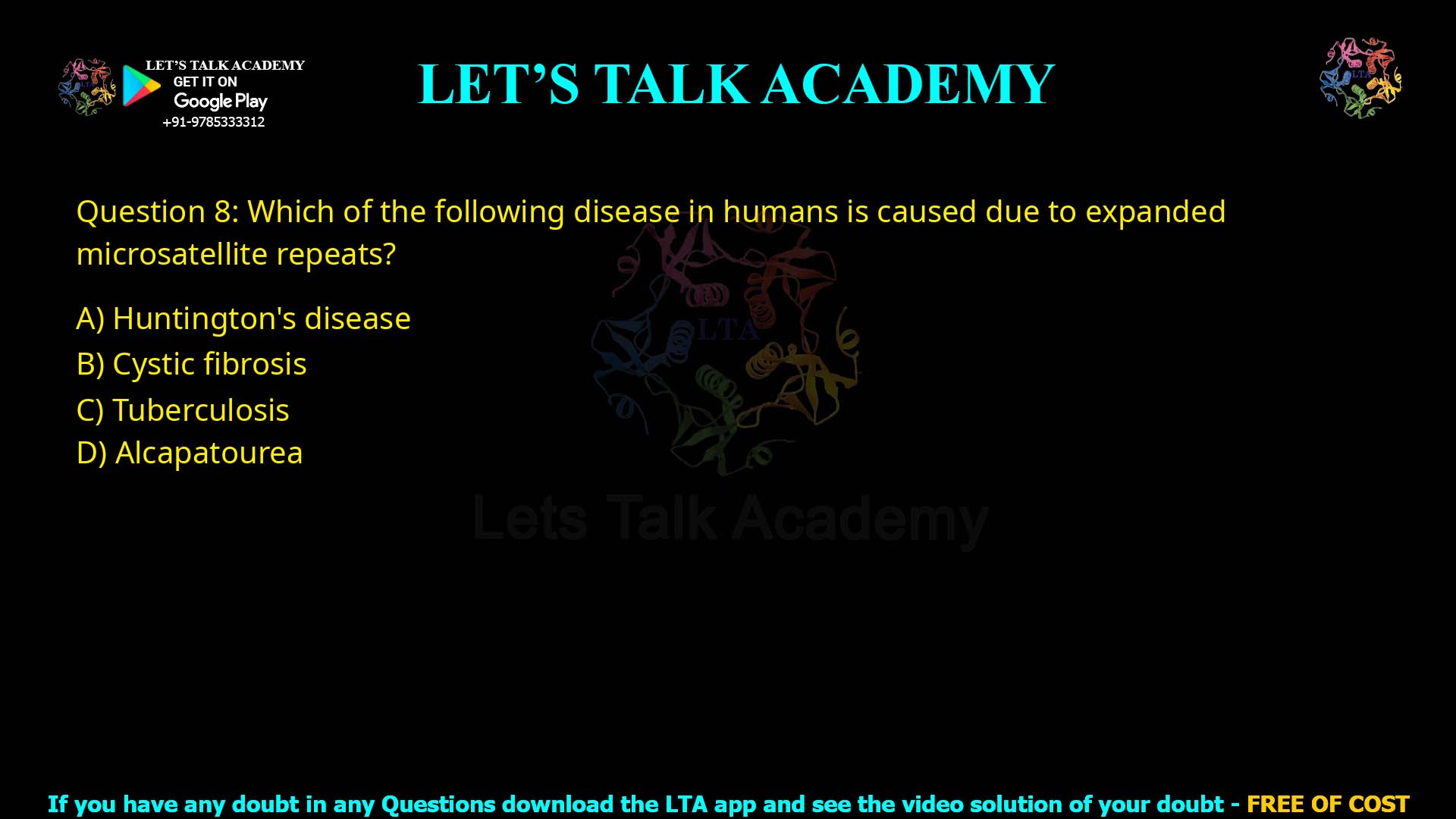
Q8.Which of the following disease in humans is caused due to expanded microsatellite repeats? (A) Huntington’s disease(B) Cystic fibrosis(C) Tuberculosis(D) Alcaptonurea Huntington’s disease (A) is caused by expanded microsatellite repeats, […]
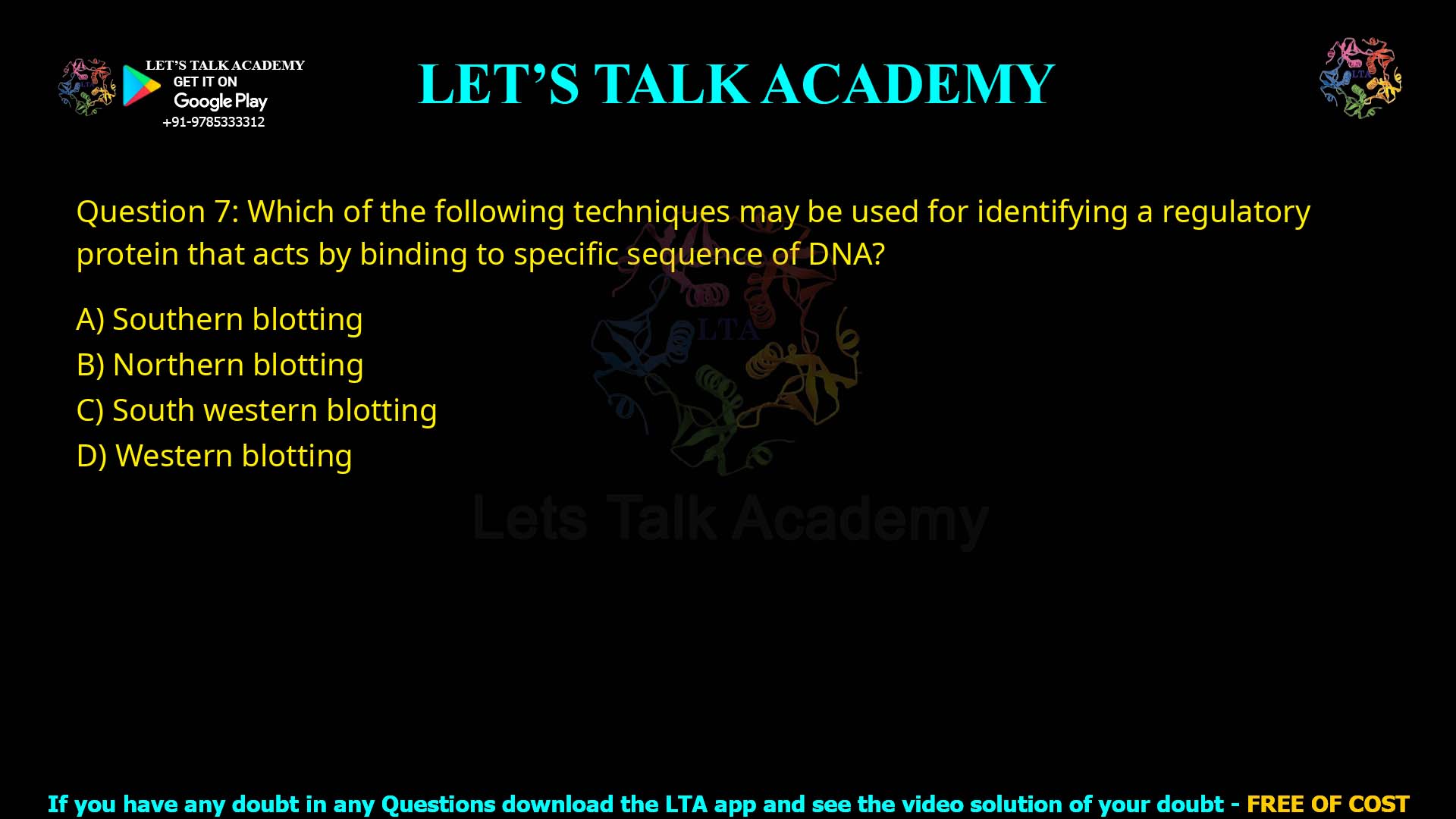
Q7.Which of the following techniques may be used for identifying a regulatory protein that acts by binding to specific sequence of DNA? (A) Southern blotting(B) Northern blotting(C) South western blotting(D) […]
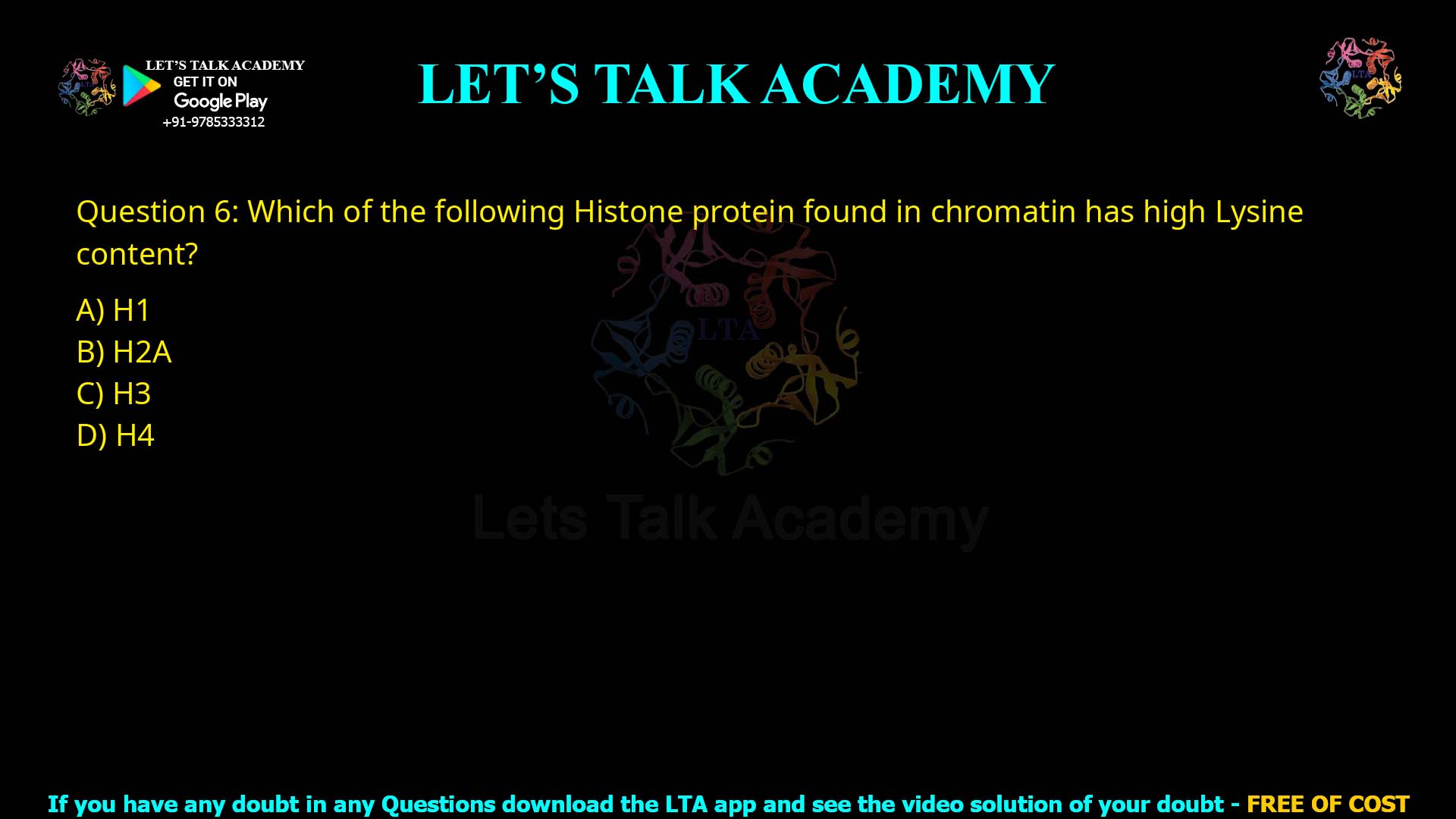
Q6.Which of the following Histone protein found in chromatin has high Lysine content? (A) H1(B) H2A(C) H3(D) H4 Answer: (A) H1 Histone H1, the linker histone, has the highest lysine […]
Q5.The microscope that converts slight difference in the refractive index and cell density into easily observed difference in the light intensity is known as- (A) Phase contrast microscope(B) Bright field […]
Q4.The pH at which net charge of protein becomes zero under an electrical field at room temperature is known as: (A) Isoelectric potential(B) Isothermal point(C) Isomeric point(D) Isoelectric point Answer: […]
Q3.The most common initial step to separate water soluble proteins from insoluble cellular material is- (A) Electroporation(B) Differential centrifugation(C) Density-gradient centrifugation(D) Western blotting Answer: (B) Differential centrifugation Differential centrifugation is […]
Q2.A specific protein required for infecting a host by corona virus is known as: (A) Receptor protein(B) PDE(C) Spike protein(D) Polymerase basic 2 Answer: (C) Spike protein The spike protein […]
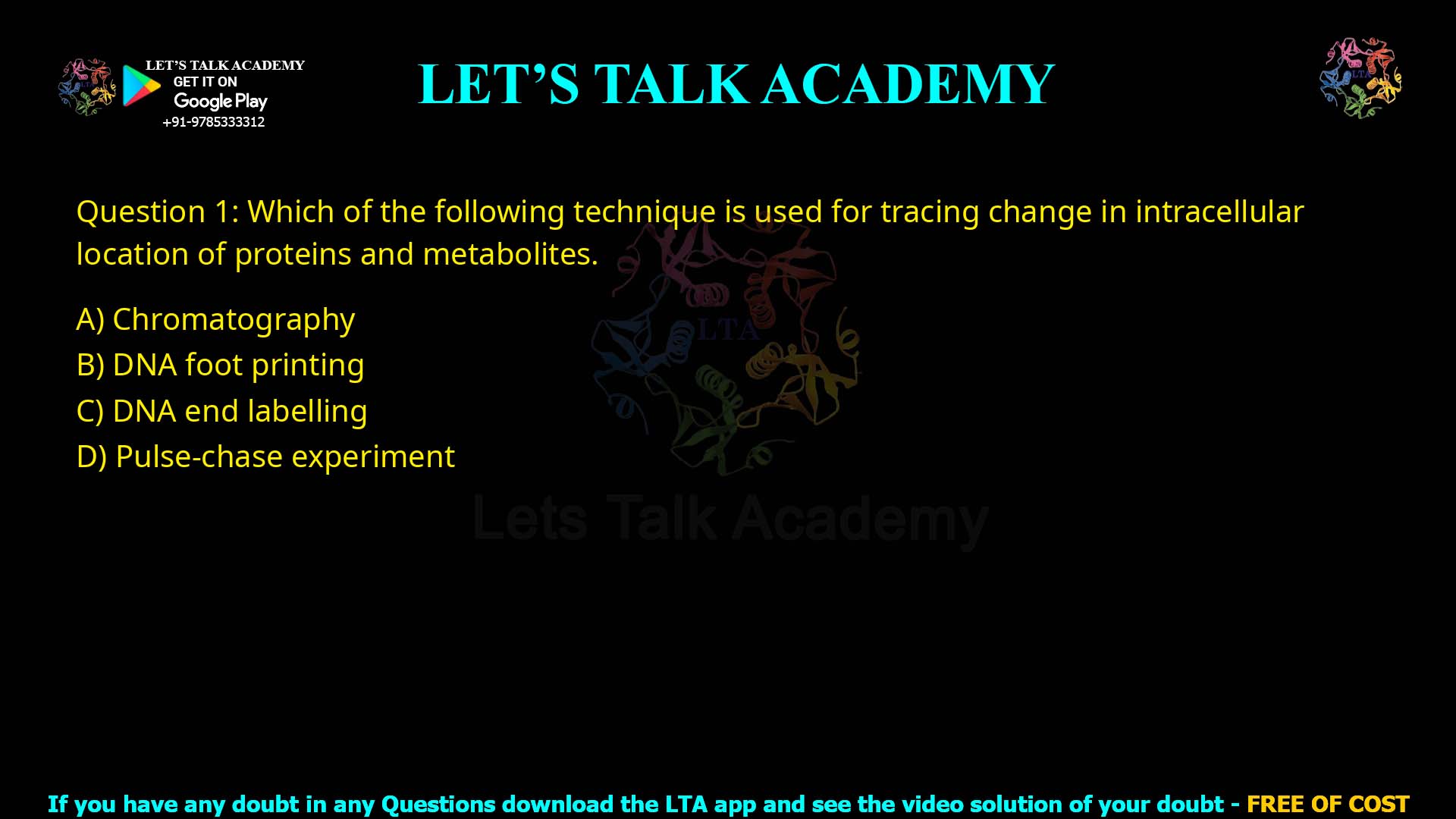
Q1.Which of the following technique is used for tracing change in intracellular location of proteins and metabolites. (A) Chromatography(B) DNA foot printing(C) DNA end labelling(D) Pulse-chase experiment Answer: (D) Pulse-chase […]


