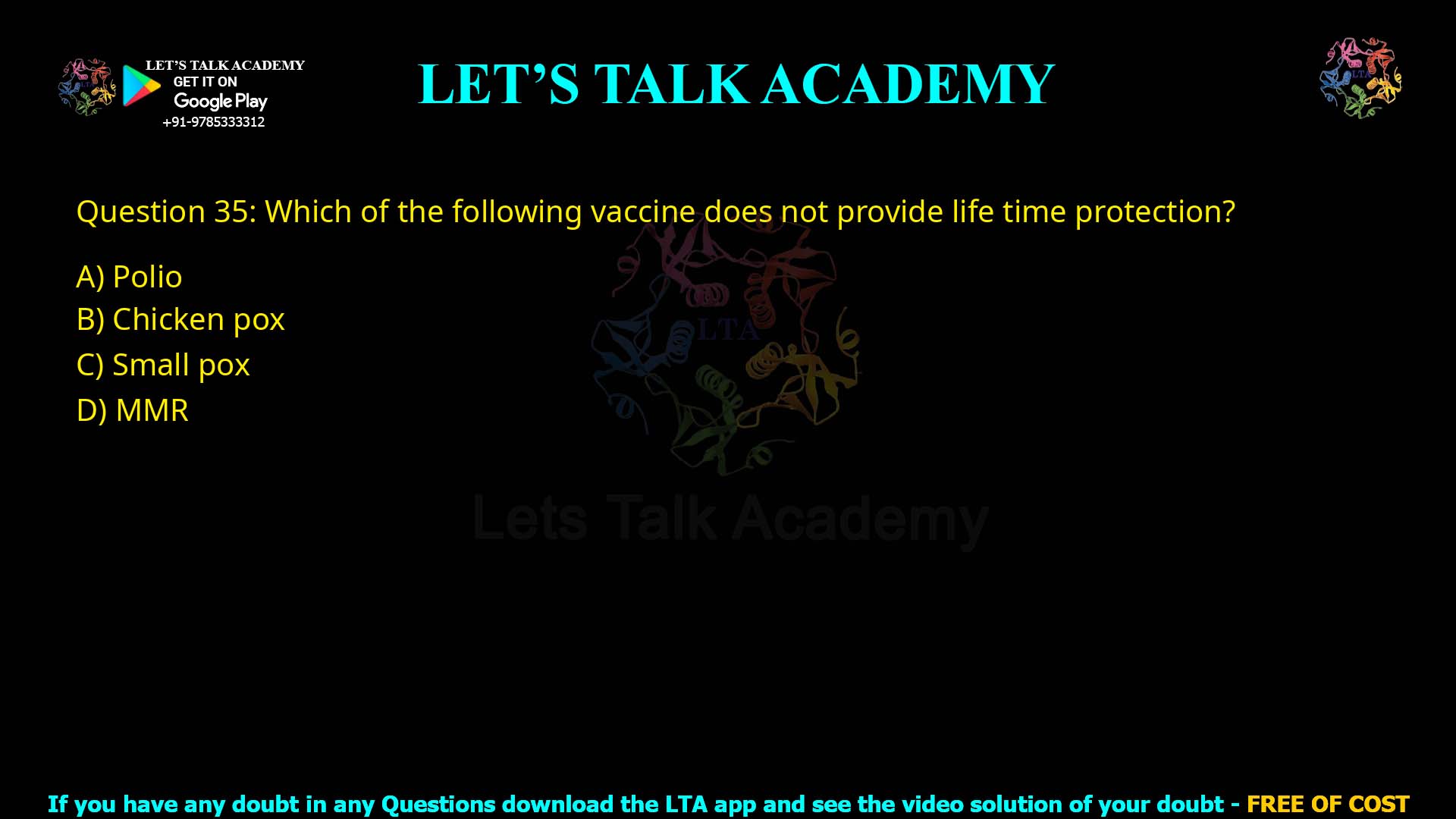
Q35.Which of the following vaccine does not provide life time protection?
(A) Polio
(B) Chicken pox
(C) Small pox
(D) MMR
The correct answer is (B) Chicken pox. The varicella (chickenpox) vaccine provides long-term but not guaranteed lifetime protection, often requiring boosters, unlike the others which confer lifelong immunity after full dosing.
Option Explanations
-
(A) Polio: The inactivated polio vaccine (IPV) offers lifelong protection after the primary series; boosters are only for high-risk adults. No routine lifetime boosters needed.
-
(B) Chicken pox: Varicella vaccine protection wanes over 10-20 years; breakthrough infections occur, and CDC recommends boosters during outbreaks or for high-risk groups.
-
(C) Small pox: The vaccinia vaccine provided lifelong immunity, eradicating the disease globally; one dose typically lasted decades with no boosters required.
-
(D) MMR: Two doses give lifetime protection against measles and rubella; mumps immunity may slightly wane but generally lifelong without routine boosters.
Vaccine lifetime protection chicken pox reveals varicella shots don’t last forever, unlike smallpox or MMR, impacting booster schedules and herd immunity.
Immunity Duration Breakdown
Chickenpox vaccine antibodies persist 10-20 years but wane, allowing mild breakthroughs; two doses reduce shingles risk but boosters advised in outbreaks. Polio and MMR leverage stable antigens for memory B-cells yielding decades-long coverage.
Vaccine Comparison Table
| Vaccine | Lifetime Protection? | Booster Need | Key Reason |
|---|---|---|---|
| Polio | Yes | Rare (high-risk only) | Stable poliovirus antigens |
| Chicken pox | No | Often (10-20 yrs) | Waning antibodies |
| Small pox | Yes | None | Eradicated; durable immunity |
| MMR | Yes (2 doses) | Rare (mumps outbreaks) | Strong T/B cell memory |


