25. Which one of the following is true for cells harbouring F+ plasmid? (1) Their F plasmid is non-functional. (2) They exhibit increased rates of transfer of all chromosomal genes. […]
No posts found.
25. Which one of the following is true for cells harbouring F+ plasmid? (1) Their F plasmid is non-functional. (2) They exhibit increased rates of transfer of all chromosomal genes. […]
24. Which one of the following is correct statement about the difference between a F+ cell and Hfr cell? (1) In F+ cell F factor is an integral part of […]
23. Conjugation involves transfer of DNA from one cell to another. In E. coli, the cells that cannot transfer their DNA into the recipient cell are (1) Hfr (2) F’ […]
22. In E. coli gal+ and bio+ genes are located very near to each other on genome. A bacterium with F’ gal+ on conjugation with F– can lead to diploid […]
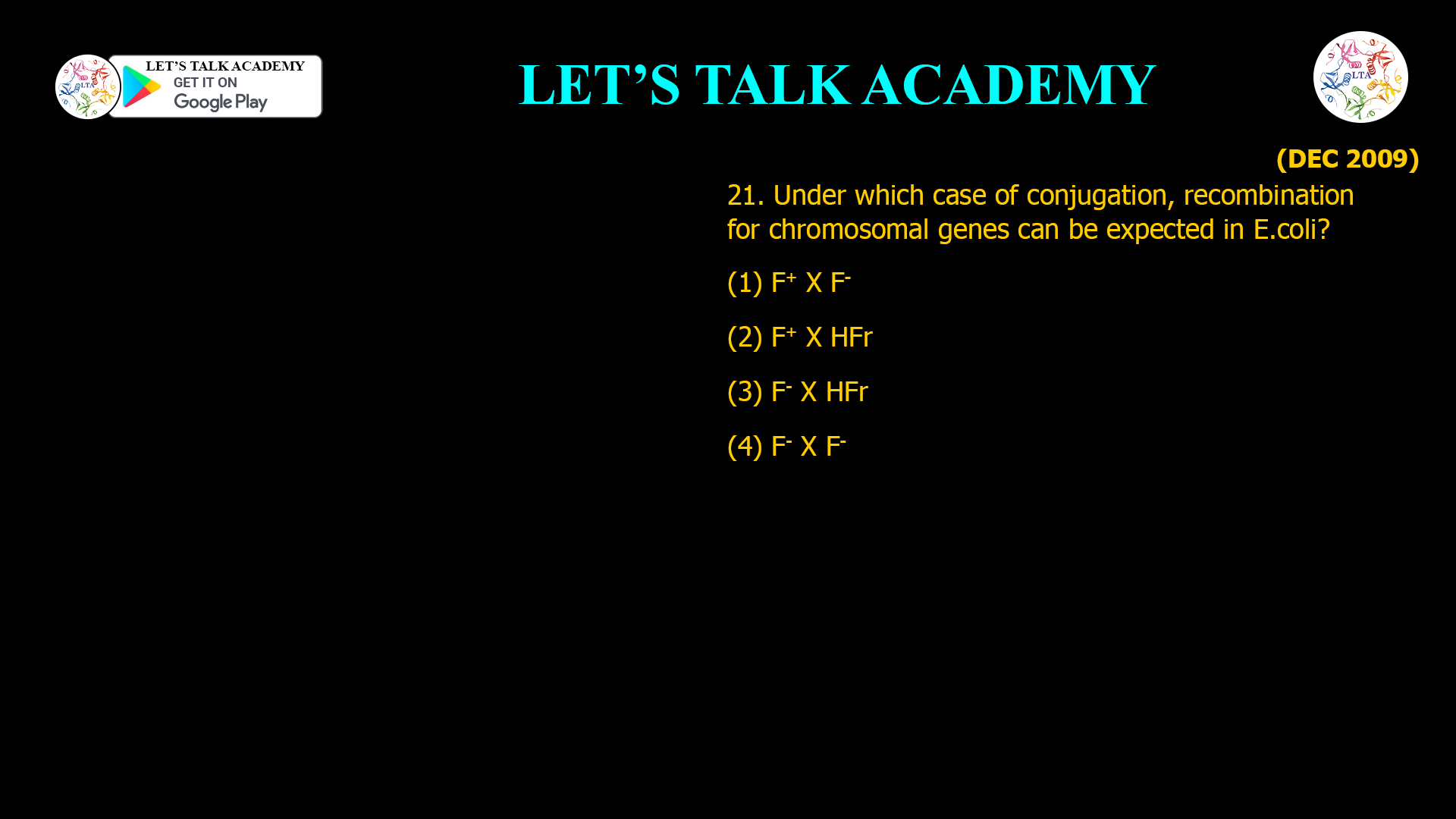
21. Under which case of conjugation, recombination for chromosomal genes can be expected in E.coli? (1) F+ X F– (2) F+ X HFr (3) F– X HFr (4) F– X […]
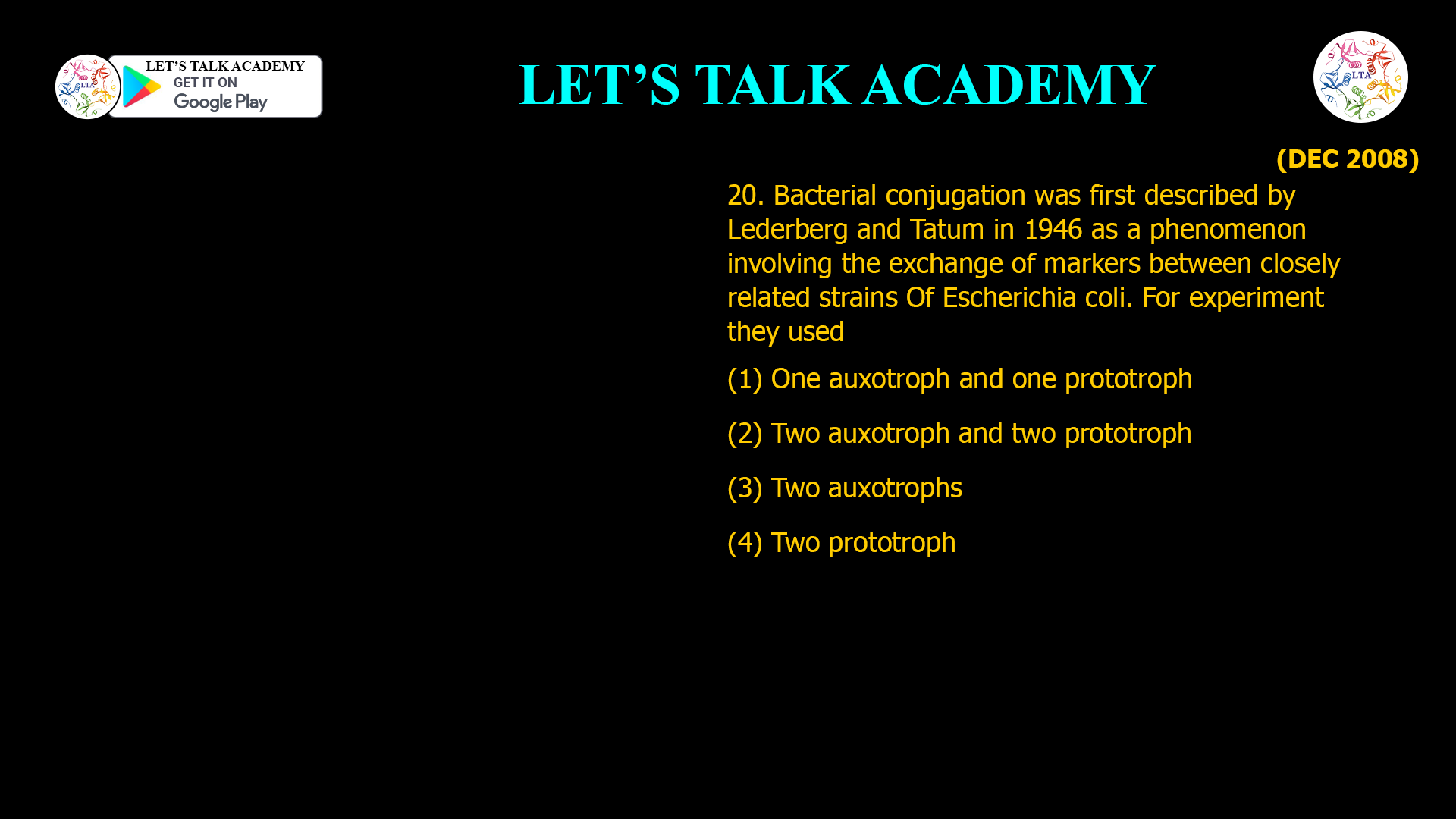
20. Bacterial conjugation was first described by Lederberg and Tatum in 1946 as a phenomenon involving the exchange of markers between closely related strains Of Escherichia coli. For experiment they […]
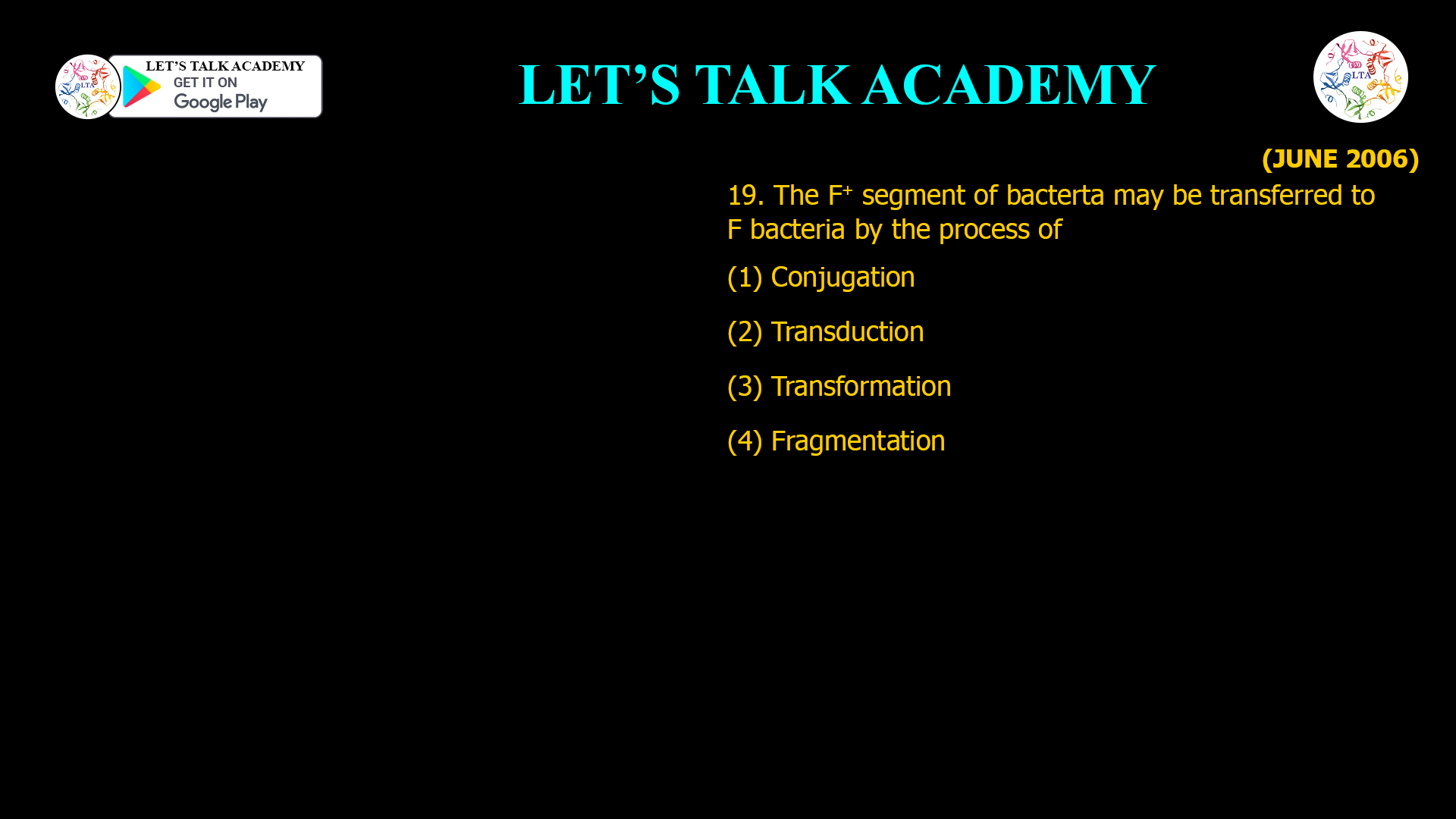
19. The F+ segment of bacterta may be transferred to F bacteria by the process of (1) Conjugation (2) Transduction (3) Transformation (4) Fragmentation The correct answer is (1) Conjugation, […]
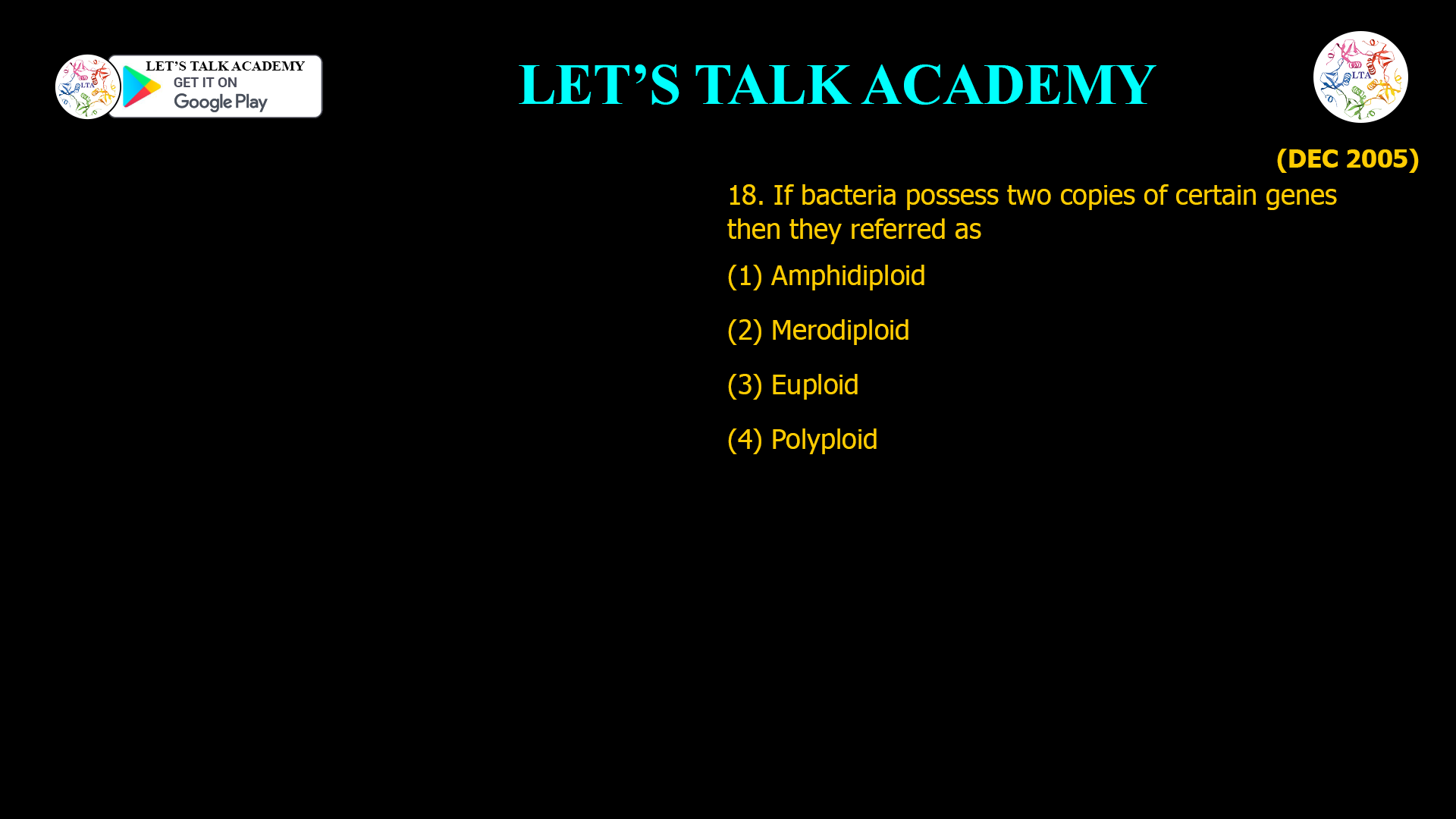
18. If bacteria possess two copies of certain genes then they referred as (1) Amphidiploid (2) Merodiploid (3) Euploid (4) Polyploid The correct answer for the question “If bacteria possess […]
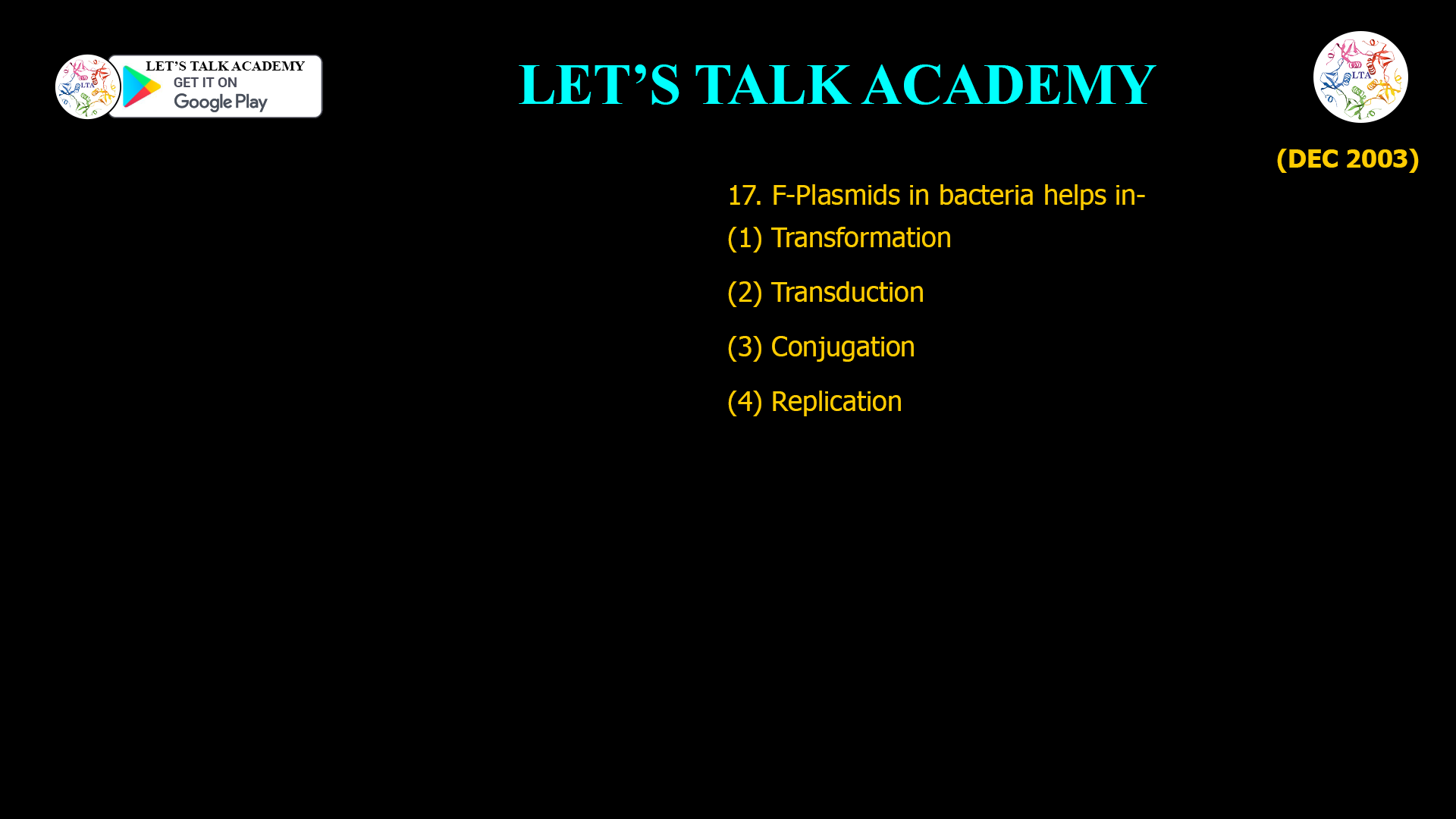
17. F-Plasmids in bacteria helps in- (1) Transformation (2) Transduction (3) Conjugation (4) Replication F-plasmids in bacteria primarily facilitate conjugation, making option (3) the correct answer. This conjugative plasmid, also […]
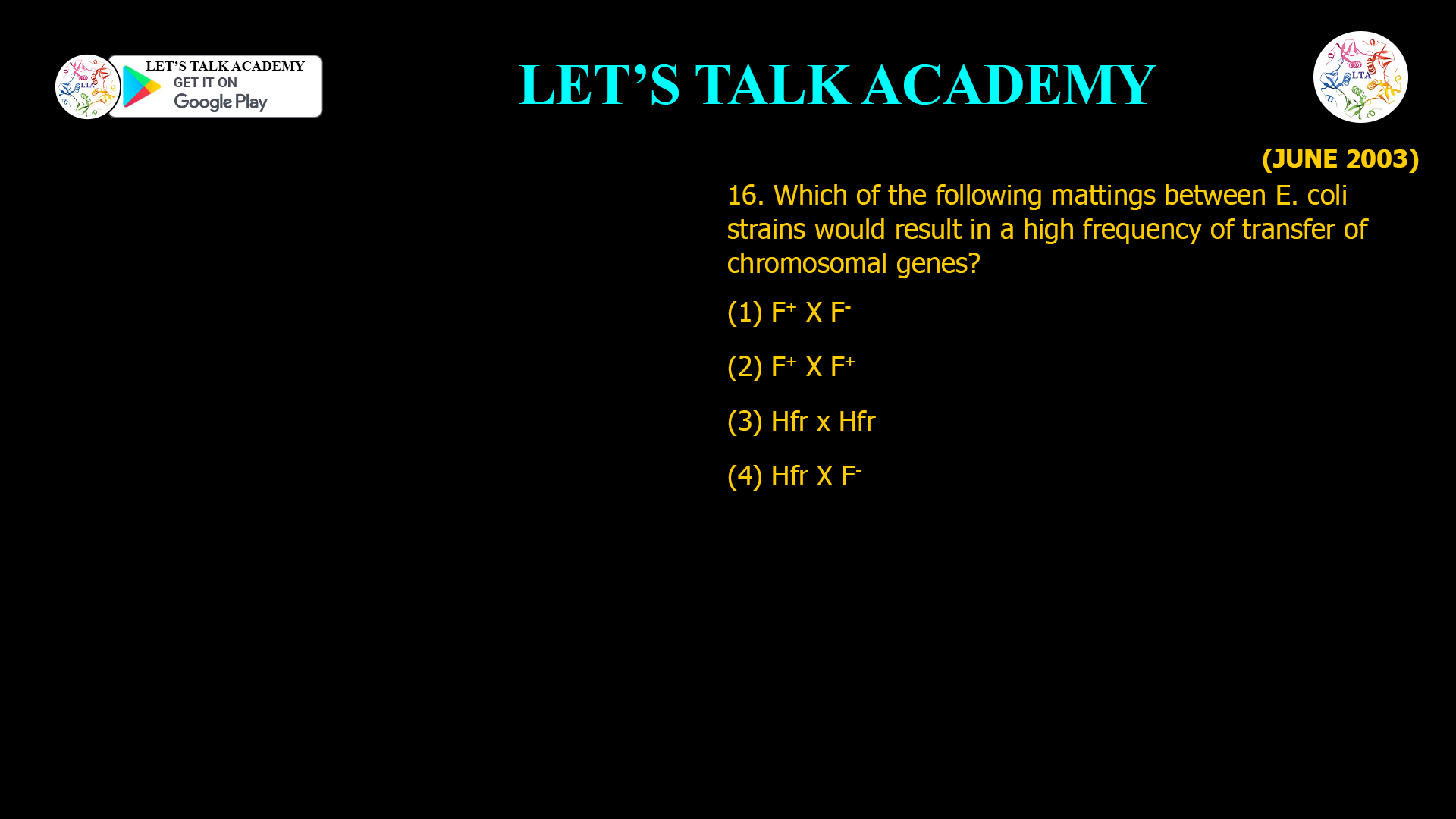
16. Which of the following mattings between E. coli strains would result in a high frequency of transfer of chromosomal genes? (1) F+ X F– (2) F+ X F+ (3) […]


