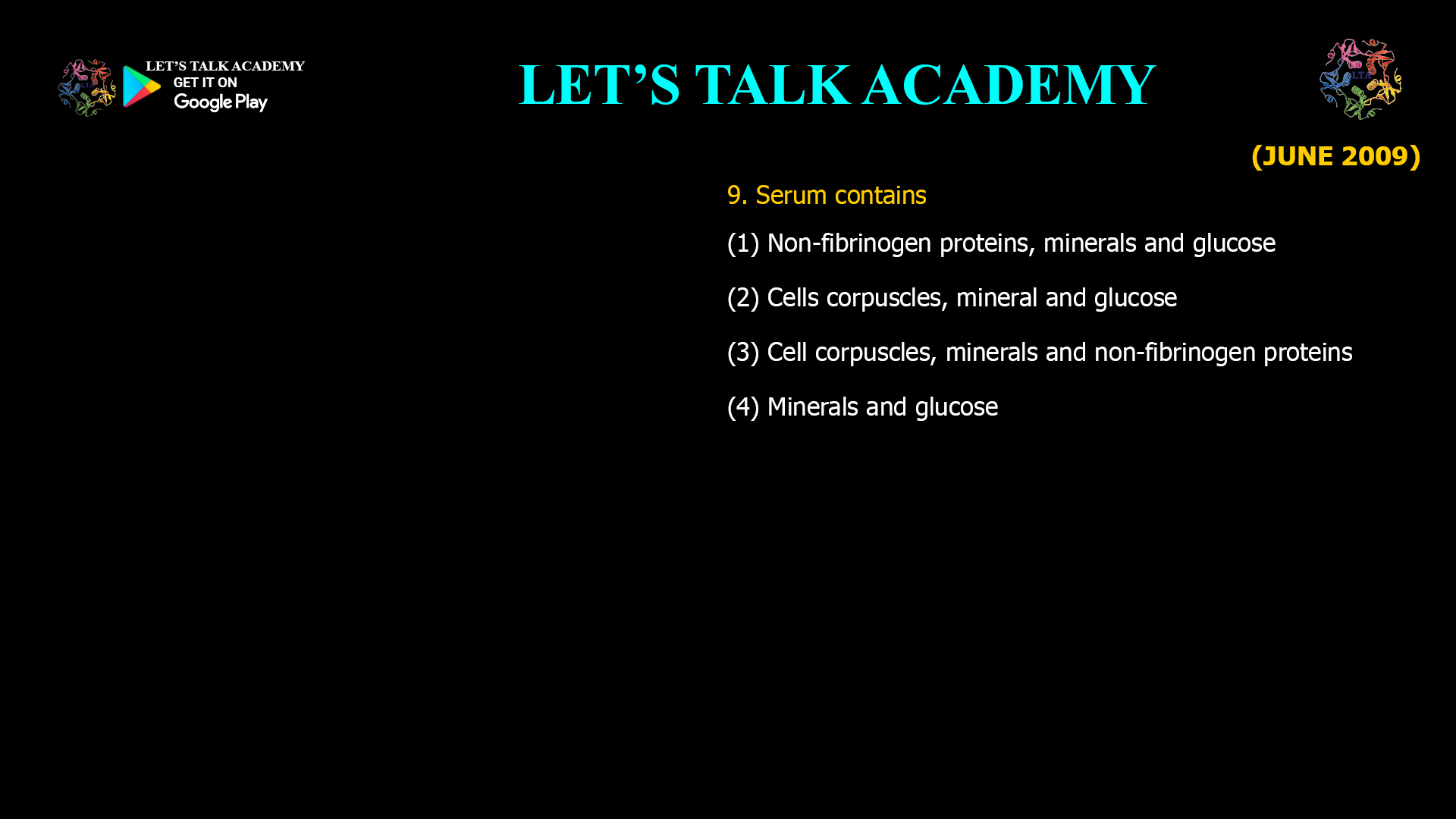
- Serum contains
(1) Non-fibrinogen proteins, minerals and glucose
(2) Cells corpuscles, mineral and glucose
(3) Cell corpuscles, minerals and non-fibrinogen proteins
(4) Minerals and glucose
Introduction
Serum is a vital component of blood, often studied in medical diagnostics to understand various physiological and pathological conditions. It is the fluid that remains after blood has clotted and the clotting factors have been removed. Serum differs from plasma primarily by the absence of fibrinogen, a key protein required for blood clotting. This article explains what serum contains, highlighting the correct components and debunking common misconceptions.
What Is Blood Serum?
Blood serum is the clear, yellowish fluid that separates from clotted blood. It contains various substances crucial for body function, including proteins, minerals, glucose, antibodies, hormones, and metabolic waste products. When blood clots, the fibrinogen converts to fibrin, forming a clot, and is thus absent from serum.
Components of Serum
-
Non-fibrinogen Proteins: Serum is rich in proteins such as albumin, which maintains osmotic pressure and transports fatty acids and hormones, and globulins, which include antibodies vital for immune defense. Unlike plasma, serum lacks fibrinogen because it is consumed during clot formation.
-
Minerals: Serum contains essential electrolytes and minerals like sodium, potassium, calcium, chloride, and phosphate. These minerals regulate fluid balance and are crucial for nerve transmission, muscle function, and cellular metabolism.
-
Glucose: As the primary energy source for cells, glucose circulates freely in serum and is tightly regulated by hormones like insulin and glucagon.
-
Other Substances: Serum may also contain hormones, vitamins, waste metabolites such as urea and creatinine, and other small molecules.
What Serum Does Not Contain
-
Cell Corpuscles: Serum does not contain cells or cellular components such as red blood cells, white blood cells, or platelets. These are separated out during centrifugation of blood samples or trapped within the clot when serum is separated.
-
Fibrinogen: As part of the clotting process, fibrinogen is used up and thus absent in serum.
Why Knowing Serum Composition Matters
Understanding serum composition is critical in clinical diagnostics:
-
Blood Tests: Many lab tests analyze serum to measure glucose levels, electrolytes, hormone levels, liver and kidney function tests, and antibodies for infections and autoimmune diseases.
-
Immune Function: Serum contains immunoglobulins (antibodies) which are essential markers of immune response.
-
Metabolic Monitoring: Serum glucose and mineral levels are tightly regulated and reflect metabolic health.
Correct Option for Serum Composition
Among the given choices:
(1) Non-fibrinogen proteins, minerals, and glucose — This is the accurate description of serum’s composition.
(2) Cells corpuscles, mineral and glucose — Incorrect; serum lacks cells.
(3) Cell corpuscles, minerals and non-fibrinogen proteins — Incorrect for same reason; no cells in serum.
(4) Minerals and glucose — Incomplete, serum also contains proteins.


11 Comments
Meera Gurjar
September 1, 2025Non fibrinogen protein, mineral nd glucose
Varsha Tatla
September 16, 2025Blood =plasma+ blood cells
|
Blood -blood cells= plasma
|
Plasma (clotting factor, Vita. ,Enz. Proteins, AA, lipid , inorganic substance ions etc )
|
Plasma -clotting factor (fac 7& fibrin)=serum
|
Serum (minerals ions glucose,non fibrinogen )
Kirti Agarwal
September 17, 2025Opt 3
Mahima Sharma
September 17, 2025Non fibrinogen protein minerals glucose
Kavita Choudhary
September 17, 2025Serum contain non fibrinogen protein mineral and glucose
Kajal
September 17, 2025Option 1 is correct as serum contains non fibrinogen protein, mineral and glucose and serum does not contain cells
Aakansha sharma Sharma
September 17, 2025Non fibrinogen protein, mineral nd glucose
Muskan singodiya
September 18, 2025Non fibrinogen protein, mineral and glucose
Bhawna Choudhary
September 19, 2025Serum contain=Non-fibrinogen proteins, minerals, and glucose
priti khandal
September 23, 2025non fibrogen protein mineral and glucose
Divya rani
December 2, 2025Serum…..non fibrinogen protein, minerals , glucose, other substances (hormones, vitamins, etc).