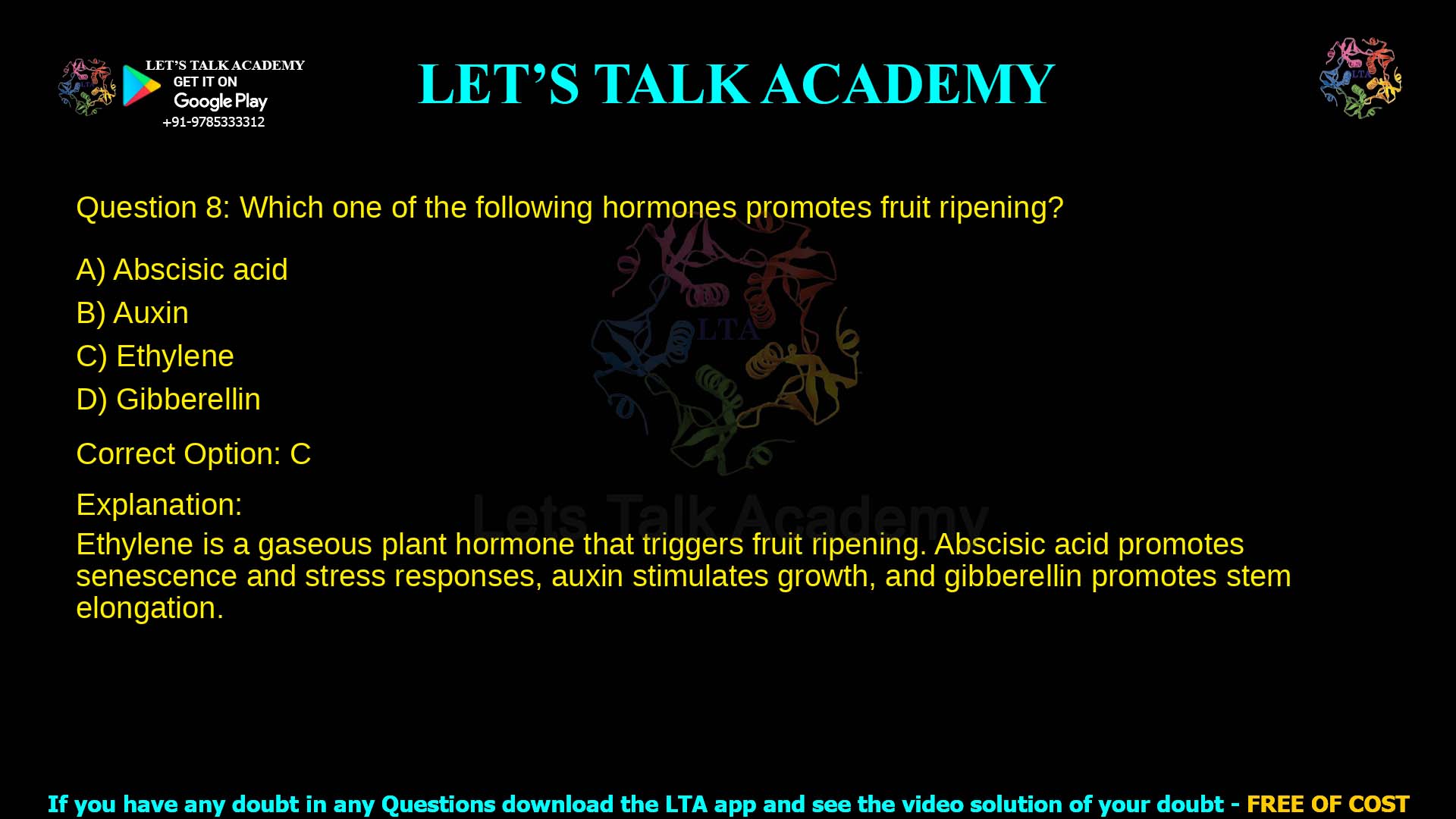
Q.8 Which one of the following hormones promotes fruit ripening?
(A) Abscisic acid
(B) Auxin
(C) Ethylene
(D) Gibberellin
Ethylene is the plant hormone that promotes fruit ripening, making it the correct answer for this CSIR NET Life Sciences question. This gaseous hormone triggers key changes like softening, color development, and sugar accumulation in climacteric fruits such as tomatoes and bananas.
Option Analysis
-
(A) Abscisic acid: Primarily regulates stress responses, seed dormancy, and stomatal closure; it influences ripening in non-climacteric fruits like strawberries but does not primarily promote fruit ripening.
-
(B) Auxin: Controls cell elongation, fruit growth, and initiation; high levels often delay ripening by inhibiting ethylene production, though effects vary by fruit type.
-
(C) Ethylene: Correct choice; acts as the “ripening hormone” in climacteric fruits, inducing autocatalytic production that accelerates respiration, cell wall breakdown, and flavor development.
-
(D) Gibberellin: Promotes stem elongation and seed germination; typically delays fruit ripening and softening by antagonizing ethylene and modulating auxin signaling.
Ethylene stands out as the key hormone that promotes fruit ripening, especially in exams like CSIR NET Life Sciences where plant physiology questions test precise hormone functions. This gaseous phytohormone coordinates the climacteric rise in respiration, transforming hard, green fruits into soft, flavorful ones through enzymatic breakdown of cell walls and starch-to-sugar conversion.
Roles of Other Plant Hormones
While ethylene drives ripening, other hormones interact in complex crosstalk:
-
Abscisic acid (ABA) accumulates in non-climacteric fruits, aiding color and sugar changes but mainly handles stress and dormancy.
-
Auxin supports early fruit growth but delays ripening by repressing ethylene biosynthesis in many species.
-
Gibberellin extends fruit shelf life by inhibiting softening and ethylene effects, often via auxin pathways.
| Hormone | Primary Ripening Role | Fruit Examples | CSIR NET Relevance |
|---|---|---|---|
| Ethylene | Promotes (climacteric) | Tomato, banana, apple | High-yield MCQ topic |
| Abscisic acid | Supports (non-climacteric) | Strawberry, grape | Stress-ripening link |
| Auxin | Delays/inhibits | Tomato, peach | Growth vs. ripening balance |
| Gibberellin | Delays | Tomato, kiwifruit | Antagonistic to ethylene |
Ethylene Mechanism in Depth
Ethylene binds receptors like ETR1, de-repressing transcription factors (e.g., ERFs, RIN) that upregulate ripening genes for pectinases, amylases, and pigment synthesis. In CSIR NET contexts, recall its autocatalytic nature: initial traces boost production, vital for post-harvest ripening. Inhibitors like 1-MCP block this for storage, while calcium carbide mimics it artificially (banned in many regions).


1 Comment
Vanshika Sharma
December 30, 2025ethylene is gas hormone which promotes fruit ripening