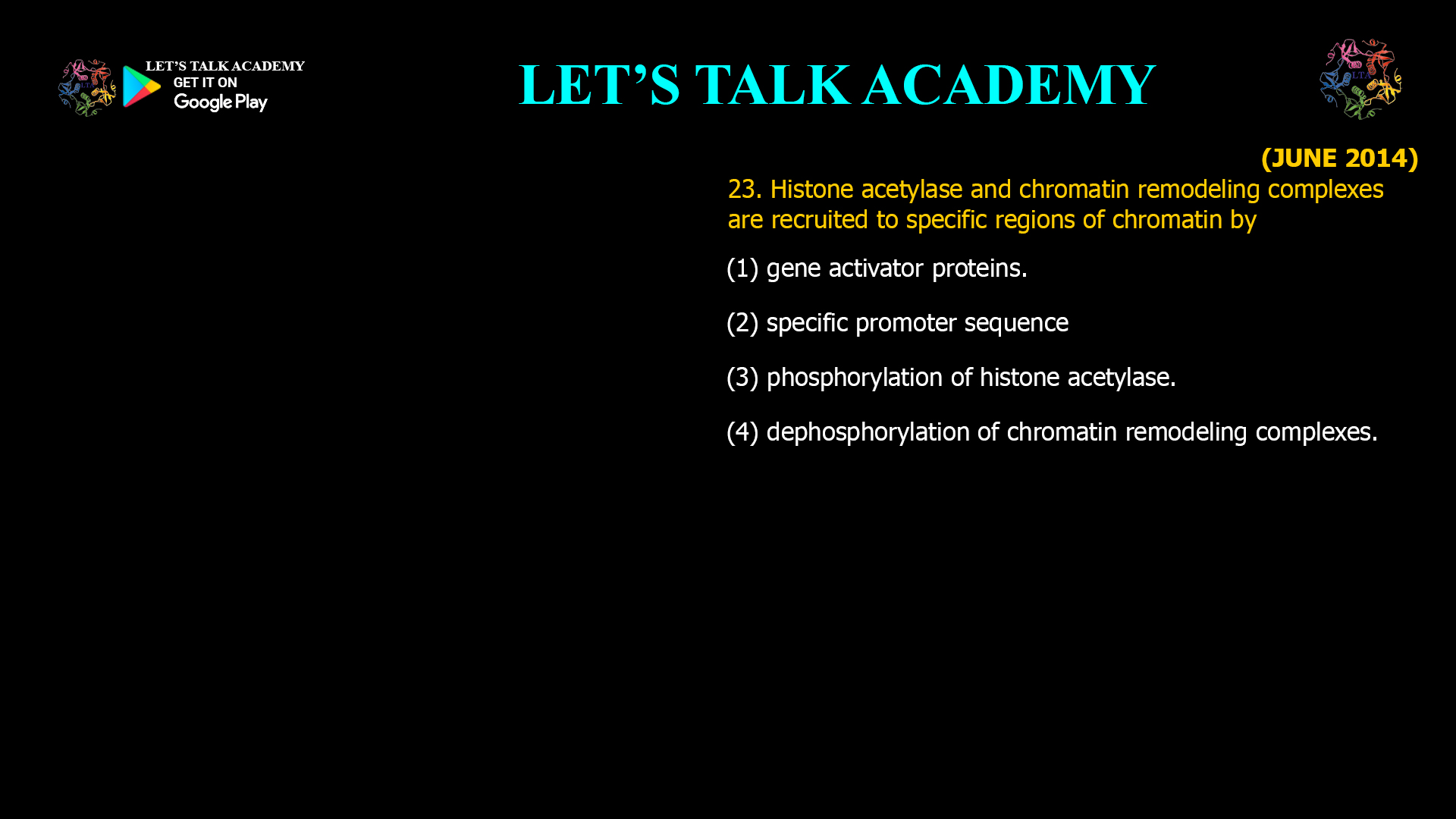
23. Histone acetylase and chromatin remodeling complexes are recruited to specific regions of chromatin by
(1) gene activator proteins.
(2) specific promoter sequence
(3) phosphorylation of histone acetylase.
(4) dephosphorylation of chromatin remodeling complexes.
Introduction
Transcriptional activation in eukaryotic cells requires dynamic changes in chromatin structure. Histone acetyltransferases (HATs) and ATP-dependent chromatin remodeling complexes modify chromatin to enable gene expression. But how are these complexes specifically targeted to certain genomic regions? The answer lies in gene activator proteins, which recruit these modifiers to precise DNA sites.
Role of Gene Activator Proteins in Recruitment
Gene activator proteins, or transcription factors, bind to specific DNA sequences in promoters or enhancers. Upon binding, they serve as platforms to recruit co-activators such as HATs and chromatin remodeling complexes.
-
HATs acetylate lysine residues on histone tails, reducing nucleosome-DNA affinity and opening chromatin.
-
Chromatin remodeling complexes reposition or evict nucleosomes, further enhancing DNA accessibility.
This recruitment is essential for initiating transcription and is a key step in gene regulation.
Supporting Mechanisms
-
Bromodomains in HATs recognize acetylated histones, helping maintain active chromatin states.
-
Remodeling complexes like SWI/SNF are recruited through interactions with activators and modified histones.
-
Post-translational modifications regulate activity but do not primarily direct recruitment.
Conclusion
Gene activator proteins are the primary determinants for recruiting histone acetyltransferases and chromatin remodeling complexes to specific chromatin regions. This targeted recruitment orchestrates chromatin changes necessary for transcriptional activation.
Answer:
(1) gene activator proteins


