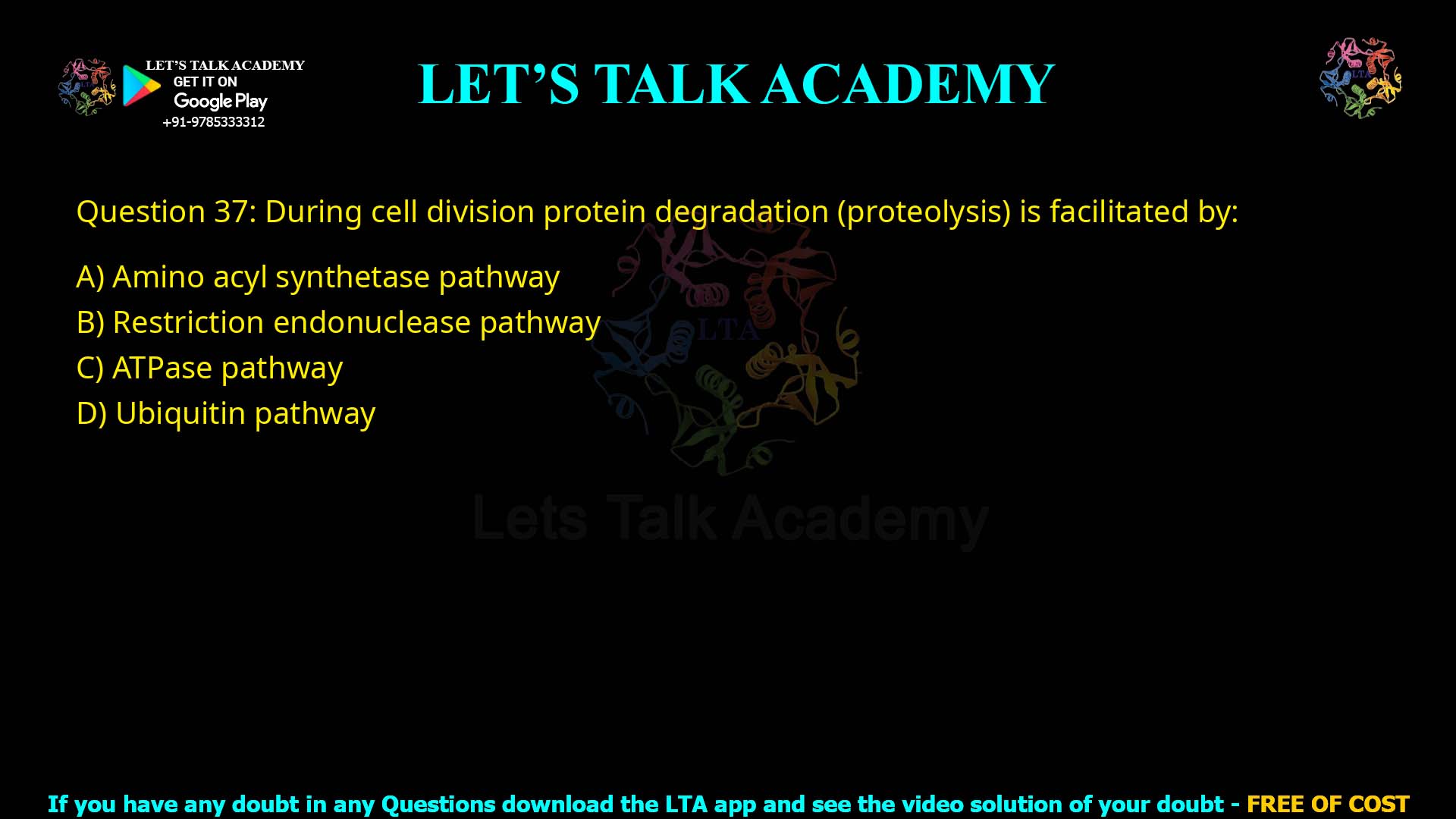
Q.37 During cell division protein degradation (proteolysis) is facilitated by:
1. Amino acyl synthetase pathway
2. Restriction endonuclease pathway
3. ATPase pathway
4. Ubiquitin pathway
Cell Division Proteolysis: Ubiquitin Pathway Role Explained
During cell division, targeted protein degradation via the ubiquitin-proteasome system regulates cyclin levels and checkpoints. The correct answer is option 4: Ubiquitin pathway.
Correct Answer
Option 4: Ubiquitin pathway.
The ubiquitin-proteasome system tags proteins like cyclins with polyubiquitin chains via E1-E2-E3 enzymes, targeting them for 26S proteasome degradation. Essential for mitotic exit by destroying cyclin B and securin.
Option Analysis
Option 1: Amino Acyl Synthetase Pathway
Aminoacyl-tRNA synthetases charge tRNAs for protein synthesis, not degradation. They activate amino acids for translation, unrelated to proteolysis.
Option 2: Restriction Endonuclease Pathway
Restriction endonucleases cleave foreign DNA in bacteria for defense. They have no role in eukaryotic protein degradation during cell division.
Option 3: ATPase Pathway
ATPases hydrolyze ATP for energy or transport (e.g., 19S proteasome cap uses ATP for unfolding). Not a specific proteolysis pathway; ubiquitin drives selectivity.
Option 4: Ubiquitin Pathway (Correct)
APC/C E3 ligase ubiquitinates cell cycle regulators during mitosis, enabling precise timing of degradation for anaphase and cytokinesis.
| Option | Pathway | Facilitates Proteolysis? | Reason |
|---|---|---|---|
| 1 | Amino acyl synthetase | No | Protein synthesis |
| 2 | Restriction endonuclease | No | DNA cleavage |
| 3 | ATPase | No | Energy provision |
| 4 | Ubiquitin | Yes | Targets cyclins |
Exam Relevance
Ubiquitin questions test cell cycle regulation; APC/C specificity distinguishes it from general proteolysis.


1 Comment
Ankita Pareek
April 21, 2026During cell division proteolysis takes place by ubiquitine pathway
Protein like cyclin and securin taged by polyubiquitine chain via e3 ligase and degrade by proteosome ubiquitine system