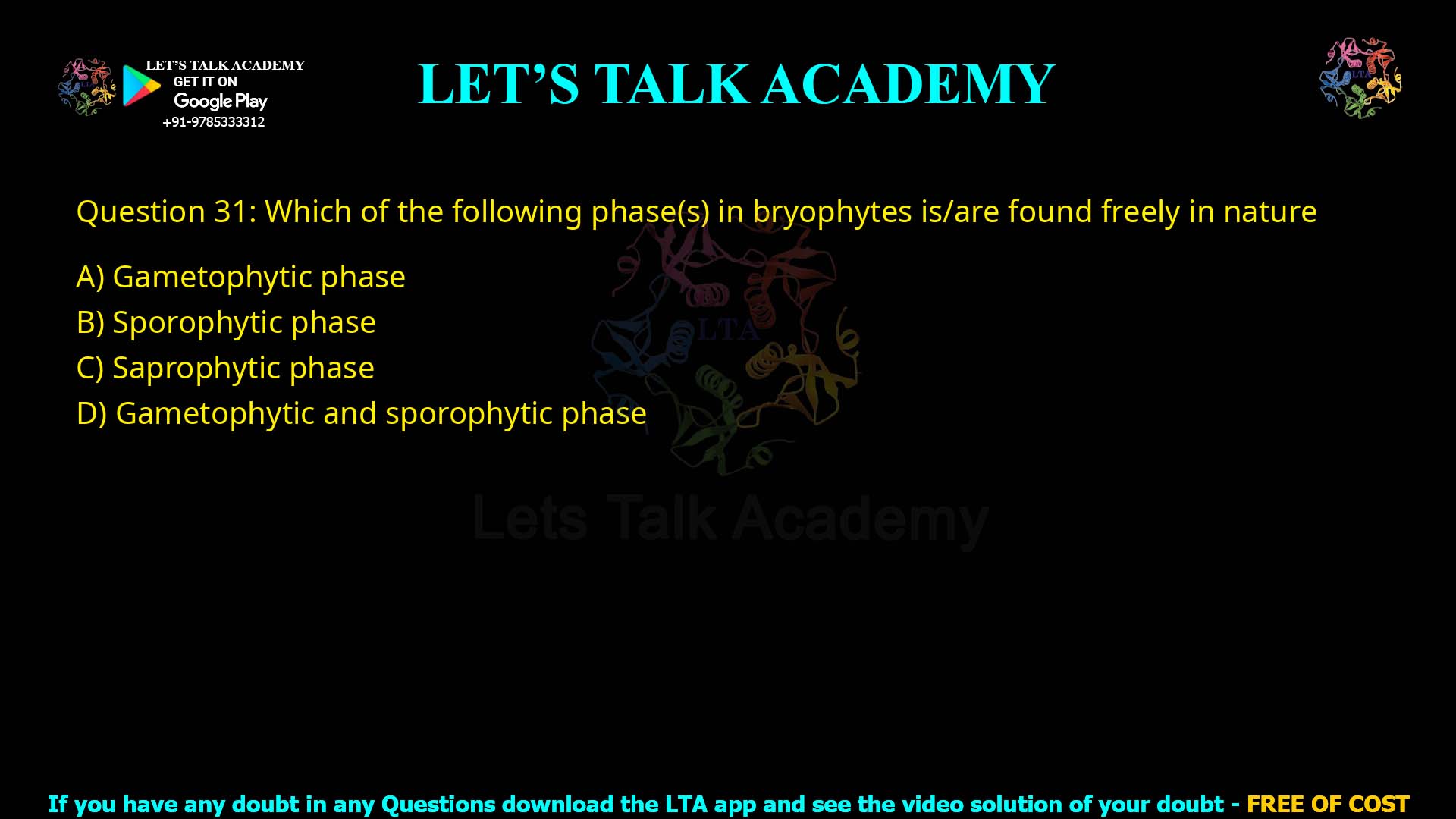
Q.31 Which of the following phase(s) in bryophytes is/are found freely in nature
(1)Gametophytic phase
(2)Sporophytic phase
(3)Saprophytic phase
(4)Gametophytic and sporophytic phase
In bryophytes, only the gametophytic phase is found freely in nature. The sporophytic phase is nutritionally dependent on the dominant, independent gametophyte, while gametophytes (moss/liverwort plants) grow freely as photosynthetic autotrophs.
Option Analysis
-
(1) Gametophytic phase: Correct—haploid (n), green leafy/thalloid body with rhizoids; dominant generation, photosynthesizes independently in moist habitats.
-
(2) Sporophytic phase: Wrong—diploid (2n), parasitic on gametophyte; consists of foot/seta/capsule for meiosis/spore dispersal, cannot survive independently.
-
(3) Saprophytic phase: Incorrect—bryophytes are autotrophs, not saprophytic (dead organic matter consumers).
-
(4) Gametophytic and sporophytic phase: Wrong—sporophyte never free-living; always attached/parasitic.
Answer: (1) Gametophytic phase.
Introduction to Bryophyte Life Cycle
In bryophytes, the phase found freely in nature is the gametophytic phase—the dominant, independent, haploid generation responsible for photosynthesis and sexual reproduction. The sporophyte remains attached as a dependent diploid phase for spore production.
Bryophyte Alternation of Generations
-
Gametophyte (n): Green leafy/thalloid plant body; free-living, autotrophic
-
Protonema → mature gametophyte → antheridia/archegonia
-
-
Sporophyte (2n): Parasitic on gametophyte
-
Foot absorbs nutrients → seta → capsule (meiosis → spores)
-
Why Sporophyte Isn’t Free-Living
Lacks stomata, vascular tissue, chlorophyll (in most); relies on gametophyte for water/minerals/photosynthate. Evolutionary relic of algal ancestors.
GATE Plant Diversity Strategy
Bryophytes: Gametophyte dominant + independent
Pteridophytes: Sporophyte dominant + independent
Tests life cycle dominance patterns critical for evolutionary botany scoring.


