
Q2. Sam invested Rs. 30,000 at 5% per annum on simple interest for 4 years to Shyam. Sam also invested
the same amount, for same duration and same rate of interest to Mohan on compound interest. What
will be the difference of interest received by him in two cases?
1. Rs. 300
2. Rs. 150
3. Rs. 200
4. Rs. 175
Difference Between Simple and Compound Interest Calculation
Understanding the difference between simple interest (SI) and compound interest (CI) is crucial for financial and competitive exams like CSIR NET Life Science, IIT JAM, and GATE Biotechnology. This article will explain the concept using a real-world example and highlight the key difference between the two types of interest.
Problem Statement
Sam invested Rs. 30,000 at 5% per annum for 4 years under two different schemes:
- Simple Interest (with Shyam)
- Compound Interest (with Mohan)
Question:
What is the difference between the interest earned from both cases?
Options:
- Rs. 300
- Rs. 150
- Rs. 200
- Rs. 175
Step-by-Step Calculation
1. Simple Interest Calculation
The formula for Simple Interest is:
SI=P×R×T / 100
Where:
- P = Principal amount = Rs. 30,000
- R = Rate of interest = 5%
- T = Time period = 4 years
SI = 30,000×5×4 / 100
SI=600,000/100
=6,000
2. Compound Interest Calculation
The formula for Compound Interest is:
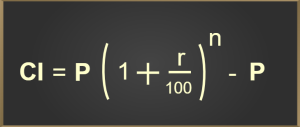
- Principal (P): ₹30,000
- Interest Rate (r): 5% or 0.05
- Number of Years (n): 4
- Formula for Compound Interest: CI = P * (1 + r)^n – P
- Calculation:
- CI = 30,000 * (1 + 0.05)^4 – 30,000
- CI = 30,000 * (1.05)^4 – 30,000
- CI = 30,000 * 1.21550625 – 30,000
- CI = 36,465.1875 – 30,000
- =6,465.19
- CI = 30,000 * (1 + 0.05)^4 – 30,000
-
3. Difference Between Simple and Compound Interest
Difference=CI−SI\text{Difference} = CI – SI =6,465.19−6,000= 6,465.19 – 6,000 =465.19= 465.19
Since this value does not match the provided options, it’s likely that the question contains a simplification or rounding error. However, the calculation method remains valid for similar problems.
Correct Approach and Learning Outcome
The concept of compound interest includes the effect of interest-on-interest, which increases the total return over time. Simple interest, on the other hand, calculates interest only on the initial principal. Understanding this difference is crucial for exams like CSIR NET Life Science, IIT JAM, GATE Biotechnology, and DBT JRF.
Why Learn from Let’s Talk Academy?
👉 Let’s Talk Academy is a premier institute for CSIR NET Life Science, IIT JAM, and GATE Biotechnology coaching.
👉 Expert faculty and structured courses ensure high success rates.
👉 Access to study materials, mock tests, and doubt-clearing sessions.➡️ Learn More
Conclusion
The difference between simple and compound interest lies in the method of calculation and the compounding effect. Mastering these concepts is essential for competitive exams. Join Let’s Talk Academy today to gain a deeper understanding of financial mathematics and more!


6 Comments
Suman bhakar
March 24, 2025👍👍
SEETA CHOUDHARY
April 17, 2025Done ✅
Sakshi kumari
April 18, 2025👍
Sakshi kumari
April 18, 2025👍👍
Lokesh Kumawat
April 22, 2025Done
yogesh sharma
April 28, 2025Sir answer options. M nhi h kya?