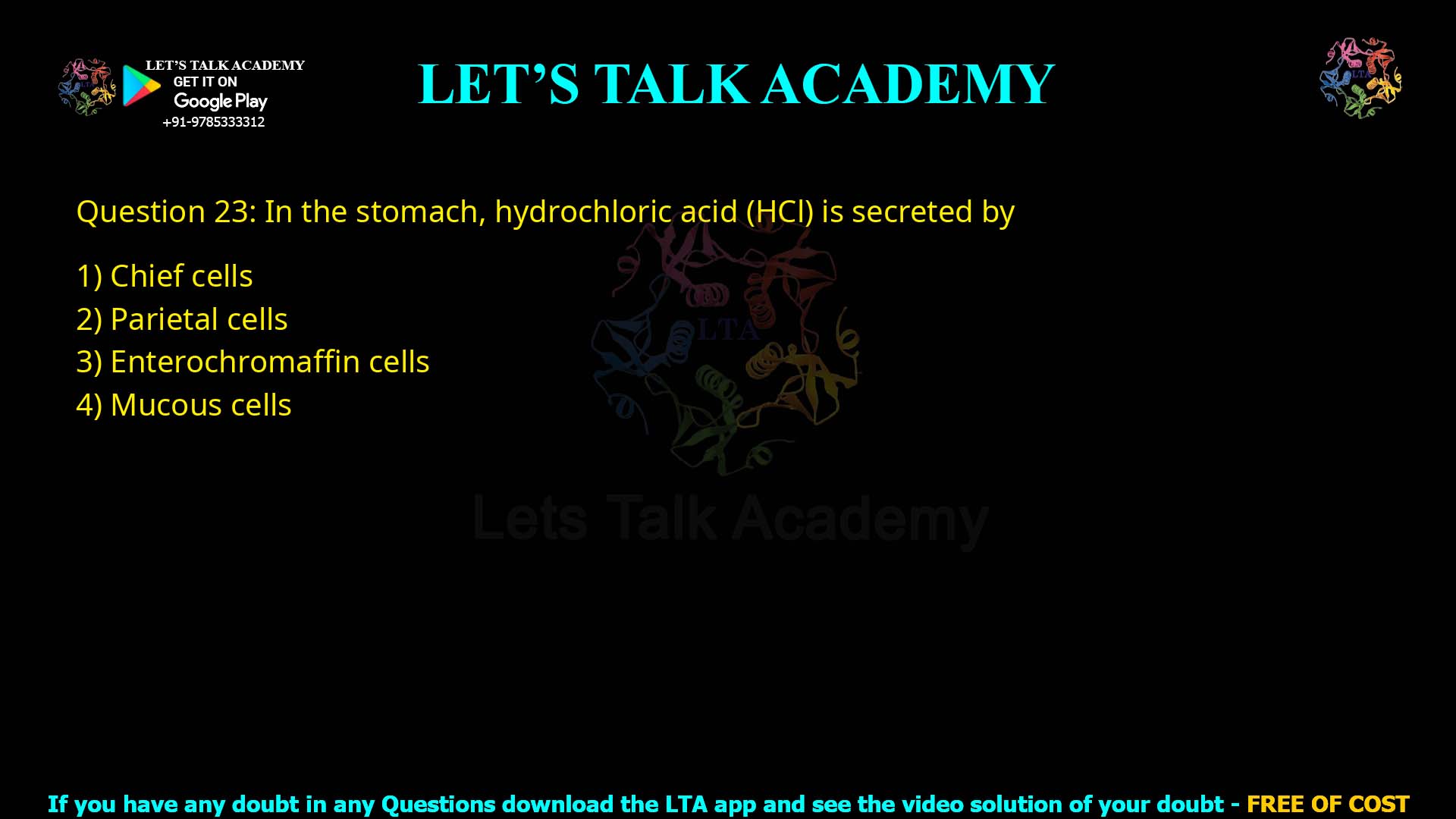
Q.23 In the stomach, hydrochloric acid (HCl) is secreted by
(1) Chief cells
(2) Parietal cells
(3) Enterochromaffin cells
(4) Mucous cells
HCl Secreted by Parietal Cells
Hydrochloric acid (HCl) in the stomach is secreted by parietal cells to create an acidic environment essential for digestion. The correct answer is option (2) Parietal cells.
Correct Answer
Parietal cells (Option 2). These cells, located in the gastric glands of the fundus and body, actively transport H+ ions into the stomach lumen via H+/K+ ATPase pumps while Cl- follows, generating HCl at pH 1-2 for pepsin activation and pathogen killing.
Option Explanations
Chief cells (Option 1)
Chief (peptic) cells secrete pepsinogen, the inactive precursor to pepsin, the proteolytic enzyme that digests proteins in acidic conditions. They do not produce HCl.
Parietal cells (Option 2)
Parietal (oxyntic) cells are responsible for HCl secretion through the proton pump mechanism stimulated by gastrin, histamine, and acetylcholine. They also secrete intrinsic factor for vitamin B12 absorption.
Enterochromaffin cells (Option 3)
Enterochromaffin-like (ECL) cells release histamine, which stimulates parietal cells to secrete HCl via H2 receptors. They do not directly secrete acid.
Mucous cells (Option 4)
Mucous (surface epithelial) cells produce mucus and bicarbonate to form a protective barrier against HCl and pepsin erosion. They prevent autodigestion but secrete no acid.
Gastric Secretion Overview
HCl production involves three phases (cephalic, gastric, intestinal) regulated by neural and hormonal signals, peaking during meals to optimize protein breakdown.
| Cell Type | Secretion | Function |
|---|---|---|
| Chief cells | Pepsinogen | Protein digestion precursor |
| Parietal cells | HCl, Intrinsic factor | Acidification, B12 absorption |
| ECL cells | Histamine | Stimulates parietal HCl release |
| Mucous cells | Mucus, HCO3- | Gastric mucosa protection |


