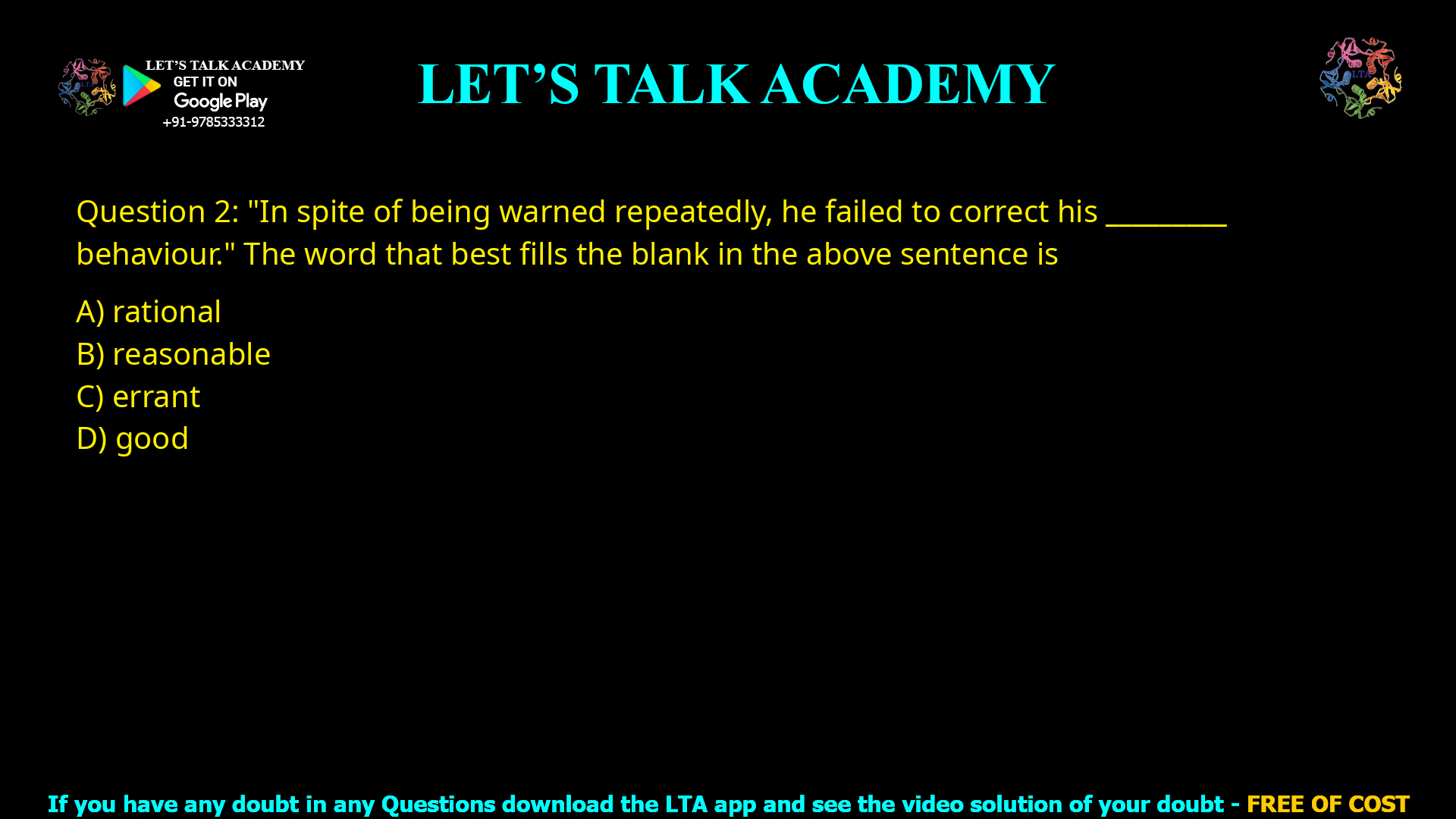
Q.2 “In spite of being warned repeatedly, he failed to correct his _________ behaviour.”
The word that best fills the blank in the above sentence is
(A) rational (B) reasonable (C) errant (D) good
Correct Answer: (C) errant
The sentence describes someone ignoring repeated warnings to fix problematic behavior, requiring a word that implies wrongdoing or deviation needing correction. “Errant” fits perfectly as it means straying from proper standards or behaving badly.
Option Analysis
Rational: Means logical or based on reason. This positive trait wouldn’t need correction after warnings, making it unsuitable.
Reasonable: Implies fair or sensible judgment. Like rational, it’s complimentary and doesn’t convey failure despite warnings.
Errant: Describes erring, wandering from norms, or misbehaving—precisely the negative conduct requiring repeated correction.
Good: Directly positive, meaning proper or virtuous. It contradicts the need for warnings and correction.
The phrase “in spite of being warned repeatedly he failed to correct his errant behaviour” appears in competitive exams like GATE, testing vocabulary precision. Errant behaviour refers to misconduct or straying from norms despite warnings.
Candidates often confuse similar-sounding options, but context demands a negative connotation. This question evaluates understanding of errant as “misbehaving” or “off-course,” common in aptitude tests.
Key Usage Tips:
-
Errant fits warnings about rule-breaking or ethical lapses.
-
Avoid rational/reasonable for negative contexts; they’re positives.
-
Practice with GATE papers to master such blanks.


