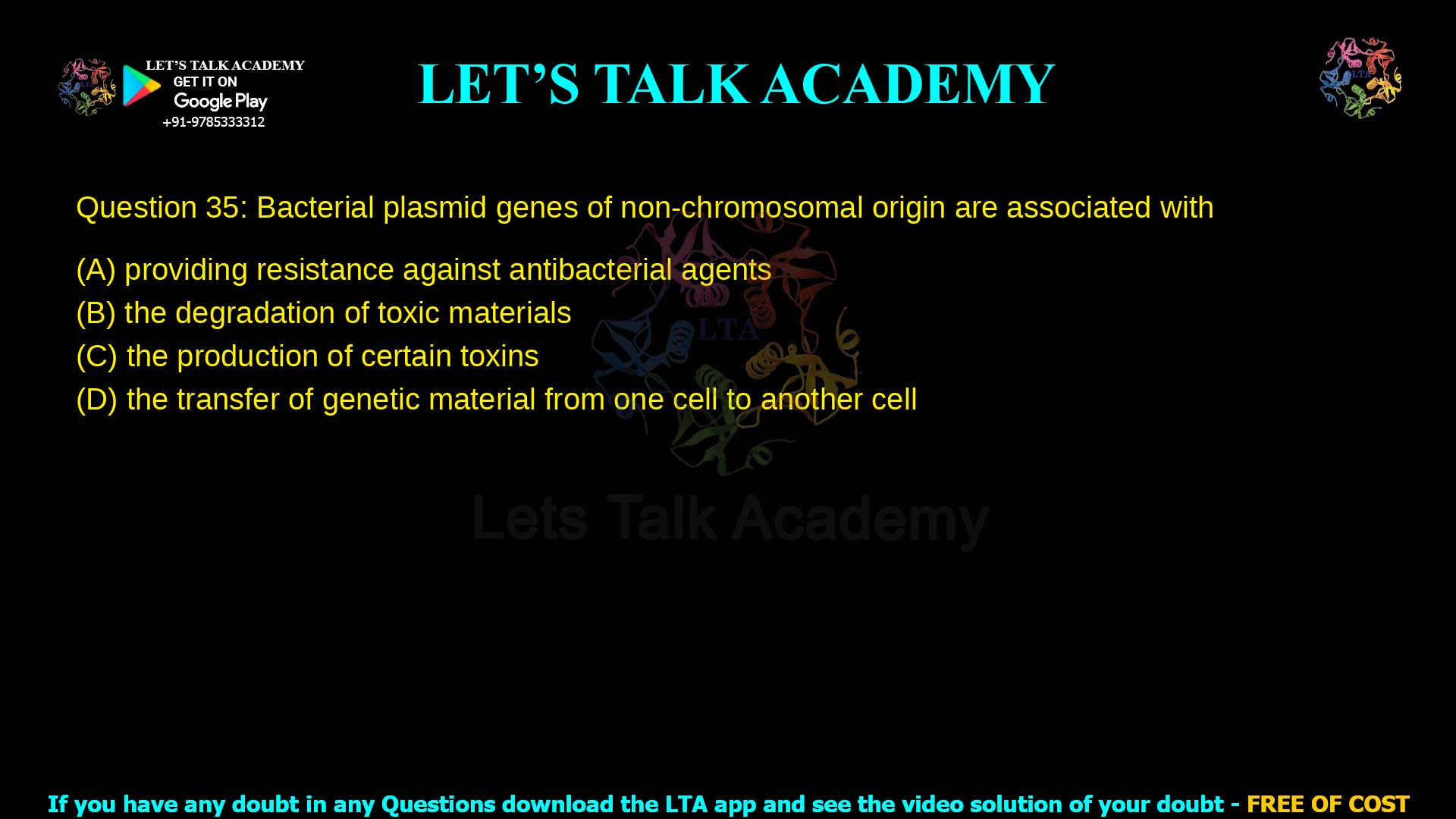
Q.35 Bacterial plasmid genes of non‑chromosomal origin are associated with
(A) providing resistance against antibacterial agents
(B) the degradation of toxic materials
(C) the production of certain toxins
(D) the transfer of genetic material from one cell to another cell
Bacterial plasmid genes of non-chromosomal origin are primarily associated with antibiotic resistance, but all listed functions occur.
Option Analysis
Option A: Providing resistance against antibacterial agents
Plasmids frequently carry R-factors (resistance plasmids) with genes conferring antibiotic resistance, enabling bacteria to survive antimicrobial exposure. This is the most common association, as many resistance genes are over-represented on plasmids compared to chromosomes.
Option B: The degradation of toxic materials
Degradative plasmids encode enzymes for breaking down pollutants like hydrocarbons or herbicides (e.g., 2,4,5-T), aiding bioremediation and bacterial survival in contaminated environments.
Option C: The production of certain toxins
Virulence plasmids in pathogens like Bacillus anthracis carry toxin genes (e.g., lethal factor, protective antigen), enhancing pathogenicity; curing these plasmids eliminates toxin production.
Option D: The transfer of genetic material from one cell to another cell
Conjugative plasmids (e.g., F-plasmids) contain tra genes for conjugation, forming pili to transfer DNA horizontally between bacteria, spreading traits like resistance.
Correct Answer
All options (A, B, C, D) are correct, as bacterial plasmids of non-chromosomal origin encode genes for these functions, providing adaptive advantages beyond essential chromosomal genes.
Bacterial plasmid genes of non-chromosomal origin play crucial roles in bacterial adaptation, carrying traits like antibiotic resistance that chromosomal DNA typically lacks. These extrachromosomal elements replicate independently, enhancing survival in hostile environments.
Plasmid Structure and Replication
Plasmids are small, circular, double-stranded DNA molecules (1-200 kb) with an origin of replication (ori), allowing autonomous replication using host enzymes. They lack essential housekeeping genes but confer selective advantages. Types include R-plasmids (resistance), F-plasmids (fertility/transfer), degradative, and virulence plasmids.
Key Functions Explained
-
Antibiotic Resistance (Option A): R-plasmids dominate, with genes like bla (beta-lactamase) over-represented (1.25% of plasmid genes vs. 0.48% chromosomal), accelerating spread via conjugation.
-
Toxic Degradation (Option B): Encode catabolic enzymes for pollutants; used in bioremediation (e.g., Pseudomonas with TOL plasmid degrades toluene).
-
Toxin Production (Option C): Virulence plasmids in Bacillus anthracis (pXO1/pXO2) control toxin expression; loss via curing abolishes virulence.
-
Genetic Transfer (Option D): F-plasmids enable conjugation via tra operon, oriT, and type IV secretion, promoting horizontal gene transfer (HGT).
| Function | Plasmid Type | Example Genes/Traits | Biological Advantage |
|---|---|---|---|
| Resistance | R-plasmids | ampR, tetR | Survive antibiotics |
| Degradation | Degradative | catabolic enzymes | Metabolize toxins/pollutants |
| Toxins | Virulence | toxA, lef | Pathogenicity |
| Transfer | Conjugative/F | tra genes | HGT/spread traits |
Relevance to CSIR NET Life Sciences
Plasmids exemplify non-chromosomal inheritance in Unit 2 (Genetic Material Organization) and Unit 8 (Microbial Genetics). Questions test associations like these, emphasizing HGT’s role in evolution and resistance crises.


