In some species of new world monkeys, only one female reproduces in a group. One or more younger females have suppressed reproduction and assist the reproductive female. This is an […]

No posts found.
In some species of new world monkeys, only one female reproduces in a group. One or more younger females have suppressed reproduction and assist the reproductive female. This is an […]

Worker bees, instead of themselves reproducing, help the queen reproduce. This behaviour is explained as an example of (1) kin selection (2) group selection (3) sexual selection (4) natural selection […]

The genetic relatedness (r) of an individual to his nephew is 0.25. The alleles that cause uncles to care for nephews will spread, according to Hamilton’s Rule, only if the […]

Honey bee keep variations among the workers by (1) Matting with males many times (2) Parthenogenesis (3) Utilizing different environment conditions (4) Extensive recombination during oogenesis The Genetic Basis […]

Inclusive fitness of an animal can be measured as a sum of direct fitness and indirect fitness. Imagine you have 10 off springs. Through diligent parental care, 5 survive to […]

Assume that individual A wants to do an altruistic act to individual B and that benefit and cost of doing this act are, in ‘fitness’ units, 40 and 12, respectively. […]

38. For an individual A to help his relative B or C, the fitness benefits and costs are 50 and 20 units, respectively. However, following Hamilton’s Rule, A should help […]
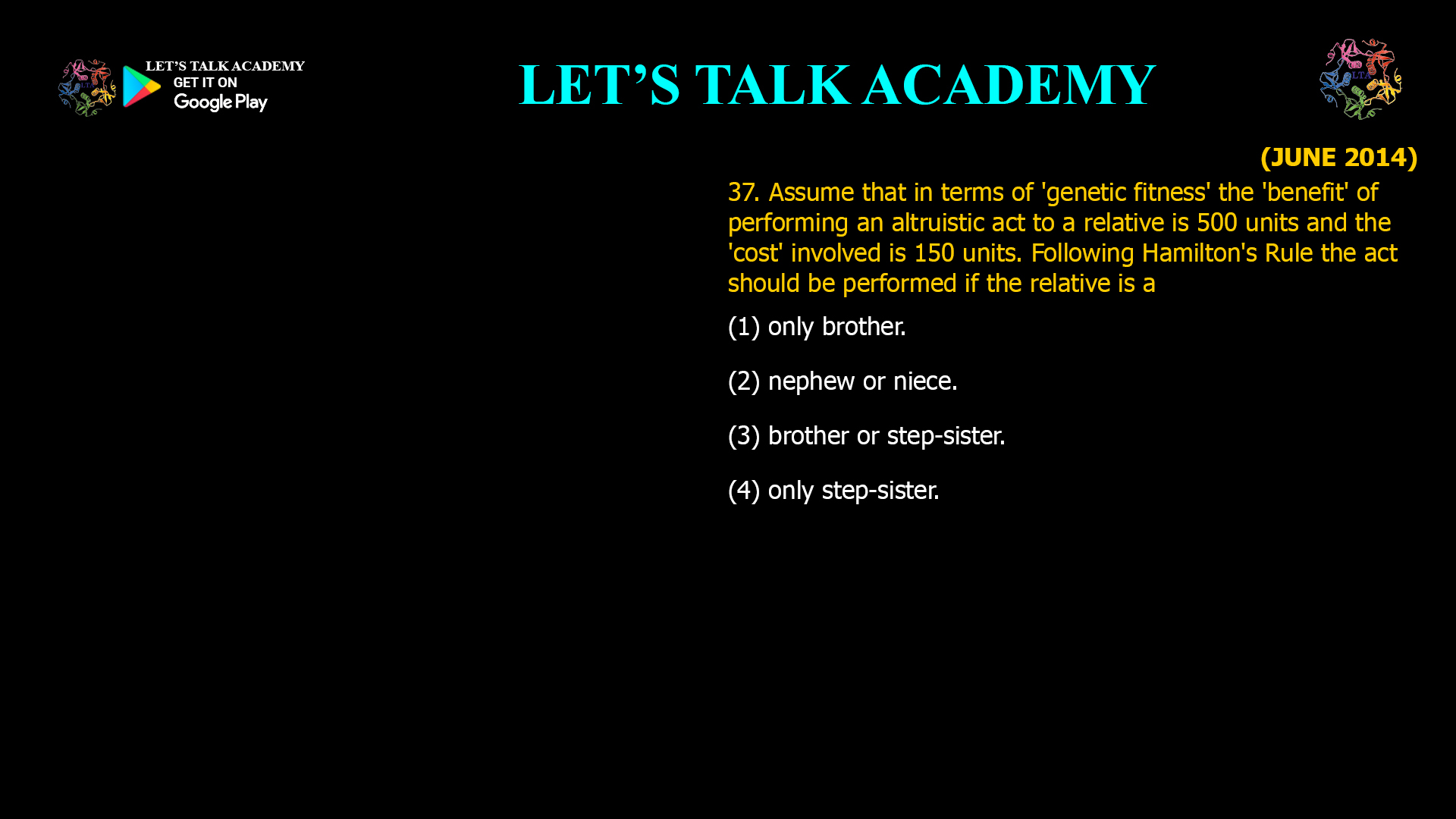
Assume that in terms of ‘genetic fitness’ the ‘benefit’ of performing an altruistic act to a relative is 500 units and the ‘cost’ involved is 150 units. Following Hamilton’s Rule […]
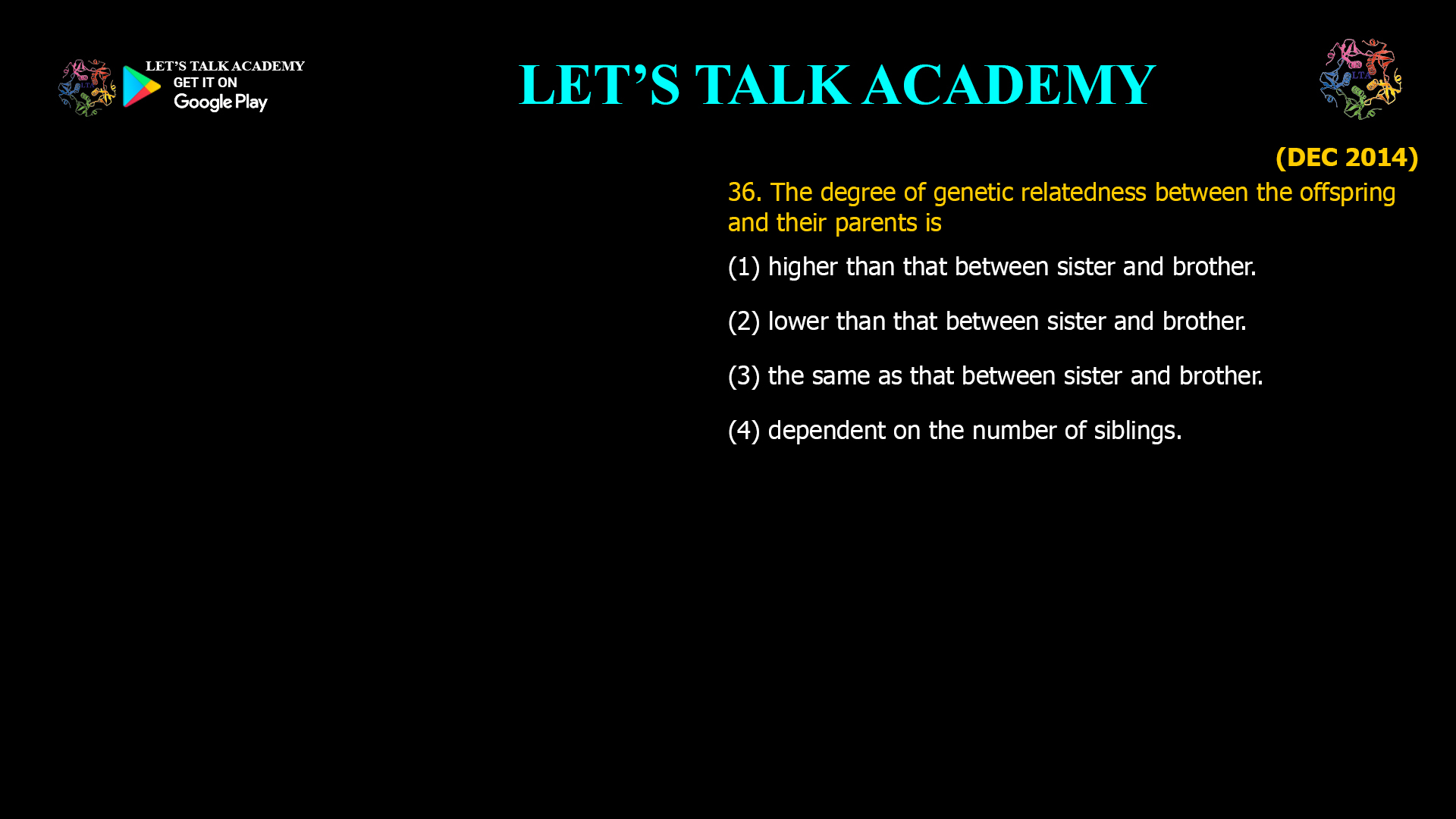
The degree of genetic relatedness between the offspring and their parents is (1) higher than that between sister and brother. (2) lower than that between sister and brother. (3) the […]
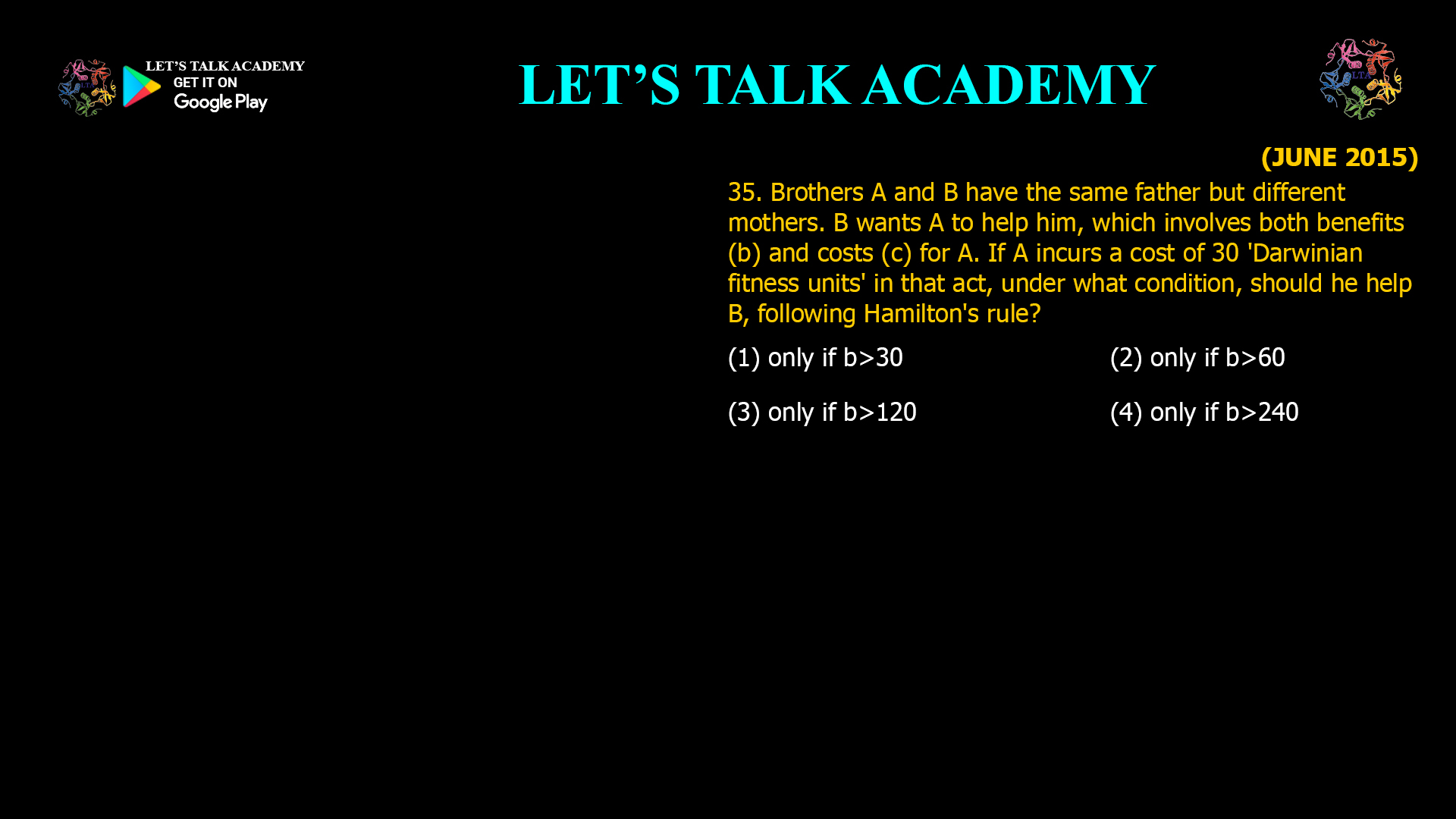
Brothers A and B have the same father but different mothers. B wants A to help him, which involves both benefits (b) and costs (c) for A. If A incurs […]


