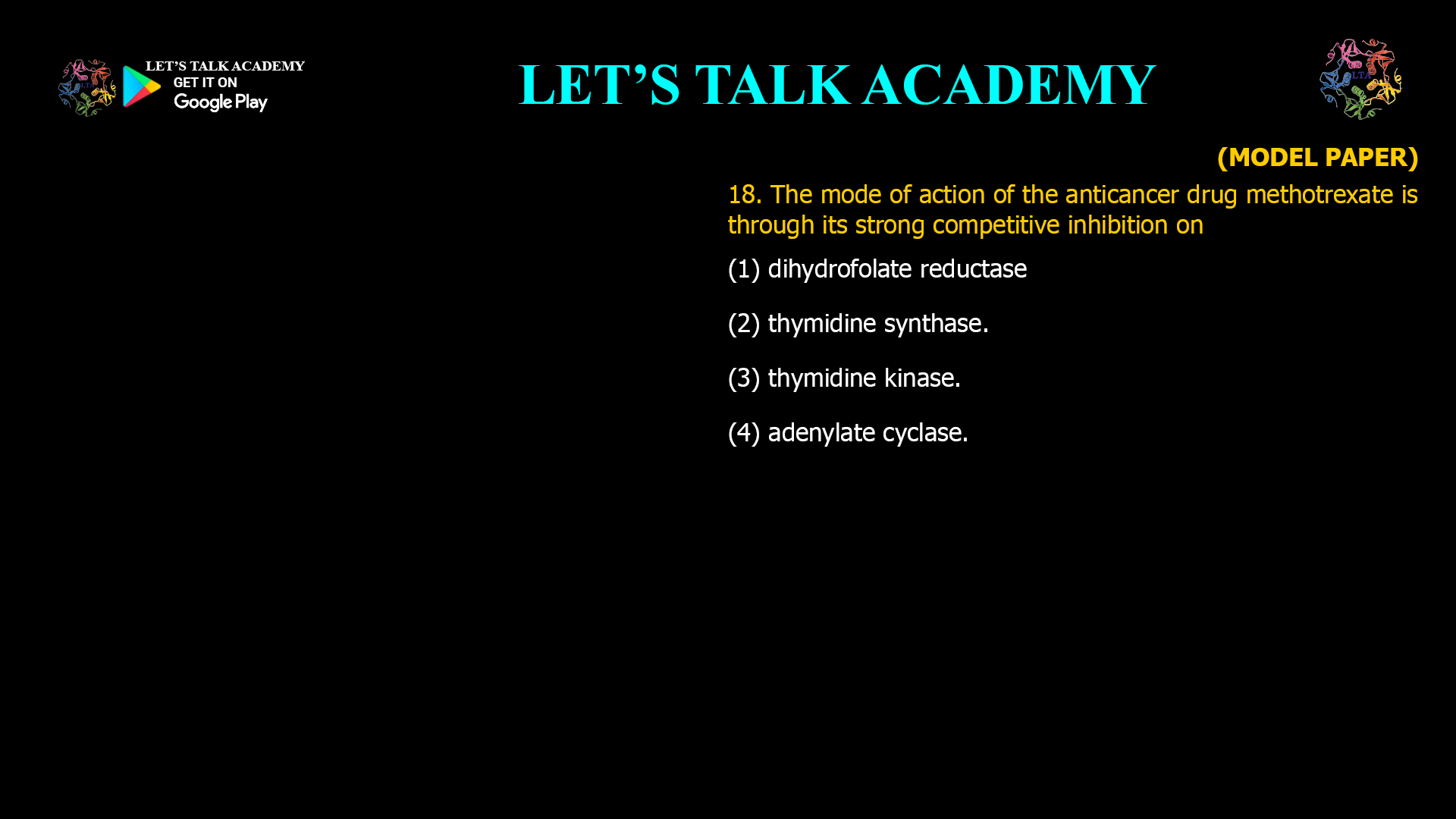
- The mode of action of the anticancer drug methotrexate is through its strong competitive
inhibition on
(1) dihydrofolate reductase (2) thymidine synthase.
(3) thymidine kinase. (4) adenylate cyclase.
Final Answer
The mode of action of the anticancer drug methotrexate is through its strong competitive inhibition on:
(1) dihydrofolate reductase
Explanation
Methotrexate is a folic acid analog that competitively inhibits dihydrofolate reductase (DHFR), the enzyme responsible for converting dihydrofolate (DHF) into tetrahydrofolate (THF). THF is essential for the synthesis of purines and thymidylate, crucial building blocks of DNA and RNA. By blocking DHFR, methotrexate prevents the regeneration of THF, effectively halting DNA synthesis and cell division, particularly in rapidly proliferating cancer cells.
This competitive inhibition is strong because methotrexate closely resembles DHF and binds to the active site of DHFR with an affinity approximately 1000 times greater than the natural substrate. This leads to a potent and sustained inhibition of nucleotide synthesis, making methotrexate effective in cancer chemotherapy.


5 Comments
Kirti Agarwal
October 29, 2025Dihydrofolate reductase
Kajal
November 6, 2025DHFR
Sonal Nagar
November 9, 2025dihydrofolate reductase
Santosh Saini
November 12, 2025Dihydrofolate reductase
Sakshi Kanwar
November 17, 2025dihydrofolate reductase as it reduce dihydrofolate into tetrahydrofolate