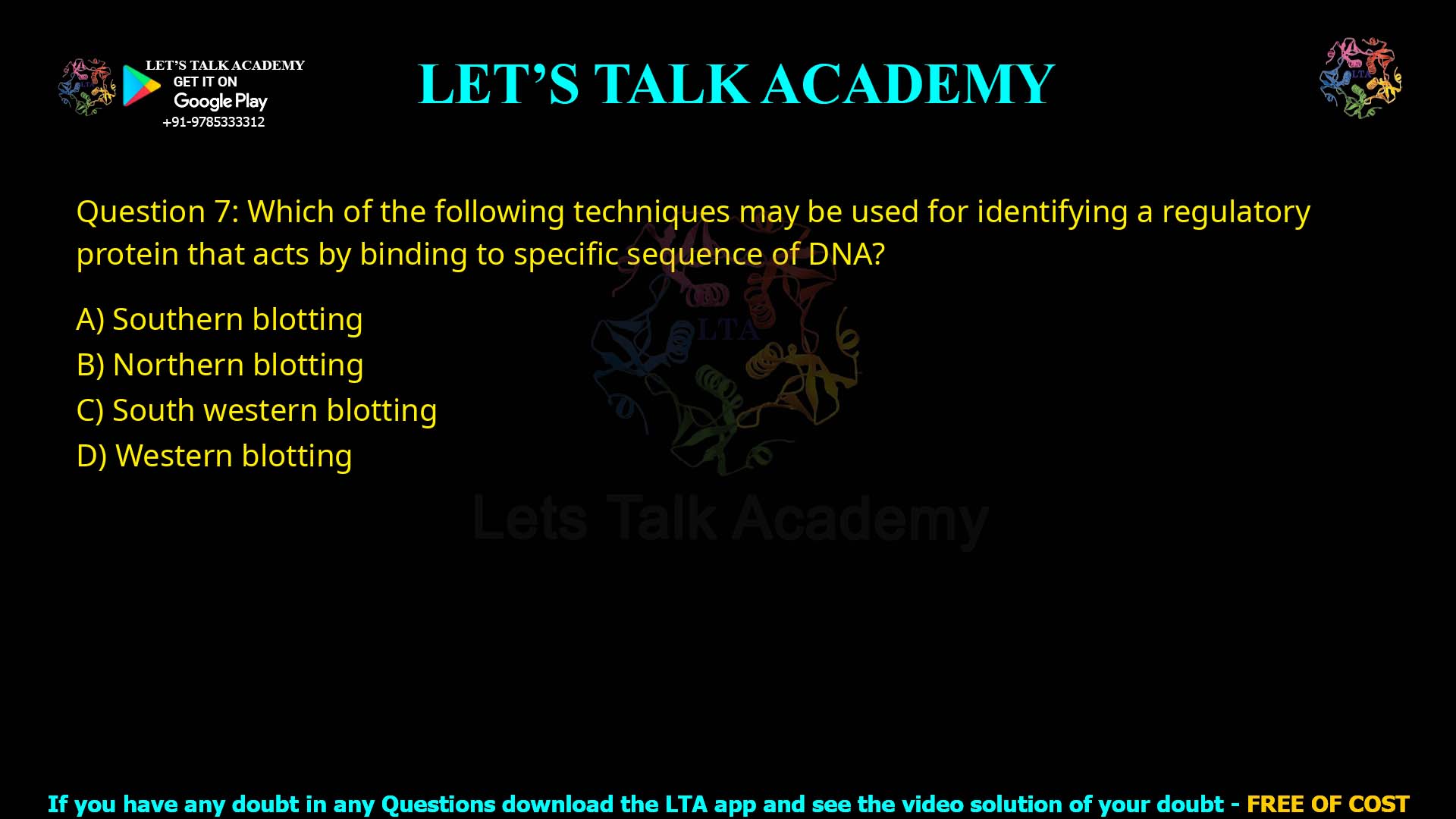
Q7.Which of the following techniques may be used for identifying a regulatory protein that acts by binding to specific sequence of DNA?
(A) Southern blotting
(B) Northern blotting
(C) South western blotting
(D) Western blotting
Southwestern blotting (C) is the correct technique for identifying a regulatory protein that binds to specific DNA sequences.
This method directly detects DNA-protein interactions, making it ideal for transcription factors and other regulatory proteins.
Option Breakdown
Southern blotting (A): Detects specific DNA sequences in a sample. DNA is digested, run on a gel, transferred to a membrane, and probed with labeled DNA. It analyzes DNA-DNA hybridization, not protein binding.
Northern blotting (B): Identifies specific RNA sequences, typically mRNA. RNA is separated by electrophoresis, blotted, and hybridized with labeled probes. Used for gene expression analysis, not proteins.
Southwestern blotting (C): Designed for DNA-binding proteins like regulatory factors. Proteins are separated by gel, transferred to a membrane, renatured, and probed with labeled DNA containing the specific sequence. Binding is detected via the label, confirming sequence-specific interaction.
Western blotting (D): Detects specific proteins using antibodies. Proteins are separated, blotted, and probed with primary/secondary antibodies for visualization. Targets protein identity or quantity, not DNA binding.
Introduction to Blotting Techniques
Southwestern blotting regulatory protein DNA binding is a specialized molecular biology method for detecting transcription factors and other regulatory proteins that interact with specific DNA sequences. This technique combines principles from Southern and Western blotting to study protein-DNA interactions crucial for gene regulation. Understanding these blotting methods is essential for biology students, researchers, and competitive exam preparation in life sciences.
Western blotting shows the overall workflow shared among techniques, with protein separation and membrane transfer as common steps.
Detailed Explanation of Each Technique
Blotting techniques transfer biomolecules from gels to membranes for specific detection.
-
Southern Blotting: Targets DNA fragments via hybridization with labeled probes. Key for DNA fingerprinting and gene mapping, but irrelevant for proteins.
-
Northern Blotting: Analyzes RNA transcripts, measuring gene expression levels. Denaturing conditions prevent RNA secondary structure issues.
-
Southwestern Blotting: Unique for regulatory proteins; post-transfer, membranes are probed with radio- or fluorescently-labeled DNA oligos matching the target sequence. Binding reveals sequence-specific regulators like homeodomain proteins.
-
Western Blotting: Antibody-based protein detection, gold standard for expression and post-translational modifications.
Applications in Regulatory Protein Research
Southwestern blotting excels in identifying transcription factors that bind promoter or enhancer sequences, aiding studies in developmental biology and gene regulation—aligning with your interests in molecular genetics and plant physiology. Limitations include potential loss of native protein folding, often supplemented by EMSA or ChIP.
Comparison Table
| Technique | Target Molecule | Detection Method | Use for DNA-Binding Proteins? |
|---|---|---|---|
| Southern (A) | DNA | Labeled DNA probe | No |
| Northern (B) | RNA | Labeled RNA/DNA probe | No |
| Southwestern (C) | Proteins | Labeled DNA probe | Yes |
| Western (D) | Proteins | Antibodies | No |


