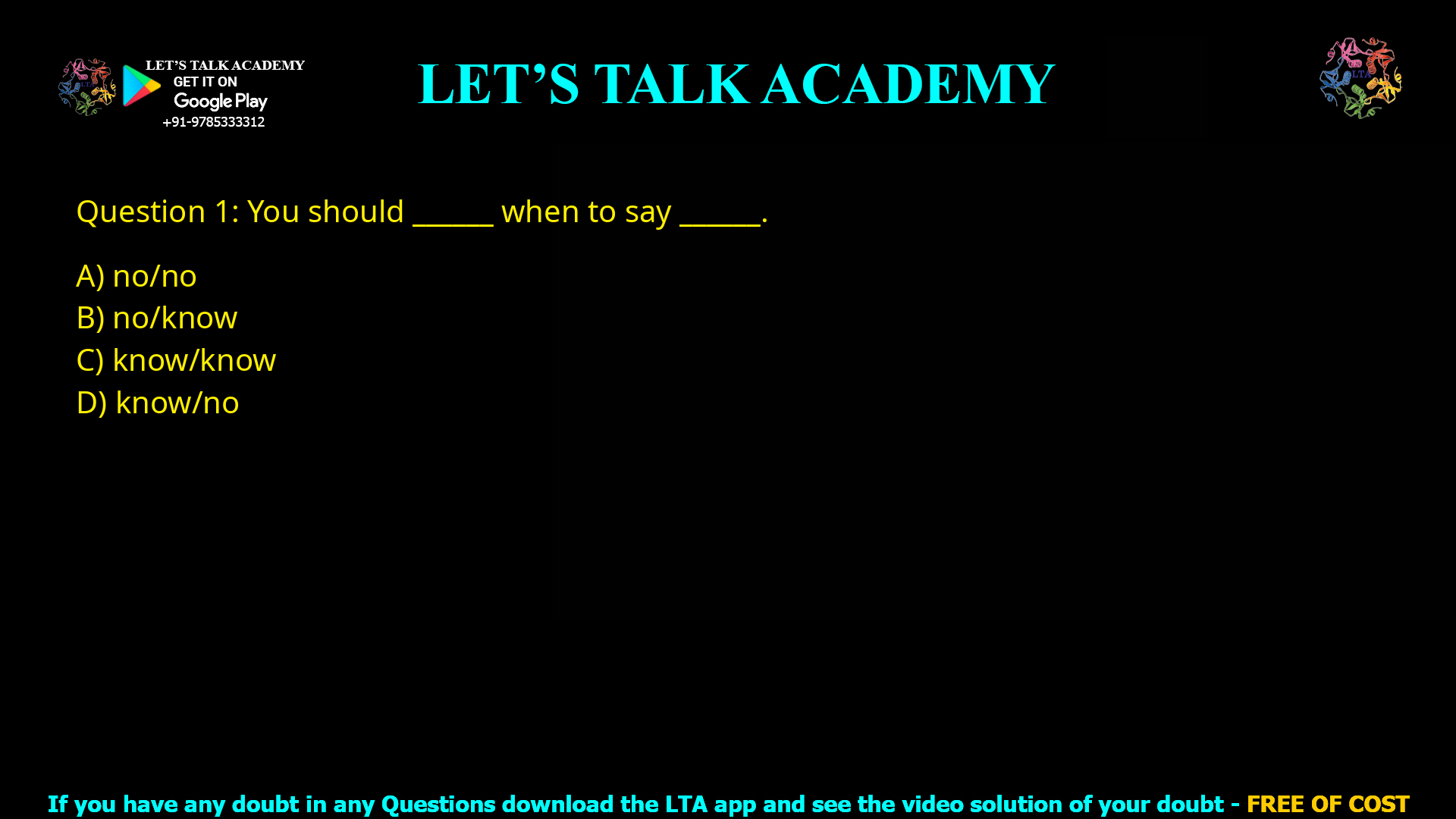
Q.1 You should _________ when to say _________.
(A) no / no
(B) no / know
(C) know / know
(D) know / no
Correct Answer: (D) know / no
The sentence “You should know when to say no” conveys the logical advice of understanding the right moments to refuse or deny something, a common English idiom emphasizing assertiveness and timing in communication.
Option Analysis
-
(A) no / no: “You should no when to say no.” This fails grammatically since “no” cannot function as a verb; “no” serves only as a negation adverb, noun, or determiner.
-
(B) no / know: “You should no when to say know.” Again, “no” misfunctions as a verb, and saying “know” (to express understanding) in this context lacks meaning.
-
(C) know / know: “You should know when to say know.” Grammatically possible but semantically awkward, as it redundantly suggests timing the use of “know” itself, which rarely applies idiomatically.
-
(D) know / no: “You should know when to say no.” Fully correct: “know” (verb: to understand) fits the first blank, and “no” (negation) completes the idiomatic advice perfectly.
“You should know when to say no” ranks as a top English homophone puzzle testing “know vs no” mastery, vital for competitive exams and clear communication. This phrase highlights knowing the right time to refuse requests assertively.
Know vs No: Key Differences
“Know” acts as a verb meaning to understand or be aware, like “I know the answer.” “No,” by contrast, denotes refusal or absence, as in “Just say no to bad habits.” These homophones sound identical (/noʊ/) but demand precise spelling for meaning.
Why This Quiz Matters
Such questions appear in exams like IELTS or school tests to check grammar nuance. The idiom “know when to say no” teaches life skills: recognize boundaries early. Practice avoids errors like confusing negation with knowledge.
-
Homophones trip up learners: sound-alike, spell-differently.
-
Tip: Replace with synonyms— “understand” for know, “not” for no—to verify fit.
-
Real use: “Know your limits; say no politely.”


