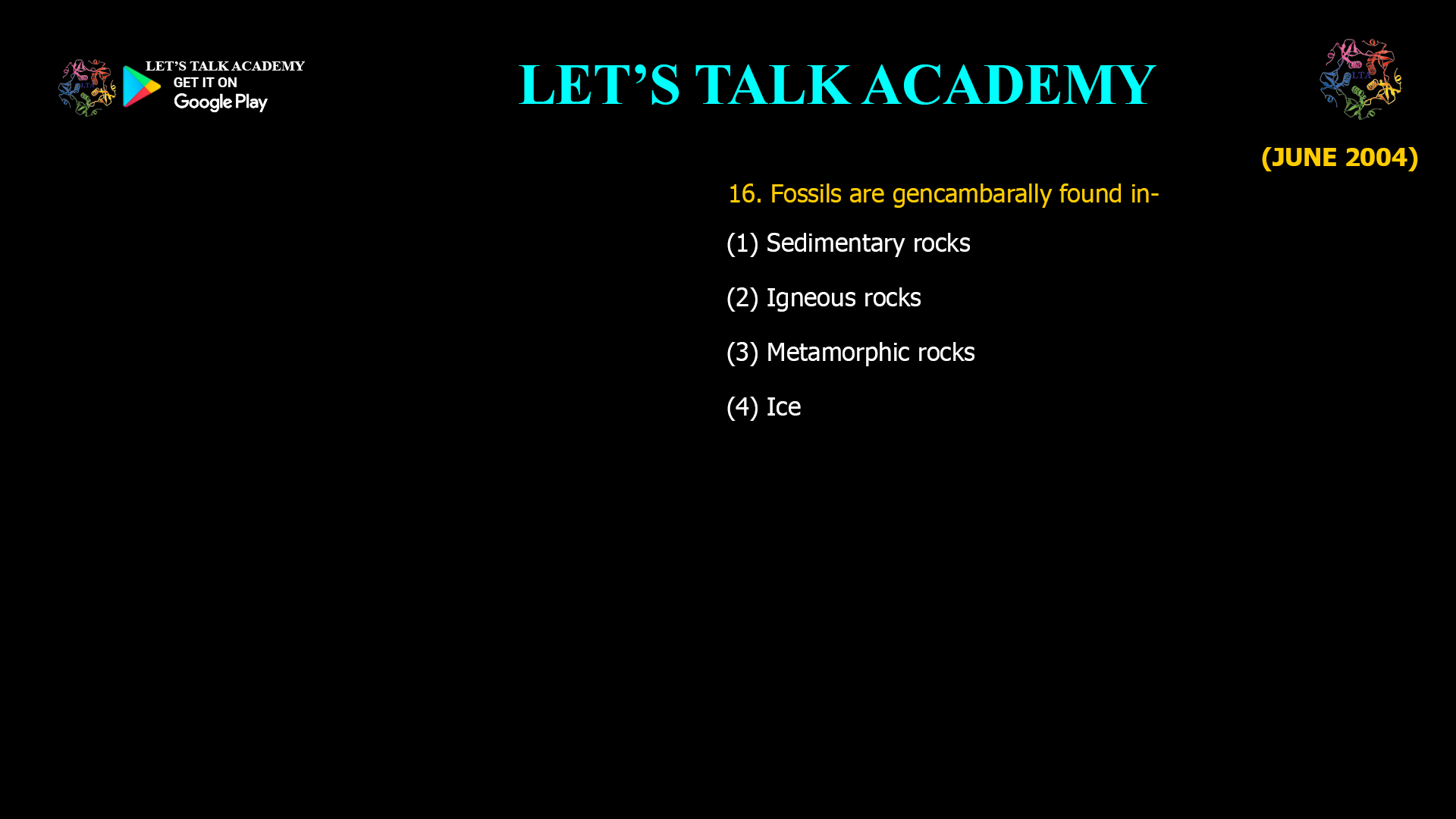
- Fossils are gencambarally found in-
(1) Sedimentary rocks (2) Igneous rocks
(3) Metamorphic rocks (4) Ice
Introduction
Fossils are the preserved remains or traces of ancient life, offering a window into Earth’s distant past. If you’ve ever wondered where fossils are most commonly discovered, the answer is clear: sedimentary rocks. But why is this the case? This article explores the science behind fossil formation, the unique properties of sedimentary rocks, and why other rock types rarely contain fossils.
What Are Fossils?
Fossils are the preserved evidence of ancient organisms, including bones, shells, leaves, footprints, and even traces of soft tissues. They provide crucial information about extinct species, evolutionary history, and past environments.
Types of Rocks and Their Role in Fossil Preservation
Earth’s crust is made up of three main rock types:
-
Igneous rocks: Formed from cooled molten magma or lava.
-
Metamorphic rocks: Created when existing rocks are transformed by heat and pressure.
-
Sedimentary rocks: Formed from layers of sediment—such as mud, sand, and shells—compressed and cemented over time.
Why Sedimentary Rocks Are Ideal for Fossils
Sedimentary rocks, such as shale, limestone, and sandstone, are the primary hosts for fossils. Here’s why:
-
Gentle Formation Process: Sedimentary rocks form at relatively low temperatures and pressures, which do not destroy delicate biological material.
-
Rapid Burial: Organisms are often quickly buried by sediments in environments like riverbeds, lakes, and oceans. This rapid burial protects remains from scavengers and decay, increasing the chances of fossilization.
-
Layering: Sedimentary rocks accumulate in layers, allowing paleontologists to date fossils and study changes in life over time.
-
Mineral Replacement: Over time, minerals in groundwater can replace organic material, turning remains into stone—a process known as petrification or permineralization.
Why Fossils Are Rare in Igneous and Metamorphic Rocks
-
Igneous rocks form from molten material. The intense heat would destroy any organic remains, making fossil preservation impossible.
-
Metamorphic rocks result from the transformation of existing rocks under extreme heat and pressure, often obliterating any fossils that may have existed.
-
Ice can preserve remains (such as mammoths in permafrost), but these are not true fossils in the geological sense; they are simply well-preserved remains.
Types of Sedimentary Rocks That Contain Fossils
-
Shale: Formed from mud and clay, excellent for preserving fine details, including soft-bodied organisms.
-
Limestone: Composed mainly of calcium carbonate from shells and corals, often packed with marine fossils.
-
Sandstone: Formed from sand-sized particles, can contain larger fossils but with less detail.
-
Conglomerates and Breccias: Less common for fossils but can contain remains if conditions are right.
How Fossilization Occurs
-
Death and Burial: An organism dies and is rapidly buried by sediment.
-
Decay and Preservation: Soft parts decay, while hard parts like bones and shells are preserved.
-
Sediment Accumulation: Layers of sediment build up, compressing the remains.
-
Mineralization: Groundwater minerals infiltrate the remains, replacing organic material.
-
Exposure: Geological processes eventually expose the fossil-bearing rock at the surface.
Where to Find Fossils
Fossils are typically found in areas where sedimentary rocks are exposed, such as:
-
River valleys
-
Cliffs and hillsides
-
Deserts
-
Human-made quarries and road cuts
Conclusion
Fossils are generally found in sedimentary rocks because these rocks form under conditions that favor the preservation of ancient life. The gentle accumulation of sediments, rapid burial, and mineralization processes make sedimentary environments ideal for fossilization. In contrast, igneous and metamorphic rocks are formed under conditions that destroy organic remains, making fossils extremely rare in those rocks.
SEO-Friendly Slugs:
-
why-fossils-are-found-in-sedimentary-rocks-explained
-
sedimentary-rocks-and-fossil-formation
-
best-rocks-for-fossil-preservation
-
how-fossils-form-in-sedimentary-environments
-
fossil-discovery-tips-for-beginners
Understanding where and how fossils form not only guides scientific discovery but also fuels our curiosity about Earth’s ancient past.


2 Comments
Manisha choudhary
October 2, 2025Sedimentary rock
Mineral replacement process ko petrification or perminerlizayion kahte h
Sonal Nagar
November 11, 2025Sedimentary rocks