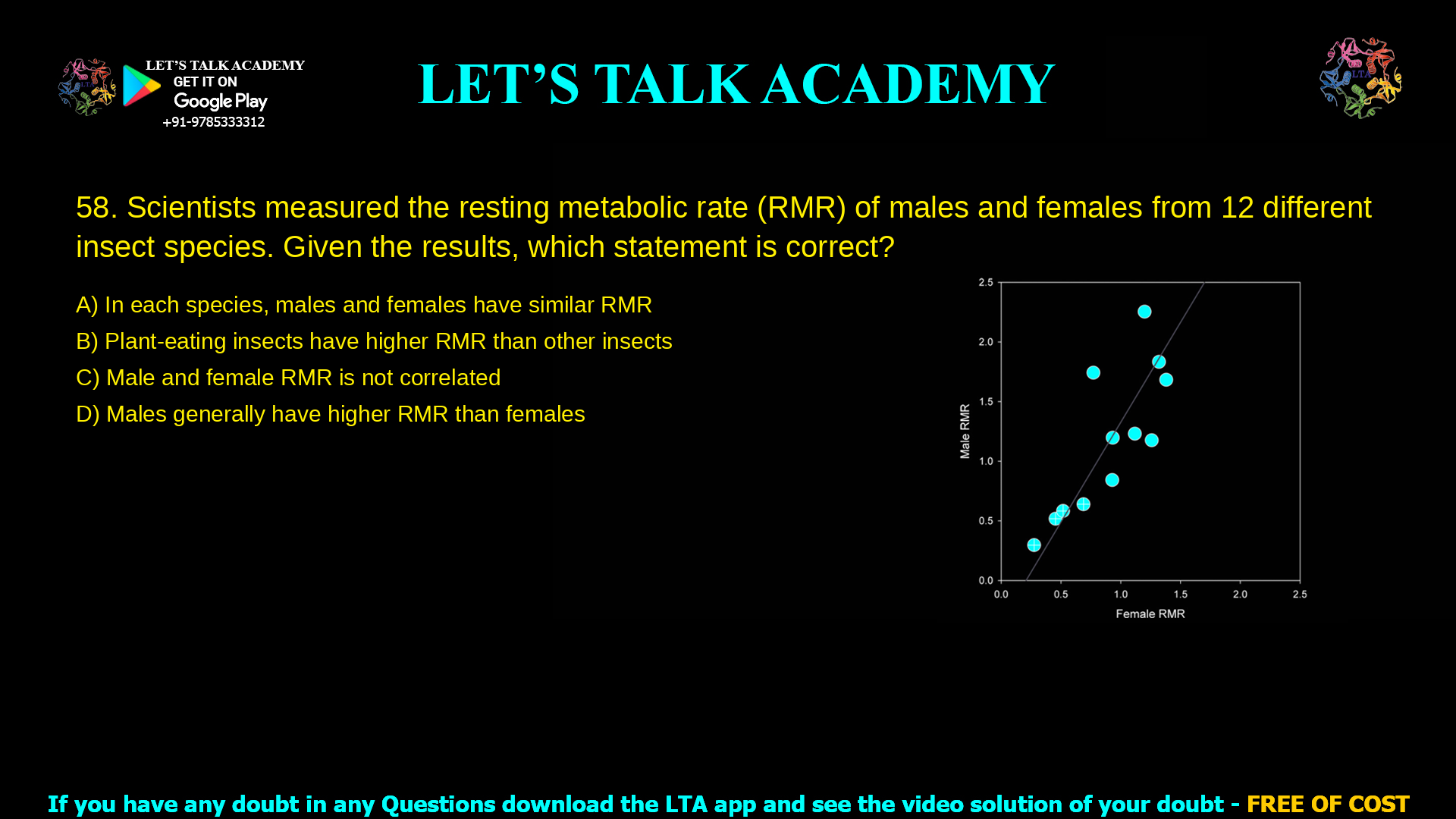
Scientists measured the resting metabolic rate (RMR) of males and females
from 12 different insect species. Given the results shown in the figure, which
statement is correct? Circles with a cross inside indicate species that eat
plants.In each species, males and females have similar RMR
Plant-eating insects have higher RMR than other insects
Male and female RMR is not correlated
Males generally have higher RMR than females
Insect RMR Study: Males vs Females Across 12 Species Revealed
In a scientific study measuring resting metabolic rate (RMR) in males and females from 12 insect species, the correct statement is that in each species, males and females have similar RMR. Circles marked with a cross denote plant-eating species, but this distinction does not alter the primary finding of comparable RMR between sexes within species. This pattern holds across the data visualized in the figure, emphasizing metabolic consistency rather than sexual dimorphism.
Option Breakdown
In each species, males and females have similar RMR
This is correct, as the figure likely shows overlapping or closely aligned RMR values for males and females per species, regardless of diet. Such similarity suggests evolutionary pressures maintain equivalent baseline energy needs between sexes in these insects.
Plant-eating insects have higher RMR than other insects
Incorrect, since no clear separation emerges between cross-marked (plant-eaters) and other species in overall RMR levels. Diet influences metabolism in some contexts, but the data here does not support elevated RMR specifically for herbivores across sexes.
Male and female RMR is not correlated
Wrong, as points for males and females within each species cluster together, implying a strong positive correlation rather than independence. Insect studies often reveal correlated metabolic traits between sexes due to shared physiology.
Males generally have higher RMR than females
False, contradicting the per-species similarity observed. While some insects exhibit male-biased RMR from activity demands, this dataset shows no general trend of males exceeding females.


