95. Which one of the following statements DOES NOT explain altruism? (A) Altruism reduces the fitness of the individual that displays this behavior (B) Altruism increases the fitness of other individuals in the population (C) Altruism reduces the fitness of the individual that displays this behavior and at the same time increases the fitness of other individuals in the population (D) Altruistic behavior helps the individual escape from predators 

Which Statement Does Not Explain Altruism?

94. Which one of the following is consistent with the germplasm theory of August Weismann? (A) Regulative development observed in frog embryos (B) Mosaic development observed in tunicates (C) Normal embryonic development of embryos formed by somatic nuclear transfer (D) Ability of differentiated cells to form pluripotent stem cells under certain conditions

August Weismann Germplasm Theory

93. The popular birth control pills for women have a combination of synthetic forms of estradiol and progesterone. Which one of the following statements is INCORRECT with regard to their function as contraceptive? (A) The pills inhibit the release of GnRH leading to inhibition of gonadotropin-stimulated ovarian function (B) They act directly on the pituitary gland to inhibit gonadotropin surges (C) The low dose of estradiol in the pill inhibits the release of FSH, and thus blocks ovulation (D) The synthetic forms of estradiol and progesterone bring about their effects by binding to their respective intracellular receptors

Decoding Birth Control Pills

92. Choose the correct option based on your understanding of the circulatory system P. Open circulatory system                         i. Fish Q. Closed circulatory system                      ii. Frog R. Three chambered heart                          iii. Earthworm S. Two chambered heart                              iv. Grasshopper (A) P-iv; Q-iii; R-ii; S-i (B) P-iv; Q-i; R-ii; S-iii (C) P-i; Q-iv; R-ii; S-iii (D) P-i; Q-iii; R-iv; S-ii

Open vs Closed Circulatory Systems

91. Choose the correct option that shows pairing of the organelle to its function P. Smooth endoplasmic reticulum               i. Internalization of receptors Q. Peroxisome                                                  ii. Protein secretion R. Golgi apparatus                                          iii. Membrane biogenesis S. Endosome                                                    iv. Breakdown of fatty acids (A) P-i, Q-ii, R-iii, S-iv (B) P-i, Q-iii, R-ii, S-iv (C) P-iii, Q-iv, R-ii, S-i (D) P-ii, Q-iii, R-iv, S-i 

Organelle-Function Pairing

90. Assuming equal frequency for all 4 nucleotides ( G, A, T, C ), how many EcoRI recognition sites (GAATTC) are possible in a bacterial artificial chromosome of 100,000 base pairs? (A) 6 (B) 12 (C) 24 (D) 48

Expected EcoRI Sites in 100kb BAC

89. Defect in poly-A tail formation in eukaryotic mRNA leads to (A) Increased translation of the resulting mRNA (B) Decreased translation of the resulting mRNA (C) Premature transcription termination (D) Decreased mRNA stability

Defect in Poly-A Tail Formation in Eukaryotic mRNA

88. In Drosophila, the gene for eye colour is present on the X chromosome. When a red-eyed female was mated with a white-eyed male, a total of 100 progeny were obtained - 50 females and 50 males. Of the 50 females, 25 were red-eyed, and 25 were white-eyed. How many of the male progeny were red-eyed? (A) 0 (B) 10 (C) 20 (D) 25

Drosophila Eye Color Genetics

87. A population of spotted deer found in a national forest is in Hardy-Weinberg equilibrium. For a particular genetic locus in this deer species, only two alleles 𝐴 and 𝑎 are possible. If the frequency of the 𝐴 allele in this population is 0.6 , and the frequency of the 𝑎 allele is 0.4 , what will be the frequency of the genotype 𝐴𝑎 ? (A) 0.24 (B) 0.48 (C) 0.96 (D) 1.6 

Hardy-Weinberg Equilibrium

86. Match the species names with class names P. Calotes versicolor                            i. Insecta Q. Periplaneta americana                   ii. Reptilia R. Glyphidrilus birmancus                 iii. Actinopterygii S. Clarias batracus                                iv. Clitellata (A) P-ii; Q-i, R-iv; S-iii (B) P-i; Q-ii; R-iii; S-iv (C) P-ii; Q-i; R-iii; S-iv (D) P-iii; Q-i; R-ii; S-iv

Calotes versicolor Class Match

85. The behavior of young ducks following their mother is known as (A) Imprinting (B) Innate behavior (C) Habituation (D) Mimicry

Behavior of Young Ducks Following Their Mother

84. What is the role of the notochord during organogenesis in a vertebrate embryo? (A) Signaling the development of placenta (B) Induction of neural plate formation (C) Stimulation of the umbilical chord formation (D) Suppression of the development of extra-embryonic membranes

Notochord in Vertebrate Embryo Organogenesis

83. Which one of the following life cycle stages of Plasmodium falciparum is infectious? (A) Sporozoite (B) Cryptozoite (C) Merozoite (D) Trophozoite

Plasmodium falciparum Life Cycle

82. Where do B lymphocytes acquire immune competence? (A) Thymus (B) Bone Marrow (C) Lymph nodes (D) Spleen

Where Do B Lymphocytes Acquire Immune Competence?

81. Which one of the following organs is INCORRECTLY paired with its function? (A) Intestinal villi-absorption (B) Epiglottis - closure of larynx (C) Gall bladder - carbohydrate digestion (D) Parietal cells - hydrochloric acid

Organ Function Mismatch

80. Which one of the following statements is FALSE with respect to phospholipids? (A) Phospholipids have amphipathic character (B) Phospholipids form the lipid bilayer of the cell membrane (C) Phospholipids form micelles in living systems (D) Some phospholipid molecules may contain a double bond in hydrophobic tails

Which Statement About Phospholipids is False?

79. Which one of the following is a function of intermediate filaments? (A) Chromosome movement during the cell division (B) Cytoplasmic streaming (C) Formation of tight junctions (D) Anchorage of the nucleus

Intermediate Filaments Function

78. Constitutive enzymes are (A) Induced by effector molecules (B) Repressed by repressors (C) Encoded by sequences that occur as part of an operon (D) Always produced in the cell

Constitutive Enzymes in Biology

77. Which one of the following statements is TRUE when determining the age of a fossil using carbon dating? (A) Carbon dating is based on carbon-13 to carbon-12 ratio in fossils (B) Carbon dating is useful for determining the age of only fossils older than 100,000 years (C) Older the fossil, lesser the carbon-14 to carbon-12 ratio (D) Older the fossil, lesser the carbon-12 to carbon-14 ratio

Carbon Dating Fossil Age

76. The term "paedomorphosis" refers to (A) Accelerated reproductive development as compared to somatic development (B) A transient stage in the developmental event (C) Two independent structures resembling each other, yet performing different functions (D) A form of mimicry

What is Paedomorphosis?

75. An E. coli strain is grown initially on glucose as the sole carbon source. Upon complete consumption of glucose following 12 h of growth, lactose is added as the sole carbon source and the strain is further grown for 12 h . Assuming that the E. coli strain has a functional wild type lac operon, which one of the following profiles is the most ACCURATE representation of 𝛽 galactosidase ( 𝛽 − 𝑔𝑎𝑙 ) expression (in arbitrary units)? (A) i (B) iii (C) ii (D) iv

β-Galactosidase Expression in E. coli

74. The volume (in ml) of a 1.0mg/mlstock solution of ampicillin to be added to 0.1 liter of growth medium for achieving a final ampicillin concentration of 50𝜇 g/ml is ____

Ampicillin Stock Solution Dilution Calculation

73. A bacterial culture is grown using 2.0mg/ml fructose as the sole source of carbon and energy. The bacterial biomass concentrations immediately after inoculation and at the end of the growth phase are 0.1mg/ml and 0.9mg/ml, respectively. Assuming complete utilization of the substrate, the bacterial growth yield (𝑌) on fructose is ____ 

Bacterial Growth Yield on Fructose

72. The doubling time (in minutes) of a bacterium with a specific growth rate of 2.3 h−1 in 500 ml of growth medium is ____

Calculate Bacterial Doubling Time

71. If the decimal reduction time for spores of a certain bacterium at 121∘C is 12 seconds, the time required (in minutes) to reduce 1010 spores to one spore by heating at 121∘C is ____ 

Decimal Reduction Time in Sterilization

70. The working volume (in liter) of a chemostat with 0.1 h−1 dilution rate and 100ml/h feed flow rate is ____ 

Chemostat Working Volume Calculation

69. An oil immersion objective of a light microscope has a numerical aperture of 1.25 . Using the Abbé equation, the maximum theoretical resolving power (in nm) of the microscope with this objective and blue light (wavelength = 450 nm ) is ____

Understanding Microscope Resolving Power

68. Which one of the following about the standard free energy change ( Δ𝐺∘′) and the equilibrium constant ( 𝐾𝑒𝑞 ) of an exergonic reaction, at pH 7.0 , is TRUE? (A) Δ𝐺∘′ is positive and 𝐾𝑒𝑞 is less than one (B) Δ𝐺∘′ is negative and 𝐾𝑒𝑞 is less than one (C) Δ𝐺∘′ is negative and 𝐾𝑒𝑞 is greater than one (D) Δ𝐺∘′ is positive and 𝐾𝑒𝑞 is greater than one

Understanding ΔG°’ and Keq in Exergonic Reactions

67. Which combination of profiles in the following figure accurately represents the transport rate of glycerol and oxygen into 𝐸. coli cells as a function of their extracellular concentration? (A) glycerol-(ii) and oxygen-(iii) (B) glycerol-(ii) and oxygen-(i) (C) glycerol-(iii) and oxygen-(i) (D) glycerol-(i) and oxygen-(ii)

Transport of Glycerol and Oxygen into E. coli

66. Which combination of the following statements about specialized transduction is TRUE? (P) Specialized transducing phages can transport only certain genes between bacteria (Q) Specialized transducing phages can transport any gene between bacteria (R) Phage P22 is a specialized transducing phage (S) Phage lambda ( 𝜆 ) is a specialized transducing phage (A) P and S only (B) Q and R only (C) P and R only (D) Q and S only

Specialized Transduction

65. Anammox organisms carry out (A) anaerobic reduction of NO3− (B) anaerobic oxidation of NH4+ (C) aerobic oxidation of NH4+ (D) aerobic oxidation of NO2−

What Do Anammox Organisms Do?

64. The class of enzymes, which catalyze addition of groups to double bonds and non-hydrolytic removal of chemical groups, is (A) oxidoreductase (B) transferase (C) hydrolase (D) lyase 

Lyase Enzymes

63. Of the following, the most effective method to kill bacterial endospores is (A) moist heat sterilization (B) UV irradiation (C) filtration (D) pasteurization

Most Effective Method to Kill Bacterial Endospores

62. The classical way of representing taxonomic hierarchy of living organisms in ASCENDING ORDER is (A) genus, species, class, order, family (B) species, genus, order, family, class (C) species, genus, family, order, class (D) genus, species, order, class, family

Taxonomic Hierarchy in Ascending Order

61. Base-pair substitutions caused by the chemical mutagen ethyl methane sulfonate are a result of (A) hydroxylation (B) alkylation (C) deamination (D) intercalation 

Ethyl Methanesulfonate Mutagenesis

60. Match scientists in Group I with terms related to their major scientific contributions in Group II. Group I                                        Group II (P) Sanger                               (i) DNA double helix structure (Q) Watson and Crick          (ii) DNA sequencing (R) Waksman                        (iii) Complement (S) Bordet                              (iv) Streptomycin                                                  (v) Immune tolerance (A) P-iii, Q-iv, R-ii, S-i (B) P-ii, Q-iii, R-iv, S-v (C) P-iv, Q-i, R-ii, S-v (D) P-ii, Q-i, R-iv, S-iii

Matching Scientists to Their Breakthrough Contributions

59. Limulus Amoebocyte Lysate (LAL) assay is used to identify the presence of (A) endotoxin (B) exotoxin (C) anthrax toxin (D) tetanus toxin

Limulus Amoebocyte Lysate Assay

58. A process in which fatty acids are shortened by two carbons at a time resulting in release of acetylCoA is known as (A) photophosphorylation (B) carboxylation (C) 𝛽-oxidation (D) oxidative phosphorylation

What Is β-Oxidation?

57. In aerobic respiration, the final electron acceptor is (A) hydrogen (B) nitrogen (C) sulfur (D) oxygen

Aerobic Respiration’s Final Electron Acceptor

56. Lophotrichous bacteria have (A) one flagellum (B) a cluster of flagella at one or both ends (C) flagella that are spread evenly over the whole surface (D) a single flagellum at each pole

What Are Lophotrichous Bacteria?

55. Statements given below are either TRUE (T) or FALSE (F). Find the correct combination. P. Somatic embryo is unipolar in nature Q. Heterokaryon can be selected using a fluorescence-activated cell sorter (FACS) R. The term somaclonal variation is coined by Larkin and Scowcroft S . Differentiation of shoot buds during in vitro culture is known as somatic embryogenesis (A) P-T, Q-F, R-T, S-F (B) P-F, Q-T, R-F, S-T (C) P-T, Q-F, R-F, S-T (D) P-F, Q-T, R-T, S-F

Unraveling Somaclonal Variation and Somatic Embryogenesis

54. Identify the CORRECT statements with regard to the function of plant hormones P. ABA is synthesized from chorismate and promotes viviparous germination Q. Auxin induces acidification of cell wall followed by turgour-induced cell expansion R. Gibberellin-reponsive genes become activated by the repression of DELLA protein S . Cytokinin regulates the G2 to M transition in the cell cycle (A) P, Q (B) Q, R (C) Q, S (D) P, R

Understanding Plant Hormones

53. With respect to germination of seeds, the CORRECT sequence of events is P. Seed imbibes water Q. Mobilization of starch reserve to embryo R. Diffusion of gibberellin from embryo to aleurone layer S. Synthesis of 𝛼-amylase in the aleurone layer (A) P, Q, S, R (B) P, R, S, Q (C) R, P, Q, S (D) R, Q, P, S

Seed Germination Sequence

52. Which of the following statements are TRUE with regard to the similarities between Crassulacean Acid Metabolism (CAM) and C4 cycle? P. Stomata open during night and remain closed during the day Q. PEPcase is the carboxylating enzyme to form C4 acid R. C4 acid is decarboxylated to provide CO2 for C3 cycle S. Kranz anatomy is predominant in both CAM and C4 plants (A) P, S (B) Q, R (C) P, Q (D) R, S 

CAM vs C4 Cycle Similarities

51. Identify the INCORRECT statements with respect to plastid transformation. P. Antibiotic used for selection of trasplastomic plant is spectinomycin Q. Chances of gene escape from transplastomic plants are high R. Microprojectile bombardment is the method of DNA delivery S. Levels of transgene expression are low (A) P, R (B) 𝑃,𝑄 (C) Q, S (D) R, S

Mastering Plastid Transformation

50. Match the floral structures with the families and representative plant species. Floral structure                                      Family                                     Plant P. Gynostegium                                       1. Orchidaceae                     i. Ocimum sanctum Q. Gynostemium                                     2. Lamiaceae                        ii. Cleome gynandra R. Gynobasic style                                   3. Capparidaceae                 iii. Calotropis procera S. Gynophore                                            4. Asclepiadaceae                iv. Vanilla planifolia (A) P-2-i, Q-3-iii, R-4-ii, S-1-iv (B) P-3-ii, Q-4-I, R-2-iii, S-1-iv (C) P-4-iii, Q-1-iv, R-2-i, S-3-ii (D) P-4-ii, Q-2-iii, R-1-iv, S-3-i

Families and Plant Species Explained

49. Match the plant products with their sources and the plant parts from which they are obtained. Product                                      Source                              Plant part P. Annatto                                  1. Acacia catechu                 i. Seed Q. Cutch                                      2. Rubia tinctorum             ii. Leaf R. Henna                                     3. Bixa orellana                   iii. Root S. Alizarin                                   4. Lawsonia inermis           iv. Stem (A) P-3-ii, Q-4-i, R-2-iii, S-1-iv (B) P-3-i, Q-1-iv, R-4-ii, S-2-iii (C) P-2-ii, Q-1-iii, R-4-iv, S-3-i (D) P-4-ii, Q-3-iv, R-1-iii, S-2-i

Plant Products Matching Quiz

48. Match the name of the diseases with their causal organisms. Disease                                              Causal Organism P. Loose smut of wheat                   1. Cercospora personata Q. Wart disease of potato                2. Alternaria solani R. Panama disease of banana        3. Synchytrium endobioticum S. Tikka disease of groundnut       4. Ustilago tritici 5. Fusarium oxysporum 6. Erwinia amylovora (A) P-6, Q-4, R-3, S-2 (B) P-4, Q-6, R-1, S-3 (C) P-4, Q-3, R-5, S-1 (D) P-2, Q-3, R-2, S-6

Matching Plant Diseases to Causal Organisms

47. Identify the CORRECT statements with respect to functioning of ecosystem. P. A food chain is a series of organisms, each one feeding on the organism succeeding it Q. Food web presents a complete picture of the feeding relationships in any given ecosystem R. In ecosystem, energy flows in unidirectional way, whereas nutrients flow in cyclic fashion S. In biogeochemical cycles, nutrients do not alternate between organisms and environment (A) P, Q (B) P, R (C) R, S (D) Q, R

Ecosystem Functioning

46. 𝐴 cross was made between 𝐴𝐴𝐵𝐵𝐶𝐶𝐷𝐷𝐸𝐸 and aabbccddee. The resultants 𝐹1 were selfed. Applying Mendelian principle, PREDICT the proportion of phenotype showing all the recessive characters in F2 generation. (A) 1/64 (B) 1/256 (C) 1/512 (D) 1/1024

Mendelian Genetics

45. Two similar holotypes are called (A) Monotype (B) Neotype (C) Isotype (D) Syntype

Two Similar Holotypes

44. Which one of the followings is NOT a cryoprotectant for plant tissue? (A) Dimethyl sulfoxide (B) Glycerol (C) Ethylene glycol (D) Liquid nitrogen

Which is NOT a Cryoprotectant for Plant Tissue?

43. A tube like membrane structure that forms the connection between the endoplasmic reticulum of neighboring cells through plasmodesmata is (A) Desmotubule (B) Desmosome (C) Dictyosome (D) Microtubule

Desmotubule in Plasmodesmata

42. Which of the following reduces the transpiration rate when applied to aerial parts of plants? (A) Phosphon-D (B) Paraquat (C) Phenyl mercuric acetate (D) Valinomycin

Which Chemical Reduces Plant Transpiration Rate?

41. Identify the CORRECT family possessing the following characters: presence of glucosinolates, tetradynamous stamens, superior ovary with parietal placentation and siliqua type fruit (A) Brassicaceae (B) Capparidaceae (C) Fumariaceae (D) Papavaraceae

Brassicaceae Family

40. Which of the following techniques is NOT applicable for evaluating the expression of a transgene? (A) Northern blot (B) RT-PCR (C) Western blot (D) Southern blot

Transgene Expression Analysis

39. During fatty acid biosynthesis, the first intermediate malonyl-CoA is formed from (A) Acetyl- CoA and bicarbonate (B) Two acetyl- CoA molecules (C) Acetyl- CoA and biotin (D) Palmitoyl CoA and acyl-carrier protein (ACP)

How Malonyl-CoA Forms in Fatty Acid Biosynthesis

38. Double haploids in plants can be induced by (A) Mitomycin-C (B) Mirin (C) Colchicine (D) 5-Azacytidine

How Double Haploids in Plants Are Induced

37. An organized and differentiated cell having cytoplasm but no nucleus is found in (A) Companion cell (B) Xylem parenchyma (C) Sieve tube element (D) Phloem parenchyma

Cell Having Cytoplasm but No Nucleus

36. Nuclear membrane is absent in (A) Chlamydomonas (B) Nostoc (C) Volvox (D) Chlorella

Nuclear Membrane Absent in Which Organism

35. Given below are the maps of a 1200 base pairs (bp) long DNA insert and a 3000 bp expression vector. The BamHI(𝐵) and HindIII ( 𝐻 ) restriction sites and DNA length between them are indicated in base pairs. The insert is cloned into the vector at the BamHI site and the desired orientation is shown by the arrow. After cloning, the orientation of the insert in the recombinant plasmid is tested by complete HindIII digestion followed by agarose gel electrophoresis. Which one of the following band patterns reveals the correct orientation of the insert in the construct?

HindIII Digestion to Determine Insert Orientation

34. A cell suspension was subjected to membrane disruption followed by differential centrifugation to fractionate the cellular components. Match the centrifugal conditions in Column I to the appropriate subcellular components in Column II. Column I                             Column II P. 1000 g, 10 min              i. Microsomes and small vesicles Q. 20000 g, 30 min          ii. Ribosomes R. 80000 g, 1 hour            iii. Nuclei S. 150000 g, 3 hours          iv. Lysosomes and peroxisomes (A) P-iii ; Q-iv ; R-i ; S-ii (B) P-i ; Q-iv ; R-iii ; S-ii (C) P-iii ; Q-iv ; R-ii ; S-i (D) P-ii ; Q-i ; R-iv; S-iii

Unlocking Cell Fractionation

33. A 1.2 kb DNA fragment was used as a template for PCR amplification using primers P1, P2, P3 and P4 as shown in the scheme below. The annealing positions of primers on the template are indicated by numbers. Primers P2 and P3 contain single base mismatches as indicated by filled triangles. PCR was performed using primer pair P1 and P3 in one vial and P2 and P4 in another vial. The purified PCR products from the two vials were mixed and subjected to another round of PCR with primers P1 and P4. The final PCR product will correspond to a (A) 1.2 kb wild type DNA (B) 1.2 kb DNA with two point mutations (C) 0.9 kb DNA with one point mutation (D) 0.5 kb DNA with one point mutation

PCR with Mismatched Primers

32. Which of the following statements is/are INCORRECT about hemoglobin (Hb) ? I. Hb demonstrates higher oxygen carrying capacity compared to myoglobin II. There is covalent bonding between the four subunits of Hb III. During deoxygenation the loss of the first oxygen molecule from oxygenated Hb promotes the dissociation of oxygen from the other subunits (A) II (B) II & III (C) I & III (D) III 

Incorrect Statements on Hemoglobin

31. Column I                                         Column II W                                                           i. 𝜓 X                                                            ii. 𝜒 Y                                                            iii. 𝜙 Z                                                            iv. 𝜔 Which of the following identifies the correctly matched pairs? (A) W-iii ; X-i ; Y-iv ; Z-ii (B) W-i ; X-iii ; Y-iv ; Z-ii (C) W-i ; X-iii ; Y-ii ; Z-iv (D) W-iii ; X-i ; Y-ii ; Z-iv

Protein Backbone Torsion Angles

30. The value of ΔG at 37∘C for the movement of Ca2+ ions from the endoplasmic reticulum where [ Ca2+ ] is 1 mM to the cytosol where [ Ca2+ ] is 0.1μM at -50 mV membrane potential is ____ kJmol−1. [R = 8.314JK−1 mol−1 and 1 Faraday = 96500 Coulombs ]

ΔG Calculation for Ca²⁺ Movement

29. Match the contents of Column I with the most appropriate options in Column II Column I                                                                              Column II P. Complement Cl q                                                           i. CD34 Q. L-Selectin                                                                        ii. Complement C 5 b R. Membrane Attack Complex                                         iii. Fc region of antibody S. T-Helper cells                                                                 iv. Complement C 5 a                                                                                                 v. CD40L (A) P-iii ; Q-v; R-iv; S-i (B) P-i ; Q-ii ; R-iv; S-v (C) P-iii ; Q-i ; R-ii ; S-v (D) P-iv; Q-v; R-ii; S-i

Complement System Matching

28. are questions with numerical answer. The predicted molar extinction coefficient at 280 nm for the peptide GEEFHISFLLIMFGAWSTHMYRTYWFIHEMISTRY is ____ M−1cm−1. [Molar extinction coefficients for phenylalanine, tryptophan and tyrosine at 280 nm are 200,5600 and 1400M−1 cm−1, respectively]

Calculating Molar Extinction Coefficient

27. The following table provides information about four proteins. Protein                                             Native mol. wt. (Da)                                  pI                               Type P                                                             32000                                                     6.4                           monomer Q                                                            40000                                                     8.5                           homodimer R                                                            25000                                                      4.9                            monomer S                                                            45000                                                       8.5                           homotrimer Which one of the following options correctly identifies the order of elution in size exclusion chromatography and the increasing order of mobility in SDS polyacrylamide gel? (A) Chromatrography: SQPR; Electrophoresis: RPQS (B) Chromatrography: RPQS; Electrophoresis: SQPR (C) Chromatrography: PRQS; Electrophoresis: PRQS (D) Chromatrography: SQPR; Electrophoresis: PRQS

Mastering Protein Separation Techniques

26. Match the entries in Column-1 with those in Column-2 Column-1                                     Column-2 P. Vitamin B1                               1. Thiamine pyrophosphate Q. Carboxypeptidase                  2. Aconitase R. TCA cycle                                 3. Sucrose S. Reducing sugar                       4. Zn2+                                                         5. Riboflavin                                                         6. Lactose (A) P-1; Q-4; R-2; S-6 (B) P-5; Q-1; R-2; S-3 (C) P-1; Q-4; R-5; S-6 (D) P-5; Q-2; R-1; S-6 

Vitamin B1 TCA Cycle Matching

25. Which one of the following is NOT a receptor tyrosine kinase? (A) Platelet derived growth factor receptor (B) Insulin like growth factor -1 receptor (C) Macrophage colony stimulating factor receptor (D) Transforming growth factor 𝛽 receptor 

Which Receptor Is Not a Tyrosine Kinase?

24. A closed circular B-DNA of 4000 base pairs is negatively supercoiled by introduction of 4 writhes. The super helical density of the resultant DNA molecule will be ____

Understanding DNA Superhelical Density

23. Which one of the following does NOT constitute the lipid moiety in lipid-linked membrane proteins? (A) Palmitic acid (B) Stearic acid (C) Farnesyl groups (D) Myristic acid

Which Lipid Does NOT Anchor Membrane Proteins?

22. Which one of the following amino acid substitutions is likely to cause the largest change in protein conformation? (A) Phe → Ile (B) Ser → Thr (C) Gln → Tyr (D) Glu → Val

Which Amino Acid Substitution Causes the Largest Protein Conformation Change?

21. The formation of a carbocation, also called an oxonium ion, occurs during the reaction catalyzed by (A) aldolase (B) lysozyme (C) ribonuclease A (D) ) carboxypeptidase

Lysozyme Carbocation Mechanism

20. Proteolytic enzymes are usually biosynthesized as large, inactive precursors known as (A) holoenzymes (B) ribozyme (C) zymogens (D) apoenzymes

Proteolytic Enzymes Zymogens

19. Ribulose-5-phosphate epimerase is involved in which one of the following processes? (A) Glycolysis (B) TCA cycle (C) Glycosylation (D) Pentose phosphate pathway

Ribulose-5-Phosphate Epimerase

18. Oxidation of one molecule of glucose via the glycerol-phosphate shuttle produces (A) 32 molecules of ATP (B) 32 molecules of NADPH (C) 30 molecules of ATP (D) 30 molecules of NADPH

Oxidation of Glucose via Glycerol-Phosphate Shuttle

17. Which one of the following bases is NOT found in the T-arm of an aminoacyl t-RNA? (A) Dihydrouridine (B) Pseudouridine (C) Uracil (D) Guanine

Which Base is NOT in tRNA T-arm?

16. Which one of the following small molecules is a prerequisite for fatty acid oxidation? (A) Inositol (B) Choline (C) Carnitine (D) Glycerol

Which Small Molecule is Essential for Fatty Acid Oxidation?

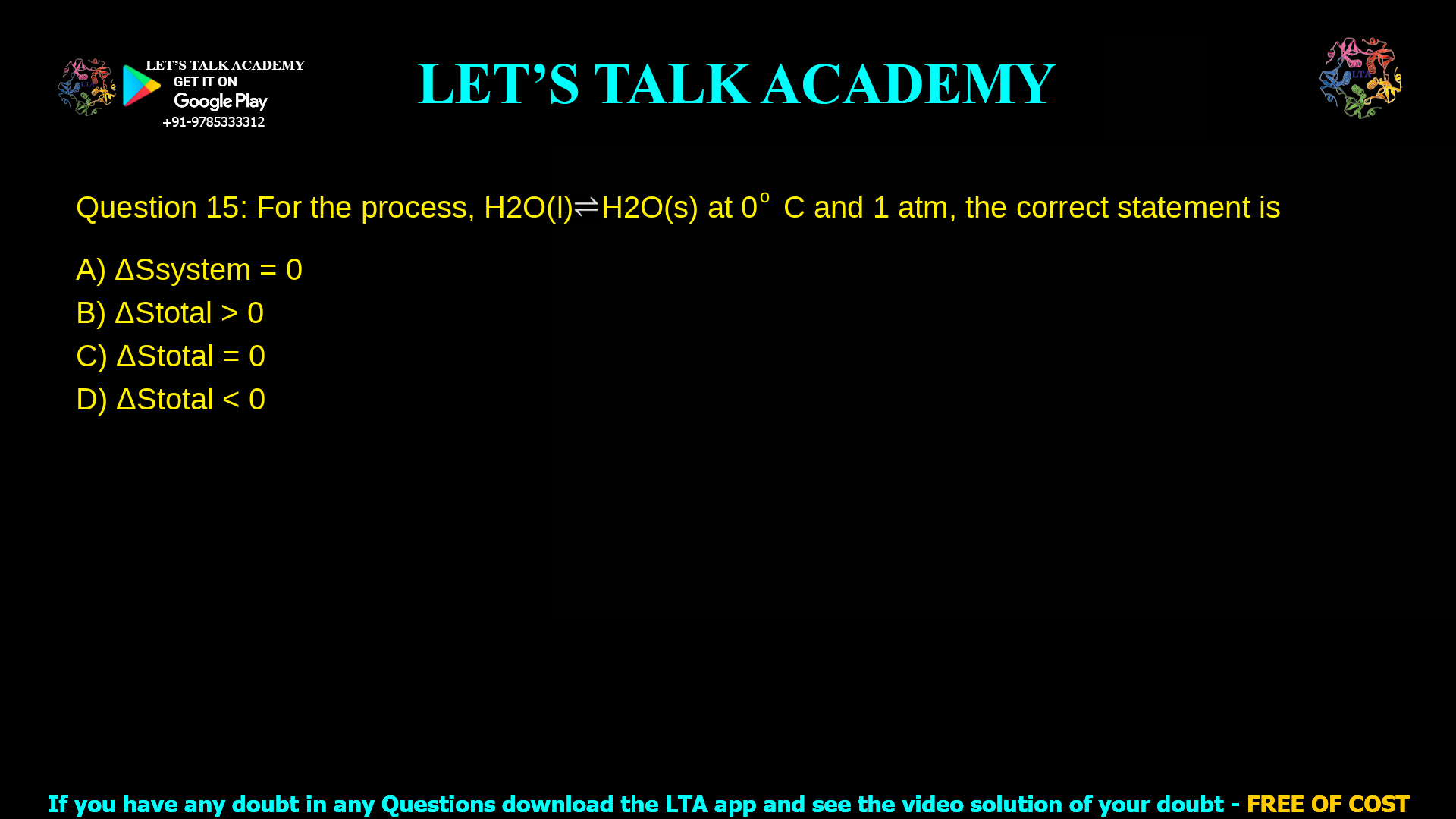
Q.15 For the process, H2O(l) ⇌ H2O(s) at 0 o C and 1 atm, the correct statement is (A) ΔSsystem = 0 (B) ΔStotal > 0 (C) ΔStotal = 0 (D) ΔStotal < 0

Unlocking Thermodynamics

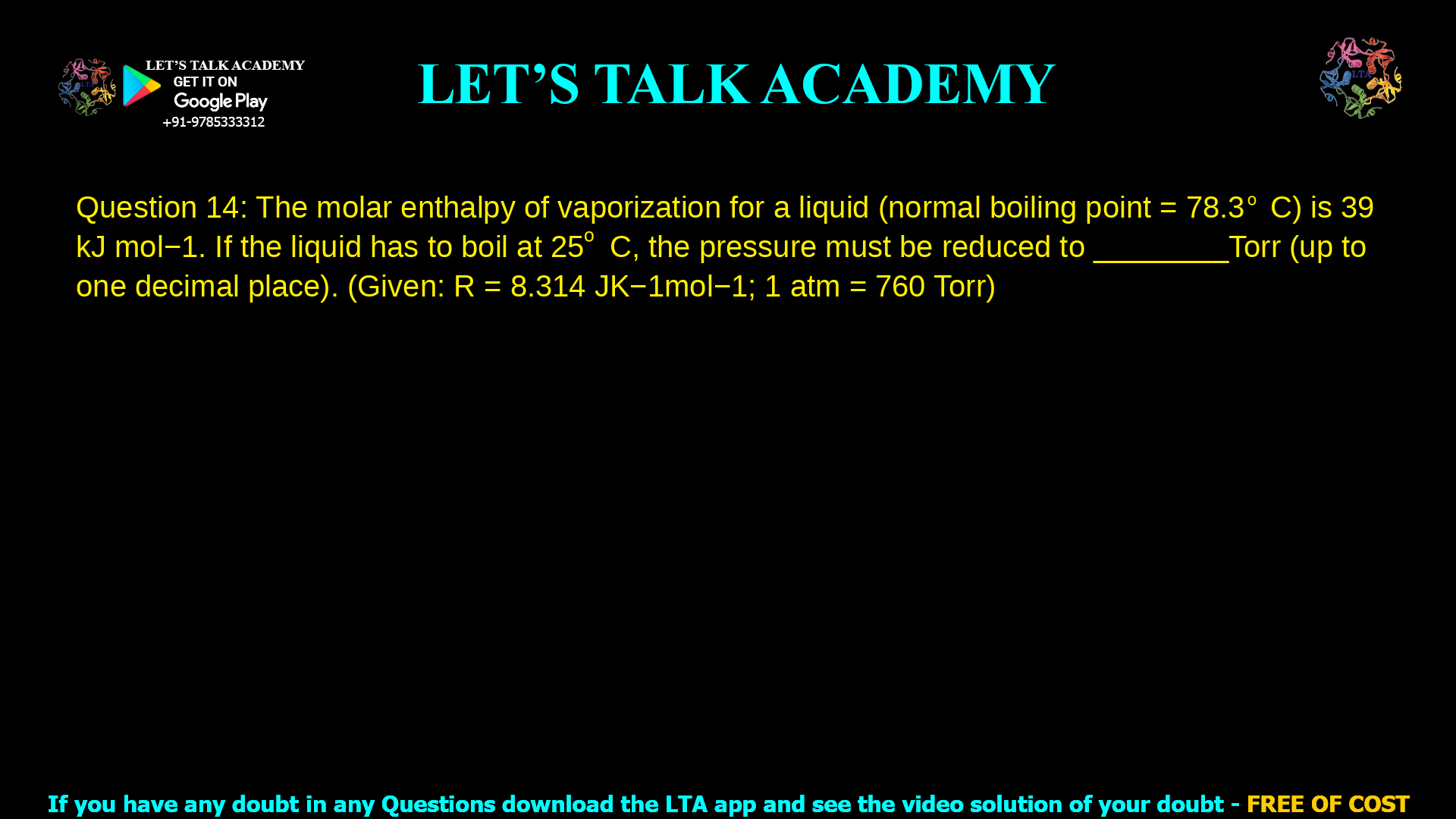
Q.14 The molar enthalpy of vaporization for a liquid (normal boiling point = 78.3 oC is 39 kJ mol−1. If the liquid has to boil at 25 oC, the pressure must be reduced to ________Torr (up to one decimal place). (Given: R = 8.314 JK−1 mol−1; 1 atm = 760 Torr)

Molar Enthalpy Vaporization

Q.13 The order of resonance energy for the following molecules is (A) (1) > (3) > (2) > (4)   (B) (1) > (3) > (4) > (2) (C) (1) > (4) > (2) > (3)   (D) (1) > (4) > (3) > (2)

Order of Resonance Energy in Aromatic Molecules

Q.12 The major product from the following reaction is

Sulfonation–Nitration of tert-Butylbenzene

Q.11 Among the following reactions, the one that produces achiral alcohol (after hydrolysis) is

Which Grignard Reaction Produces an Achiral Alcohol?

Q.10 In compounds K4[Fe(CN)6] (P) and Fe(CO)5 (Q), the iron metal centre is bonded to (A) C of CN− in P and C of CO in Q (B) N of CN− in P and C of CO in Q (C) C of CN− in P and O of CO in Q (D) N of CN− in P and O of CO in Q

K4[Fe(CN)6] and Fe(CO)5 Bonding

Q.9 Among the following pairs, the paramagnetic and diamagnetic species, respectively, are (A) CO and O2− (B) NO and CO (C) O22−and CO (D) NO+and O2−

Paramagnetic vs Diamagnetic Species

Q.8 Stability of [CrCl6]3− (X), [MnCl6]3− (Y) and [FeCl6]3− (Z) follows the order (Given: Atomic numbers o Cr = 24 Mn = 25 and Fe = 26) (A) X > Y > Z (B) X < Y < Z (C) Y < X < Z (D) X < Y = Z

Stability Order of [CrCl₆]³⁻, [MnCl₆]³⁻, and [FeCl₆]³⁻ Complexes

Q.7 If 50 mL of 0.02 M HCl is added to 950 mL of H2O, then the pH of the final solution will be________

pH of 50 mL 0.02 M HCl + 950 mL Water

Q.6 If the radius of first Bohr orbit is 0.53 Å, then the radius of the third Bohr orbit is (A) 2.12 Å (B) 4.77 Å (C) 1.59 Å (D) 3.18 Å

Radius of Third Orbit Calculation

Q.5 Among the following diagrams, the one that correctly describes a zero order reaction (X → product) is (Given: [X]o = initial concentration of reactant X; [X] = concentration of reactant X at time t and t1/2 = half-life period of reactant X)

Zero Order Reaction Graphs Explained

Q.4 For the electrochemical reaction Cu2+(aq) + Zn(s) ⇌ Cu(s) + Zn2+(aq), the equilibrium constant at 25 °C is 1.7 × 1037. The change in standard Gibbs free energy (ΔG°) for this reaction at that temperature will be ______ kJ mol−1 (up to one decimal place). (Given: R = 8.314 J K−1 mol−1)

Calculate ΔG° for Cu2+ + Zn Reaction

Q.3 The number of possible enantiomeric pair(s) in HOOC−CH(OH)−CH(OH)−COOH is________

HOOC-CH(OH)-CH(OH)-COOH Enantiomeric Pairs

Q.2 The Diels-Alder adduct from the reaction between cyclopentadiene and benzyne is

Diels-Alder Adduct Cyclopentadiene Benzene

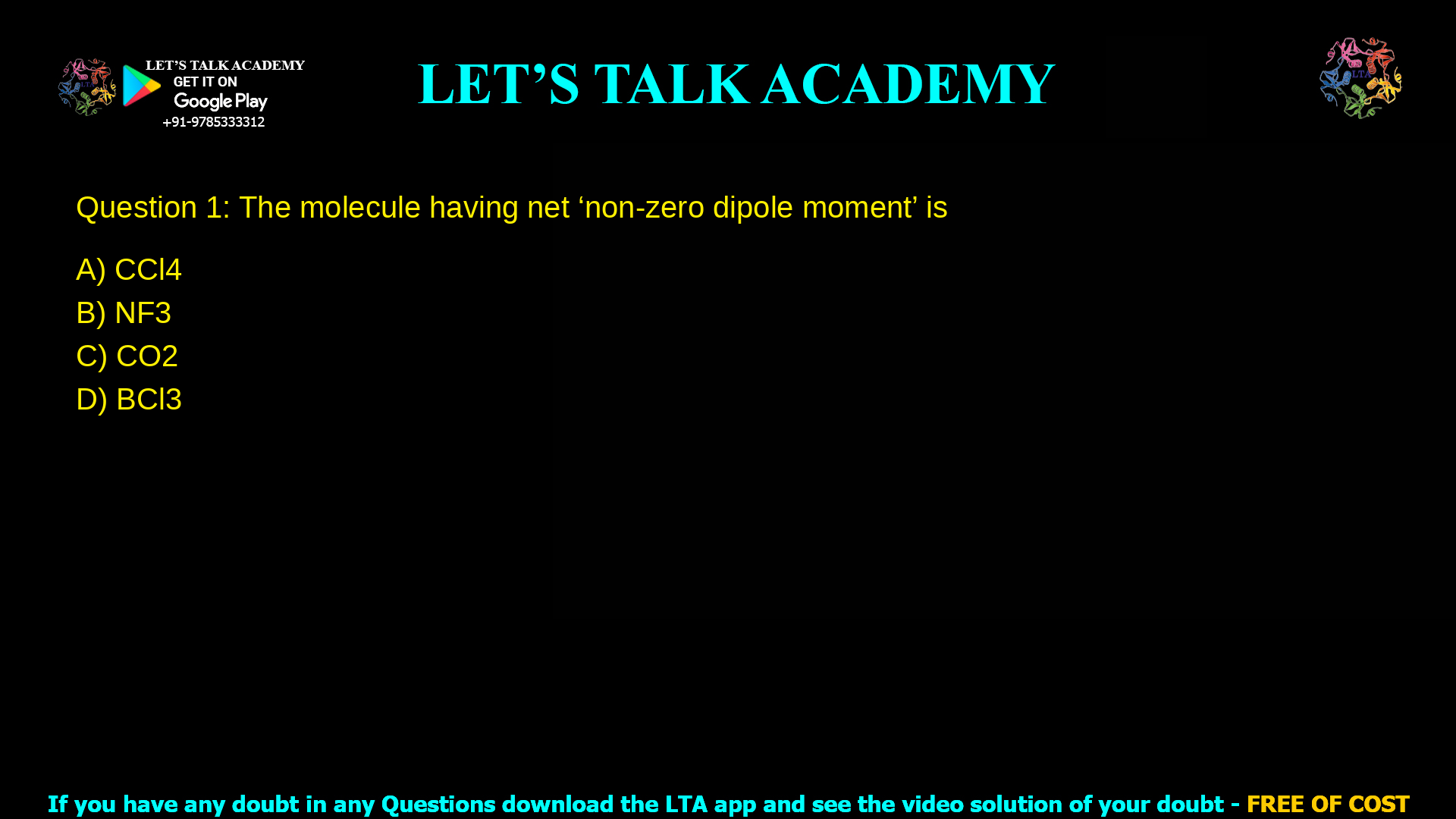
Q.1 The molecule having net ‘non-zero dipole moment’ is (A) CCl4 (B) NF3 (C) CO2 (D) BCl3

The Molecule with Net Non-Zero Dipole Moment

Latest Courses