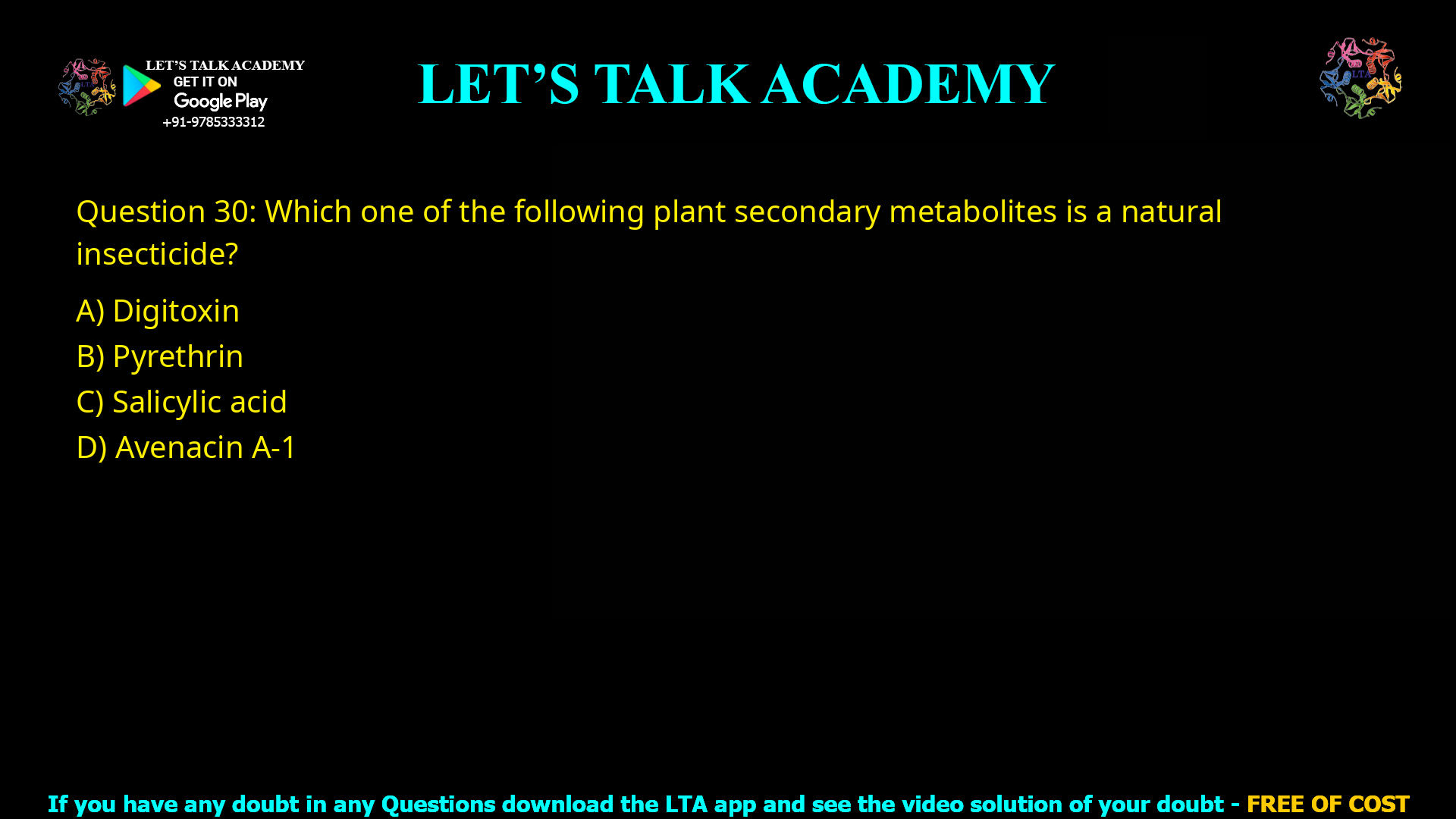
Q.30 Which one of the following plant secondary metabolites is a natural insecticide?
(A) Digitoxin (B) Pyrethrin (C) Salicylic acid (D) Avenacin A-1
Pyrethrin is the plant secondary metabolite that acts as a natural insecticide.
Option Analysis
Digitoxin serves as a cardiac glycoside from foxglove plants, primarily used in heart treatments due to its impact on heart muscle contraction. It lacks insecticidal properties and focuses on mammalian cardiac effects.
Pyrethrin, extracted from Chrysanthemum flowers, disrupts insect nervous systems by prolonging sodium channel opening, leading to paralysis and death. Commercial insecticides like pyrethroids derive from it.
Salicylic acid functions in plant defense signaling against pathogens and some herbivores via hormone-like pathways, but it does not qualify as a direct natural insecticide.
Avenacin A-1 provides antifungal protection to oat roots by deterring soil pathogens, with no established role as an insecticide.
Pyrethrin stands out as the key plant secondary metabolite functioning as a natural insecticide among options like Digitoxin, Salicylic acid, and Avenacin A-1. This compound from Chrysanthemum cinerariifolium offers eco-friendly pest control, vital for sustainable agriculture and biotechnology research.
What Are Plant Secondary Metabolites?
Plant secondary metabolites include diverse compounds like terpenoids, phenolics, and alkaloids that aid defense, not primary growth. They yield natural insecticides, pharmaceuticals, and flavors, drawing interest in molecular biology and genetic engineering.
Breaking Down the Options
-
Digitoxin: Cardiac glycoside from Digitalis; treats heart failure, toxic to mammals, no insecticidal action.
-
Pyrethrin: Terpenoid neurotoxin targeting insect sodium channels; basis for pyrethroid pesticides.
-
Salicylic acid: Hormone for plant immunity against pathogens; indirect herbivore deterrence.
-
Avenacin A-1: Oat saponin antifungal for root protection; not insecticidal.
| Metabolite | Source Plant | Primary Function | Insecticidal? |
|---|---|---|---|
| Digitoxin | Foxglove | Cardiac therapy | No |
| Pyrethrin | Chrysanthemum | Insect neurotoxin | Yes |
| Salicylic acid | Many plants | Defense signaling | No |
| Avenacin A-1 | Oats | Antifungal | No |
Why Pyrethrin Excels as Natural Insecticide
Pyrethrin rapidly kills pests like mosquitoes and aphids by overexciting nerves, with low mammal toxicity due to quick metabolism. Modern biotech refines it via genetic engineering for crop resistance.
Applications in Biotechnology
Researchers engineer pyrethrin pathways into crops for built-in pest control, reducing synthetic chemical use. This aligns with molecular biology advances in sustainable farming.


