37. In which one of the following human disorders, parents or grandparents are said to carry pre-mutations? (1) Down syndrome (2) Fragile X syndrome (3) Klinefelter syndrome (4) Alkaptonuria

Pre-mutations and Inheritance in Fragile X Syndrome

36. Somatic recombination was caused by mild exposure to radiation on flies heterozygous for a given allele during specific stages of development and the individuals were allowed to develop. Such individuals are likely to have A. clones of homozygous cells in heterozygous body. B. site specific mutagenesis. C. twin spots, i.e., patches of mutants cells and homozygous wild type cells in heterozygous body. D. tissue specific expression of the given allele. Which of the following combination of answers will be most appropriate? (1) A and B (2) B and C (3) A and C (4) C and D

Somatic Recombination in Drosophila

35. Two auxotrophic strains of E. coli: A (met- bio- thr+ leu+ thi+) and B (met+ bio+ thr- leu- thi-) were incubated together for 18 hours in liquid medium and then ~108 cells were plated on minimal medium. Prototrophs were observed at frequency of 1 X 10⁻⁷ cells. This may have happened by process of genetic recombination between two strains or by mutation of strains. Which of the following control experiment would help rule out the possibility of mutation? (1) Plating strains A and B directly on minimal medium (2) Growing the mixture of strain A and B for 18 hours and then plating on complete medium (3) Growing strains A and B individually in a liquid complete medium for 18 hours and then plating on a minimal medium (4) Growing the obtained prototroph in a liquid complete medium for 18 hours and then plating them on minimal medium

Auxotrophic E. coli Strains Recombination vs Mutation Control Experiment

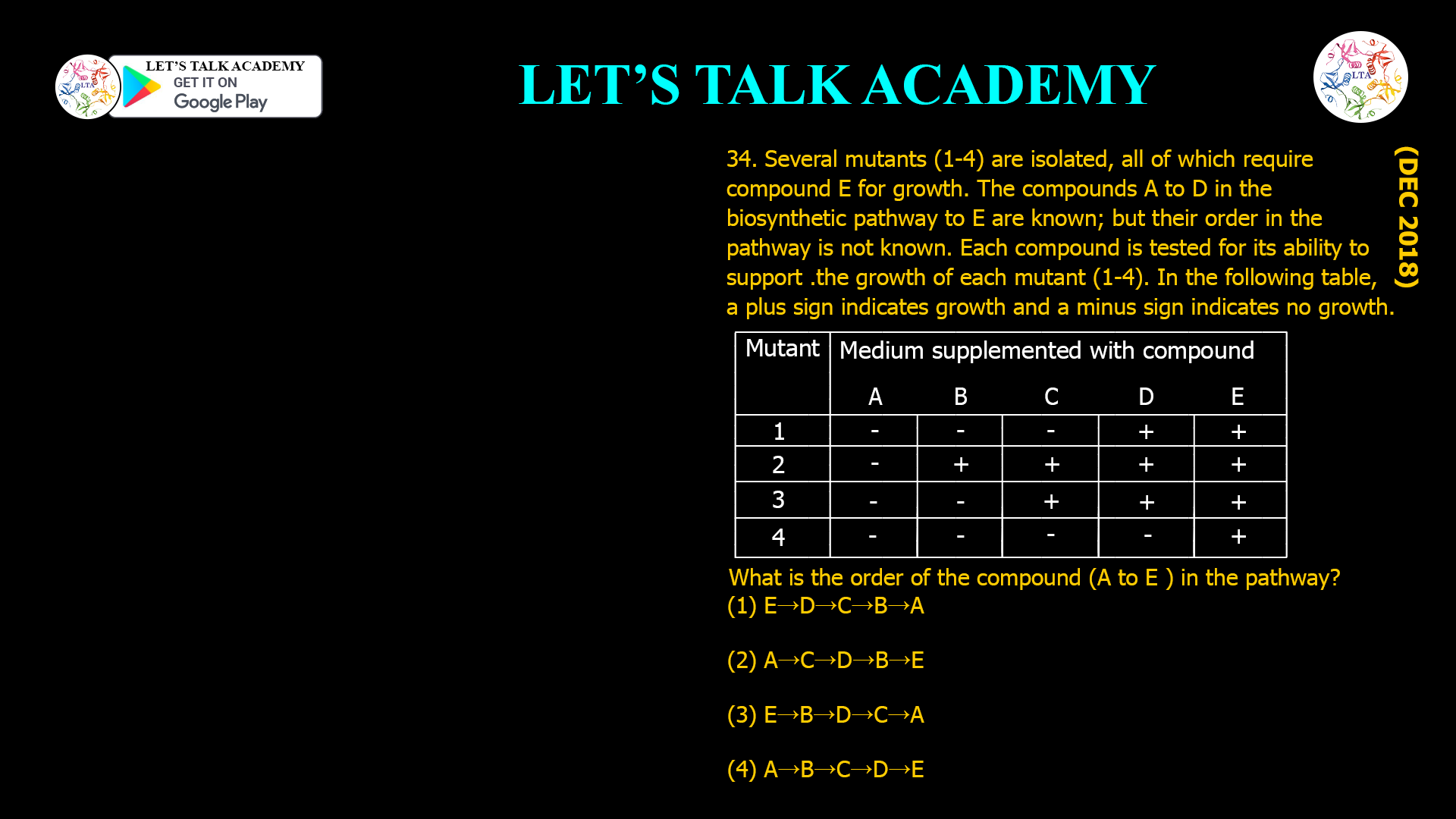
34. Several mutants (1-4) are isolated, all of which require compound E for growth. The compounds A to D in the biosynthetic pathway to E are known; but their order in the pathway is not known. Each compound is tested for its ability.to support .the growth of each mutant (1-4). In the following table, a plus sign indicates growth and a minus sign indicates no growth. Mutant Medium supplemented with compound A B C D E 1 - - - + + 2 - + + + + 3 - - + + + 4 - - - - + What is the order of the compound (A to E ) in the pathway? (1) EDCBA (2) ACDBE (3) EBDCA (4) ABCDE

Determining Order of Compounds from Mutant Growth Data (A to E)

33. Three E. coli mutants were isolated which require compound 'A' for their growth. The compounds B, C and D are known to be involved in biosynthetic pathway to A. In order to determine pathway, the mutants were grown in a minimal medium supplemented with ONE OF THE COMPOUNDS, A TO D. The results obtained are summarized below: '+' = Growth on medium 'O' = No growth Which of the following equation represents the biosynthetic pathway of A? (1) BCDA (2) CDBA (3) BDCA (4) ACDB

Decoding E. coli Mutant Pathways

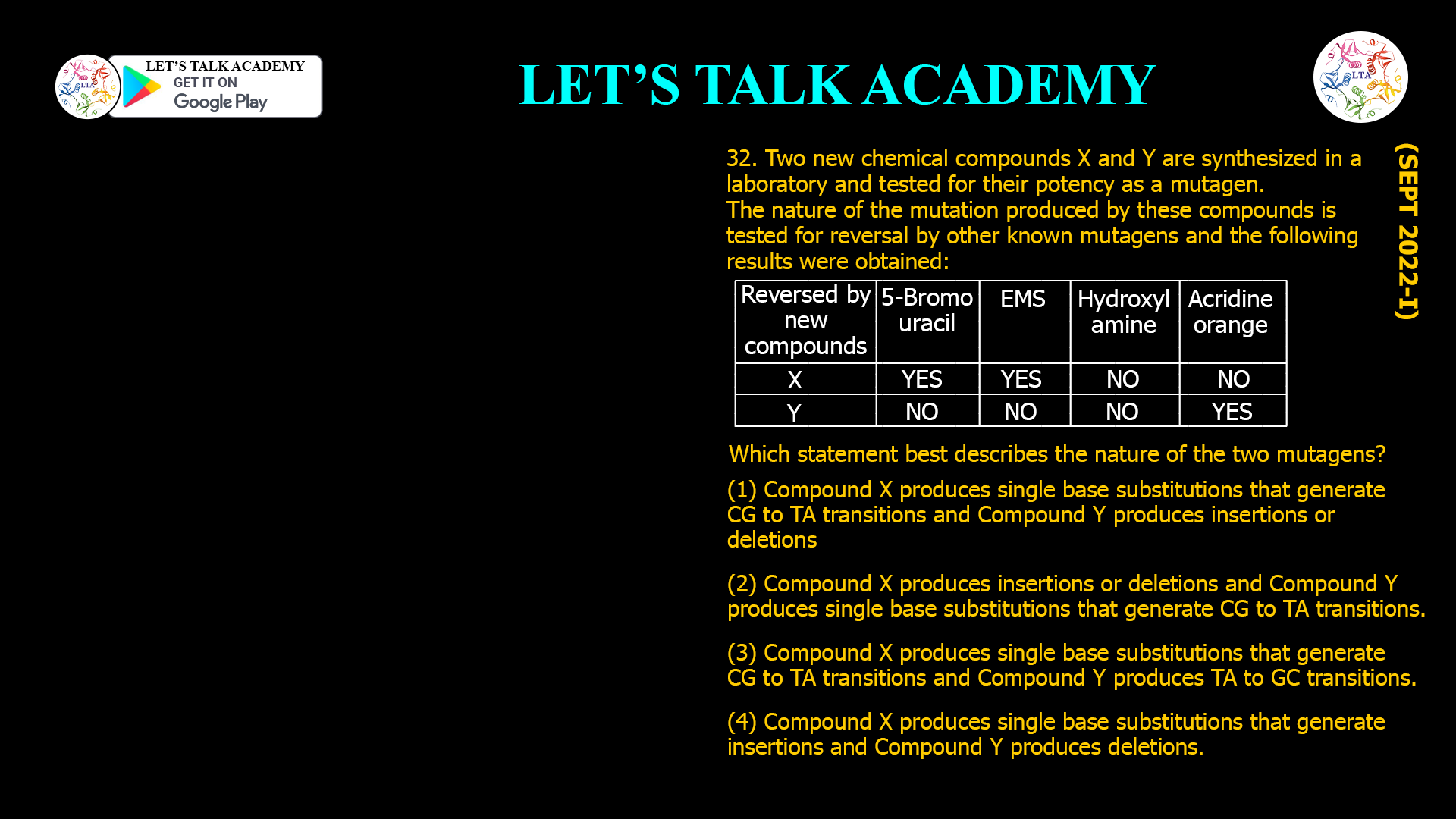
Two new chemical compounds X and Y are synthesized in a laboratory and tested for their potency as a mutagen, The nature of the mutation produced by these compounds is tested for reversal by other known mutagens and the following results were obtained: Reversed by new compounds 5-Bromo uracil EMS Hydroxyl amine Acridine orange X Yes Yes No No Y No No No Yes Which statement best describes the nature of the two mutagens? (1) Compound X produces single base substitutions that generate CG to TA transitions and Compound Y produces insertions or deletions (2) Compound X produces insertions or deletions and Compound Y produces single base substitutions that generate CG to TA transitions. (3) Compound X produces single base substitutions that generate CG to TA transitions and Compound Y produces TA to GC transitions. (4) Compound X produces single base substitutions that generate insertions and Compound Y produces deletions.

Mutagenic Action of Compounds X and Y Explained

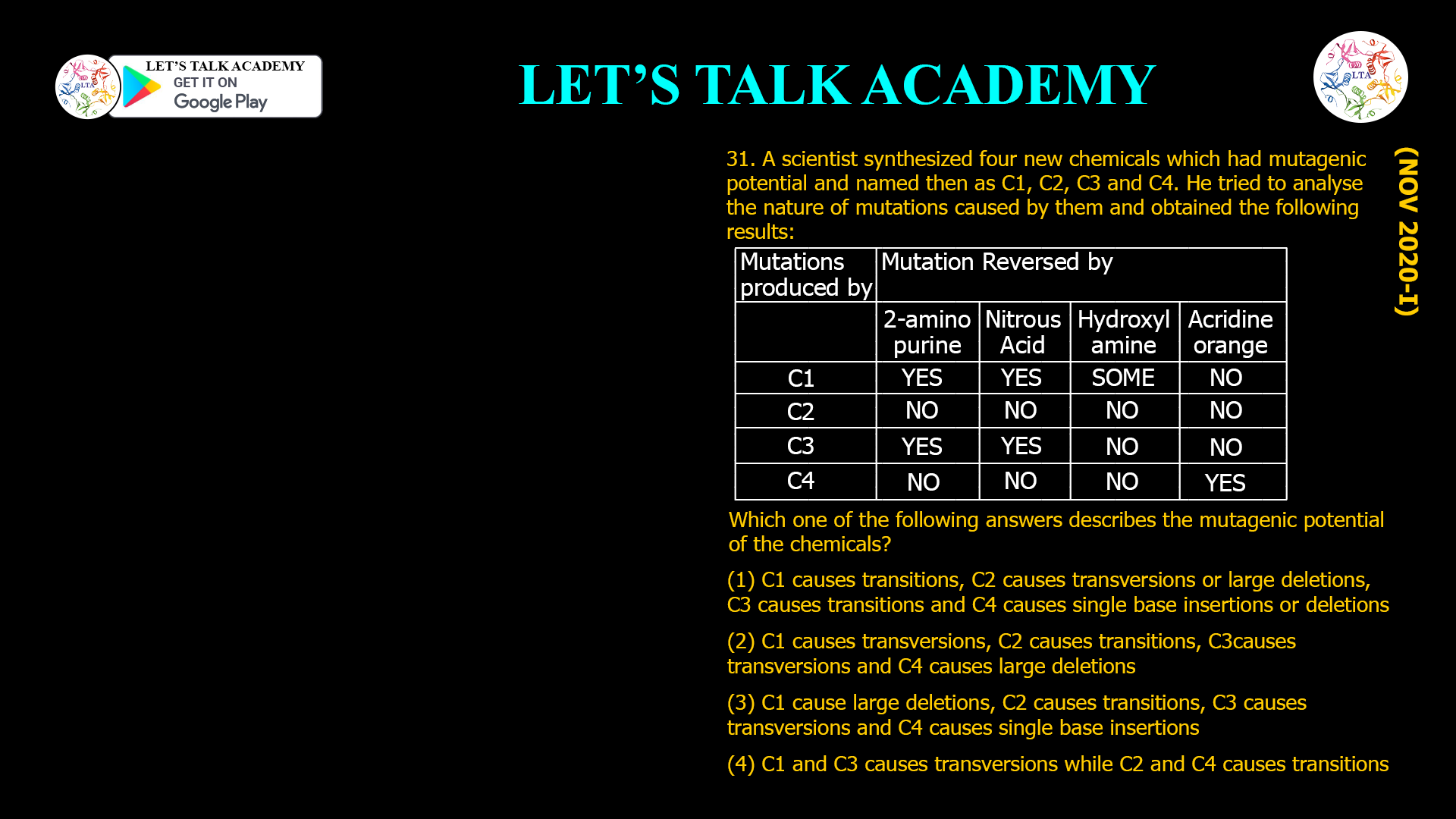
31. A scientist synthesized four new chemicals which had mutagenic potential and named then as Cl, C2, C3 and C4. He tried to analyse the nature of mutations caused by them and obtained the following results: Which one of the following answers describes the mutagenic potential of the chemicals? (1) C1 causes transitions, C2 causes transversions or large deletions, C3 causes transitions and C4 causes single base insertions or deletions (2) C1 causes transversions, C2 causes transitions, C3 causes transversions and C4 causes large deletions (3) Cl cause large deletions, C2 causes transitions, C3 causes transversions and C4 causes single base insertions (4) Cl and C3 causes transversions while C2 and C4 causes transitions

Mutagenic Potential of Chemicals C1, C2, C3 and C4

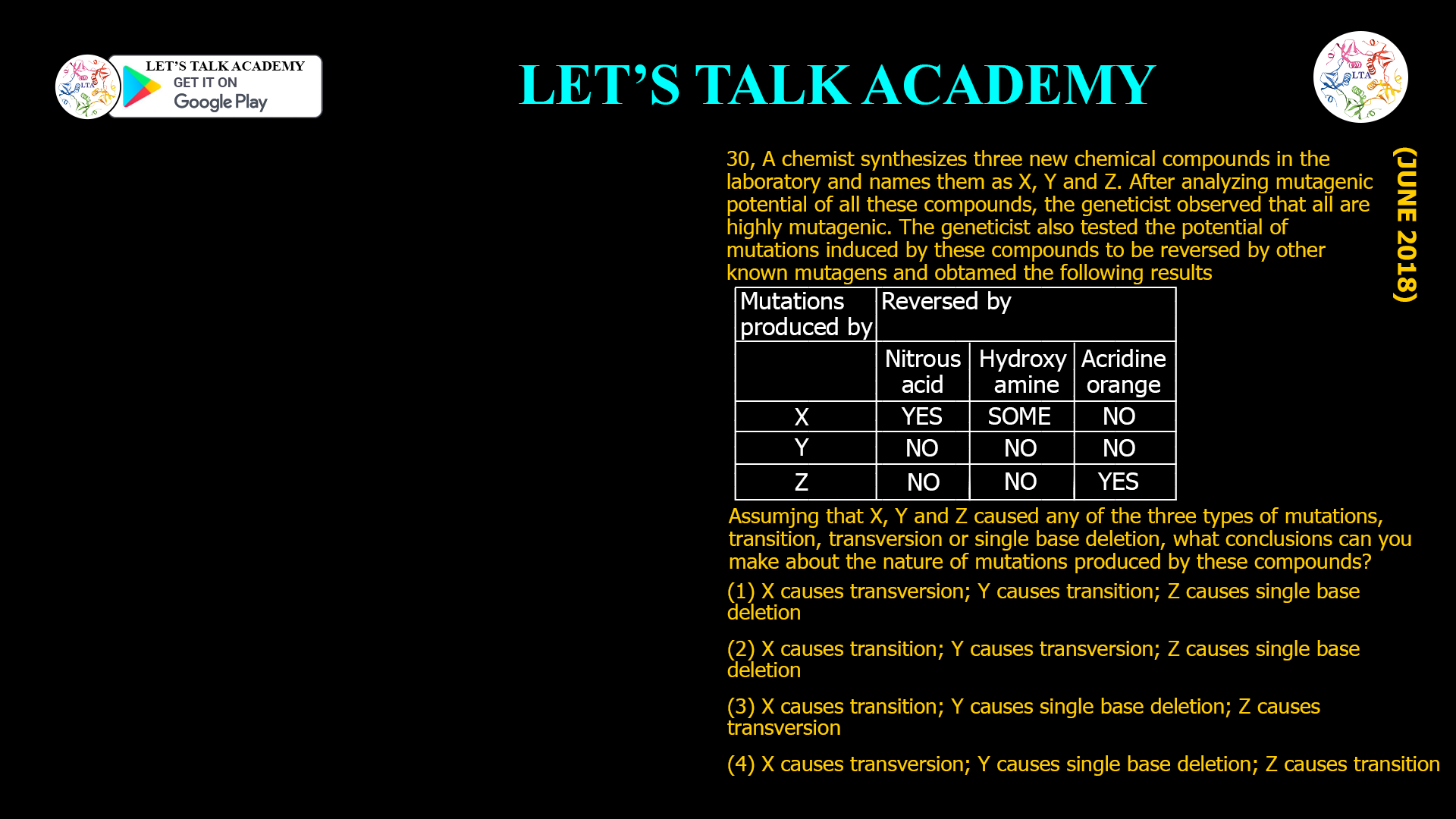
30, A chemist synthesizes three new chemical compounds in the laboratory and names them as X, Y and Z. After analyzing mutagenic potential of all these compounds, the geneticist observed that all are highly mutagenic. The geneticist also tested the potential of mutations induced by these compounds to be reversed by other known mutagens and obtamed the following results Mutation produce by Reversed by Nitrous acid Hydroxyl amine Acridine orange X YES SOME NO Y NO NO NO Z NO NO YES Assumjng that X, Y and Z caused any of the three types of mutations, transition, transversion or single base deletion, what conclusions can you make about the nature of mutations produced by these compounds? (1) X causes transversion; Y causes transition; Z causes single base deletion (2) X causes transition; Y causes transversion; Z causes single base deletion (3) X causes transition; Y causes single base deletion; Z causes transversion (4) X causes transversion; Y causes single base deletion; Z causes transition Mutations produced by Mutation Reversed by 2-amino purine Nitrous Acid Hydroxyl amine Acridine orange C1 YES YES SOME NO C2 NO NO NO NO C3 YES YES NO NO Mutation produce by Reversed by Nitrous acid Hydroxyl amine Acridine orange X YES SOME NO Y NO NO NO Z NO NO YES Assumjng that X, Y and Z caused any of the three types of mutations, transition, transversion or single base deletion, what conclusions can you make about the nature of mutations produced by these compounds? (1) X causes transversion; Y causes transition; Z causes single base deletion (2) X causes transition; Y causes transversion; Z causes single base deletion (3) X causes transition; Y causes single base deletion; Z causes transversion (4) X causes transversion; Y causes single base deletion; Z causes transition

Nitrous Acid, Hydroxylamine and Acridine Orange with X, Y, Z

29. A chemist synthesized three new chemical compounds, MI, M2 and M3. The compounds were tested for their mutagenic potential and were found to be highly mutagenic. Tests were made to characterize the nature of mutations by allowing the reversion with other mutagens. The following results were obtained: Mutations produced by Reversed by 2-amino purine Nitrous Acid Hydroxyl amine Acridine orange M1 NO NO NO NO M2 YES YES NO NO M3 NO NO NO YES C4 NO NO NO YES Which one of the following conclusions drawn regarding the nature of mutations by the compounds is correct? (1) M1- transversion, M2 – insertion, M3 –deletion (2) M1- transition, M2- transversion, M3 – insertion (3) M1 – insertion, M2 – transition, M3 – transversion (4) M1 – transversion, M2 – transition, M3 – insertion

Identifying Transition, Transversion and Insertion Mutations from Reversion Tests

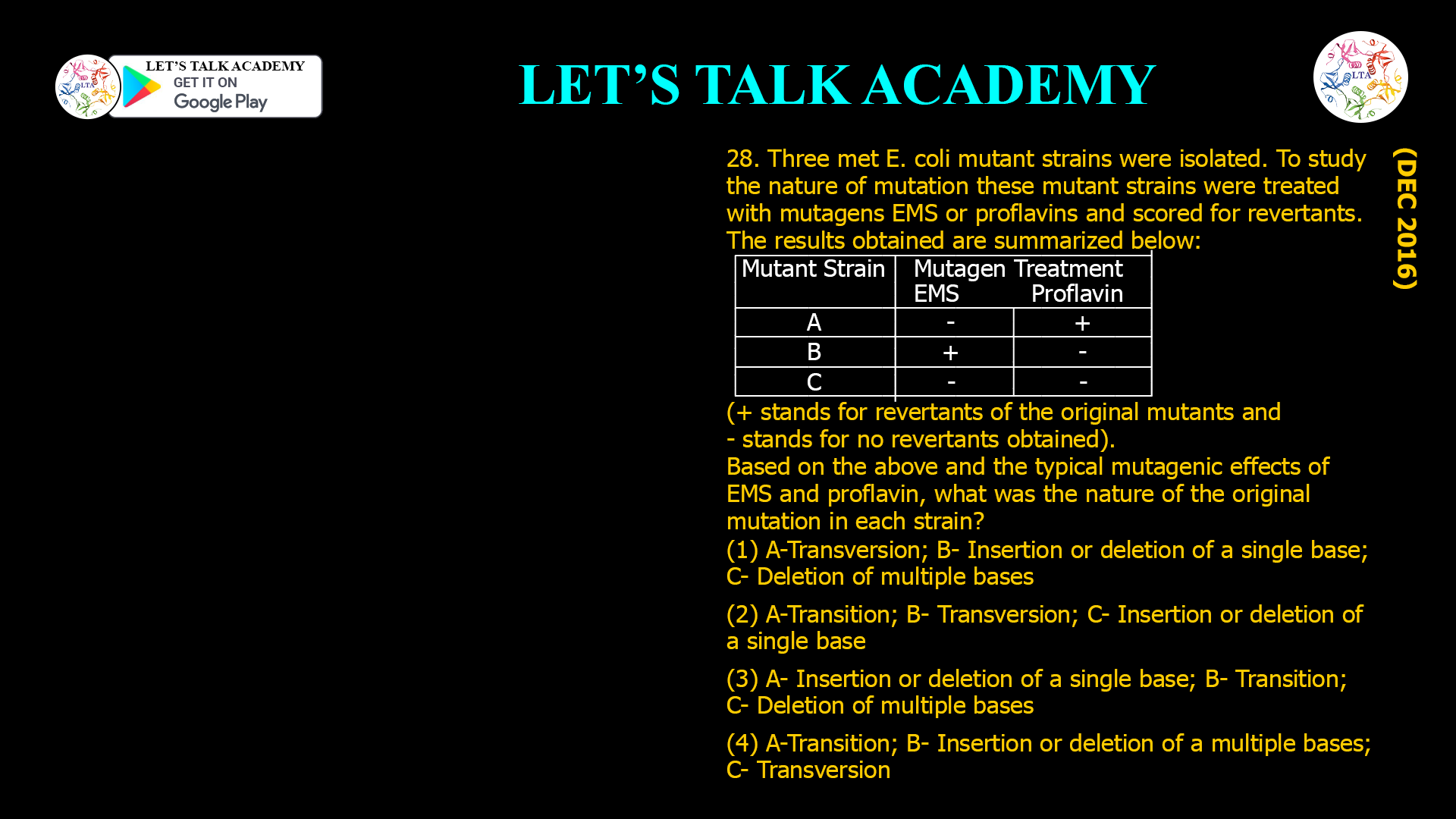
28. Three met E. coli mutant strains were isolated. To study the nature of mutation these mutant strains were treated with mutagens EMS or proflavins and scored for revertants. The results obtained are summarized below: Mutant Strain Mutagen Treatment EMS Proflavin A - + B + - C - - (+ stands for revertants of the original mutants and - stands for no revertants obtained). Based on the above and the typical mutagenic effects of EMS and proflavin, what was the nature of the original mutation in each strain? (1) A-Transversion; B- Insertion or deletion of a single base; C- Deletion of multiple bases (2) A-Transition; B- Transversion; C- Insertion or deletion of a single base (3) A- Insertion or deletion of a single base; B- Transition; C- Deletion of multiple bases (4) A-Transition; B- Insertion or deletion of a multiple bases; C- Transversion

E. coli Mutation Question on EMS and Proflavin

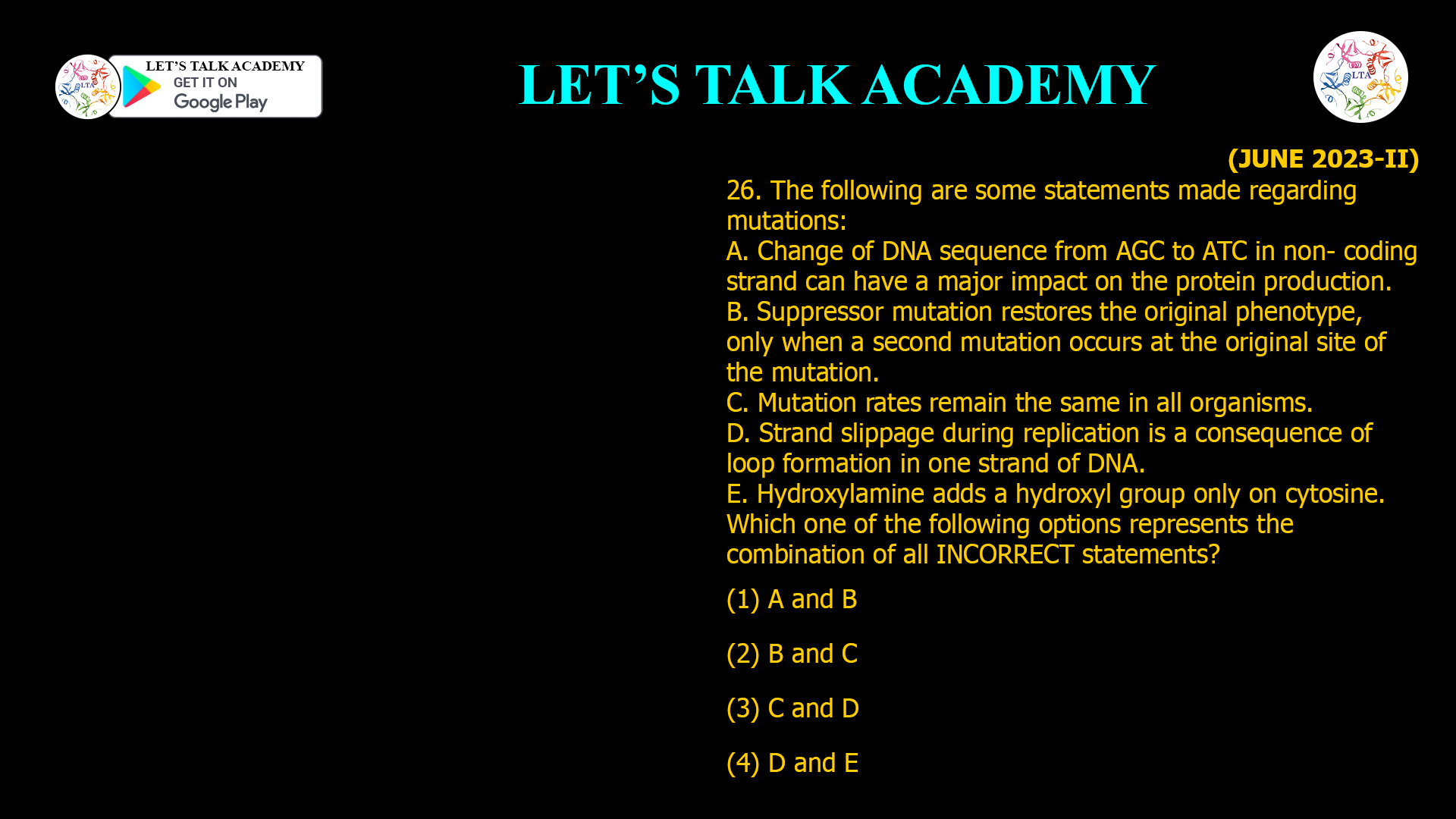
26. The following are some statements made regarding mutations: A. Change of DNA sequence from AGC to ATC in non- coding strand can have a major impact on the protein production. B. Suppressor mutation restores the original phenotype, only when a second mutation occurs at the original site of the mutation. C. Mutation rates remain the same in all organisms. D. Strand slippage during replication is a consequence of loop formation in one strand of DNA. E. Hydroxylamine adds a hydroxyl group only on cytosine. Which one of the following options represents the combination of all INCORRECT statements? (1) A and B (2) B and C (3) C and D (4) D and E

Mutations Statements

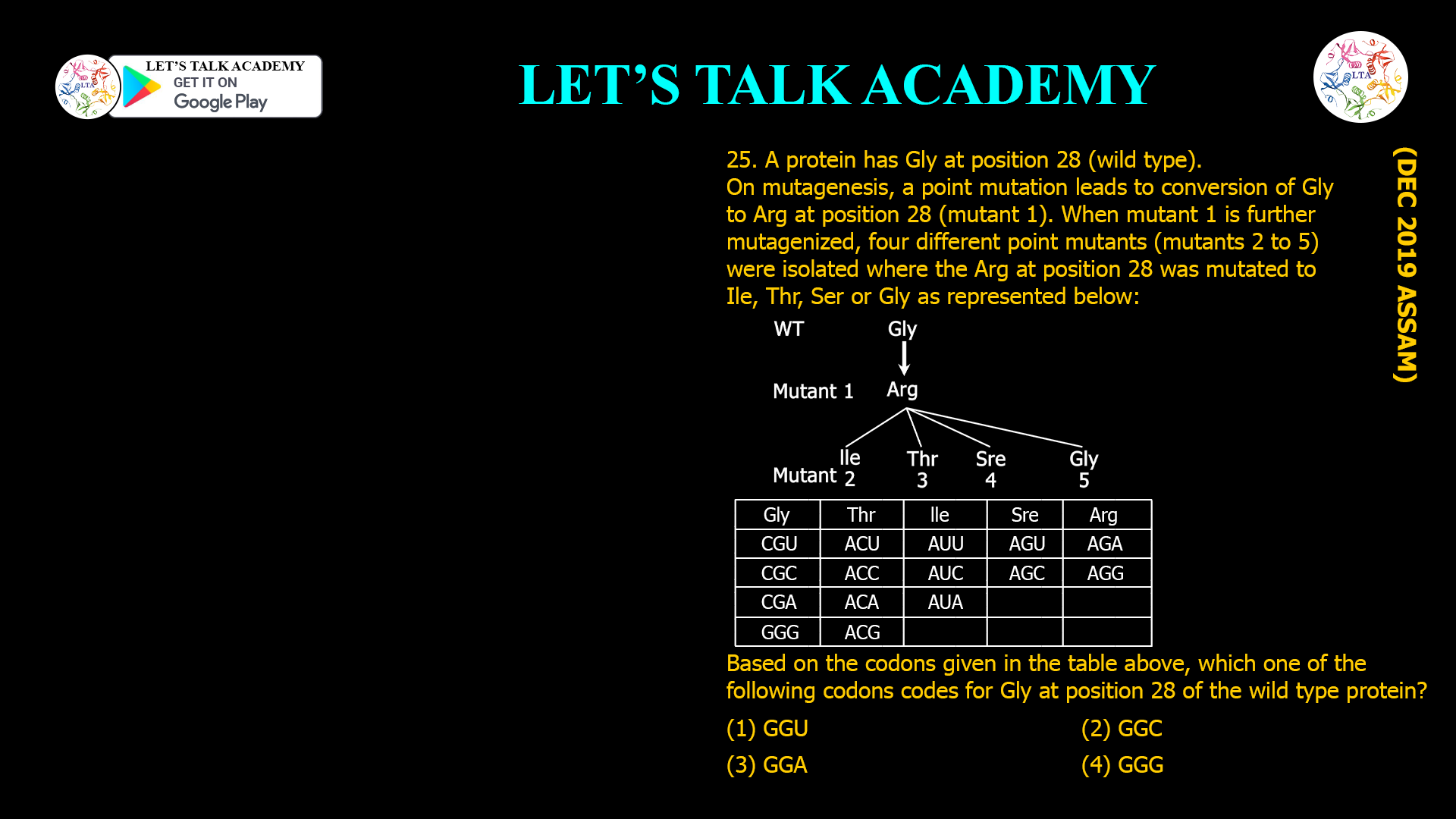
25. A protein has Gly at position 28 (wild type). On mutagenesis, a point mutation leads to conversion of Gly to Arg at position 28 (mutant 1). When mutant 1 is further mutagenized, four different point mutants (mutants 2 to 5) were isolated where the Arg at position 28 was mutated to Ile, Thr, Ser or Gly as represented below: Based on the codons given in the table above, which one of the following codons codes for Gly at position 28 of the wild type protein? (1) GGU (2) GGC (3) GGA (4) GGG

Identifying the Glycine Codon from Mutational Pathways

24. The base analog 2-aminopurine pairs With thymine, and can occasionally pair with cytosine. The type of mutation induced by 2-aminopurine is (1) transversion (2) Transition. (3) deletion (4) nonsense.

Understanding the Mutation Type Induced by 2-Aminopurine Base Analog

23. Dearnination of bases is a common chemical event that produces spontaneous mutation. Which one of the following bases will be formed by deamination of 5-methylcytosine? (1) Uracil (2) Thymine (3) Cytosine (4) Guanine

Deamination of 5-Methylcytosine Produces Thymine

22. 2- Aminopurine induces mutation by (1) Base pair change. (2) Frameshift (3) Duplication (4) Deletion

2-Aminopurine Induces Mutation by Base Pair Change

21. Which one of the following chemicals is a DNA intercalator? (1) 5-Bromouracil (2) Ethyl methane sulfonate (3) Acridine orange (4) UV

DNA Intercalator

20. 5-Bromouracil is a base analog that can cause mutation when incorporated into DNA. Which of the following is the most likely change that 5-Bromouracil induces: (1) T:A to C:G (2)T:A to A:T (3) G:C to T:A (4) C:G to A:T

5-Bromouracil Mutation

19. Which of the following mutagens is most likely to results in a single amino acid change in a gene product? (1) Acridine orange (2) X-rays (3) EMS (4) Ethidium bromide

Mutagen Causing Single Amino Acid Change

18. Ames test is used to evaluate mutagens in the environment. Which of the following statements, about Ames test are true? A. The mutagenic effect of a compound tested using an auxotrophic strain of Salmonella typhimurium B. The mutagenic effect of a compound is tested using His strain of Escherichia coli. C. Using appropriate strains, compounds causing base substitutions and frame shift D. Liver enzymes are important as they are activated by test compound to evaluate its mutagenicity potential. E. Many compounds may have to be converted to bioactive metabolites, which is carried out by the enzymes from the liver (1) A, Cand D (2) A, B and D (3) A, C and E (4) A and E only

Detailed Explanation of Ames Test for Detecting Environmental Mutagens

17. To replace animal use in testing hepatic toxicity of a drug on trial, which one of the following would be used in vitro to be closest to the in vivo scenario? (1) Liver cells (2) Hepatic cell lines (3) Liver slices (4) Co-culture of liver parenchymal cells and kupfer cells

Best In Vitro Model to Replace Animal Testing for Hepatic Drug Toxicity

16. The effect of nonsense mutation could be nullified by reversion as well as suppression. Which of the following processes will help to distinguish between the two kinds of revertants? (1) Complementation (2) Transgenesis (3) Test for allelism (4) Recombination

Distinguishing Revertants in Nonsense Mutations

15. A hypothetical gene encodes a protein with the following amino acid sequence: Phe- Pro- Thr- Ala- Val-Arg- Ser A mutation of single nucleotide alters the amino acid sequence to Phe- Leu- Leu- Leu- Leu- A second single nucleotide mutation occurs in same gene restoring back the amino acid sequence to the original. The following statements were made regarding the nature and location of the first mutation and that of the intragenic suppressor mutation: A. The first mutation is a deletion in the second codon. B. The first mutation is an insertion in the second codon. C. The intragenic suppressor mutation is an insertion in the second codon D. The intragenic suppressor mutation is a deletion in the third codon Which combination of the above statements is correct? (1) A and C (2) A and D (3) B and C (4) B and D

Frameshift Mutation and Intragenic Suppressor

14. A gene encoding t-RNA undergoes a mutational event in its anticodon region that enables it to recognize a mutant nonsense codon and permit completion of translation. Such a mutation is known as (1) silent mutation (2) neutral mutation (3) reversion (4) Non sense suppressor

Nonsense Suppressor Mutation in tRNA

13. Aspartic acid (Asp) is specified by the codon GAU and GAC. After mutation, Asp is changed to Alanine represented by GCX, where X may be A, U, C and G. The reversion of the mutation could only be done with reactive oxygen species. The nature of mutation is considered to be (1) transition (2) transversion (3) depurination (4) either transition or transversion

Understanding Mutation Types

12. Mutation in gene 'X' leads to lethality in a haploid organjsm. Which one of the following is best suited to analyse the function of gene ‘X’? (1) Pleiotropic mutants (2) Temperature sensitive mutants (3) Recessive mutants (4) Mutants with low penetrance

Analyzing Lethal Mutations in Haploid Organisms Using Temperature-Sensitive Mutants

11. Spontaneity of mutation means (1) Mutation in absence of exogenous mutagen (2) Mutation directly proportion to presence of mutagen (3) Mutation inversely proportion to presence of mutagen (4) Mutation at in appropriate time

Spontaneity of Mutation in Genetics

10. An insertion of single nucleotide in coding region of gene leads to frameshift mutation and result is formation of nonfunctional protein. Under certain condition second suppressor mutation in another gene may result into formation of functional protein. How suppressor mutation can do this (1) There is insertional mutation in gene of tRNA anticodon such that it is able to interact with four nucleotide codon (2) Mutation in gene of ribosome leading to frameshift over transcript (3) Mutation in gene whose product bulge out extra nucleotide (4) Another mutation reverses the original insertion

How Suppressor Mutations Correct Frameshift Mutations

9. Consider the following DNA sequence 5’-ATGGGCATAGACGATATGGTAG-3’. Insertion of G between 3rd and 4th position lead to frameshift mutation and non-functional protein synthesis. Which intragenic suppressor mutation will have minimum effect on functioning of protein? (1) Insertion of nucleotide between 5th and 6th position (2) Insertion of three nucleotide between 5th and 6th position (3) Deletion of a nucleotide between 5th and 6th position (4) Deletion of a nucleotide between 11th and 12th position

How Intragenic Suppressor Mutations Minimize Frameshift Mutation Effects in DNA Sequences

8. In a lac operon, a nonsense mutation in the gene encoding beta-galactosidase was found to interfere with the expression of downstream permease and transacetylase genes. Which one of the following may explain this observation most appropriately? (1) Polar effect of the mutation (2) trans-effect of the mutation (3) Binding of the release factor to the nonsense codon prevents translation of the downstream cistrons (4) Formation of a stem-loop structure in the upstream cistron prevents translation of downstream cistrons.

Lac Operon Nonsense Mutation Polar Effect

7. An bacterial operon contains three structural genes A, B, and C in the same order. If polar mutation occurs in gene B, then the effect in protein would be observed in (1) In all proteins A, B, and C (2) Only IN B and C (3) Only in B (4) Complete loss of all proteins

Effect of Polar Mutation in Bacterial Operons

6. If mutation changes codon in such a way that there is no effect on functioning and sequence of protein. This type of mutation is termed as (1) Silent mutation (2) Mis-sense (3) Transition (4) Frameshift

Silent Mutation

5. If substitution is the only possible type of mutation, then which technique would be no more useful for detecting them? (1) DNA sequencing (2) PCR amplification (3) Database searching (4) Restriction fragment analysis

Substitution Mutation Detection

4. The frame shift mutation is induced by- (1) Nitrous oxide (2) Acradines (3) EMS (4) UV rays

Frame Shift Mutation Induced by Acridines

3. Point mutation in which there is deletion or addition of one base pair is termed as (1) Deletion (2) Transition (3) Transversion (4) Frame shift mutation

Point Mutation

2. A single base pair mutation occurs in strand and mutant strand has a sequence CATTACCG, while its complementary strand has a sequence GTTATGGC. It means mutation has changed base pair (1) A - T (2) T --T (3) T-----A (4) A------A

Single Base Pair Mutation in DNA

1. Which one of the following situations could be termed as intergenic suppression of a mutation in a coding sequence? (1) A nonsense mutation in the codon leading to lack of interaction with cognate tRNA anticodon (2) The amber mutation in the codon recognized by the altered anticodon of a tRNA (3) A read-through of a stop codon by the ribosomes (4) A frameshift mutation skipping an otherwise stop codon

Intergenic Suppression of Mutation in Coding Sequence

Latest Courses