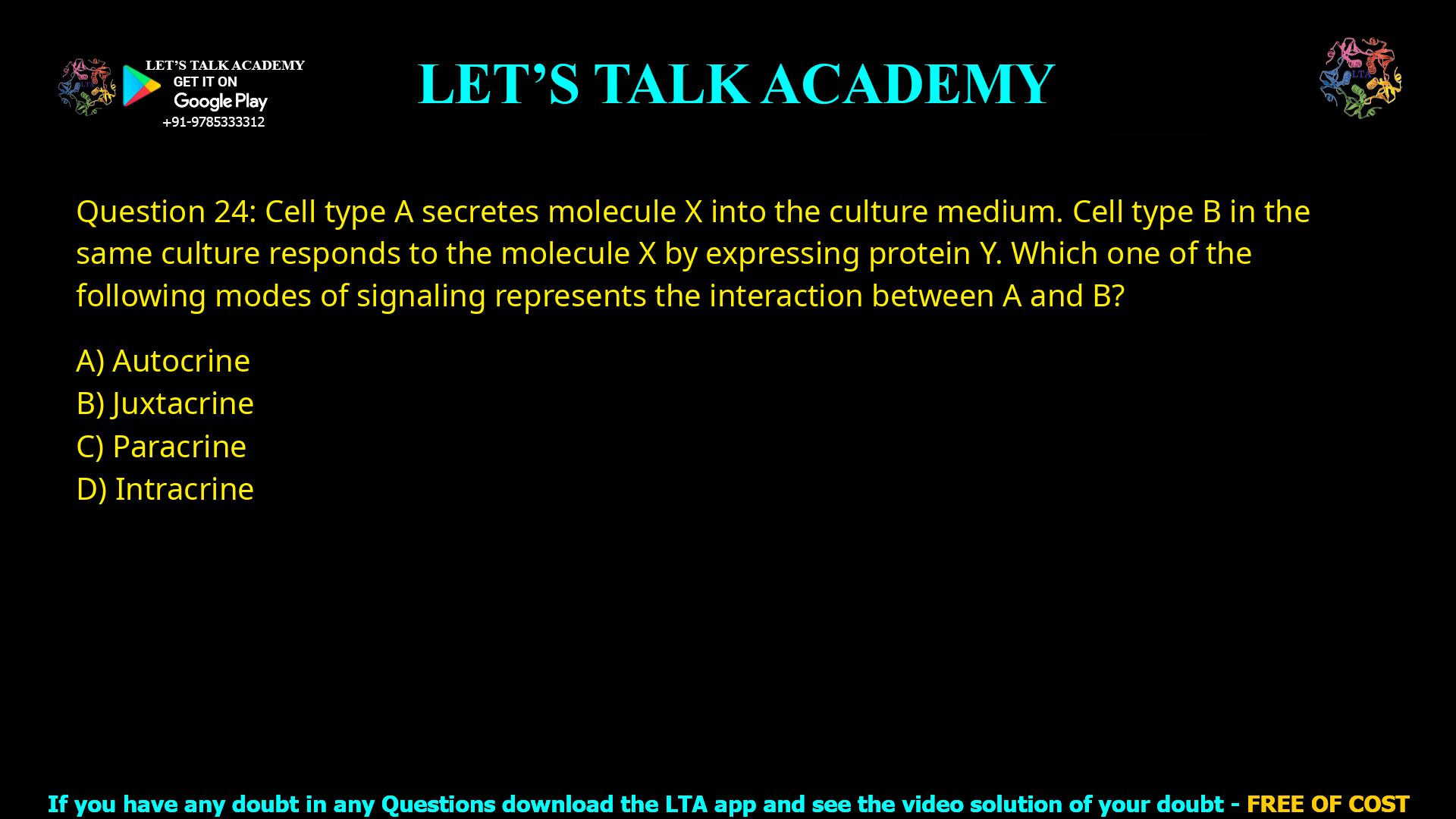
Q.24 Cell type A secretes molecule X into the culture medium. Cell type B in the same culture
responds to the molecule X by expressing protein Y. Which one of the following modes of
signaling represents the interaction between A and B?
(A) Autocrine (B) Juxtacrine
(C) Paracrine (D) Intracrine
Answer: (C) Paracrine
Cell type A secretes molecule X into the shared culture medium, where it diffuses to affect cell type B, inducing protein Y expression—this describes signaling between distinct nearby cells via a diffusible ligand.
Option Explanations
Autocrine occurs when a cell releases a signaling molecule that binds back to receptors on its own surface, influencing its own behavior, as seen in T-cell proliferation or cancer cell growth. This does not apply here since cell B, not A, responds to X.
Juxtacrine requires direct physical contact between the signaling cell (A) and target cell (B), typically via membrane-bound ligands like Notch, without diffusible molecules entering the medium.
Paracrine involves a cell secreting a short-range diffusible signal into the local environment, affecting neighboring cells of a different type in the same tissue or culture, matching the scenario exactly.
Intracrine features a ligand acting inside the same cell that produces it, often after internalization, without secretion or external diffusion.
Cell type A secretes molecule X into the culture medium, prompting cell type B to express protein Y—this classic paracrine signaling example from GATE Biotechnology 2018 highlights key cell communication modes. Paracrine signaling enables precise interactions between distinct cell types in shared environments like tissues or cultures, crucial for development, immunity, and pathology.
Key Signaling Modes Defined
-
Autocrine Signaling: Self-targeted; a cell responds to its own secreted ligand, amplifying growth in immune cells or tumors.
-
Juxtacrine Signaling: Contact-dependent; membrane proteins on adjacent cells interact directly, vital for differentiation.
-
Paracrine Signaling: Local diffusion; secreted factors like growth factors affect nearby heterologous cells, as in this query.
-
Intracrine Signaling: Internal action; ligands function within the producing cell post-uptake.
Why Paracrine Fits Perfectly
In the experiment, molecule X diffuses through the medium from A to B, inducing Y without contact or self-response, exemplifying paracrine signaling in co-cultures. This contrasts autocrine (same cell) and rules out juxtacrine (no contact specified).
Biological Relevance
Paracrine signaling drives processes like wound healing (via cytokines) and neurogenesis, with implications in cancer where rogue signals promote invasion. For biotech researchers, mastering these via GATE questions sharpens experimental design in cell-based assays.


