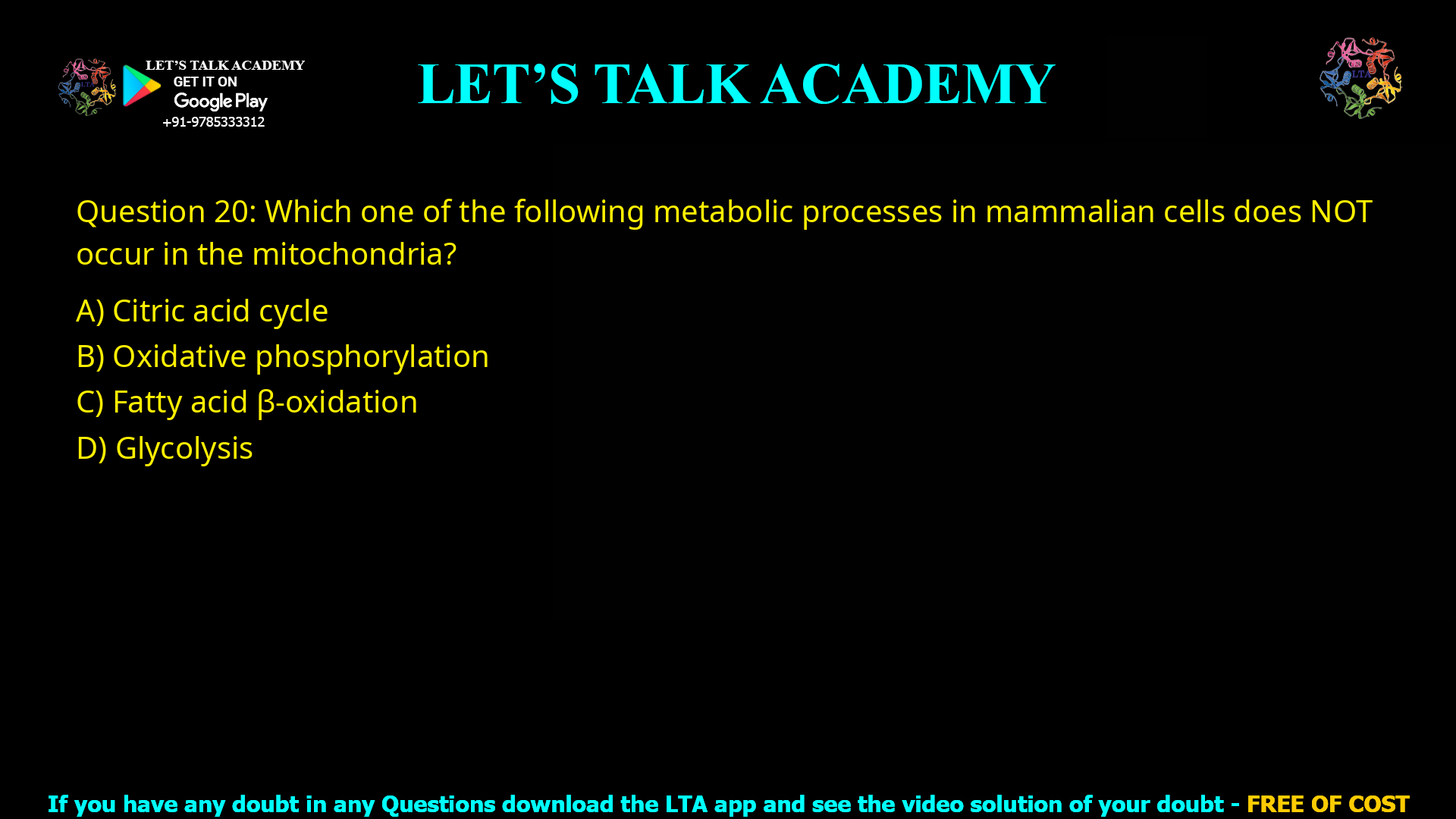
Q.20 Which one of the following metabolic processes in mammalian cells does NOT occur in the
mitochondria?
(A) Citric acid cycle (B) Oxidative phosphorylation
(C) Fatty acid β-oxidation (D) Glycolysis
Glycolysis does not occur in the mitochondria of mammalian cells; it takes place in the cytosol. The correct answer is (D) Glycolysis.
Option Analysis
Citric Acid Cycle
The citric acid cycle, also known as the Krebs cycle or TCA cycle, occurs in the mitochondrial matrix. It oxidizes acetyl-CoA derived from carbohydrates, fats, and proteins to produce CO₂, NADH, FADH₂, and GTP (or ATP), generating electron carriers for the next stage of respiration.
Oxidative Phosphorylation
Oxidative phosphorylation happens across the inner mitochondrial membrane. It involves the electron transport chain (using NADH and FADH₂ from prior steps) to create a proton gradient, driving ATP synthase to produce most cellular ATP.
Fatty Acid β-Oxidation
Fatty acid β-oxidation breaks down long-chain fatty acids into acetyl-CoA units within the mitochondrial matrix. Carnitine shuttles fatty acyl-CoA into mitochondria, where sequential dehydrogenation, hydration, oxidation, and thiolysis occur.
Glycolysis
Glycolysis converts glucose to two pyruvate molecules in the cytosol, yielding 2 ATP and 2 NADH per glucose. Pyruvate then enters mitochondria for further processing, but the glycolytic enzymes and steps remain cytosolic in mammalian cells.
Glycolysis, citric acid cycle, oxidative phosphorylation, and fatty acid β-oxidation represent core metabolic processes in mammalian cells, powering energy production. A common question in biotechnology and molecular biology exams asks: which metabolic process does NOT occur in the mitochondria? This article breaks down each process, their locations, and why glycolysis stands out, optimized for researchers and students searching “metabolic process mitochondria glycolysis.”
Key Metabolic Processes Explained
-
Glycolysis: Anaerobic breakdown of glucose to pyruvate in the cytosol (10 enzyme steps, net 2 ATP). No mitochondrial involvement; pyruvate shuttles in later.
-
Citric Acid Cycle: Aerobic oxidation in mitochondrial matrix, yielding reducing equivalents for ATP synthesis.
-
Oxidative Phosphorylation: Inner mitochondrial membrane process coupling ETC to ATP production.
-
Fatty Acid β-Oxidation: Matrix-based fatty acid catabolism to acetyl-CoA.
Why Glycolysis Occurs Outside Mitochondria
In mammalian cells, glycolysis enzymes (e.g., hexokinase, phosphofructokinase) are cytosolic, enabling rapid ATP under low oxygen. Exceptions exist in non-mammals like stramenopiles, but mammalian standard holds. This cytosolic location supports fermentation and feeds pyruvate to mitochondria.
Exam Relevance for Biotechnology Students
For competitive exams, remember: mitochondria host A, B, C options; glycolysis (D) is cytosolic. Visual aids like pathway maps clarify enzyme localization.


