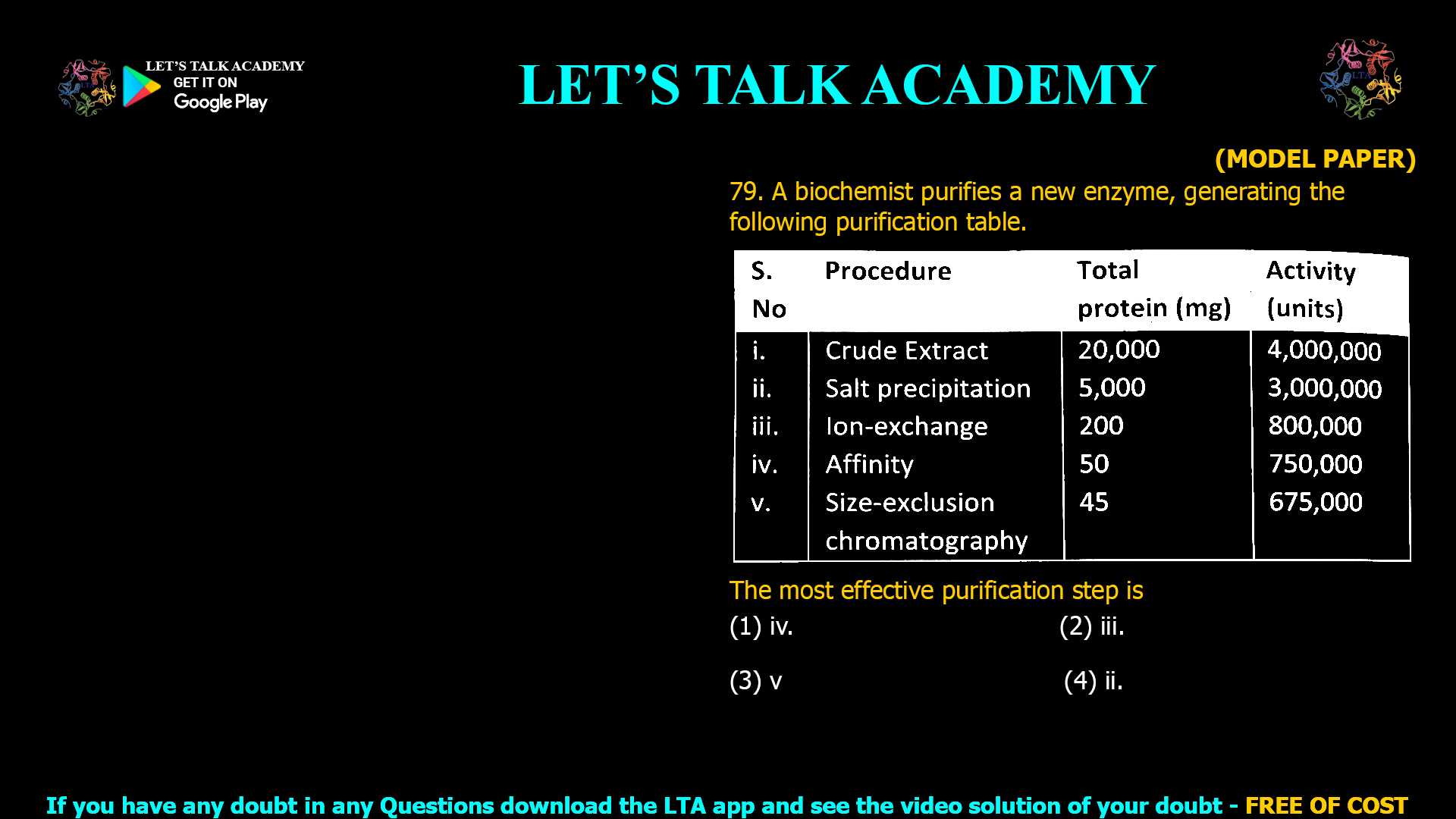

(MODEL PAPER) 79. A biochemist purifies a new enzyme, generating the following purification table. The most effective purification step is (1) iv. (2) iii. (3) v (4) ii.

Affinity Chromatography: The Most Effective Step in Enzyme Purification

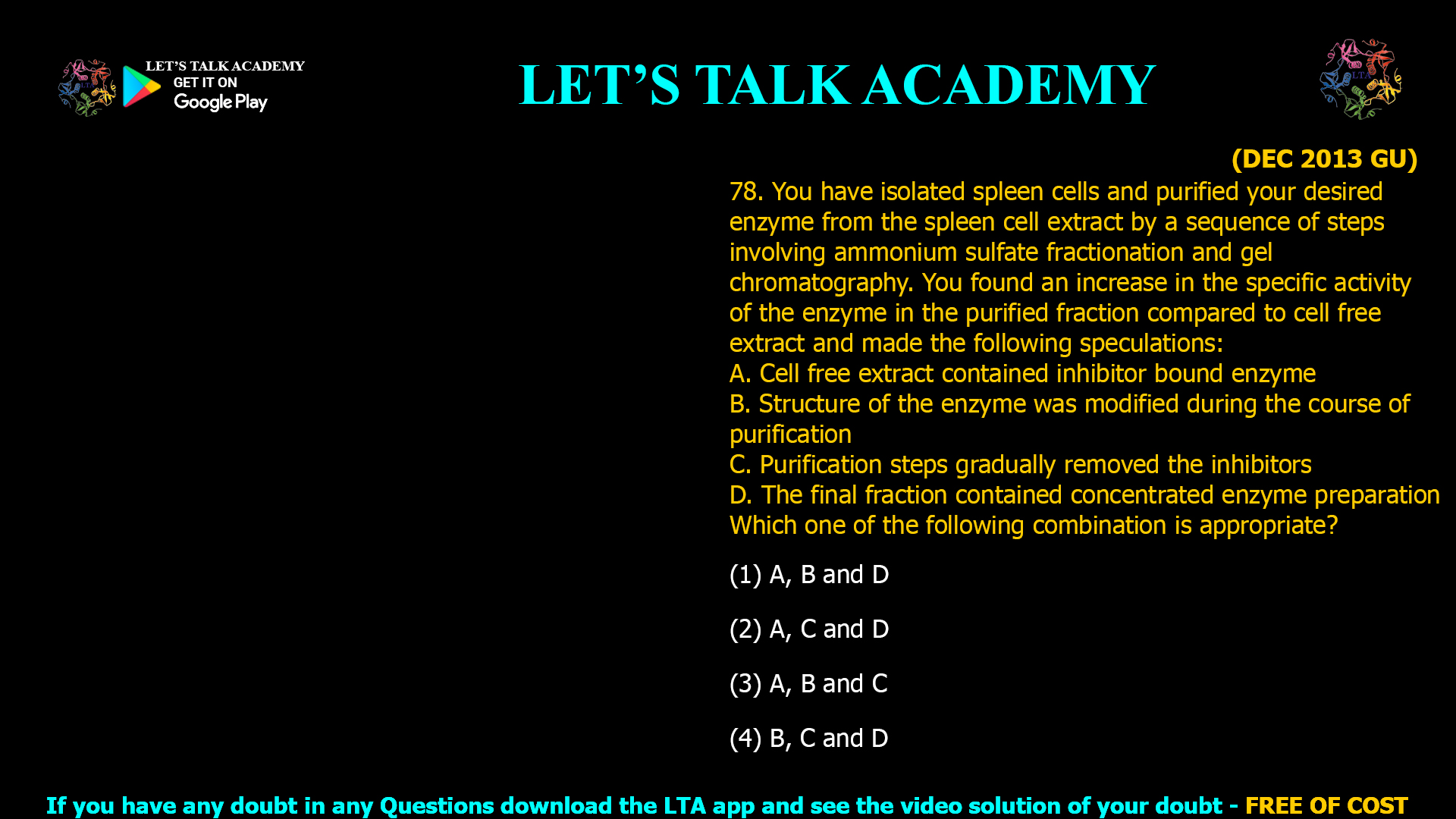
(DEC 2013 GU) 78. You have isolated spleen cells and purified your desired enzyme from the spleen cell extract by a sequence of steps involving ammonium sulfate fractionation and gel chromatography. You found an increase in the specific activity of the enzyme in the purified fraction compared to cell free extract and made the following speculations: A. Cell free extract contained inhibitor bound enzyme B. Structure of the enzyme was modified during the course of purification C. Purification steps gradually removed the inhibitors D. The final fraction contained concentrated enzyme preparation Which one of the following combination is appropriate? (1) A, B and D (2) A, C and D (3) A, B and C (4) B, C and D

Understanding Enzyme Purification: Role of Inhibitors and Enzyme Concentration on Specific Activity

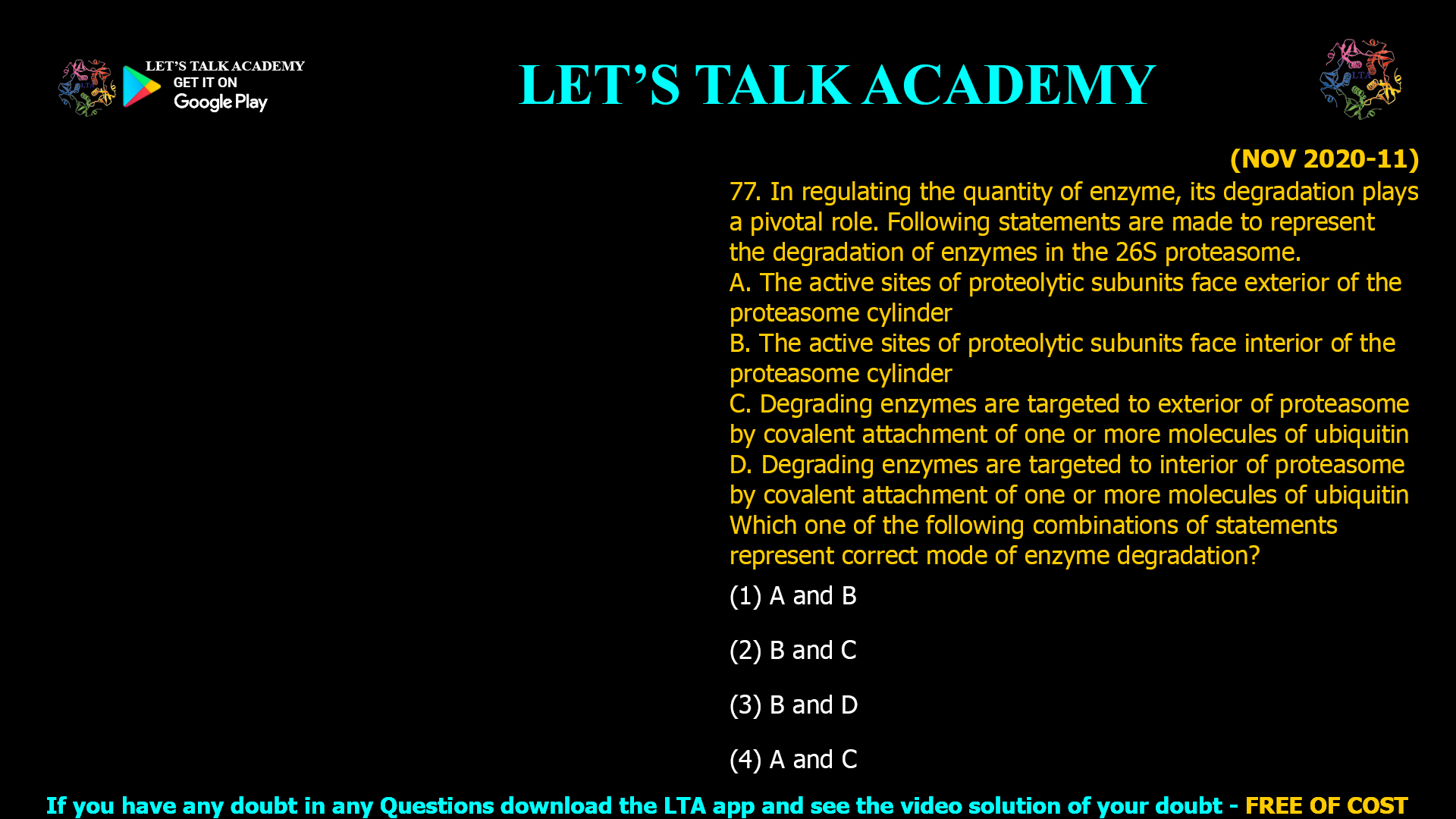
(NOV 2020-11) 77. In regulating the quantity of enzyme, its degradation plays a pivotal role. Following statements are made to represent the degradation of enzymes in the 26S proteasome. A. The active sites of proteolytic subunits face exterior of the proteasome cylinder B. The active sites of proteolytic subunits face interior of the proteasome cylinder C. Degrading enzymes are targeted to exterior of proteasome by covalent attachment of one or more molecules of ubiquitin D. Degrading enzymes are targeted to interior of proteasome by covalent attachment of one or more molecules of ubiquitin Which one of the following combinations of statements represent correct mode of enzyme degradation? (1) A and B (2) B and C (3) B and D (4) A and C

Mechanism of Enzyme Degradation by the 26S Proteasome: Orientation of Active Sites and Ubiquitin Targeting

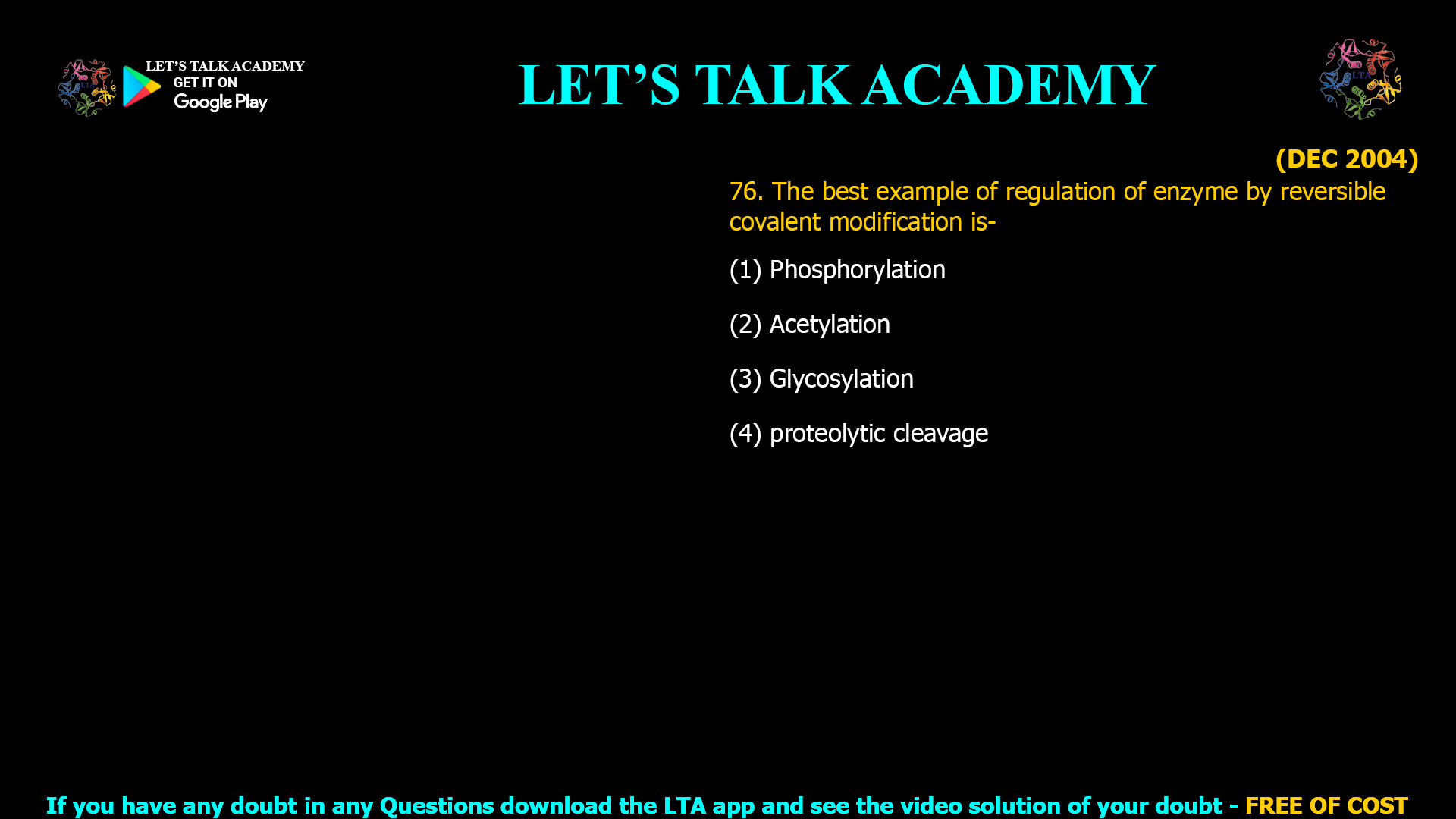
(DEC 2004) 76. The best example of regulation of enzyme by reversible covalent modification is- (1) Phosphorylation (2) Acetylation (3) Glycosylation (4) proteolytic cleavage

Phosphorylation: The Premier Example of Enzyme Regulation by Reversible Covalent Modification

(SEPT 2022-1) 75. Dixon plot is used to study the enzyme inhibition by plotting various expressions of velocity (v) and inhibitor concentration [l] on the X-axis (column A) and Y-axis (column B) as given below: Which one of the following options is the correct combination from columns A and B to draw the Dixon plot? 1. Column A -iv, Column B- i 2. Column A -i, Column B- ii 3. Column A- ii, Column B- iii 4. Column A- iii, Column B- iv

Using Dixon Plot for Enzyme Inhibition: Correct Axes Selection Explained

(NOV 2020-11) 74. A plot with which one of the following axes is drawn to exhibit enzyme inhibition kinetics applying Dixon's plot?

How to Use Dixon’s Plot for Enzyme Inhibition Kinetics: The 1/Vi1/Vi vs. [I][I] Approach

The correct answer is (3) Non-competitive inhibitor. Title Interpreting Double Reciprocal Equations: Identifying Non-Competitive Inhibition in Enzyme Kinetics Meta Description Learn how to distinguish non-competitive inhibition using changes in Lineweaver-Burk plot equations. See why only Vmax changes—classic for non-competitive inhibitors—in detailed biochemical analysis. Slug noncompetitive-inhibition-lineweaver-burk-double-reciprocal-equation Introduction Enzyme kinetics is foundational for understanding metabolic regulation and drug mechanisms. Identifying different inhibition types is pivotal when analyzing altered Lineweaver-Burk plots or double reciprocal equations. Non-competitive inhibition is characterized by a change in the y-intercept (reflecting Vmax) while Km remains unchanged. This article shows how to recognize non-competitive inhibition from the mathematical forms and the biochemical impact it has on enzyme activity. Double Reciprocal Equations Overview Given: Without inhibitor (X): 1 v 0 = K m V m a x ( 1 [ S ] ) + 1 V m a x v 0 1 = V max K m ( [S] 1 )+ V max 1 With inhibitor (X): 1 V 0 = K m V m a x ( 1 [ S ] ) + 1 V m a x ( 1 + [ X ] K X ) V 0 1 = V max K m ( [S] 1 )+ V max 1 (1+ K X [X] ) Analysis: Identifying Inhibition Type In the presence of inhibitor, the slope K m V m a x V max K m (linked to Km) is unchanged. The y-intercept is increased by a factor ( 1 + [ X ] K X ) (1+ K X [X] ), decreasing apparent Vmax but leaving Km unaltered. This matches the action of a non-competitive inhibitor, which binds at a site distinct from the substrate binding site and reduces enzyme activity regardless of substrate concentration. In competitive inhibition, the slope (dependent on Km) would increase; in uncompetitive inhibition, both Km and Vmax are affected proportionally. Mechanistic Understanding Non-competitive inhibitors bind to either free enzyme or the ES complex at an allosteric site. This reduces the overall number of catalytically competent enzyme molecules, decreasing Vmax. Importantly, Km (substrate affinity) remains unchanged—substrate can bind just as well, but some enzyme can’t convert it to product. Summary Table Inhibitor Type Double Reciprocal Equation Change Km Vmax Effect on Plot/Activity Competitive Slope increases, y-intercept unchanged ↑ — Can be overcome by substrate Non-competitive y-intercept increases, slope unchanged — ↓ Can’t be overcome by substrate Uncompetitive Both slope and y-intercept change ↓ ↓ Lower Km and Vmax Visual Summary Non-competitive inhibition: Lines (with and without inhibitor) have the same x-intercept (Km unchanged) but different y-intercepts (Vmax decreased). Conclusion The molecule X is a non-competitive inhibitor, as indicated by the unchanged Km and decreased Vmax represented in the altered double reciprocal equation. This is a classic kinetic pattern, crucial for enzyme pharmacology and molecular biology.

Interpreting Double Reciprocal Equations: Identifying Non-Competitive Inhibition in Enzyme Kinetics

(SEPT 2022-11) 72. An enzyme has a Km of 5 x 10⁻⁵ M and a Vmax of 100 µmoles.lit-1. min-1(Km is the Michaelis constant and Vmax is the maximal velocity). What is the velocity in the presence of 1 x 10⁻⁴ M substrate and 2 x 10⁻⁴ M competitive inhibitor, given that the Ki for the inhibitor is 2 x 10⁻⁴ M? (1) 0.005 µmoles. Lit-1. Min-1 (2) 50 µmoles. Lit-1. Min-1, (3) 5 µmoles. Lit-1. Min-1, (4) 500 µmoles. Lit-1. Min-1,

Calculating Enzyme Velocity with Competitive Inhibition: A Practical Example

(FEB 2022-1) 71. Following statements are made about uncompetitive inhibition of an enzyme: A. Uncompetitive inhibitor binds to both free enzyme as well as an enzyme- substrate complex. B. Addition of uncompetitive inhibitor lowers the Vmax of the reaction. C. Apparent KM of the enzyme is lowered. D. Apparent KM of the enzyme remains unchanged. Which one of the following option represents the correct combination of the statements? (1) B and C (2) A and C (3) A and B (4) A and D

Uncompetitive Enzyme Inhibition: Binding Mechanism and Effects on KmKm and VmaxVmax

(DEC 2012) 70. An enzyme catalyzed reaction was measured in the presence and absence of an inhibitor for an uncompetitive inhibition, (1) only Km is increased (2) only is Vmax decreased (3) both Km and Vmax are decreased (4) both Km and Vmax are not affected

Uncompetitive Inhibition: Effects on Enzyme Kinetics and Determination of Km and Vmax

(DEC 2013 GU) 69. If the product of an enzyme binds to the enzyme- substrate complex to exhibit its activity through a decrease in both Km and Vmax, this type of inhibition is called (1) competitive inhibition (2) non-competitive inhibition. (3) uncompetitive inhibition. (4) partially-competitive inhibition.

Demystifying Competitive Enzyme Inhibition: Substrate Competition and Reversibility

(DEC 2016) 68. A researcher was investigating the substrate specificity of two different enzymes, X and Y,. on the same substrate. Both the enzymes were subjected to treatment with either heat or an inhibitor which inhibits the enzyme activity. Following are the results heat obtained where, a= inhibitor treatment, b = heat treatment, c= control Which of the following statements is correct? (1) Only protein X is specific for the substrate, S (2) Only protein Y is specific for the substrate, S (3) Both X and Y are specific for the substrate, S (4) Both X and Y are non-specific for the substrate, S

Interpreting Enzyme Specificity Using Activity Profiles After Inhibitor and Heat Treatments

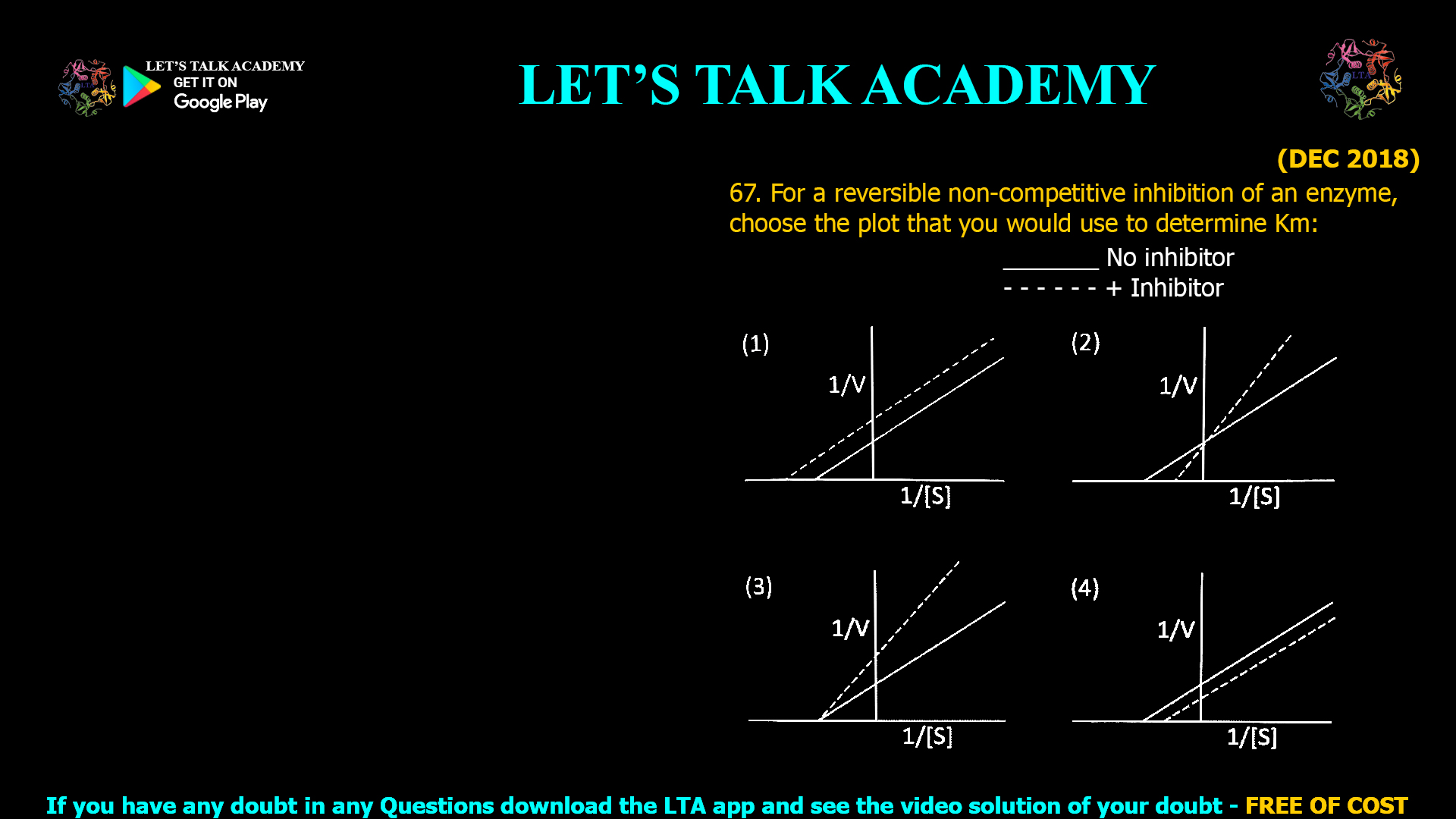
(DEC 2018) 67. For a reversible non-competitive inhibition of an enzyme, choose the plot that you would use to determine Km: _______ No inhibitor - - - - - - + Inhibitor

Lineweaver-Burk Plot Analysis for Km Determination in Reversible Non-Competitive Enzyme Inhibition

(JUNE 2002) 66. Which of following is true for non-competitive inhibition? (1) Increases Vmax (2) Decreases Vmax (3) Increases Km (4) Decreases Km

Non-Competitive Enzyme Inhibition: Effects on Kinetic Parameters VmaxVmax and KmKm

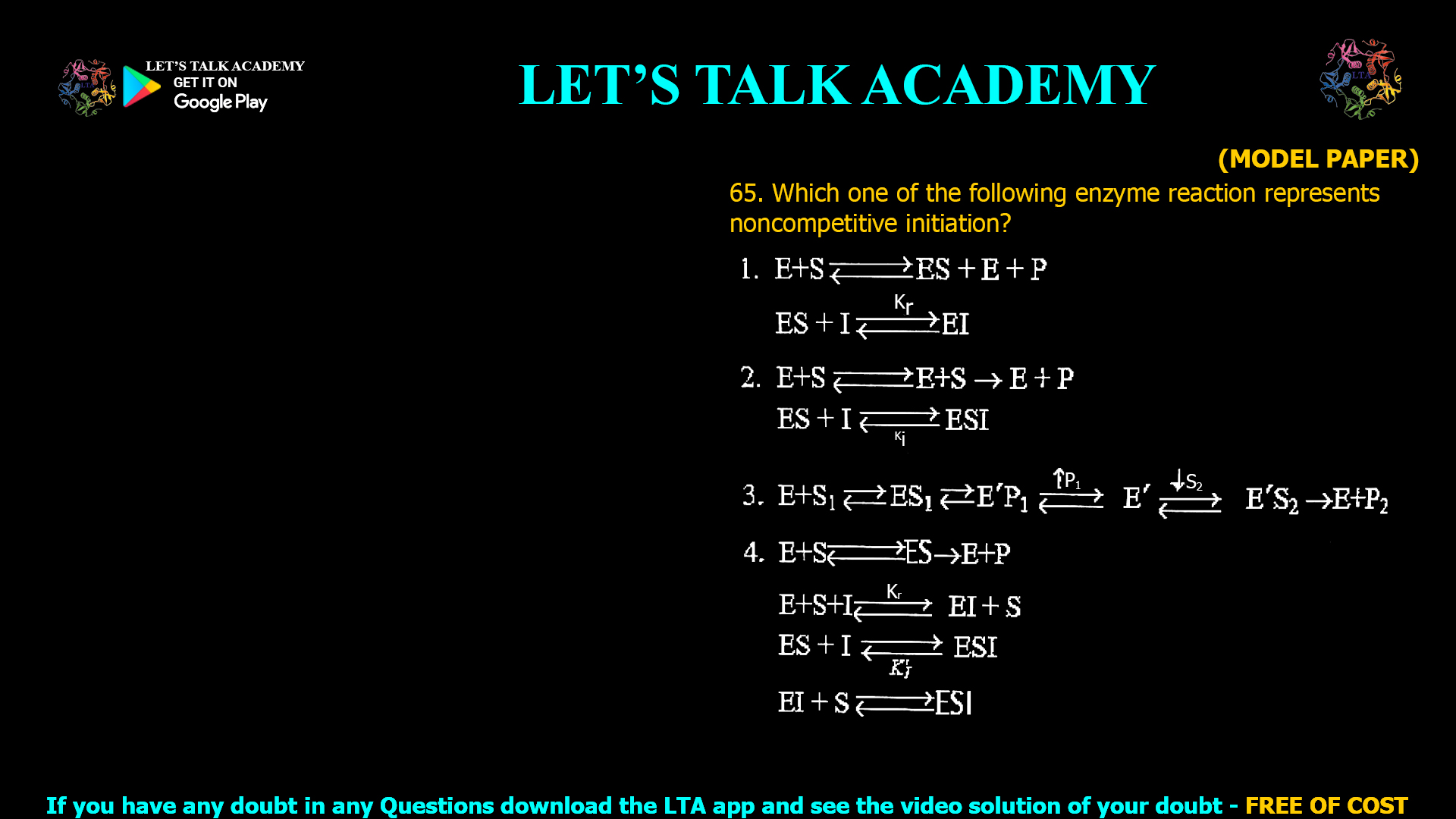
(MODEL PAPER) 65. Which one of the following enzyme reaction represents noncompetitive initiation?

Noncompetitive Enzyme Inhibition: Reaction Schemes, Mechanism, and Impact on Kinetics

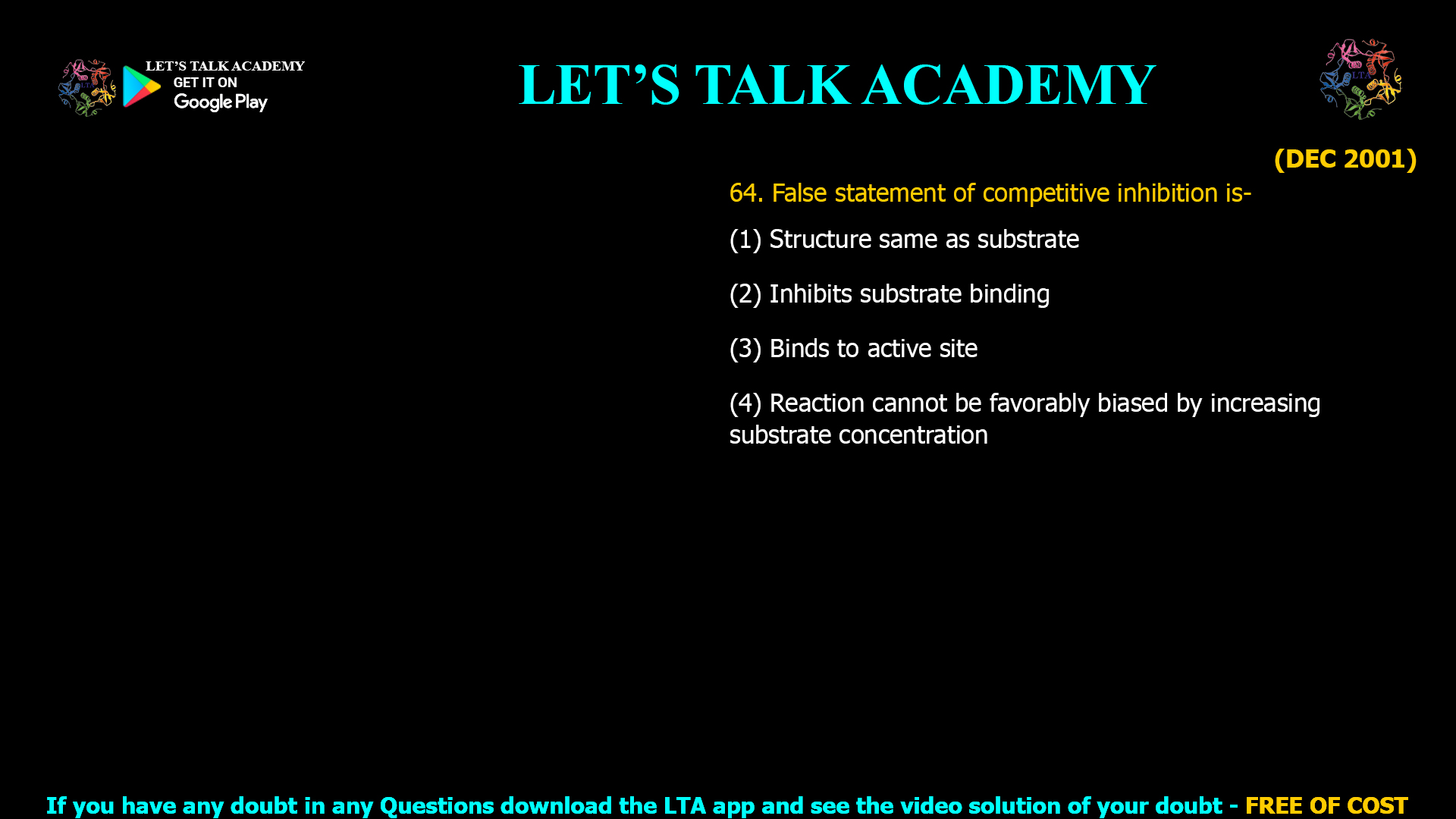
(DEC 2001) 64. False statement of competitive inhibition is- (1) Structure same as substrate (2) Inhibits substrate binding (3) Binds to active site (4) Reaction cannot be favorably biased by increasing substrate concentration

Understanding Competitive Inhibition: How Substrate Concentration Overcomes Inhibition

(JUNE 2004) 63. During inhibition of enzyme action Vmax remains unchanged while Km is increased. Inhibition is- (1) Competitive (2) Non-competitive (3) Un-competitive (4) Allosteric

Understanding Enzyme Inhibition: Why Competitive Inhibition Increases KmKm but Not VmaxVmax

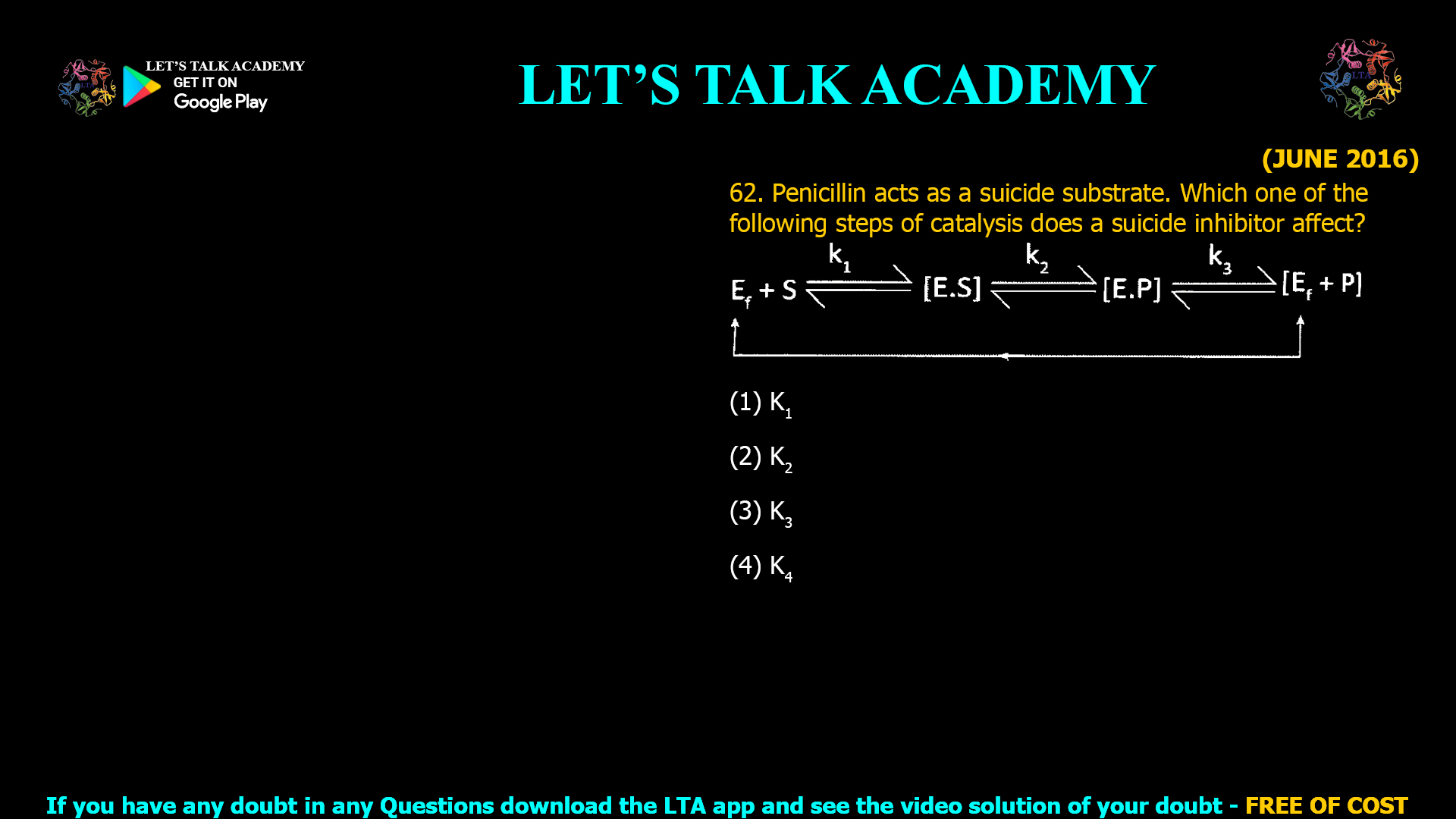
(JUNE 2016) 62. Penicillin acts as a suicide substrate. Which one of the following steps of catalysis does a suicide inhibitor affect? (1) K1 (2) K2 (3) K3 (4) K4

Mechanism-Based (Suicide) Inhibition in Enzyme Catalysis: Penicillin’s Site of Action Explained

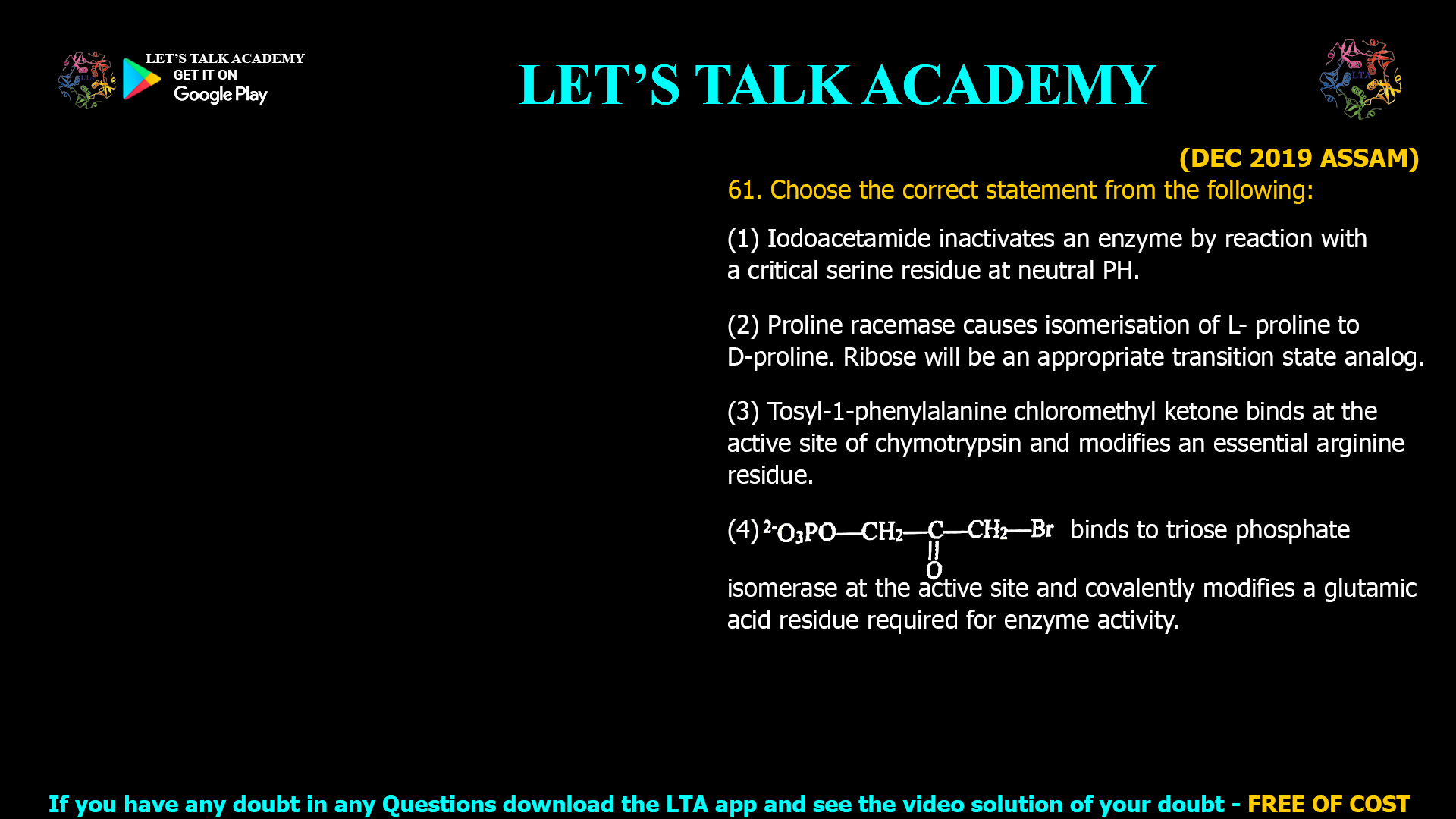
(DEC 2019 ASSAM) 61. Choose the correct statement from the following: (1) Iodoacetamide inactivates an enzyme by reaction with a critical serine residue at neutral PH. (2) Proline racemase causes isomerisation of L- proline to D-proline. Ribose will be an appropriate transition state analog. (3) Tosyl-1-phenylalanine chloromethyl ketone binds at the active site of chymotrypsin and modifies an essential arginine residue. (4) binds to triose phosphate isomerase at the active site and covalently modifies a glutamic acid residue required for enzyme activity.

Covalent Enzyme Modification and Transition State Analogs: Key Mechanisms in Enzyme Inhibition

(DEC 2017) 60. Indicate the INCORRECT statement from the following: (1) Allosteric enzymes function through reversible noncovalent binding of allosteric modulators or effectors. (2) Monoclonal antibodies that catalyze hydrolysis of esters or carbonates can be produced. (3) Enzymes are not inhibited irreversibly by heavy metals such as Hg2+, Ag+ (4) Acid phosphatases hydrolyze biological phosphate esters at ̴ pH 5.0.

Enzyme Inhibition by Heavy Metals and Catalytic Activity of Monoclonal Antibodies: Clarifying Common Misconceptions

(DEC 2014) 59. Reaction products inhibit catalysis in enzymes by (1) covalently binding to the enzyme. (2) altering the enzyme structure (3) occupying the active site. (4) form a complex with the substrate.

How Reaction Products Inhibit Enzyme Catalysis: Mechanisms and Impact

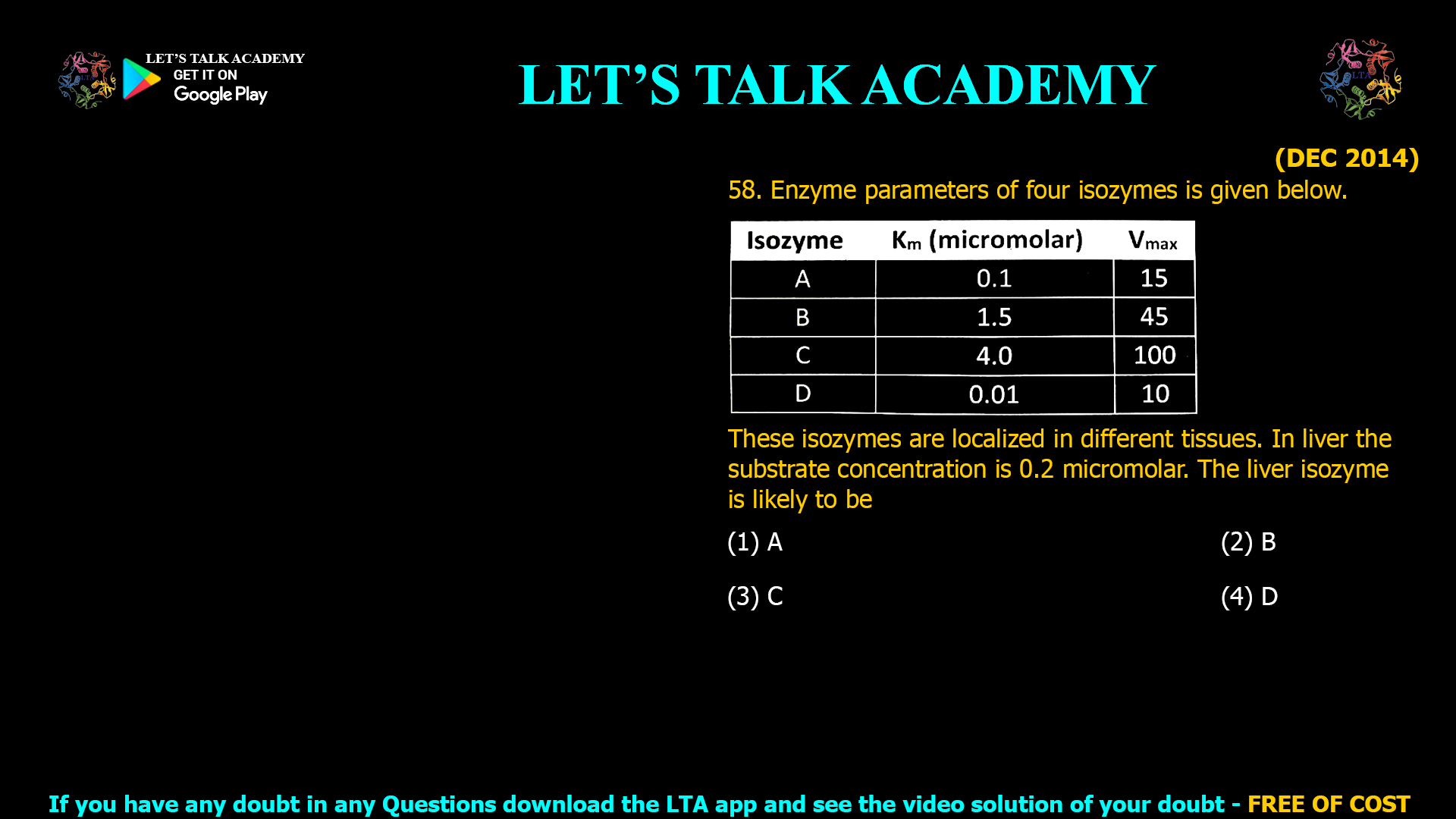
(DEC 2014) 58. Enzyme parameters of four isozymes is given below. These isozymes are localized in different tissues. In liver the substrate concentration is 0.2 micromolar. The liver isozyme is likely to be (1) A (2) B (3) C (4) D

Selecting the Optimal Isozyme for Low Substrate Concentrations: Liver Enzyme Kinetics Explained

(JUNE 2019) 57. Choose the INCORRECT statement from the following statements made for an enzyme- catalyzed reaction (1) The kinetic properties of allosteric enzyme do not diverge from Michaelis-Menten behaviour. (2) In feedback inhibition, the product of a pathway inhibits an enzyme of the pathway (3) An antibody that binds tightly to the analog of the transition state intermediate of the reaction S → P, would promote formation of P when the analog is added to the reaction. (4) An enzyme with Kcat = 1.4 x 10⁴ s-1 and Km = 9 x 10⁻⁵ M has activity close to the diffusion controlled limit.

Correcting Misconceptions in Enzyme Kinetics: Allosteric Behavior and Enzymatic Efficiency

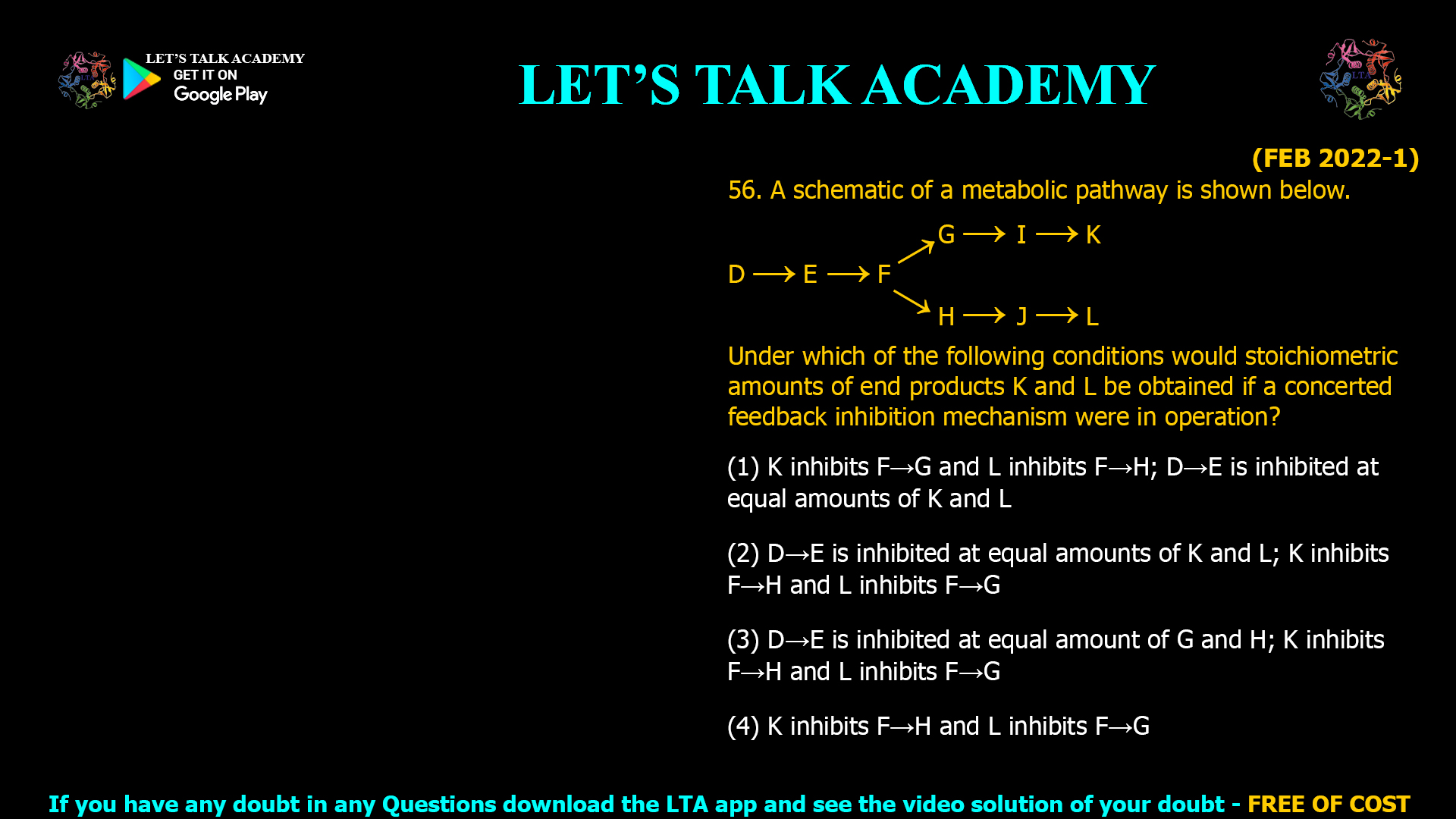
(FEB 2022-1) 56. A schematic of a metabolic pathway is shown below. Under which of the following conditions would stoichiometric amounts of end products K and L be obtained if a concerted feedback inhibition mechanism were in operation? (1) K inhibits F→G and L inhibits F→H; D→E is inhibited at equal amounts of K and L (2) D→E is inhibited at equal amounts of K and L; K inhibits F→H and L inhibits F→G (3) D→E is inhibited at equal amount of G and H; K inhibits F→H and L inhibits F→G (4) K inhibits F→H and L inhibits F→G

Concerted Feedback Inhibition in Metabolic Pathways: Achieving Stoichiometric End Product Balance

(DEC 2019 ASSAM) 55. An allosteric enzyme has two heterotropic effectors, X and Y. The allosteric constant, L for the enzyme in the absence of effector molecules is 180. For the X- saturated form, the value of L increases from 180 to 1200, while for Y-saturated form it decreases to 60. What kind of effector molecules are X and Y? (1) X and Y both are positive regulators. (2) X is a negative regulator while Y is a positive regulator. (3) X is a positive regulator while Y is a negative regulator. (4) X and Y are not allosteric regulators.

Understanding Allosteric Regulation: Identifying Positive and Negative Effectors Through the Allosteric Constant LL

(DEC 2006) 54. If an enzyme obeying Hills reaction shows negative cooperativity. It means (1) Binding of substrate to any one site of multi-subunit enzyme decreases affinity for other substrate to other sub-units (2) Binding of substrate to any one site of single subunit enzyme decreases affinity for other substrate (3) Binding of substrate to any one site of multi-subunit enzyme increases affinity for other substrate to other sub-units (4) Binding of substrate to any one site of multi-subunit enzyme makes enzyme non-functional

Understanding Negative Cooperativity in Multi-Subunit Enzymes: Mechanism and Implications

(NOV 2020-11) 53. The Hill equation and its plot describe the following enzyme kinetic behaviours A. Saturation Kinetics B. Cooperative Kinetics C. Log Vi/(Vmax — Vi) versus Log [s] D. Log (Vmax — Vi)/Vi versus Log [s]-1 Which one of the following combination represent correct descriptions? (1) A and C (2) B and C (3) B and D (4) A and D

Understanding the Hill Equation and Hill Plot: Describing Cooperative Enzyme Kinetics

(JUNE 2023-11) 52. The plot below has two curves (A, B) that show the fractional occupancy of hemoglobin and myoglobin by oxygen as a function of the amount of oxygen. The two reactions are i. E + S ⇄ ES and ii. E + nS ⇄ ESn. where S is O2 and E is myoglobin or haemoglobin The equations that could be used to fit the two curves are: Yo2 is the fraction of oxygen-binding sites occupied by oxygen. pO2 is partial pressure of oxygen. From the options given below, select the option with the right curve (A, B), reaction (i, ii) and equation/s (l, ll, lll, lV) that describe oxygen binding to haemoglobin and myoglobin. (1) Myoglobin: curve A, reaction i, equations lll and lV. Hemoglobin: curve B, reaction ii, equations l and ll. (2) Myoglobin: curve B, reaction i, equations ll and lV. Hemoglobin: curve A, reaction ii, equations l and lll. (3) Myoglobin: curve A, reaction ii, equations lll and lV. Hemoglobin: curve B, reaction i, equations l and ll. (4) Myoglobin: curve A, reaction ii, equations l and ll. Hemoglobin: curve B, reaction i, equations lll and lV.

Modeling Oxygen Binding to Hemoglobin and Myoglobin: Kinetic Equations and Curve Fitting

(JUNE 2006) 51. The graph below shows (1)Cooperativity (2) Exponential growth (3) Linear rise (4) Saturation kinetics

Interpreting Sigmoidal Kinetic Graphs: The Signature of Cooperativity in Biology

(DEC 2014) 50. Binding of two ligands to their binding proteins were investigated. Following binding isotherms were obtained. Which of the following statements is correct? (1) A is obtained with an oligomeric protein and B is obtained with a monomeric protein (2) B is obtained with protein with positive cooperativity (3) A and B were obtained by the same protein at two different temperatures (4) The profile B is not possible

Interpreting Ligand Binding Isotherms: Cooperativity and Protein Structure

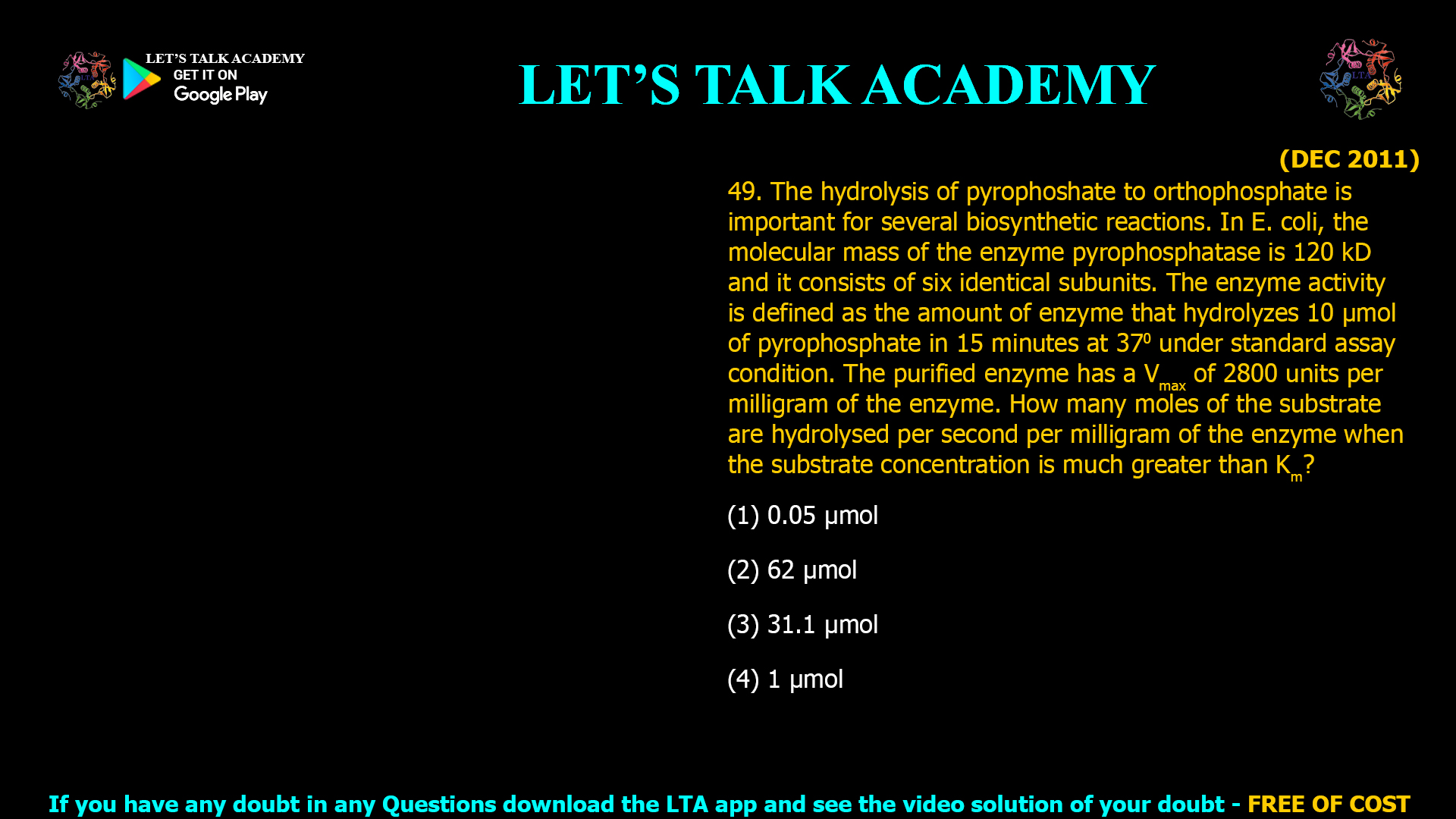
(DEC 2011) 49. The hydrolysis of pyrophoshate to orthophosphate is important for several biosynthetic reactions. In E. coli, the molecular mass of the enzyme pyrophosphatase is 120 kD and it consists of six identical subunits. The enzyme activity is defined as the amount of enzyme that hydrolyzes 10 µmol of pyrophosphate in 15 minutes at 370 under standard assay condition. The purified enzyme has a Vmax of 2800 units per milligram of the enzyme. How many moles of the substrate are hydrolysed per second per milligram of the enzyme when the substrate concentration is much greater than Km? (1) 0.05 µmol (2) 62 µmol (3) 31.1 µmol (4) 1 µmol

Calculating Substrate Hydrolysis Rate for Pyrophosphatase Under Saturating Conditions

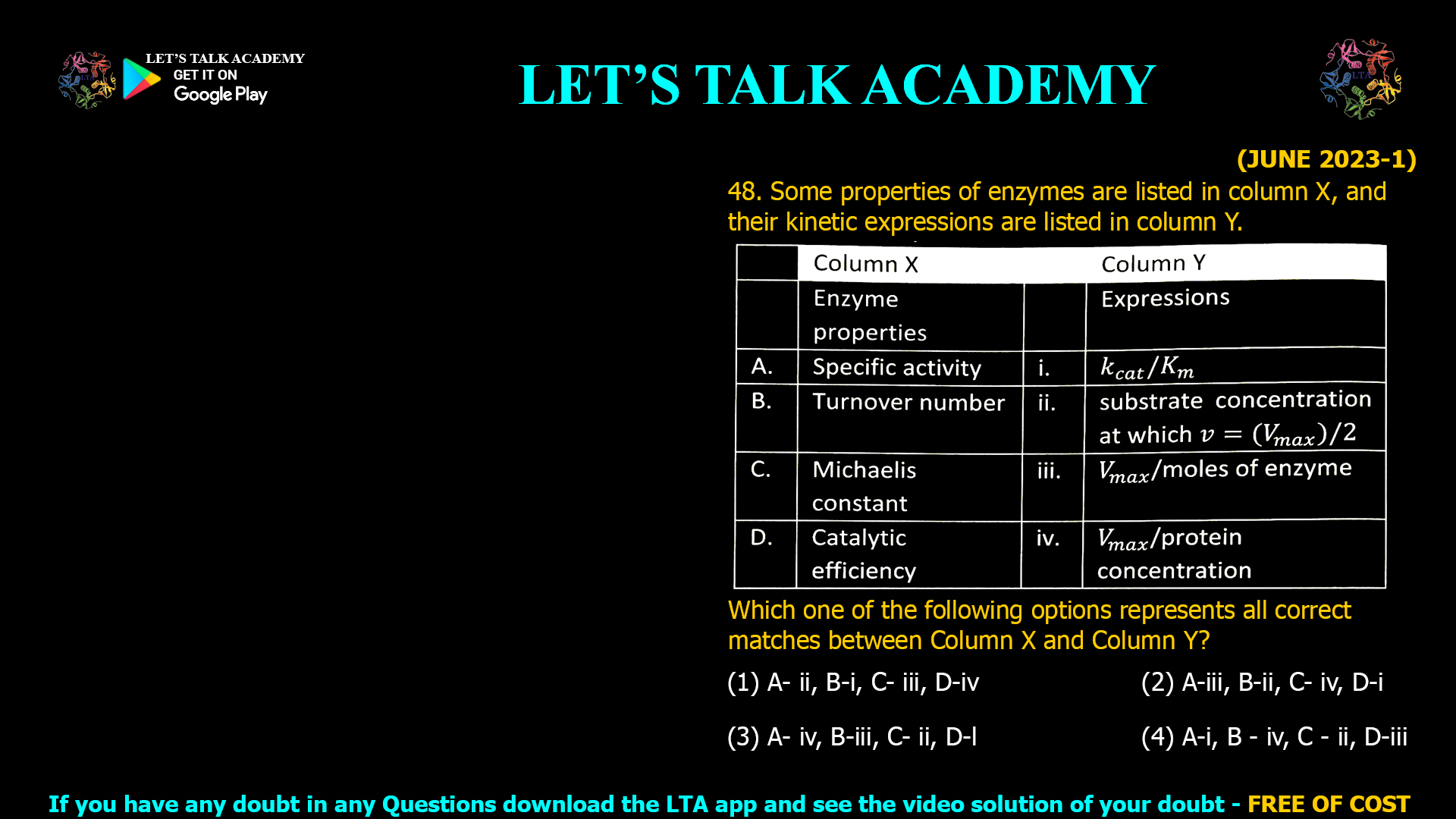
(JUNE 2023-1) 48. Some properties of enzymes are listed in column X, and their kinetic expressions are listed in column Y. Which one of the following options represents all correct matches between Column X and Column Y? (1) A- ii, B-i, C- iii, D-iv (2) A-iii, B-ii, C- iv, D-i (3) A iv, B-iii, C- ii, D-l (4) A-i, B - iv, C - ii, D-iii

Matching Enzyme Properties to Kinetic Expressions: A Guide to Biochemical Definitions

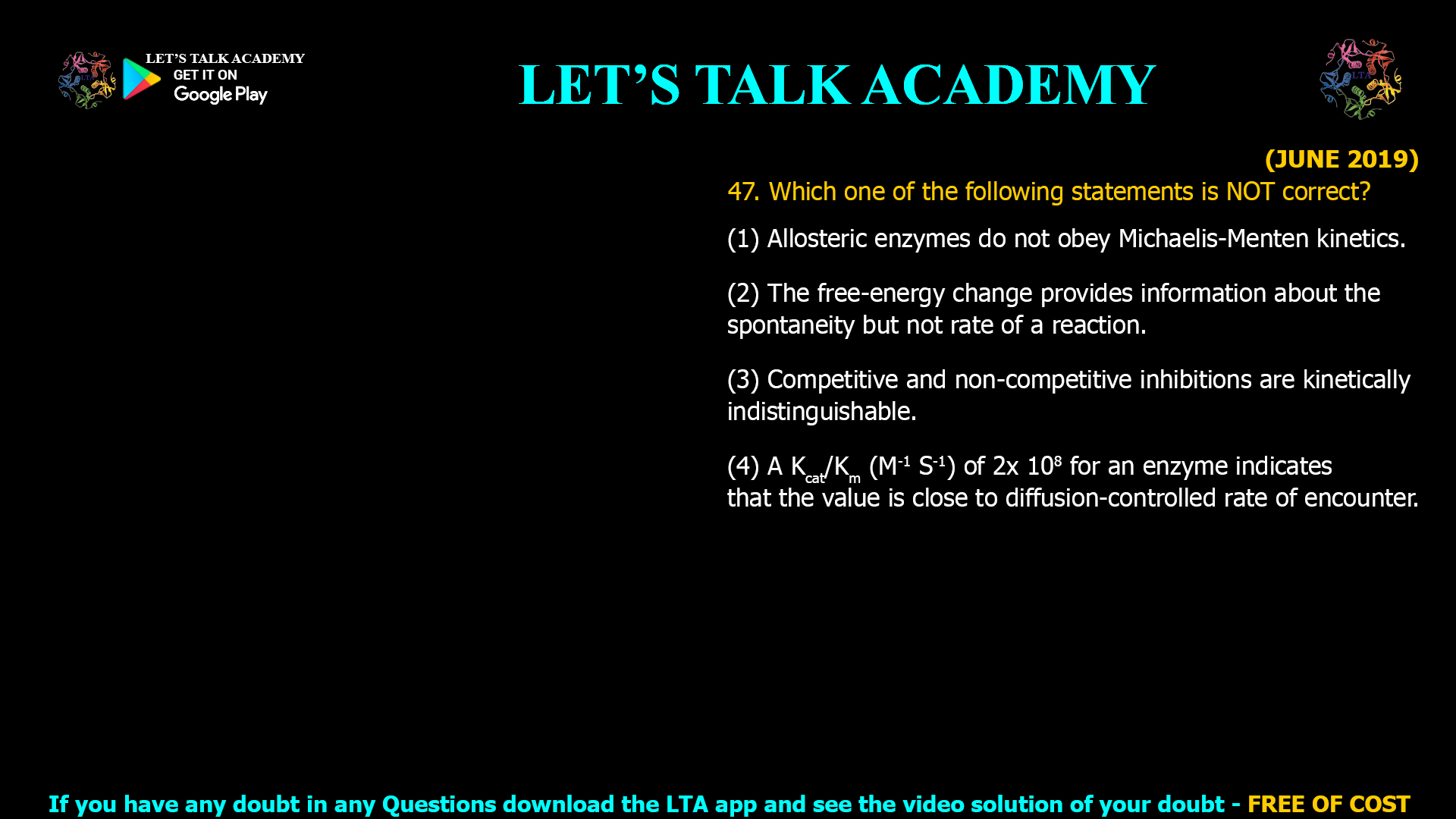
enzyme-kinetics-misconceptions-allosteric-inhibition-energy

Common Misconceptions in Enzyme Kinetics: Understanding Allosteric Behavior, Energy Change, Inhibition, and Catalytic Efficiency

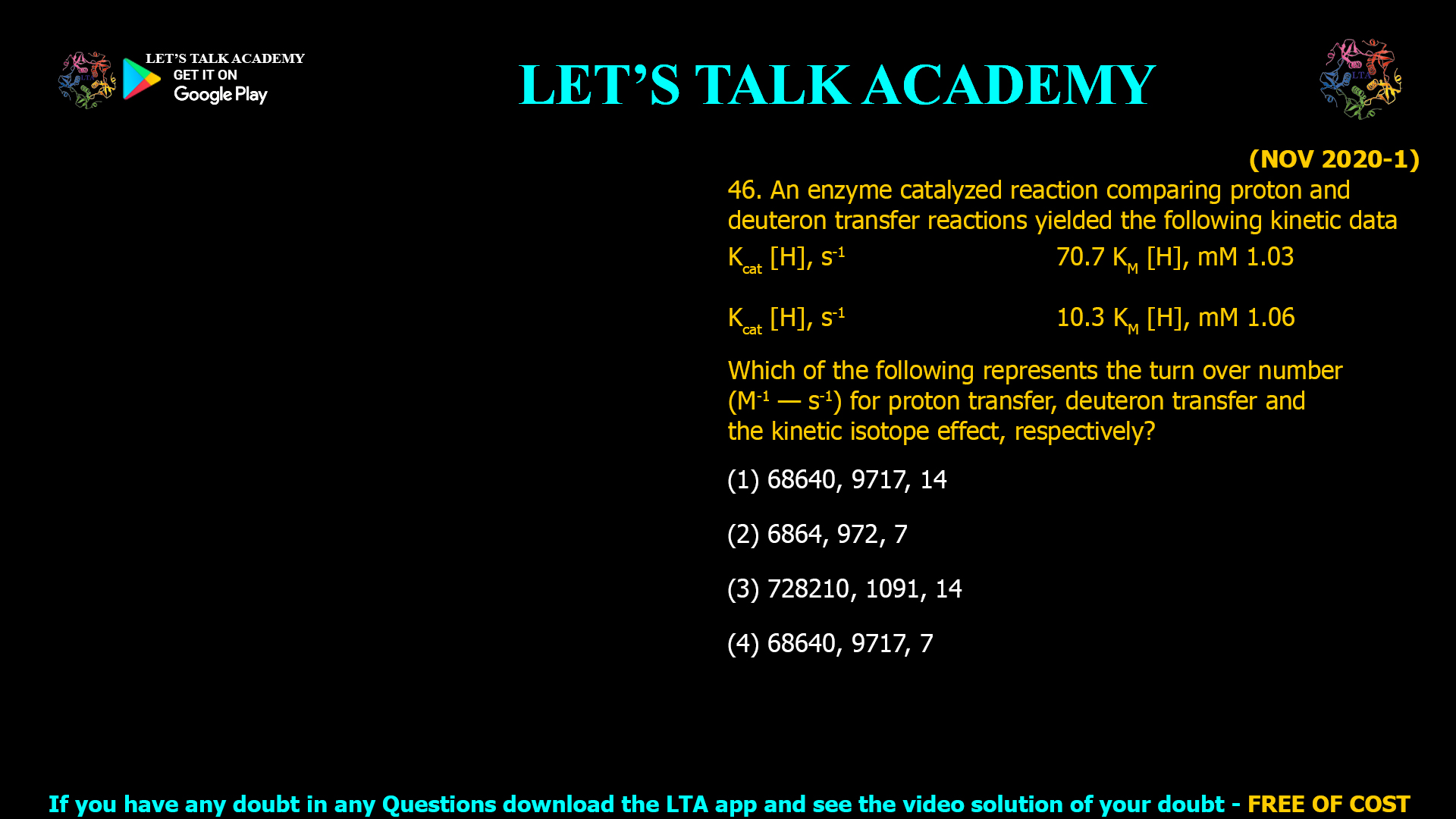
calculating-turnover-number-and-kinetic-isotope-effect-in-proton-and-deuteron-transfer-enzyme-reactions

Calculating Turnover Number and Kinetic Isotope Effect in Proton and Deuteron Transfer Enzyme Reactions

(JUNE 2017) 45. A serine protease was tested for its activity on the following peptide substrates of different lengths and sequences. The obtained kinetic parameters of the protease are shown along with the peptide. Arrow denotes site of cleavage. Based on the above data, the following statements are made: A. Catalytic efficiency (Kcat / Km) increases with the size of the peptide. B. Amino acid at the hydrolytic cleavage position of the peptide is critical for binding of the peptide with the protease C. Catalytic efficiency decreases from three amino acid peptide to four amino acid peptide. Which of the following combinations of the above statements is correct? (1) A and B (2) A and C (3) B and C (4) A, B and C

Analyzing Serine Protease Catalytic Efficiency and Substrate Binding: Insights from Peptide Length and Sequence

(JUNE 2013) 44. The following small peptide substrates are used for determining elastase activity and the following data have been recorded. The arrow indicates the Cleavage site. From the above observations, it appears that: (A) PAPAF is digested most rapidly. (B) PAPAG is digested most rapidly. (C) A hydrophobic residue at the C- terminus seems to be favored. (D) A smaller residue at the C-terminus seems to be favored. (E) Elastase always requires a smaller residue at the N- terminus of the cleavage site. Which of the following is true? (1) (A), (C), (E) (2) (B), (D), (E) (3) (E) only (4) (D), (E) only

Analyzing Elastase Substrate Specificity Using Kinetic Data: Rate, Residue Size, and Cleavage Preferences

(DEC 2013 GU) 43. The Kcat/Km values of an enzyme-catalyzed reaction when plotted as a function of pH yielded a bell-shaped curve with a maximum around pH 6.0. Which of the following conclusions best describes the above observation? (1) A His residue may be important for catalysis. (2) The enzyme would be highly stable at pH 6.0. (3) The enzyme would be most active below and above pH 6.0. (4) The enzyme will require a metal ion as cofactor for catalysis.

pH Dependence of Enzyme Catalytic Efficiency: Role of Ionizable Residues in Catalysis

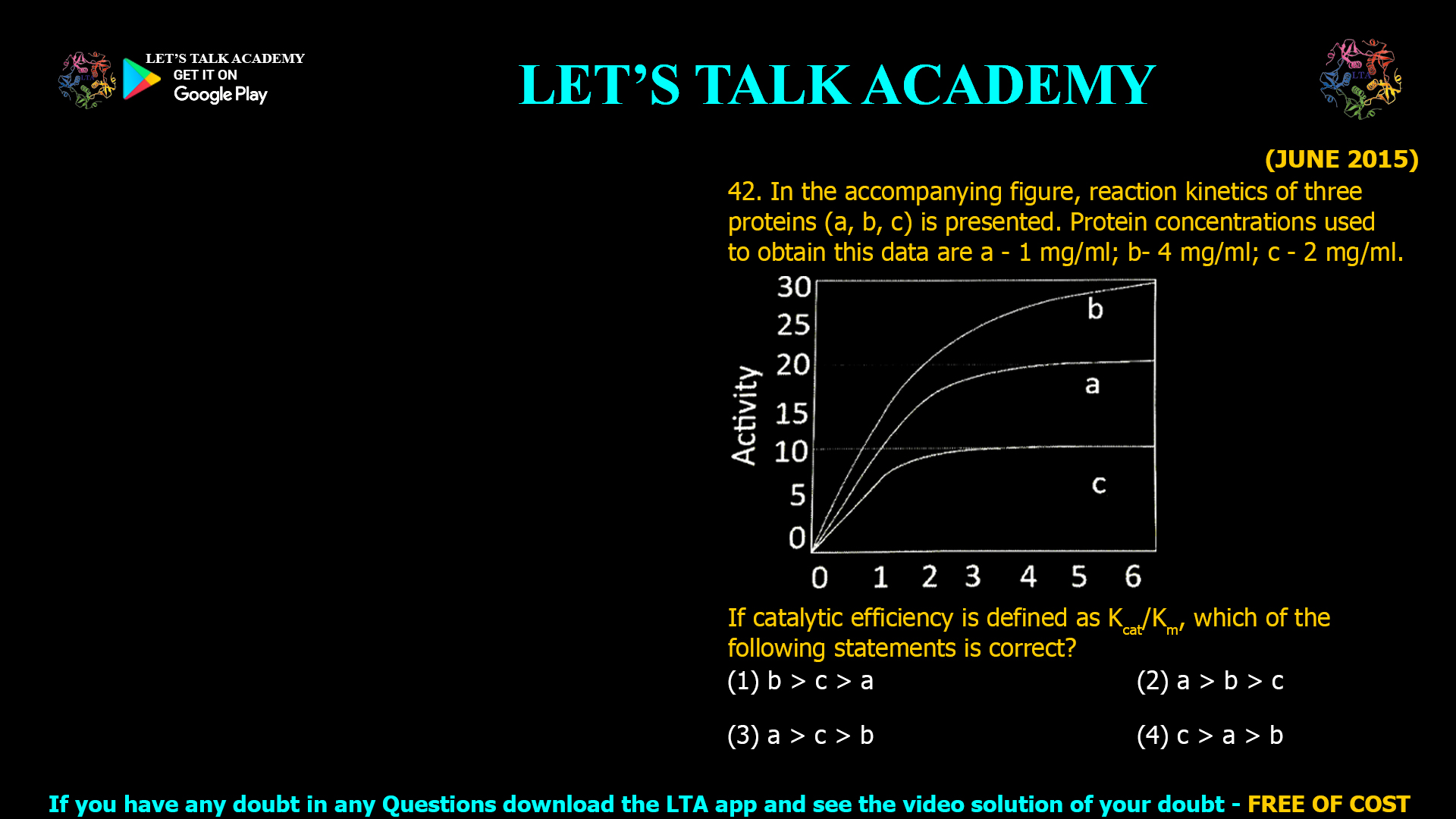
(JUNE 2015) 42. In the accompanying figure, reaction kinetics of three proteins (a, b, c) is presented. Protein concentrations used to obtain this data are a - 1 mg/ml; b- 4 mg/ml; c - 2 mg/ml. If catalytic efficiency is defined as Kcat/Km, which of the following statements is correct? (1) b > c > a (2) a > b > c (3) a > c > b (4) c > a > b

Comparing Catalytic Efficiency (kcat/Kmkcat/Km) from Enzyme Activity Curves: Analysis and Interpretation

(MODEL PAPER) 41. A solution of 1% (w/v) starch at pH 6.7 is digested by 15 µg of ß-amylase (mol wt 152,000). The rate of maltose (mol wt = 342) had a maximal initial velocity of 8.5 mg formed per min. The turnover number is (1) 0.25 x 10⁵ min-1. (2) 25 x 105 min-1 (3) 4 x 10⁻⁶ min-1 (4) 2.5 x 10⁴ min-1.

Calculating Turnover Number (kcatkcat) for β-Amylase from Kinetic Data: A Detailed Guide

give a right answer and explain and give SEO friendly content in 3000 words with slug and meta description and title and do not provide any links

Calculating Turnover Number (kcatkcat) for an Enzyme from Substrate and Product Data

calculate-turnover-number-specific-activity-enzyme

Calculating Turnover Number and Specific Activity of an Enzyme: Step-by-Step Guide

(DEC 2001) 38. Which statement is CORRECT regarding specific activity of enzyme? (1) Depends on concentration of substrate and amount of free enzyme (2) The number of enzyme units per ml divided by the concentration of protein in mg/ml (3) Affinity for one particular substrate (4) Activity against more than one substrate

Understanding Specific Activity of Enzymes: Definition, Calculation, and Importance

(DEC 2019) 37. Given below is the [P] vs time plot of an enzymatic reaction carried out by the enzyme X Which one of the following statements is the correct interpretation of the data? (1) The Km and Vmax of the enzyme X are 15 and 60 units, respectively. (2) The Vmax is 60 but the Km cannot be determined (3) The Km 15 but the Vmax cannot be determined (4) Neither the Km nor the Vmax of the enzyme X can be determined from these data

Interpreting [P] vs Time Plots in Enzyme Kinetics: Determining Vmax and Km

(JUNE 2018) 36. The Vmax and Km from a Lineweaver-Burk plot of an enzyme reaction where 1/v = 40µM-1 min at 1/[S] = 0 and 1/[S] = -1.5 x 10² mM-1 at 1/v = 0 are (1) 0.025 µM min-1 and 0.67 x 10⁻²mM (2) 0.025 µM-1 min and 0.67 x 10⁻² (3) 0.025 µM min-1 and 1.5 x 10² mM-1 (4) 0.038 µM min-1 and 0.67 x 10⁻²mM

Determining VmaxVmax and KmKm from a Lineweaver-Burk Plot: Step-by-Step Explanation

(SEPT 2022-ll) 35. Given below are plots of the linear derivation of Michaelis-Menten kinetic equation and statements related to the variables (initial velocity-Vo and substrate concentration - [S]) used. A. In plot (i), both x and y axes have dependent variables B. In plot (ii) neither x nor y axis has independent variables C. In plot (i) only y-axis has a dependent variable D. In both the plots, x axis has an independent variable

Identifying Dependent and Independent Variables in Enzyme Kinetic Linear Plots

(SEPT 2022-1) 34. A student was asked to plot a graph representing enzyme kinetic data for initial velocity, vO , and substrate concentration [S] using any of the equations given below. The student used an equation for which neither X-axis nor Y-axis had independent variables. Which one of the following equation might the student have used? (1) 1/ vO = (Km/Vmax) 1/[S]+ 1/Vmax) (2) [S]/vO = [S]/Vmaxx + (Km /Vmax) (3) vO / [S] = (Vmax / Km) - vO / Km (4) vO = V max [S] / Km + [S]

Understanding Enzyme Kinetic Plots: Identifying Equations Without Independent Variables on Axes

(JUNE 2012) 33. A plot of V/[S] versus V is generated for an enzyme catalyzed reaction, and a straight line is obtained. Indicate the information that can be obtained from the plot. (1) Vmax and Km can be obtained only from a plot of 1/V versus 1/[S]. (2) Km/Vmax from the slope (3) Vmax and Km (4) only Km

Interpreting a Plot of V/[S]V/[S] vs. VV in Enzyme Kinetics: Extracting Km and Vmax

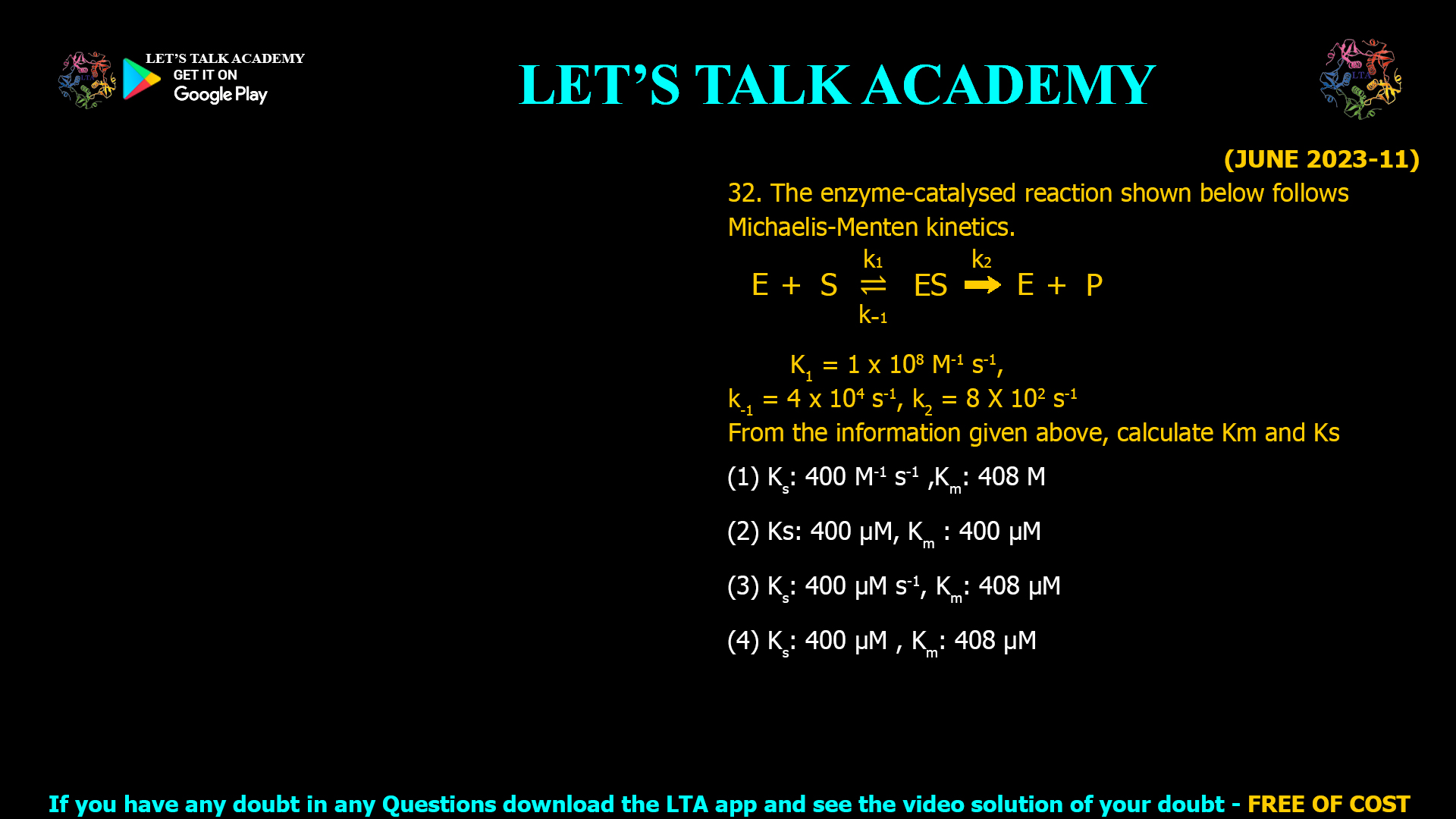
(JUNE 2023-11) 32. The enzyme-catalysed reaction shown below follows Michaelis-Menten kinetics. K1 = 1 x 10⁸ M-1 s-1, k-1 = 4 x 10⁴ s-1, k2 = 8 X 10² s-1 From the information given above, calculate Km and Ks (1) Ks: 400 M-1 s-1 ,Km: 408 M (2) Ks: 400 µM, Km : 400 µM (3) Ks: 400 µM s-1, Km: 408 µM (4) Ks: 400 µM , Km: 408 µM

Calculating Km and Ks in Michaelis-Menten Enzyme Kinetics: Strategy and Application

(FEB 2022-11) 31. What is the fold difference between v at [S] =Km and v at [S] = 1000 Km where v is the initial velocity of an enzyme catalyzed reaction, [S] is substrate concentration and Km is the Michaelis constant? (1) 1.998 (2) 1000 (3) 2.998 (4) 3.998

Fold Difference in Initial Velocity Between Substrate Concentrations Km and 1000 Km in Michaelis-Menten Enzyme Kinetics

(JUNE 2008) 30. For an enzyme catalyzed reactions exhibiting Michalis Menten equation what would be increase in substrate concentration to increase the rate of reaction from 10 % of Vmax to 90 % of Vmax (1) 81 fold (2) 8 fold (3) 4 fold (4) 2 fold

Determining Substrate Concentration Increase for Enzyme Reaction Rate Enhancement from 10% to 90% of VmaxVmax

(DEC 2007) 29. In a biochemical reaction catalyzed by enzyme following the Michales-Menten equation, what will be the substrate concentration, when the observed velocity of reaction is 90% of the maximum velocity? (1) 18 Km (2) 9Km (3) 5 Km (4) 1Km

Calculating Substrate Concentration for 90% Maximum Velocity in Michaelis-Menten Enzyme Kinetics

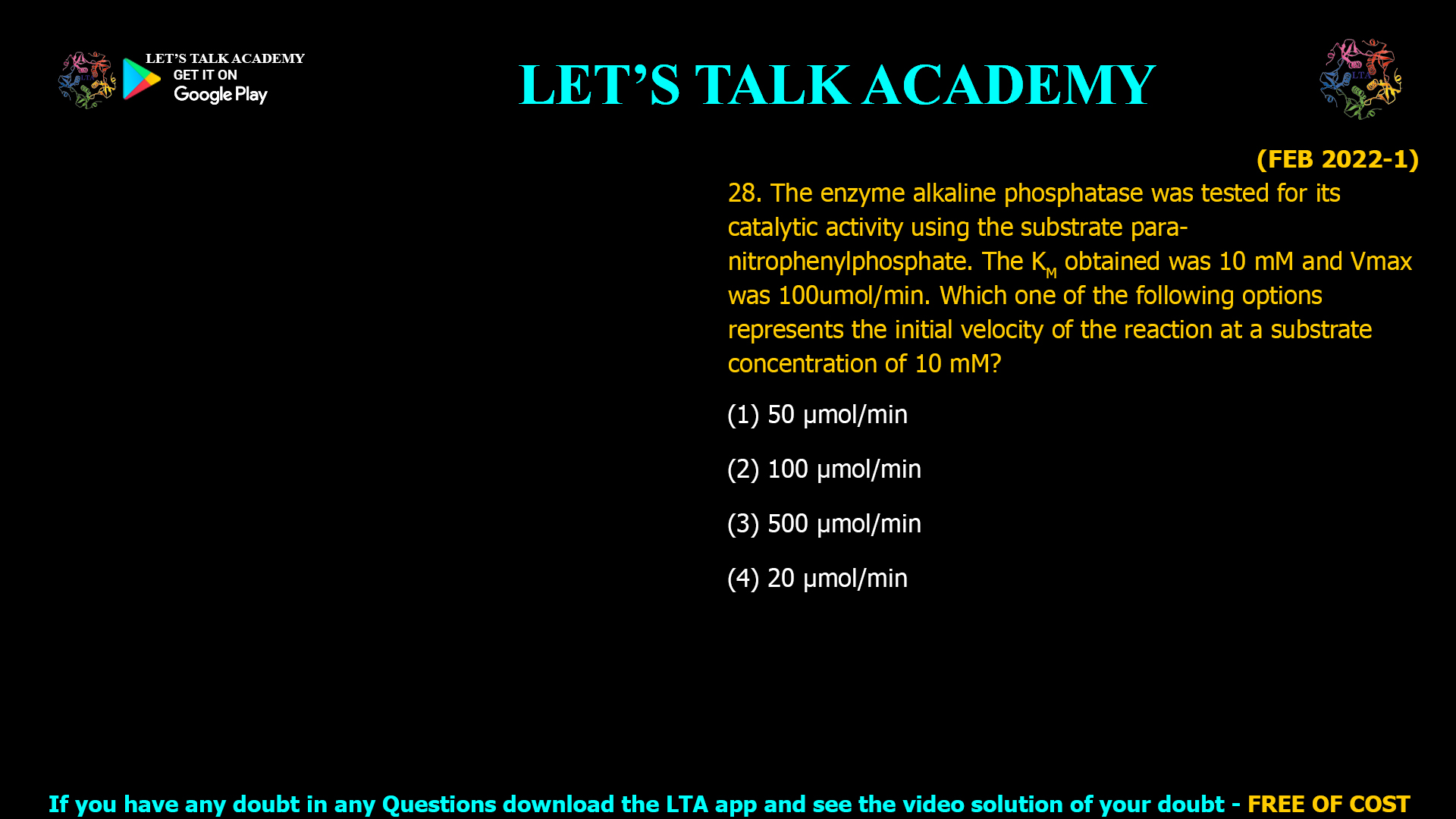
(FEB 2022-1) 28. The enzyme alkaline phosphatase was tested for its catalytic activity using the substrate para- nitrophenylphosphate. The KM obtained was 10 mM and Vmax was 100umol/min. Which one of the following options represents the initial velocity of the reaction at a substrate concentration of 10 mM? (1) 50 µmol/min (2) 100 µmol/min (3) 500 µmol/min (4) 20 µmol/min

Calculating Initial Velocity Using Michaelis-Menten Kinetics: Alkaline Phosphatase Example

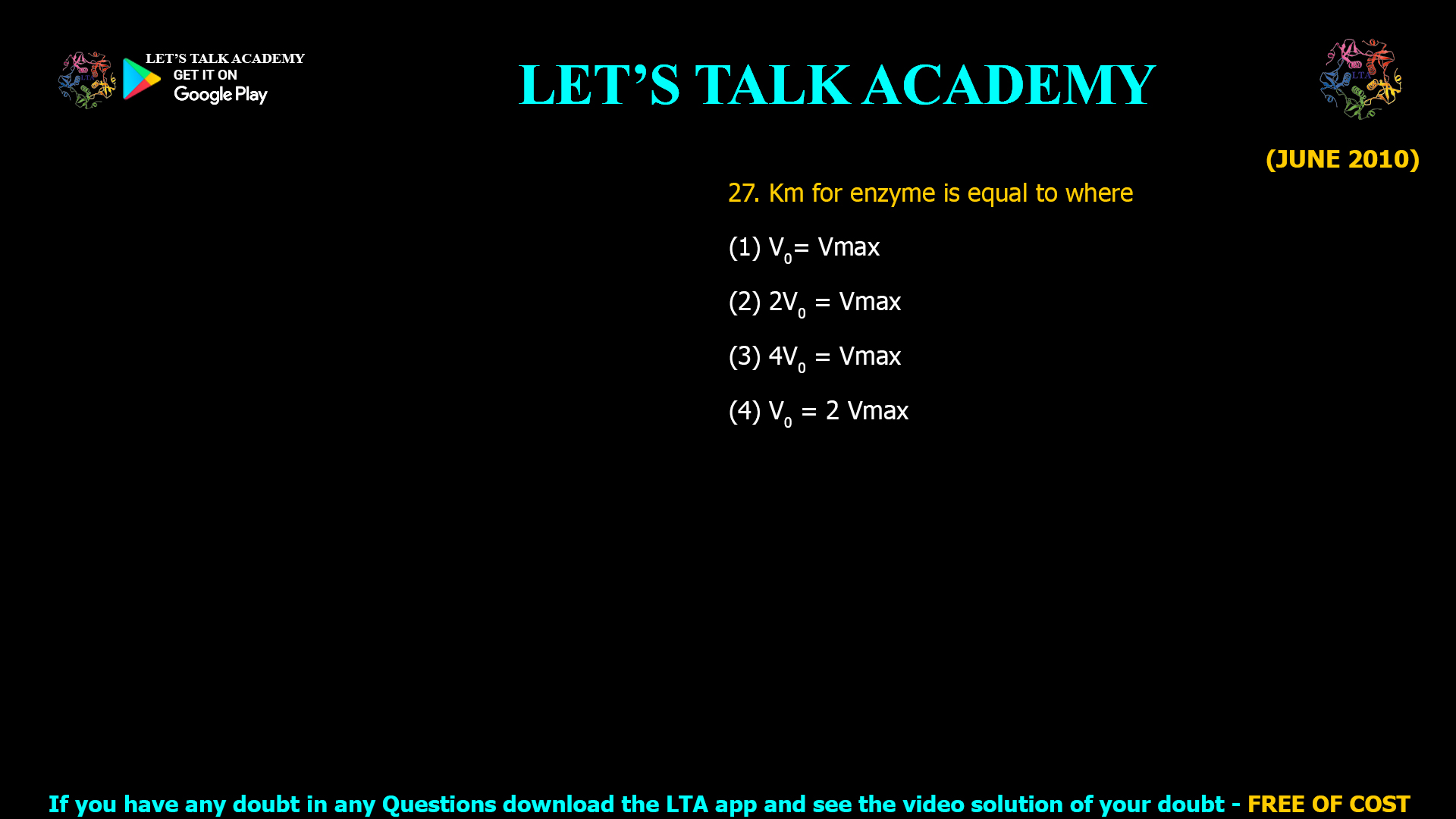
(JUNE 2010) 27. Km for enzyme is equal to where (1) V0=Vmax (2) 2V0= Vmax (3) 4V0=Vmax (4) V0 = 2 Vmax

Substrate Concentration for Half-Maximal Velocity: Understanding Michaelis Constant (Km)

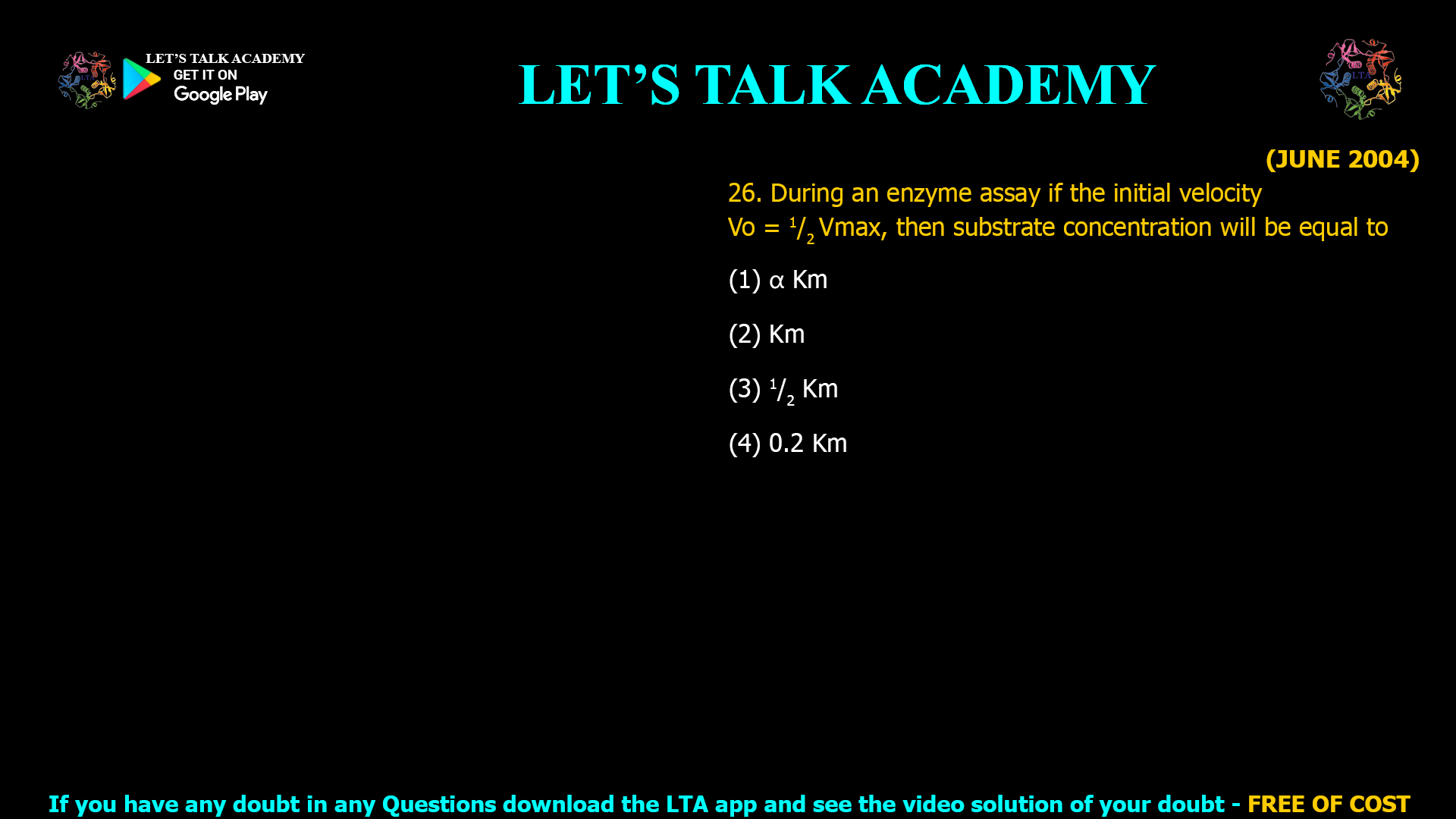
(JUNE 2004) 26. During an enzyme assay if the initial velocity Vo = 1/2 Vmax, then substrate concentration will be equal to (1) α Km (2) Km (3) 1/2 Km (4) 0.2 Km

Understanding Michaelis Constant (Km) and Its Relationship with Substrate Concentration and Initial Velocity in Enzyme Kinetics

(FEB 2022-1) 25. The following statements are being made to define the Michaelis constant (KM). It is: A. Independent of enzyme concentration [E] and substrate concentration [S] B. Equal to the dissociation constant when the [ES] complex dissociates more rapidly than product formation C. Equal to the dissociation constant when product formation is more rapid than [ES] complex dissociation D. An intrinsic property of an enzyme and does not depend on pH, temperature and ionic strength Which one of the following combination of statements is correct? (1) A and B only (2) A, B and D only (3) C and D only (4) A and D only

Michaelis Constant (Km) Explained: Key Properties and Assumptions in Enzyme Kinetics

enzyme-substrate-affinity-michaelis-constant-km-explained

Understanding Enzyme-Substrate Affinity: The Role of Michaelis Constant (Km)

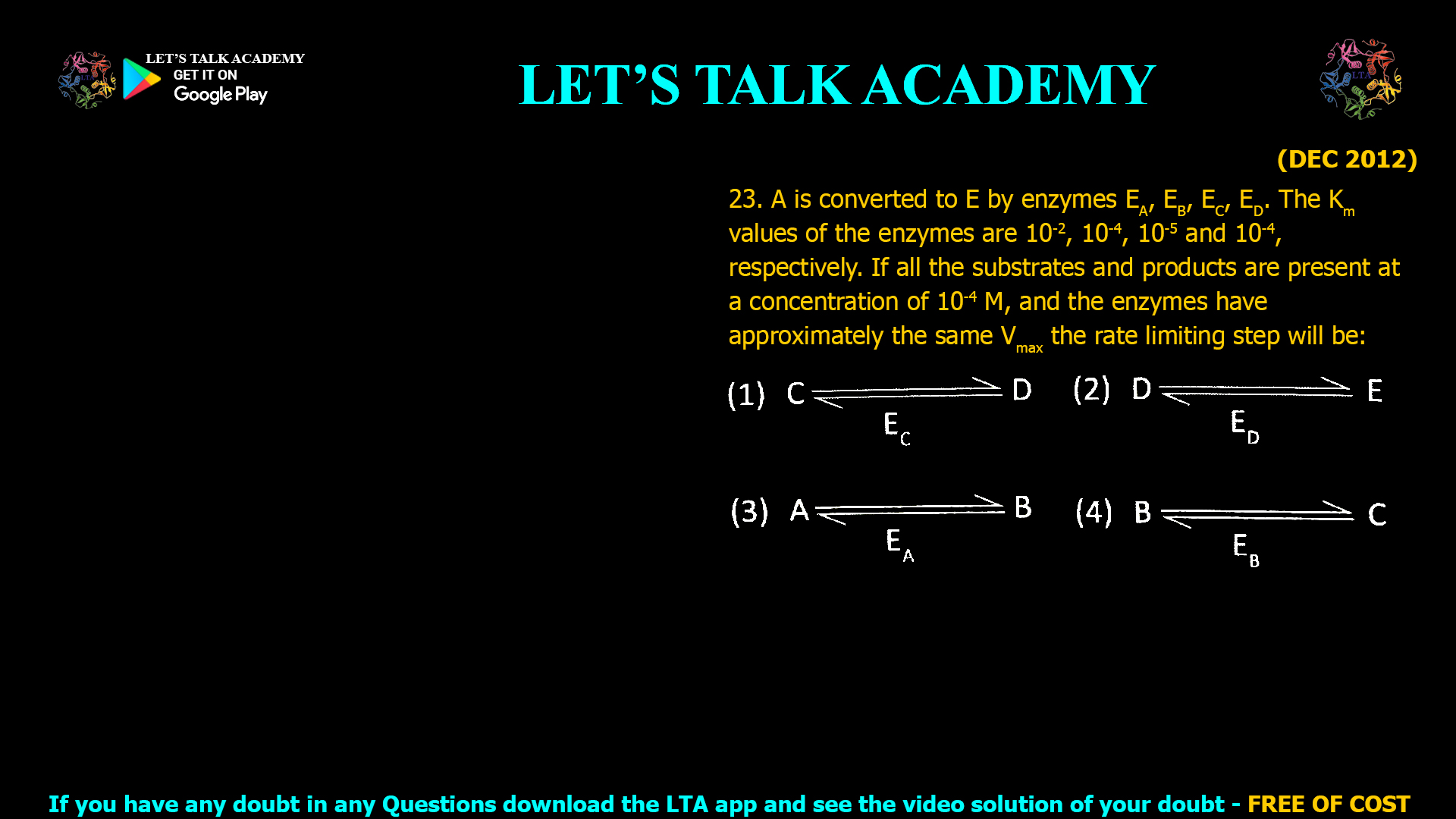
(DEC 2012) 23. A is converted to E by enzymes EA, EB, Ec, ED. The Km values of the enzymes are 10-2, 10-4, 10-5 and 10-4, respectively. If all the substrates and products are present at a concentration of 10-4 M, and the enzymes have approximately the same Vmax the rate limiting step will be:

Identifying the Rate-Limiting Step in Multi-Enzyme Reactions Using Michaelis Constant (Km)

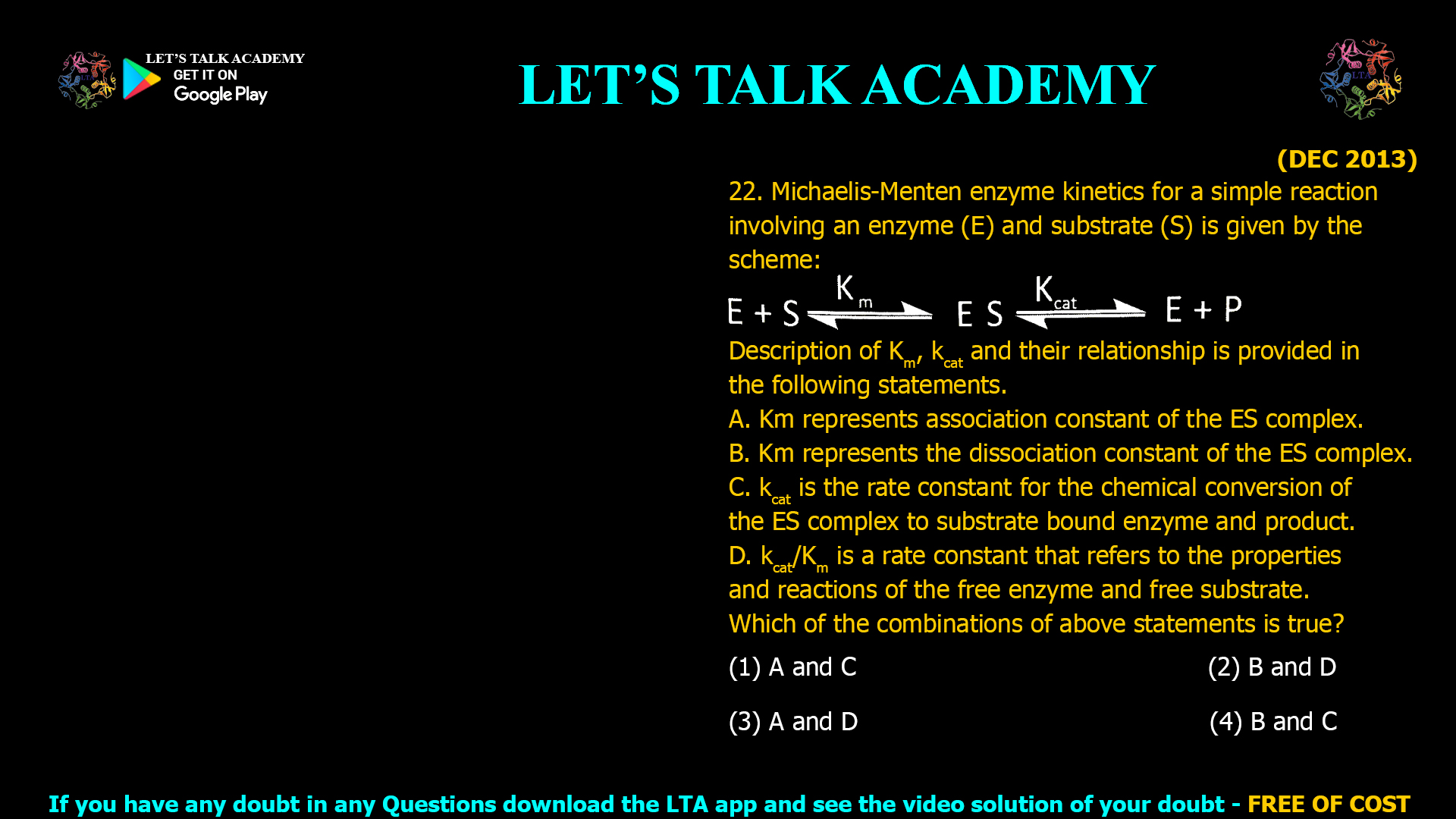
(DEC 2013) 22. Michaelis-Menten enzyme kinetics for a simple reaction involving an enzyme (E) and substrate (S) is given by the scheme: Description of Km, kcat and their relationship is provided in the following statements. A. Km represents association constant of the ES complex. B. Km represents the dissociation constant of the ES complex. C. kcat is the rate constant for the chemical conversion of the ES complex to substrate bound enzyme and product. D. kcat/Km is a rate constant that refers to the properties and reactions of the free enzyme and free substrate. Which of the combinations of above statements is true? (1) A and C (2) B and D (3) A and D (4) B and C

Michaelis-Menten Enzyme Kinetics: Understanding Km, kcat, and Their Relationships

(DEC 2019 ASSAM) 21. Following are statements on enzyme kinetics. Choose the correct statement. (1) Sufficiently high concentrations of substrate cannot completely relieve competitive inhibition. (2) Sufficiently high concentrations of substrate can relieve non-competitive inhibition. (3) Allosteric nature of an enzyme cannot be inferred from a plot of reaction velocity and substrate concentration. (4) For an enzyme following Michaelis-Menten kinetics, the initial velocity is determined at the beginning when enzyme-substrate dissociation is insignificant.

Clarifying Enzyme Kinetics and Inhibition: Correct Statements on Substrate Concentration and Reaction Velocity

(DEC 2006) 20. The steady state hypothesis for enzyme suggest that (1) Rate of formation of ES complex is equal to rate of breakdown of ES complex (2) Rate of formation of ES complex is equal to rate of formation of products (3) Rate of formation of ES complex and its dissociation into E and S are equal (4) Enzyme are steadily consumed in the reaction

Steady-State Hypothesis in Enzyme Kinetics: Explanation and Key Assumptions

(DEC 2011) 19. Michaelis and Menten derived their equation using which of the following assumption? (1) Rate limiting step in the reaction is the breakdown of ES complex to product and free enzyme (2) Rate limiting step in the reaction is the formation of ES complex (3) Concentration of the substrate can be ignored (4) Non-enzymatic degradation of the substrate is the major step

Understanding Michaelis-Menten Equation: Key Assumptions and Rate-Limiting Step

(JUNE 2011) 18. A researcher has isolated a restriction endonuclease that cleaves at only one specific 10 base pair site. A) Would this enzyme be useful in protecting cells from viral infections, given that a typical viral genome is 5 x 10⁴ base pairs long? B) Restriction endonucleases are slow enzymes with turnover number of 1 s-1. Suppose the isolated endonuclease was faster with turnover numbers similar to those for carbonic anhydrase (106 s-1), would this increased rate be beneficial to host cells, assuming that the fast enzymes have similar levels of specificity? The correct combination of answer is (1) (A) : No (B) : Yes (2) (A) : No (B) : No (3) (A) : Yes (B) : No (4) (A) : Yes (B) : Yes

Role of Restriction Endonucleases in Viral Defense and Impact of Enzyme Turnover Rate on Host Benefit

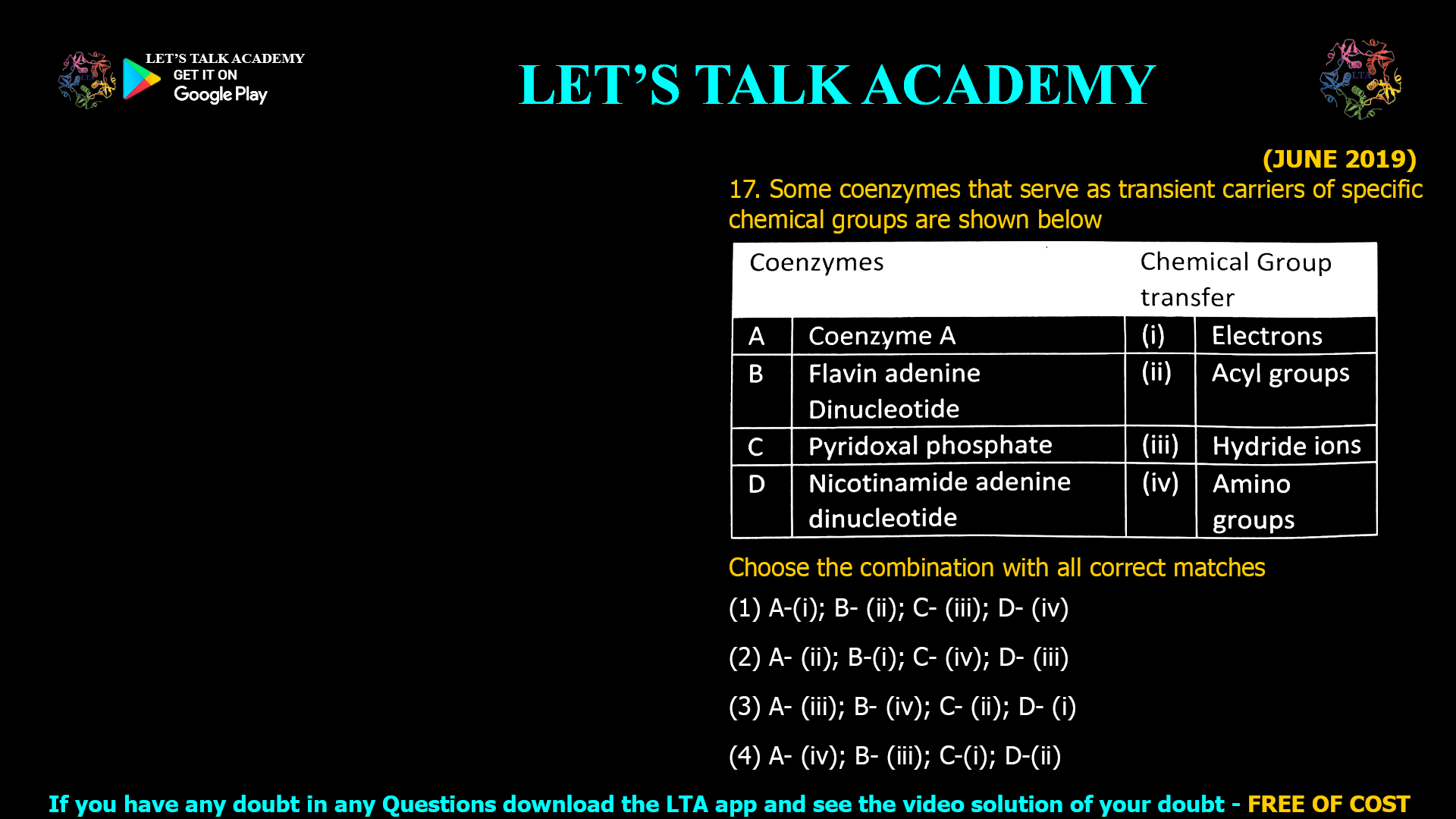
(JUNE 2019) 17. Some coenzymes that serve as transient carriers of specific chemical groups are shown below Choose the combination with all correct matches (1) A-(i); B- (ii); C- (iii); D- (iv) (2)A- (ii); B-(i); C- (iv); D- (iii) (3)A- (iii); B- (iv); C- (ii); D- (i) (4) A- (iv); B- (iii); C-(i); D-(ii)

Roles of Coenzymes as Transient Chemical Group Carriers: Comprehensive Matching Guide

(DEC 2017) 16. Match the coenzymes in column I serving as transient. Carriers of specific atoms or functional groups in column II Select correct combinations from the options given below: (1) A-(iv), B-(iii), C-(ii), D-(i) (2) A-(iii), B-(iv), C-(i), D-(ii) (3) A-(i), B-(ii), C-(iii), D-(iv) (4) A-(ii), B-(i), C-(iv), D-(iii)

Calculating Equilibrium Constant in Enzyme-Catalyzed Reaction with Rate Enhancement

equilibrium-constant-enzyme-catalysis-rate-constants

Calculating Equilibrium Constant in Enzyme-Catalyzed Reaction with Rate Enhancement

Common Misconceptions About Enzyme Properties: Clarifying Wrong Statements on Enzyme Catalysis

Common Misconceptions About Enzyme Properties: Clarifying Wrong Statements on Enzyme Catalysis

(NOV 2020-1) 13. The following statements were made of suggest the existence of an enzyme-substrate complex. A. at constant concentration of enzyme, the reaction increase with rate increase with increasing substrate concentration B. An enzyme-catalyzed reaction has a maximal velocity C. At constant concentration of the enzyme and substrate, an increase in the reaction rate is observed. D. An enzyme catalyzed reaction is not influenced by high substrate concentration. Which of the above statements suggest the existence of an enzyme-substrate complex? (1) A and B (2) B and C (3) A and C (4) D only

Evidence of Enzyme-Substrate Complex Formation: Key Statements Explained for Life Science Students

(DEC 2002) 12. When a mixture of protease, protein, nuclease and nucleic acid are incubated at 37OC, at the end of one hour which will remain intact (1) Nucleic acid (2) Nuclease (3) Protein (4) protease

Protease, Protein, Nuclease, and Nucleic Acid Stability at 37°C: What Remains Intact After Incubation?

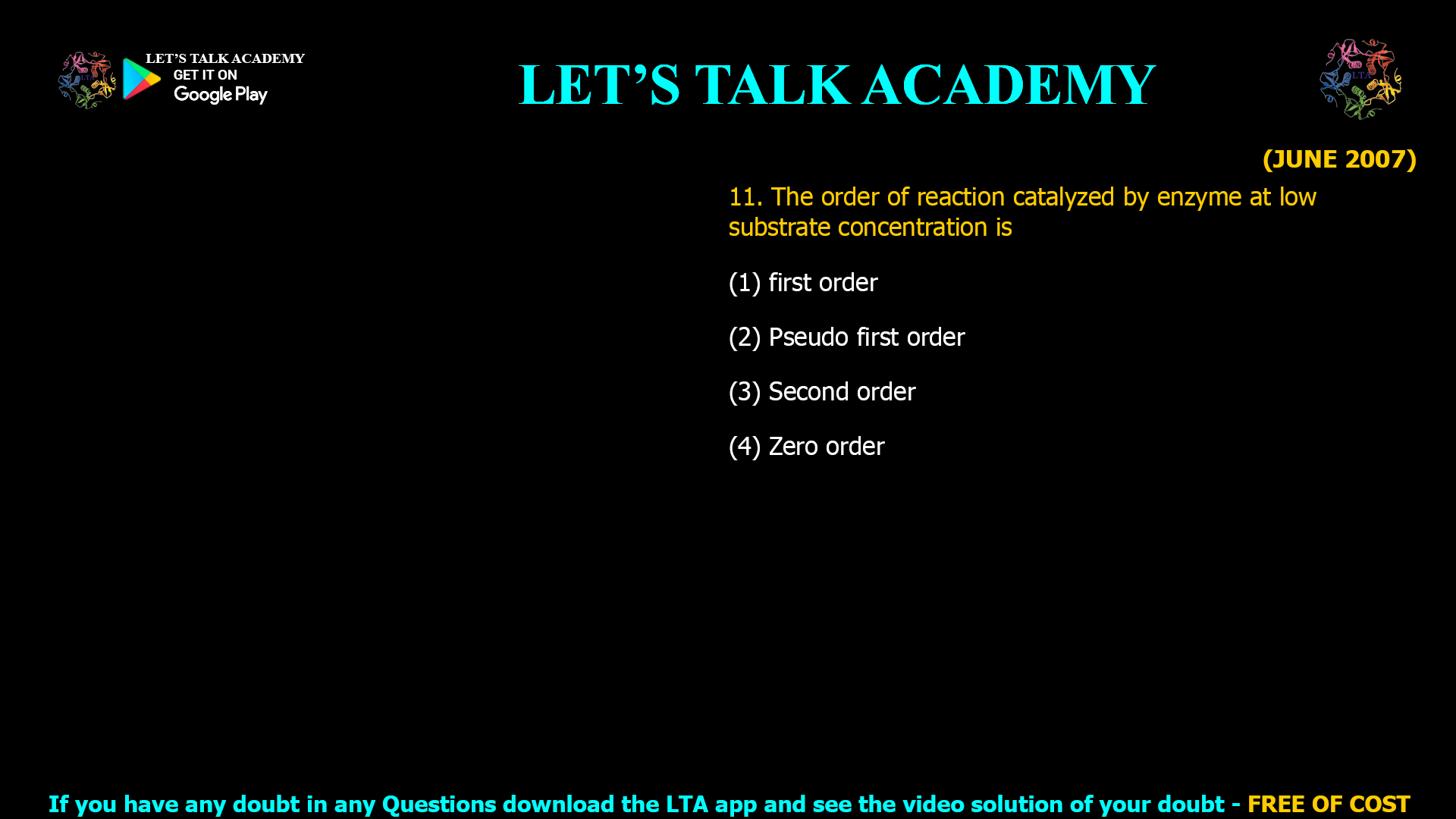
(JUNE 2007) 11. The order of reaction catalyzed by enzyme at low substrate concentration is (1) first order (2) Pseudo first order (3) Second order (4) Zero order

Reaction Order of Enzyme-Catalyzed Reactions at Low Substrate Concentration: A Detailed Analysis

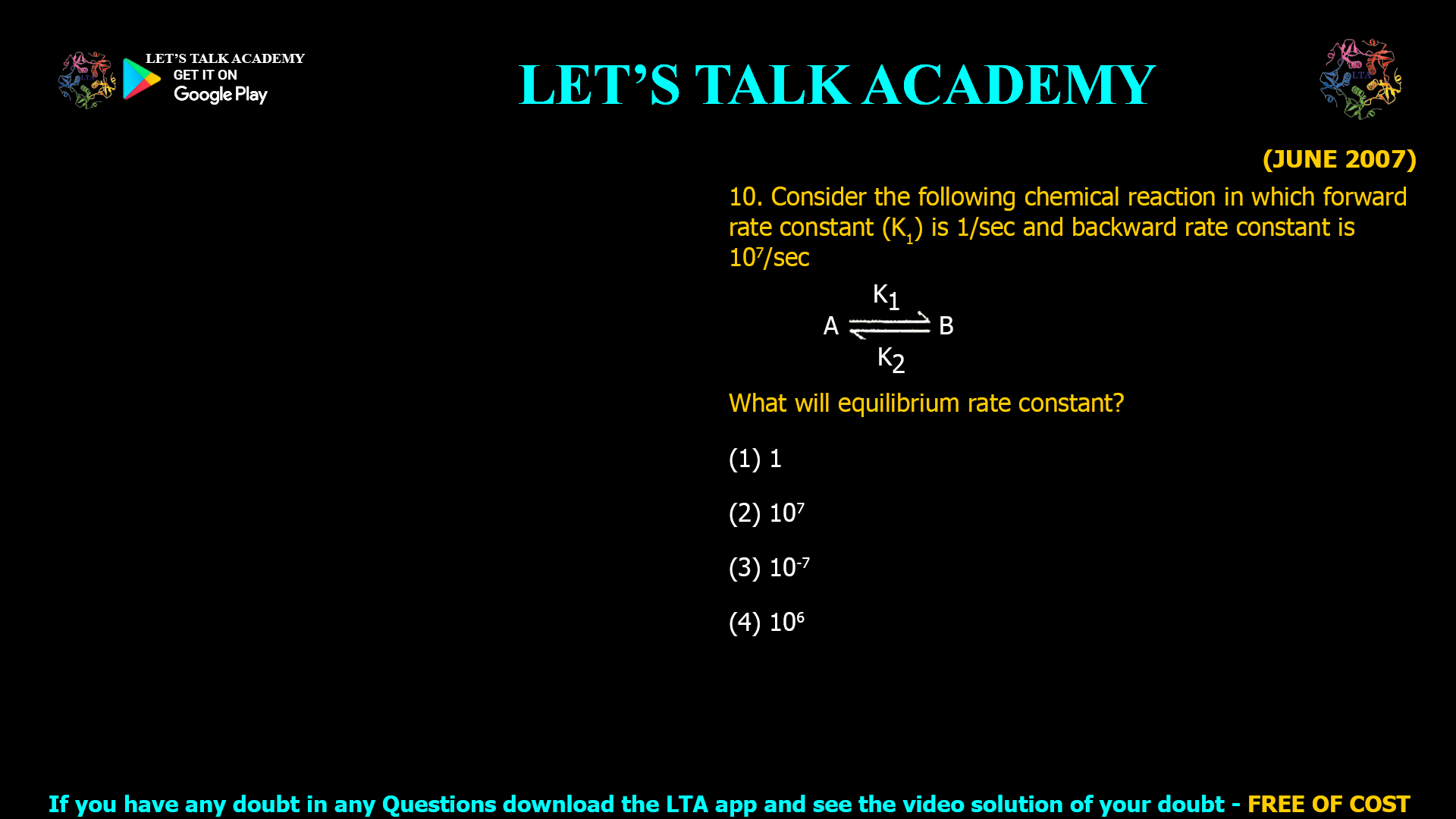
(JUNE 2007) 10. Consider the following chemical reaction in which forward rate constant (K1) is 1/sec and backward rate constant is 107/sec What will equilibrium rate constant? (1) 1 (2) 107 (3) 10-7 (4) 106

Equilibrium Rate Constant Calculation: Understanding Rate Constants in Chemical Reactions

(JUNE 2014) 9. A protein is composed of leucine, isoleucine, alanine, glycine, proline, one lysine, one arginine and two cysteines connected by a disulfide bond. Conformational analysis indicates that the protein has elements of helix and beta structure. The protein is most likely. (1) a non-specific protease (2) not an enzyme (3) a lipase. (4) a flippase

Understanding Protein Structure and Function: Identifying Enzymes from Amino Acid Composition and Secondary Structure

(DEC 2013) 8. Enzymes help to lower the activation energies of reactions by (1) covalent interaction with substrates. (2) binding only with the solvent molecules, (3) changing reaction equilibria. (4) forming weak interactions with substrates.

How Enzymes Lower Activation Energy: Mechanisms of Catalysis Explained

7. Which of the following is NOT a property of an enzyme (1) from complex with substrate (2) decrease activation energy (3) decrease Gibb's free energy (4) Increases rate of reaction

Properties of Enzymes: Understanding What Enzymes Can and Cannot Do in Catalysis

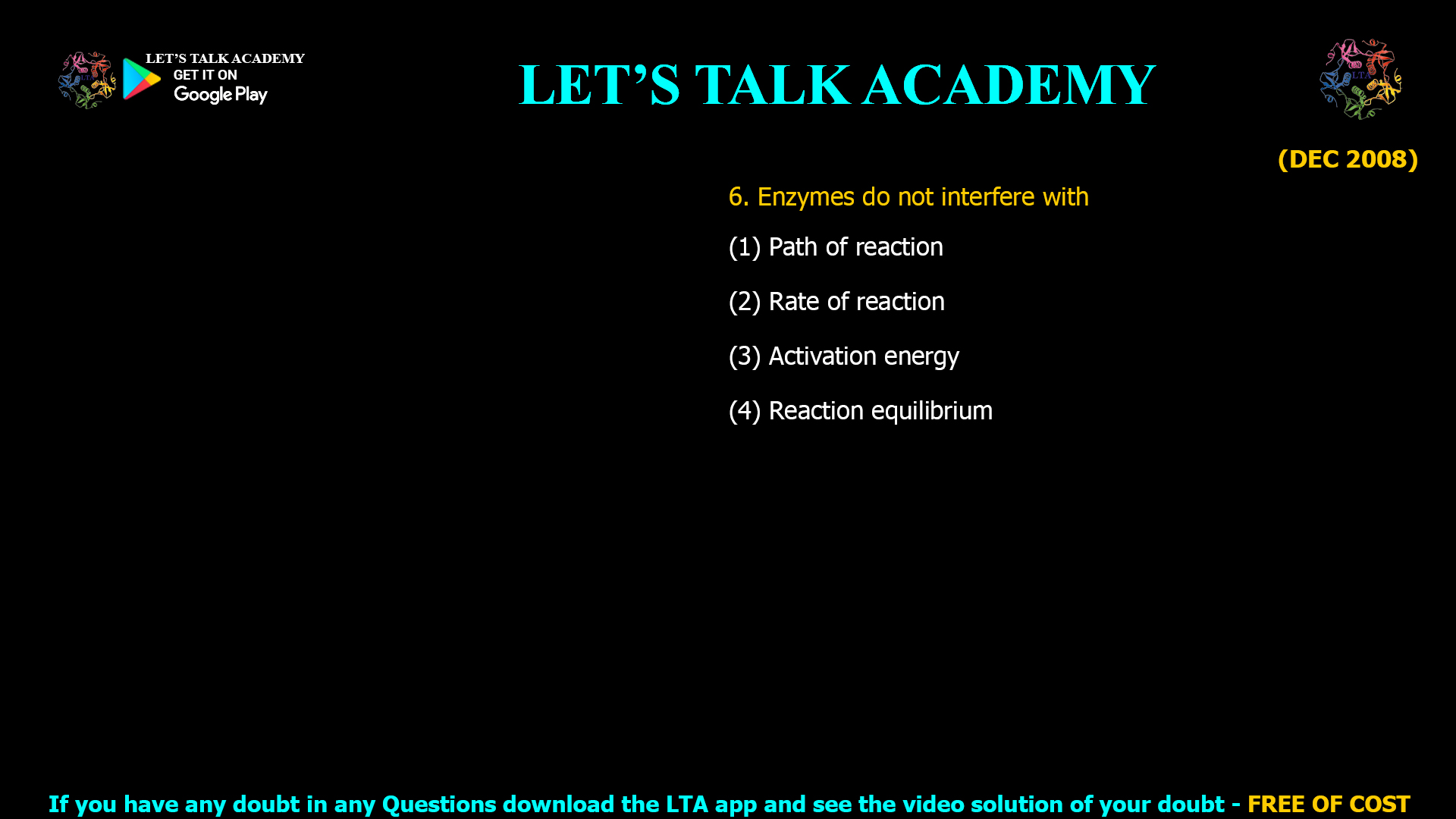
(DEC 2008) 6. Enzymes donot interfere with (1) Path of reaction (2) Rate of reaction (3) Activation energy (4) Reaction equilibrium

Understanding Enzyme-Substrate Interactions: Mechanisms, Models, and Catalytic Processes

5. In enzyme catalyzed reactions, enzyme molecules are capable of all of the following, except (1) disturbing the equilibrium of the chemical reaction (2) decreasing the activation energy of the reaction (3) increasing the rate of the reaction (4) altering the path of the reaction

Do Enzymes Affect Chemical Equilibrium? Understanding Enzyme Action in Catalysis

(DEC 2005) 4. Which bond/interaction is not seen between enzyme and substrate? (1) Vander wall interaction (2) Hydrogen bond (3) Peptide bond (4) ionic bond

Types of Bonds in Enzyme-Substrate Interaction: Which Is Not Present?

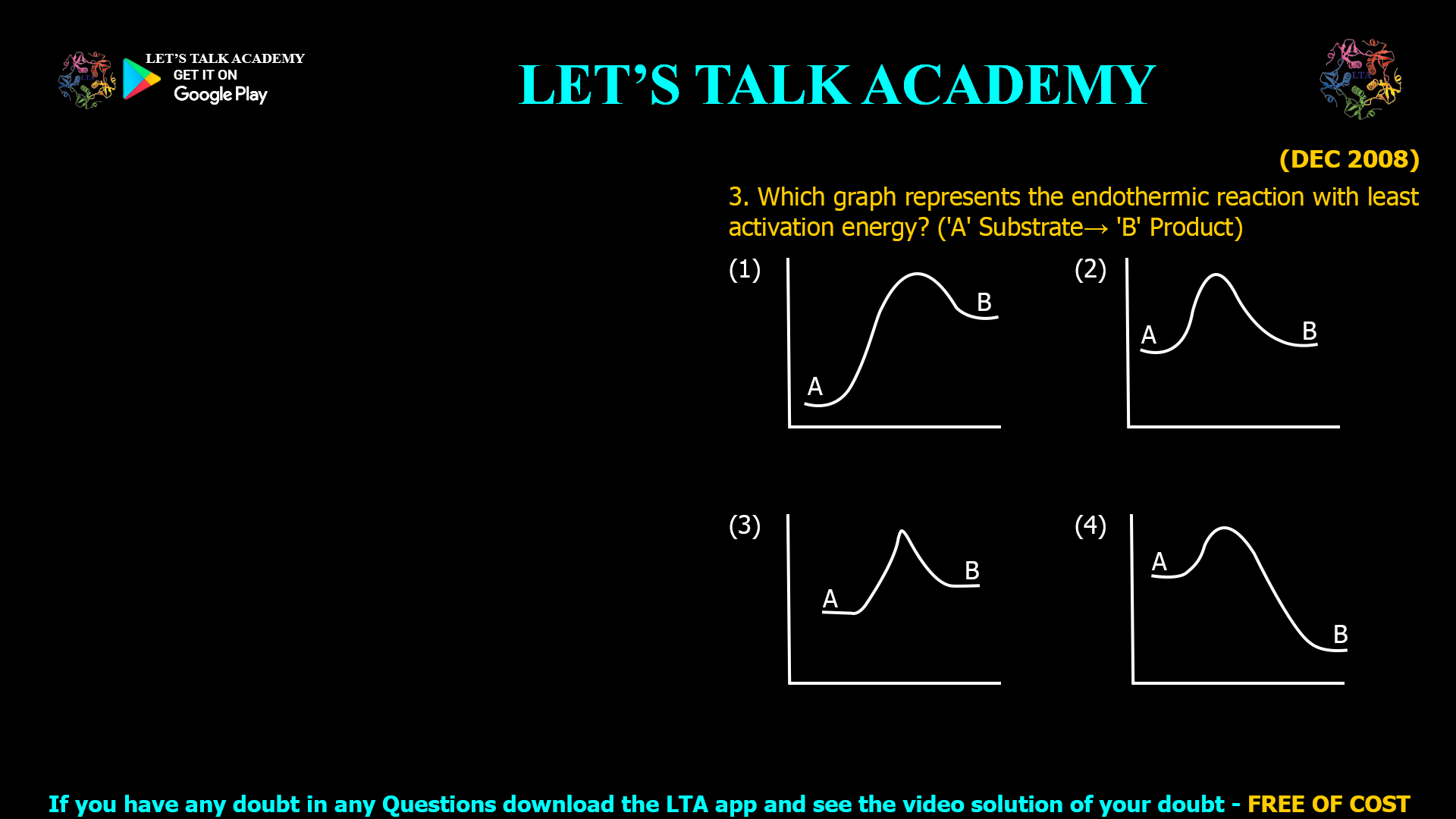
Endothermic Reaction with Least Activation Energy: Graph Identification and Explanation for CSIR NET Life Sciences

Endothermic Reaction with Least Activation Energy: Graph Identification and Explanation for CSIR NET Life Sciences

(DEC 2008) 2. Enzymes accelerates rate of reaction by (1) Lowering number of transition states (2) Lowering the activation energy of highest transition state (3) Providing direct energy to substrate (4) Providing more chance to substrates to react together

How Do Enzymes Accelerate Reaction Rates? Lowering Activation Energy Explained

Enzymes accelerate a reaction by which one of the following strategies? (1) Decreasing energy required to form the transition state. (2) Increasing kinetic energy of the substrate. (3) Increasing the free energy difference between substrate and the product. (4) Increasing the turn over number of enzymes.

Enzyme Catalysis and Activation Energy

CSIR NET Life Science Previous Year Questions and Solution on Biochemistry

Phosphorylation: The Premier Example of Enzyme Regulation by Reversible Covalent Modification

(DEC 2004) 76. The best example of regulation of enzyme by reversible covalent modification is- (1) Phosphorylation                                   (2) Acetylation (3) Glycosylation                                       (4) proteolytic cleavage The correct answer is (1) Phosphorylation. Introduction […]

Latest Courses