


. Fertilization in sea urchin involves interaction of sperm Bindin with its receptor EBR1, a 350 kDa glycoprotein on the egg vitelline membrane. The plot given below shows the status of membrane potential and levels of EBR1, Na+ and K+ in an unfertilized egg.18. Fertilization in sea urchin involves interaction of sperm Bindin with its receptor EBR1, a 350 kDa glycoprotein on the egg vitelline membrane. The plot given below shows the status of membrane potential and levels of EBR1, Na+ and K+ in an unfertilized egg.

The Crucial Role of Bindin and EBR1 in Sea Urchin Fertilization: Molecular Mechanisms and Egg Membrane Dynamics

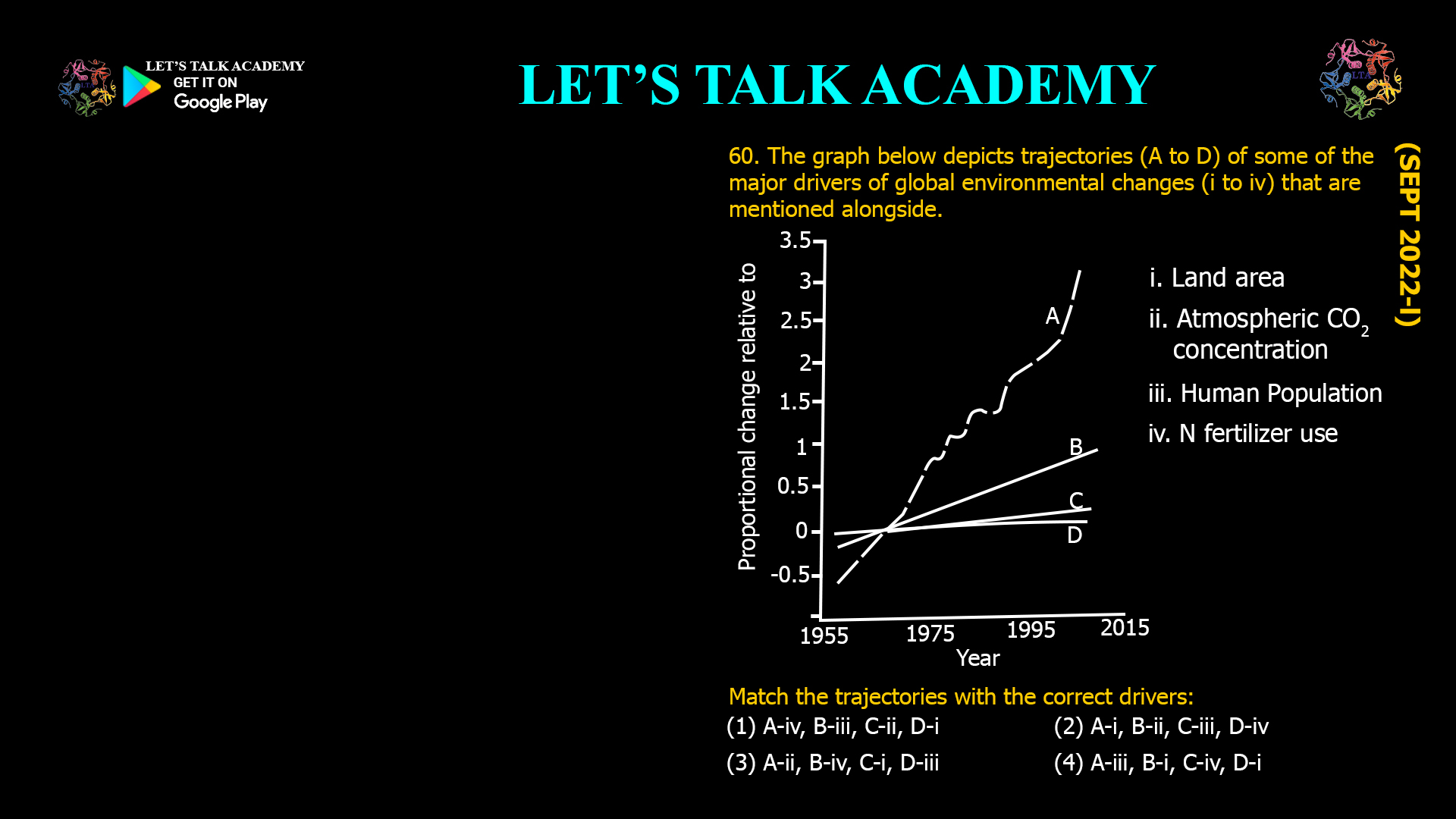
The graph below depicts trajectories (A to D) of some of the major drivers of global environmental changes (i to iv) that are mentioned alongside. Match the trajectories with the correct drivers: (1) A-iv, B-iii, C-ii, D-i (2) A-i, B-ii, C-iii, D-iv (3) A-ii, B-iv, C-i, D-iii (4) A-iii, B-i, C-iv, D-i

Matching Trajectories of Global Environmental Change Drivers: How to Link Trends with Key Causes

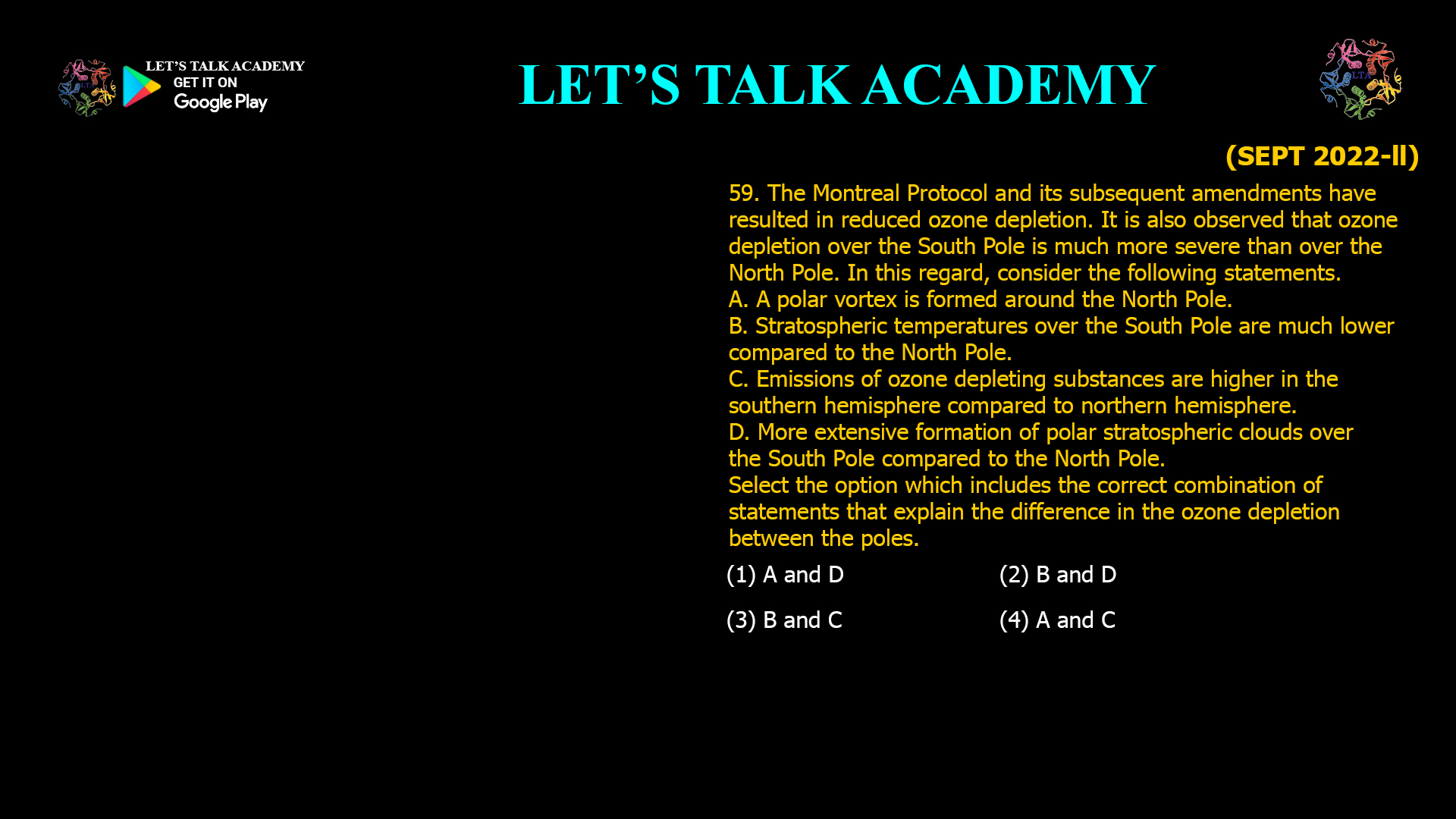
The Montreal Protocol and its subsequent amendments have resulted in reduced ozone depletion. It is also observed that ozone depletion over the South Pole is much more severe than over the North Pole. In this regard, consider the following statements. A. A polar vortex is formed around the North Pole. B. Stratospheric temperatures over the South Pole are much lower compared to the North Pole. C. Emissions of ozone depleting substances are higher in the southern hemisphere compared to northern hemisphere. D. More extensive formation of polar stratospheric clouds over the South Pole compared to the North Pole. Select the option which includes the correct combination of statements that explain the difference in the ozone depletion between the poles. (1) A and D (2) B and D (3) B and C (4) A and C 

Why Is Ozone Depletion More Severe Over the South Pole? Understanding the Role of the Polar Vortex, Stratospheric Temperatures, and Polar Stratospheric Clouds

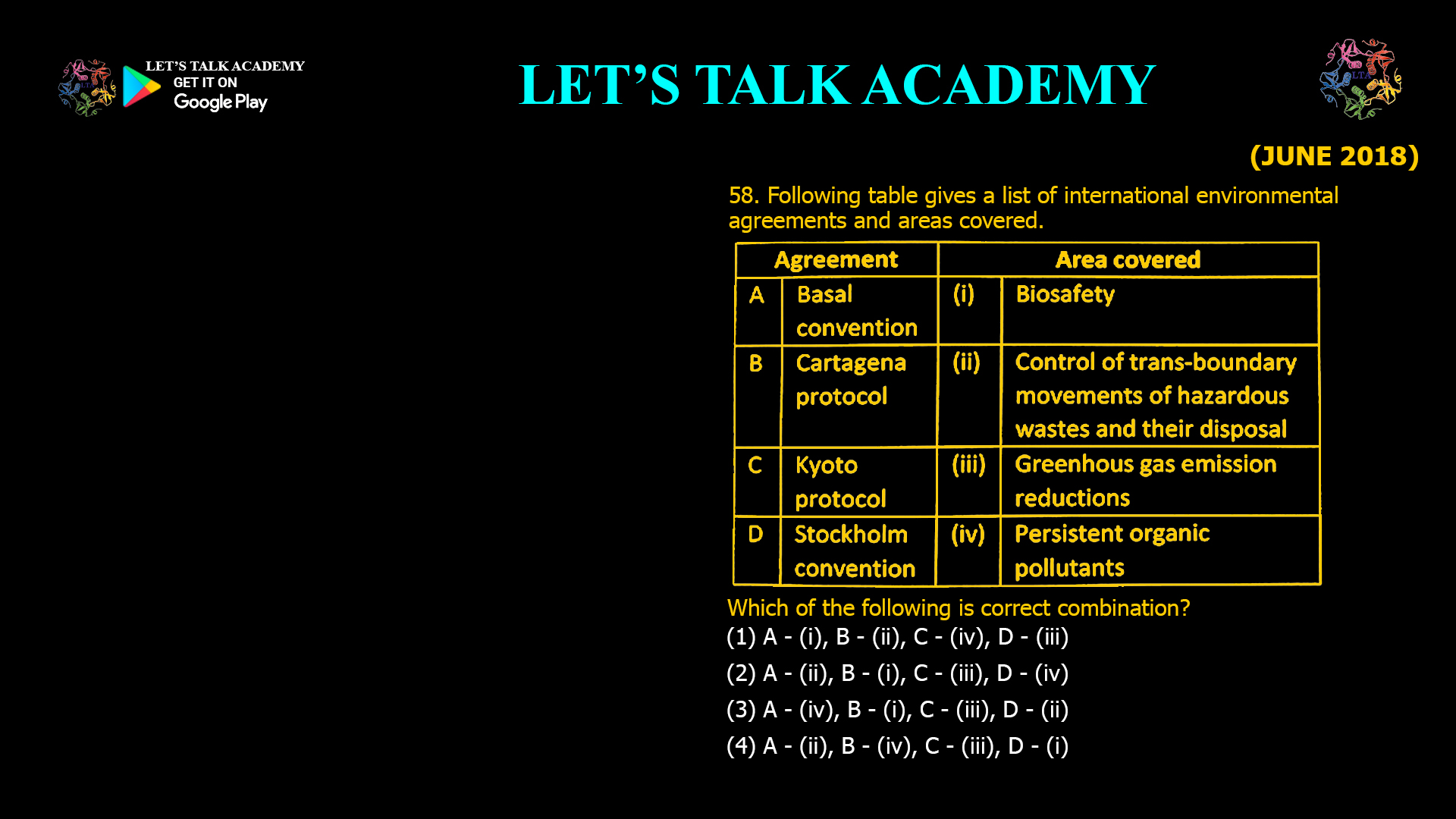
Following table gives a list of international environmental agreements and areas covered. Which of the following is correct combination? (1) A - (i), B - (ii), C - (iv), D - (iii) (2) A - (ii), B - (i), C - (iii), D - (iv)

Matching International Environmental Agreements to Their Focus Areas: A Comprehensive Guide

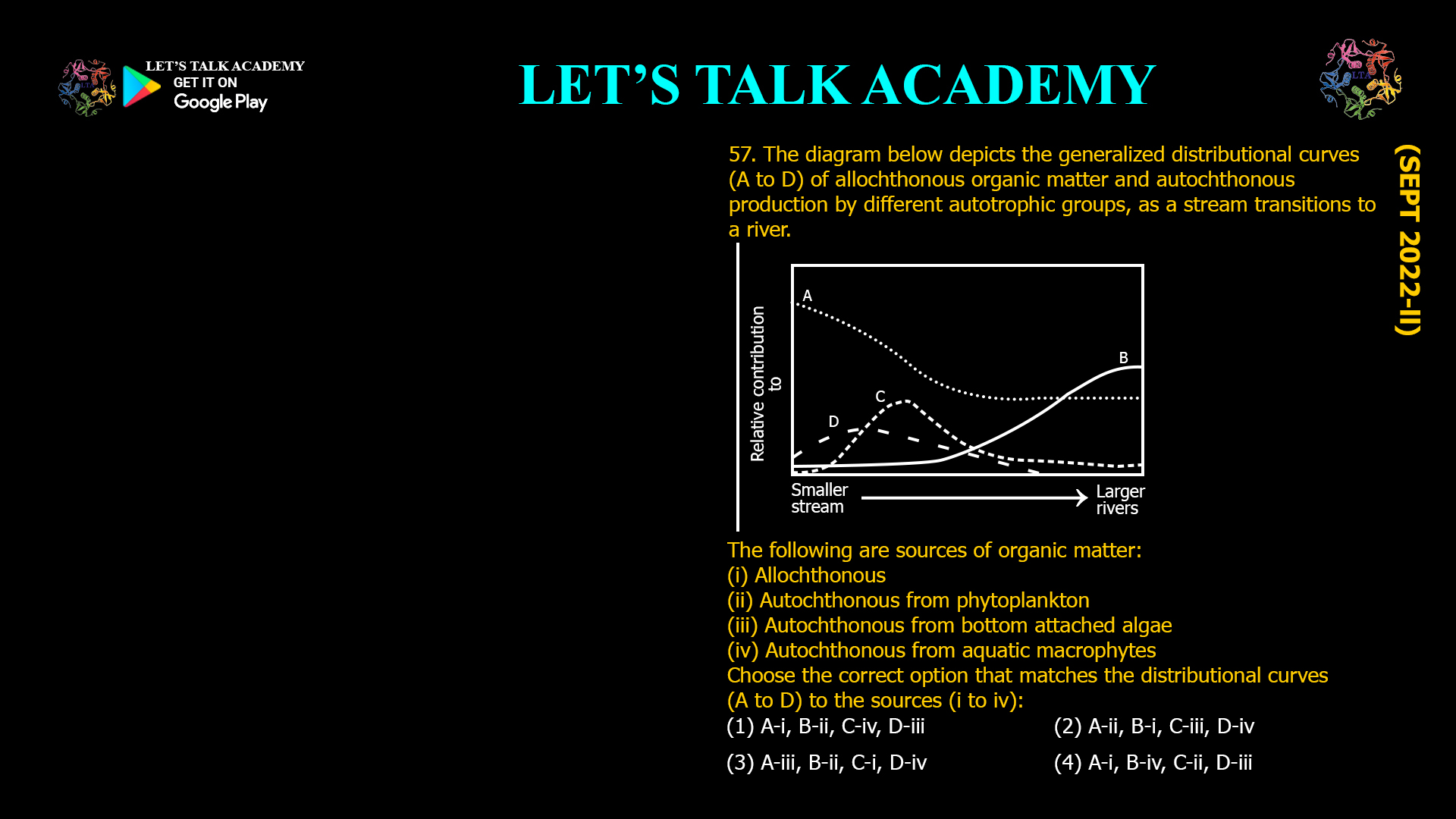
The diagram below depicts the generalizeddistributional curves (A to D) of allochthonous organic matter and autochthonous production by different autotrophic groups, as a stream transitions to a river. The following are sources of organic matter: (i) Allochthonous (ii) Autochthonous from phytoplankton (iii) Autochthonous from bottom attached algae (iv) Autochthonous from aquatic macrophytes Choose the correct option that matches the distributional curves (A to D) to the sources (i to iv): (1) A-i, B-ii, C-iv, D-iii (2) A-ii, B-i, C-iii, D-iv (3) A-iii, B-ii, C-i, D-iv (4) A-i, B-iv, C-ii, D-iii

Mapping Organic Matter Sources Along a Stream-to-River Continuum: How Allochthonous and Autochthonous Inputs Shape Aquatic Ecosystems

In a lake subjected to progressive eutrophication,temporal changes in the magnitude of selectedparameters (A, B, C, D) are shown in the graph The parameters A, B, C, D are (1) A - Green algal biomass, B — Cyano-bacterial biomass, C - Dissolved Oxygen concentration, D - Biological Oxygen Demand (2) A - Biological Oxygen Demand, B – Cyanobacterial biomass, C- Dissolved Oxygen concentration, D - Green algal biomass (3) A - Biological Oxygen demand, B - Green algal biomass, C - Cyanobacterial biomass, D – Dissolved Oxygen concentration (4) A - Cyanobacterial biomass, B - Biological Oxygen Demand, C -Green algal biomass, D – Dissolved Oxygen concentration

Understanding Lake Eutrophication: How Key Parameters Change Over Time and Their Ecological Significance

Which one of the following statements is true for trends of the dissolved oxygen (DO) and biological oxygen demand in water stream receiving pollutants from point source? (1) In septic zone, both DO and BOD levels remains stationary (2) In recovery zone, both DO and BOD levels increase rapidly  (3) In decomposition zone, DO levels drop rapidly where as BOD level remains more or less stable (4) In septic zone, DO levels decrease and BOD level increase whereas in recovery zone DO increase and BOD decrease

Understanding Dissolved Oxygen and Biological Oxygen Demand Trends in Polluted Streams: A Guide to Water Quality Zones

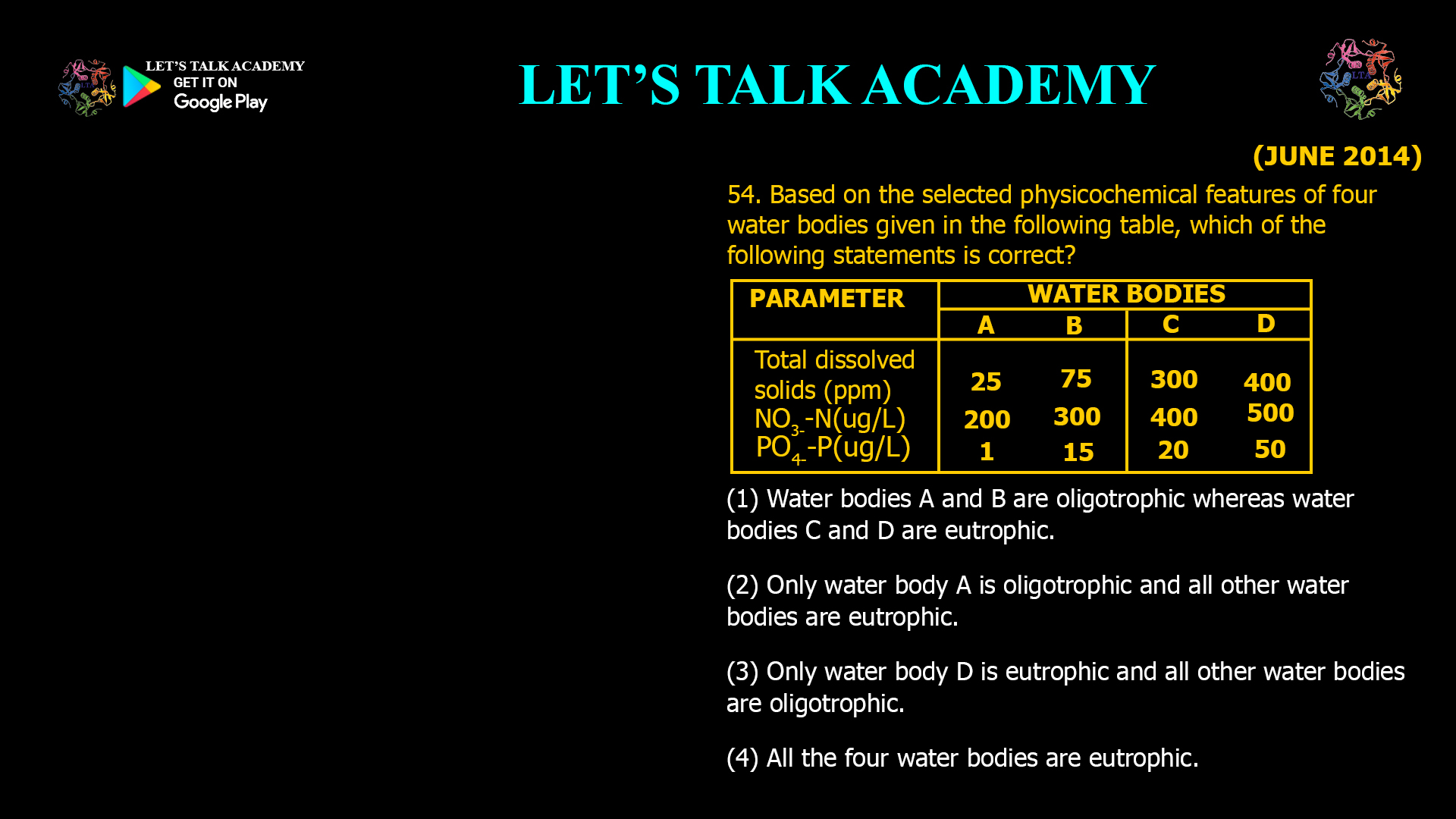
Based on the selected physicochemical features of four water bodies given in the following table, which of the following statements is correct? (1) Water bodies A and B are oligotrophic whereas water bodies C and D are eutrophic. (2) Only water body A is oligotrophic and all other water bodies are eutrophic. (3) Only water body D is eutrophic and all other water bodies are oligotrophic. (4) All the four water bodies are eutrophic.

How to Classify Water Bodies as Oligotrophic or Eutrophic Using Physicochemical Features: A Comprehensive Guide

The present global warming trend is expected to resultin an increased incidence of malaria in temperatecountries. The supposed underlying mechanism is that (1) higher temperatures make temperate country people more vulnerable to diseases (2) malarial parasite grows better at higher temperatures. (3) the vector mosquito species requires warmer temperatures for reproduction. (4) anti-malaria drugs are less effective in temperate countries. 

Why Global Warming Could Increase Malaria in Temperate Countries: The Science Behind Temperature and Mosquito-Borne Disease

Ozone concentration in the atmosphere is measured in Dobson units (Du). An ozone hole is said to have occurred when the concentration of ozone in the region falls below 220 Du. The diagram of the globe below shows the location of three study sites. The table below it shows values of ozone concentrations recorded at the sites for two dates in 2009. 

Understanding Ozone Hole Detection: The Role of Dobson Units and Global Ozone Monitoring

The losses of ozone over Arctic are significantly lower than that over Antarctica because (1) polar vortex over Arctic is not as tight as over Antarctic. (2) Arctic stratosphere warms slower in the spring. (3) Concentration of chlorine in the atmosphere over Arctic is less than over Antarctic. (4) freezing of NO2and CH4are slower over Arctic than over Antarctic. 

Why Are Arctic Ozone Losses Lower Than Antarctic? Comparing Polar Ozone Depletion Causes

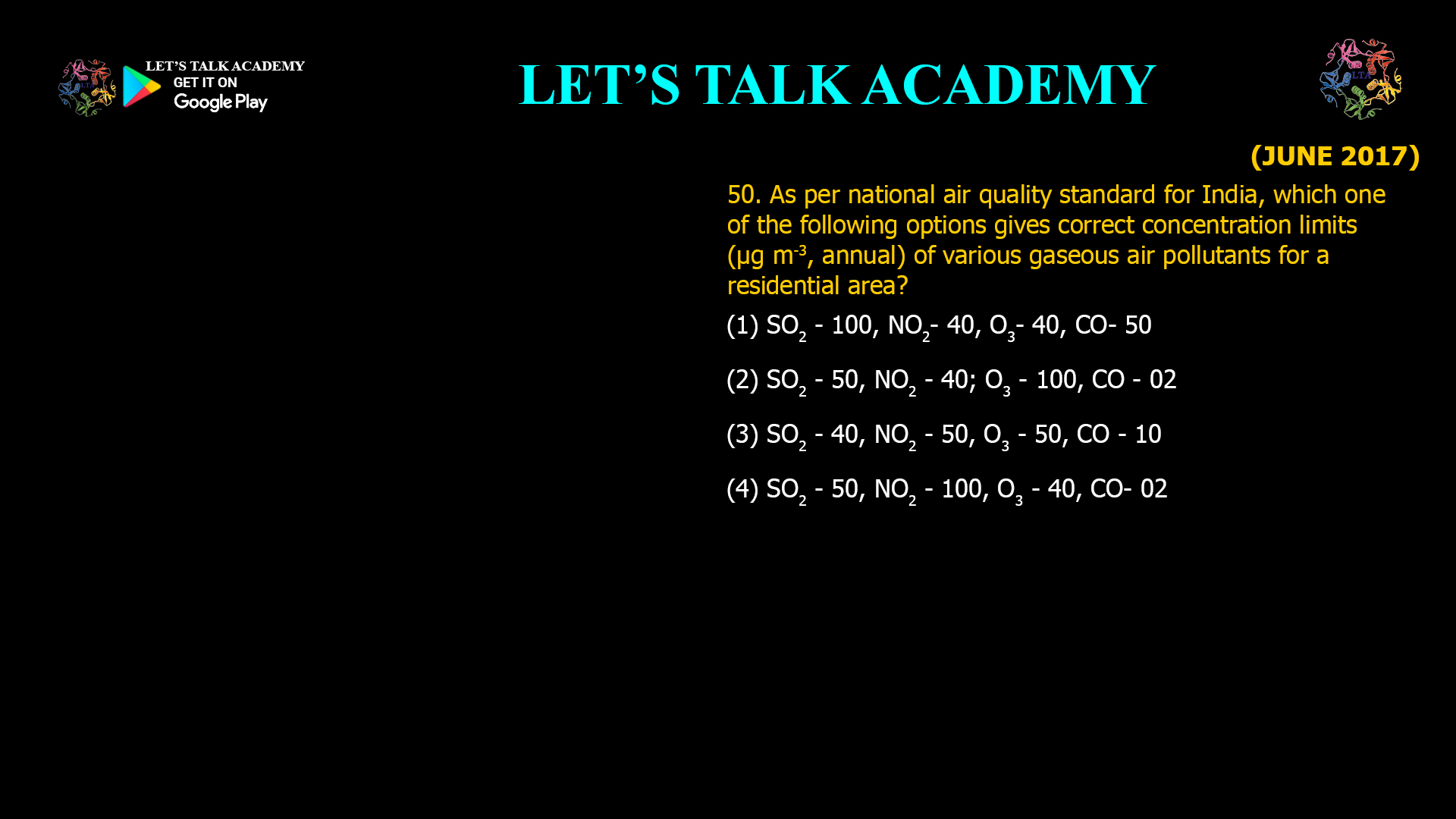
As per national air quality standard for India, which one of the following options gives correct concentration limits (µg m-3, annual) of various gaseous air pollutants for a residential area? (1) SO2- 100, NO2- 40, O3- 40, CO- 50 (2) SO2- 50, NO2 - 40; O3 - 100, CO - 02 (3) SO2 - 40, NO2 - 50, O3 - 50, CO - 10 (4) SO2 - 50, NO2 - 100, O3 - 40, CO- 02 

What Are India’s National Air Quality Standards for Residential Areas? Understanding Gaseous Pollutant Limits

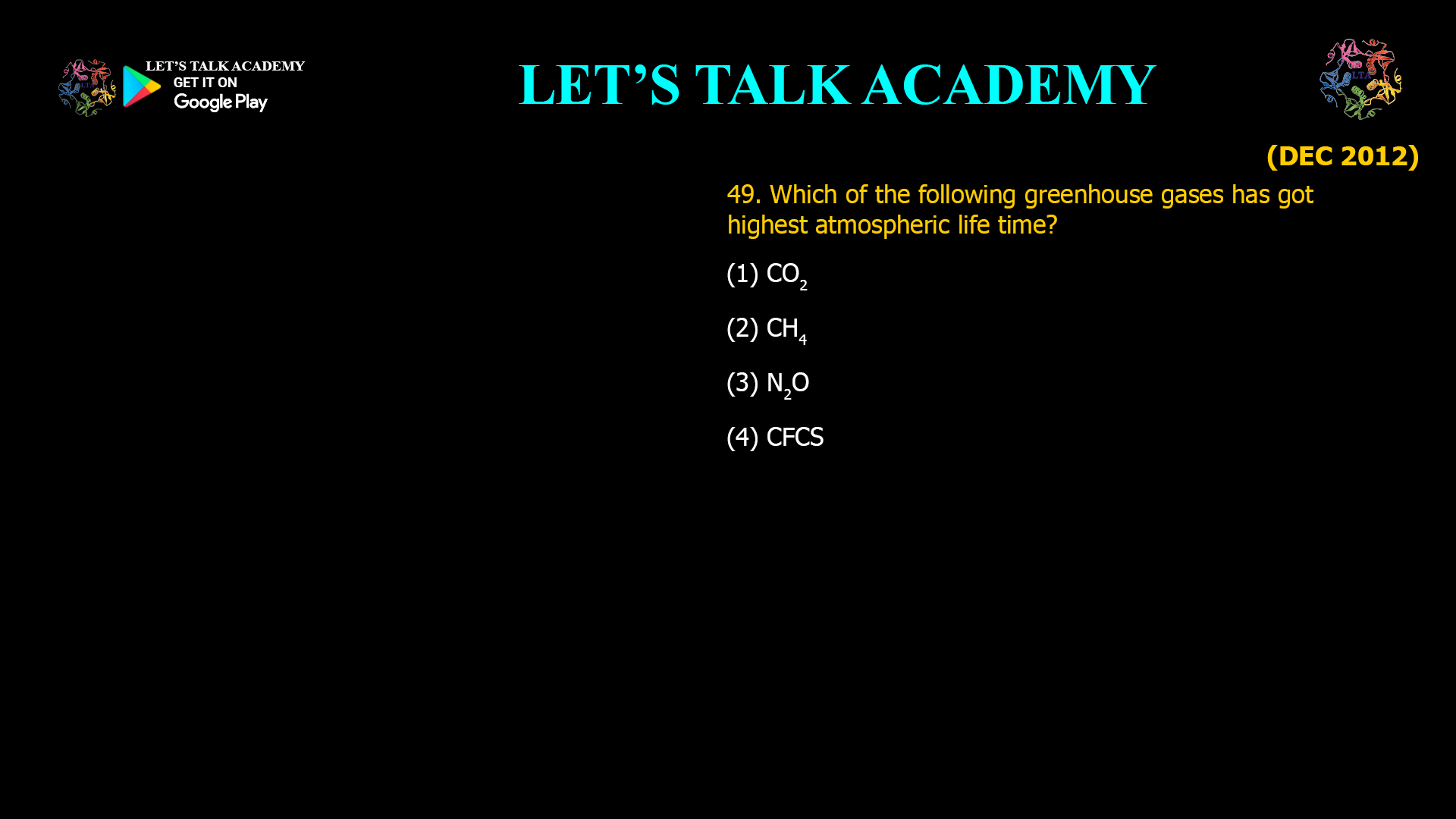
Which of the following greenhouse gases has got highest atmospheric life time? (1) CO2 (2) CH4 (3) N2O (4) CFCS 

Which Greenhouse Gas Has the Highest Atmospheric Lifetime? Comparing CO₂, CH₄, N₂O, and CFCs

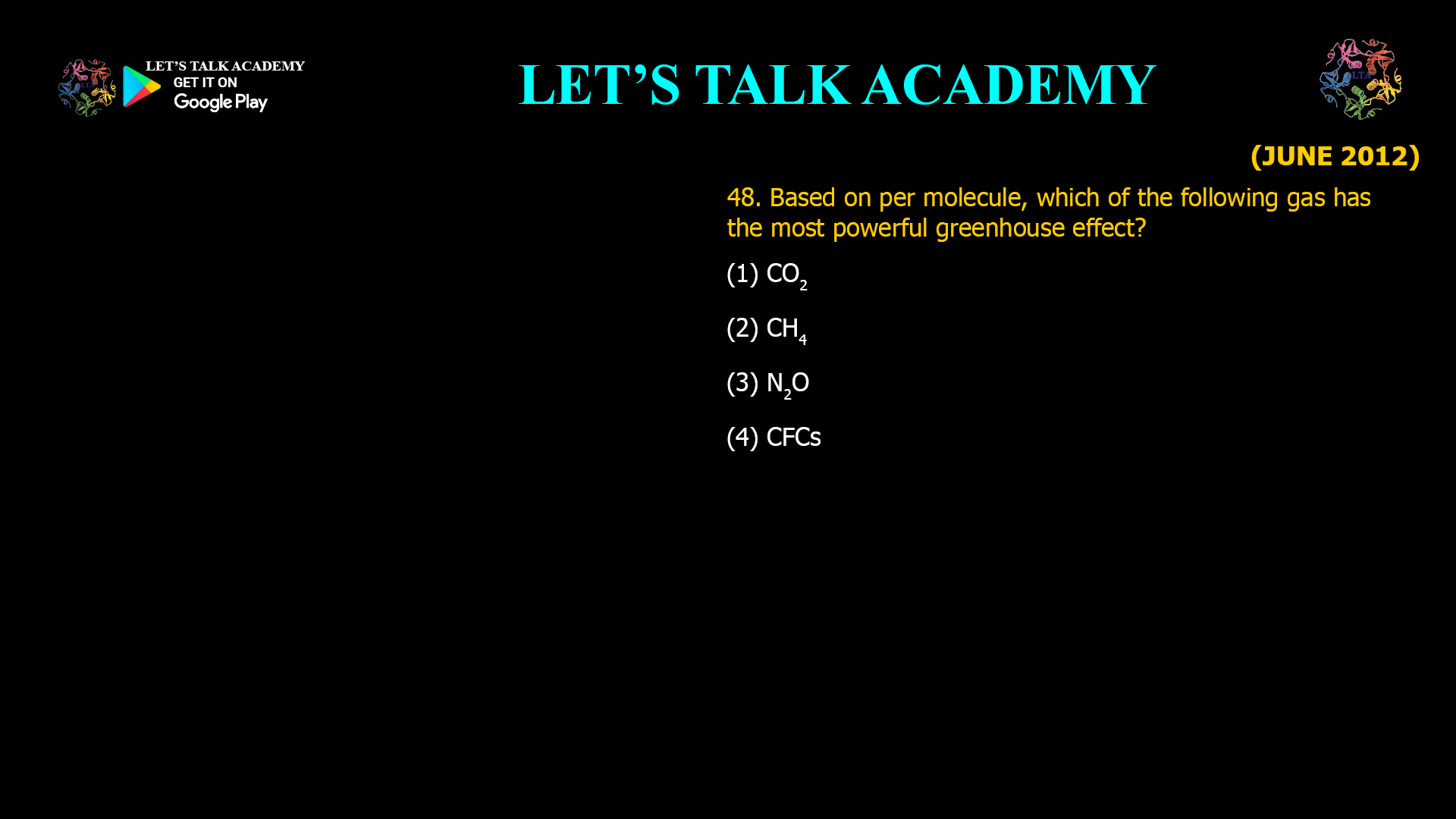
Based on per molecule, which of the following gas hasthe most powerful greenhouse effect? (1) CO2 (2) CH4 (3) N2O (4) CFCs

Which Gas Has the Most Powerful Greenhouse Effect Per Molecule? Comparing CO₂, CH₄, N₂O, and CFCs

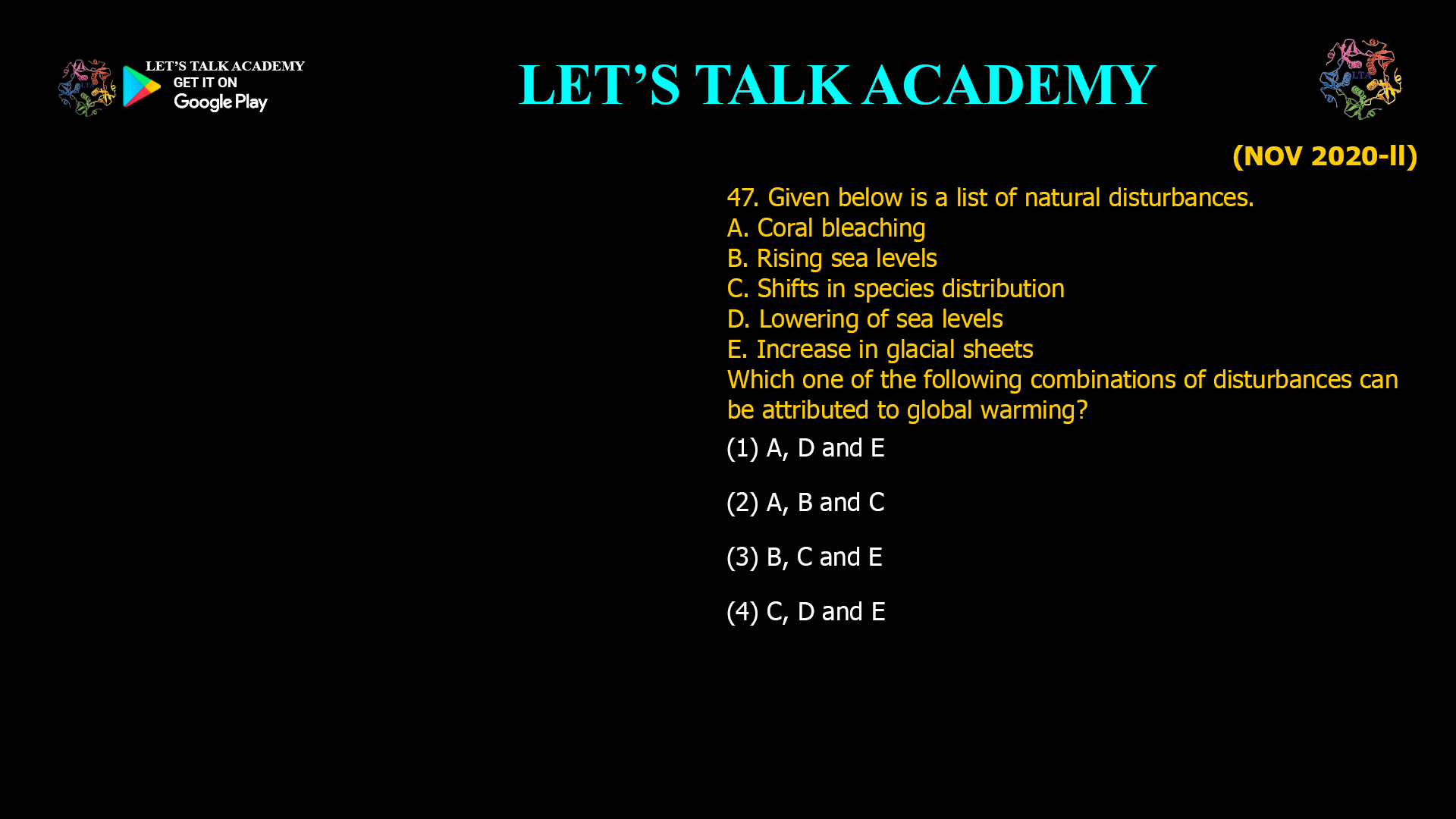
Given below is a list of natural disturbances. A. Coral bleaching B. Rising sea levels C. Shifts in species distribution D. Lowering of sea levels E. Increase in glacial sheets Which one of the following combinations of disturbances can be attributed to global warming? (1) A, D and E (2) A, B and C (3) B, C and E (4) C, D and E 

Which Natural Disturbances Are Caused by Global Warming? Identifying Climate Change Effects

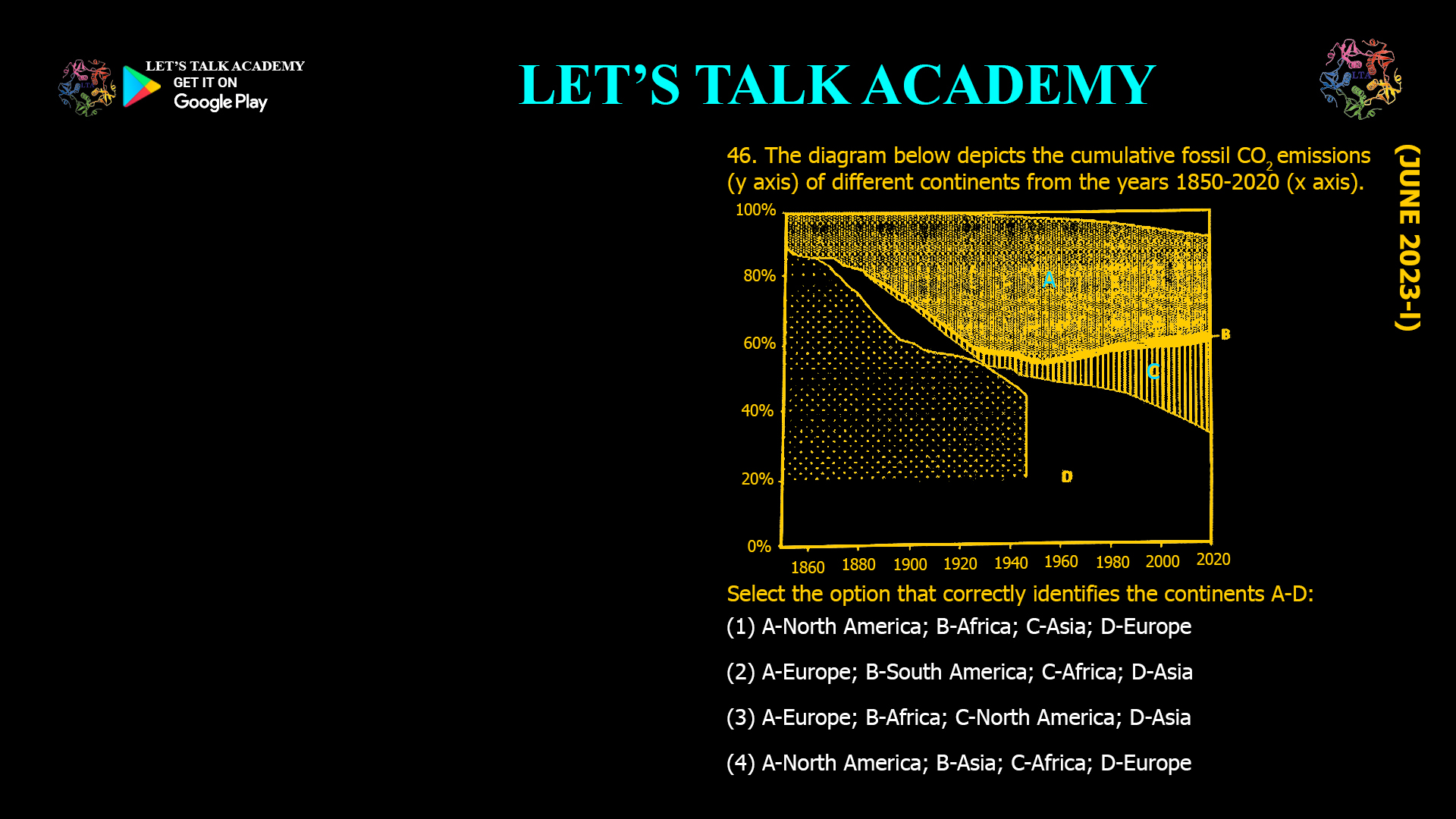
The diagram below depicts the cumulative fossil CO2emissions (y axis) of different continents from the years 1850-2020 (x axis). Select the option that correctly identifies the continents A-D: (1) A-North America; B-Africa; C-Asia; D-Europe (2) A-Europe; B-South America; C-Africa; D-Asia (3) A-Europe; B-Africa; C-North America; D-Asia (4) A-North America; B-Asia; C-Africa; D-Europe

Which Continents Have the Highest Cumulative Fossil CO₂ Emissions? Decoding the Graph of Continental Emissions (1850–2020)

The Covid-19 pandemic had a major impact on CO2emissions due to the disruption of industrial activities caused by it. Which of the following countries/regions had the smallest fall of CO2emissions in % terms during the year 2020? (1) India (2) USA (3) China (4) European Union

Which Country Had the Smallest CO2 Emissions Drop During COVID-19? Analyzing 2020’s Pandemic Impact

Which of the following constitute the largest reservoir of carbon in the global carbon cycle? (1) The atmosphere (2) The plant biomass on land (3) Soils (4) The ocean 

What Is the Largest Reservoir of Carbon in the Global Carbon Cycle? Exploring Earth’s Major Carbon Sinks

Which gas does NOT contribute to global warming through its greenhouse effect? (1) Nitrous oxide (2) Methane (3) Carbon dioxide (4) Nitric oxide 

Which Gas Does NOT Contribute to Global Warming? Understanding Greenhouse Gas Roles

Which one of the following is in the correct decreasingorder for the major reservoirs of carbon on Earth? (1) Terrestrial soils > Terrestrial vegetation >Atmospheric CO2> Large lake sediments (2) Terrestrial soil > Large lake sediments > Terrestrial vegetation > Atmospheric CO2 (3) Atmospheric CO2 > Large lake sediments >Terrestrial soils > Terrestrial vegetation (4) Large lake sediments > Terrestrial soils > Atmospheric CO2 >Terrestrial vegetation 

Correct Decreasing Order of Earth’s Major Carbon Reservoirs: Understanding Where Carbon Is Stored

Largest reservoir of carbon is (1) Atmosphere (2) Ocean sediments (3) Carbonate and Silicate Rocks (4) Inorganic carbon in earth mantle

Where Is the Largest Reservoir of Carbon on Earth? Exploring Carbon Storage in Rocks and Oceans

Which of the following is major radioactive indoor air pollutant in home air conditioner? (1) Cs (2) U (3) Sr (4) Rn  

Major Radioactive Indoor Air Pollutant in Home Air Conditioners: The Role of Radon

Among the following which is not a result of acid rain (1) Low amount of phosphate availability (2) Low amount of aluminum availability (3) Low availability of nutrients to plant (4) Increased acidity of soi

What Is Not a Result of Acid Rain? Separating Myth from Fact in Soil and Plant Effects

Among the following which is not monitored as daily potential pollutant (1) CO (2) CO2 (3) SO2 (4) NOx 

Which Air Pollutant Is Not Monitored Daily? Understanding Routine Air Quality Monitoring

Cattle are known to be responsible for green houseeffect due to (1) high respiration rate (2) More consumption of plant (3) Fermentation in rumen and release of methan (4) High reproductive rate 

Why Cattle Contribute to the Greenhouse Effect: The Role of Rumen Fermentation and Methane Emissions

The maximum BOD and minimum DO for pure drinkingwater should be (1) 25, 5 (2) 2, 5 (3) 3, 9 (4) 0, 6 

Maximum BOD and Minimum DO for Pure Drinking Water: Standards and Importance

Chlorinated hydrocarbons effects ecosystem by (1) Bio magnifications (2) Bio concentration (3) Bio accumulation (4) Bioremediation

How Chlorinated Hydrocarbons Affect Ecosystems: The Role of Biomagnification and Bioaccumulation

Generally limiting factor for primary productivity inaquatic ecosystem is (1) Nitrogen (2) Phosphorus (3) Sulphur (4) Carbon 

What Is the Limiting Factor for Primary Productivity in Aquatic Ecosystems? Exploring the Role of Nutrients and Light

Increase in amount of the following is NOT a consequence of sewage effluents in river system (1) Microbial load (2) Phosphate level (3) Biological Oxygen Demand (4) Cyanobacterial density 

What Does NOT Increase in Rivers Due to Sewage Effluents? Understanding the Impact on Water Quality

Correct statement regarding the effect of ozone on biosphere is (1) Both atmospheric and stratospheric ozone is beneficial (2) Both atmospheric and stratospheric ozone is harmful (3) Atmospheric ozone is harmful but stratospheric ozone is beneficial (4) Atmospheric ozone is beneficial but stratospheric ozone is harmful 

Ozone’s Dual Role: Why Atmospheric and Stratospheric Ozone Have Opposite Effects on the Biosphere

The book by Rachel Carson –‘Silent Spring’ is related with (1) Environmental pollution (2) Use of pesticides in agriculture (3) Flowering in spring season (4) Effect of pesticides on non-target organism

What Is Rachel Carson’s ‘Silent Spring’ About? Exploring Its Connection to Pesticides and Environmental Pollution

Second abundant greenhouse gas after CO2is (1) Methane (2) NOx (3) CFC (4) Ozone

What Is the Second Most Abundant Greenhouse Gas After CO₂? Exploring Methane’s Role in Climate Change

Cyanobacteria out competes the green algae in eutrophic lakes due to organic pollutions because they can (1) tolerate low oxygen level (2) tolerate high phosphorus level (3) fix nitrogen, so it is not limitation for them (4) low light is required for photosynthesis 

Why Cyanobacteria Outcompete Green Algae in Eutrophic Lakes: The Role of Nitrogen Fixation

The accumulation of DDT has decreased the populationof Brown Pelican ducks because DDT (1) Altered the ducks's calcium metabolism in a waythat results in thin eggshells. (2) Directly Killed all ducken due to bioaccumulation (3) Affected neural systems of pelican ducks (4) Inhibited production of eggs 

How DDT Accumulation Led to the Decline of Brown Pelicans: The Role of Eggshell Thinning

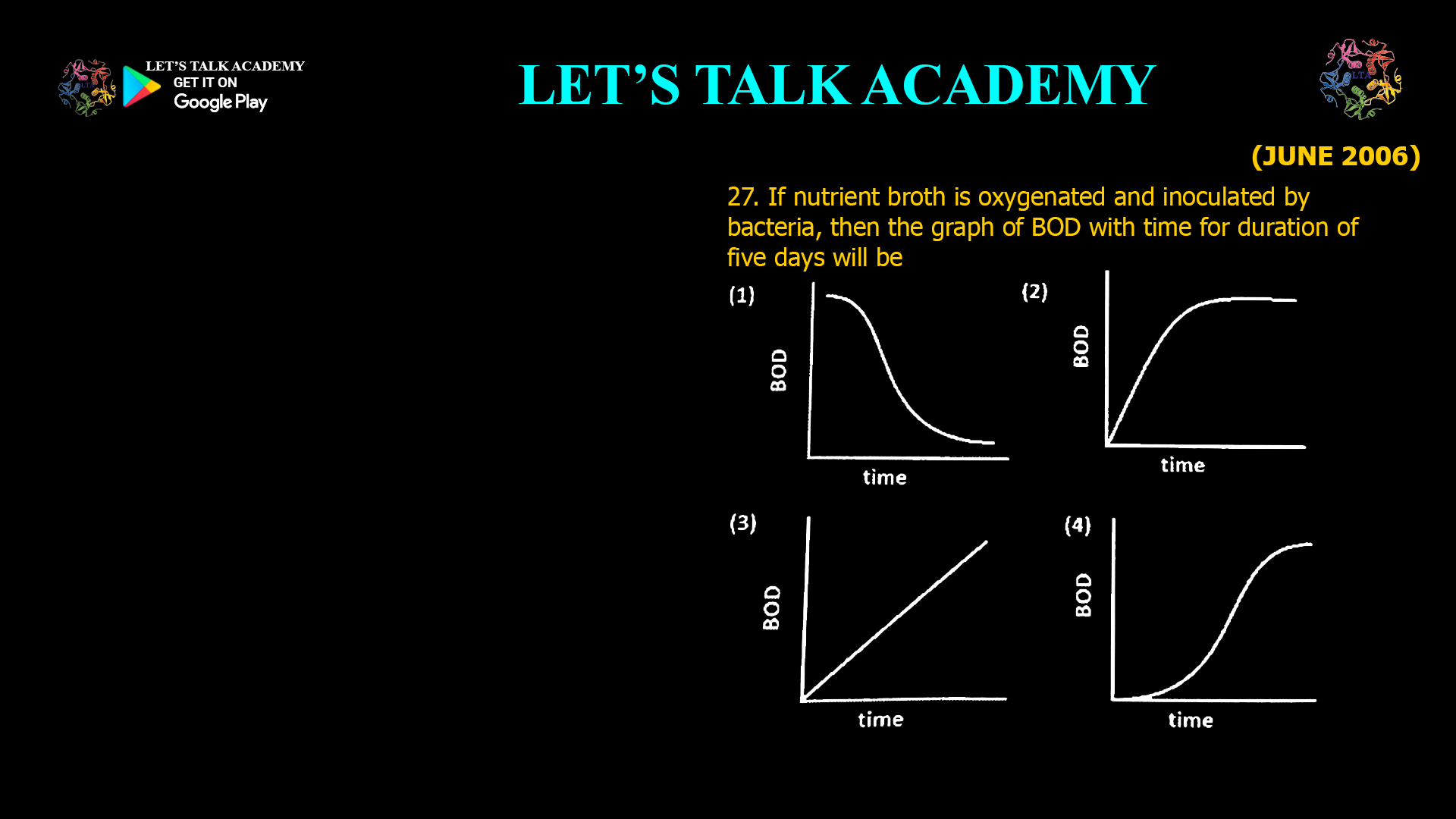
If nutrient broth is oxygenated and inoculated by bacteria, then the graph of BOD with time for duration of five days will be

Understanding the BOD Curve in Oxygenated Nutrient Broth Inoculated with Bacteria

Among the following which is best indicator of water pollution due mixing of human feces (1) E. coli (2) Trypanosoma (3) Paramecium (4) Bacillus 

Best Indicator of Water Pollution from Human Feces: Why E. coli Stands Out

Periodic toxic algal blooms in oceans leading to red tides are due to (1) Dinoflagellates (2) Cyanobacteria (3) Brown-Red algae (4) Green Algae 

Red Tides: The Role of Dinoflagellates in Oceanic Toxic Algal Blooms

What would happen if we release the high BOD water into fresh lake? (1) Opacity will decrease (2) Number of organism will decrease (3) Amount of dissolved oxygen will decrease (4) No effect

Releasing High BOD Water into a Freshwater Lake: Effects and Ecological Consequences

On application of certain pesticide it was observed thatthe population of pests instead of decreasing actuallyincreased. The probable cause could be (1) Development of resistance (2) Pesticide is ineffective (3) Pesticide acts as nutrient for pest (4) Pesticide has removed natural biological control 

Why Pesticide Use Sometimes Increases Pest Populations: Causes and Consequences

Main cause of respiratory problem arising frompollution from automobile combustion is due to- (1) NOx (2) SO2 (3) SPM50µm 

How Automobile Pollution Causes Respiratory Problems: The Role of Fine Particulate Matter (SPM<10µm)

Minimata disease is an example of- (1) Bioaccumulation (2) Bio concentration (3) Bio magnification (4) Air Pollution

Minamata Disease: A Classic Example of Bioaccumulation and Biomagnification

Which one of the following countries has contributedthe maximum towards CO2 (1) India (2) USA (3) China (4) Russia 

Which Country Contributes the Most to CO₂ Emissions? Comparing China, USA, India, and Russia

Global warming is the long-term heating of Earth'sclimate system due to human activities, primarily fossilfuel burning, which increases heat-trapping greenhouse gas levels in Earth's atmosphere. The reason for heating is (1) Absorption of UV by Ozone (2) Absorption of IR by CO2 (3) Absorption of IR by ozone (4) Absorption of UV by CO2

Why Does Global Warming Occur? The Science Behind Heat-Trapping Greenhouse Gases

In winter pollution rate enhances due to- (1) SPM (2) SO2and NO2 (3) Burning of fuels (4) Low temperature

Why Pollution Rates Increase in Winter: The Role of Cold Temperatures and Human Activities

Major source of green house gases are- (1) Release of methane (2) Burning of fossil fuels (3) Respiration (4) Depletion of ozone layer 

What Is the Major Source of Greenhouse Gases? Understanding the Role of Fossil Fuel Burning

The major pollution in lake by effluents coming from laundry industry containing high detergents is by- (1) Nitrates (2) Sulphates (3) Phosphates (4) Silcates 

How Laundry Industry Effluents Pollute Lakes: The Role of Phosphates in Detergents

15. Biological magnification is maximum in human it proves that human is- (1) Top consumer in food chain (2) More susceptible (3) Major Pollutant (4) Most efficient in storage of reserve food

Biological Magnification in Humans: What It Reveals About Our Position in the Food Chain

The Ozone layer saves from lethal UV. It mainly absorbs- (1) UV-A (2) UV-B only (3) UV-A and B (4) UV-B and C 

How the Ozone Layer Protects Us: Which UV Rays Does It Absorb?

Which one of the following gases is present in thestratosphere at a concentration higher than itsconcentration in troposphere? (1) Nitrogen (2) Oxygen (3) Ozone (4) Carbon dioxide 

Which Gas Is More Abundant in the Stratosphere? Understanding Ozone’s Unique Role

Layer of Atmosphere possessing ozone is- (1) Stratosphere (2) Mesosphere (3) Ionosphere (4) Troposphere 

Where Is the Ozone Layer Located? Understanding Its Importance in the Stratosphere

Which of the following is the most pertinent biologicaleffect of the depletion of ozone layer in stratosphere? (1) Denaturation of cellular proteins (2) Formation of pyrimidine dimmers (3) Increase in the photosynthetic rates in plants (4) Cross-linking of deoxyribose sugar of DNA 

Biological Effects of Ozone Layer Depletion: Why Pyrimidine Dimers Are the Most Pertinent Result

During organic pollution in lakes (1) BOD decreases (2) Amount of oxygen decreases (3) Amount of oxygen increases (4) Nutrient decreases 

Organic Pollution in Lakes: How Excess Nutrients and Decomposition Affect Oxygen Levels and Aquatic Life

Cyanobacteria flourish well in eutropic lakes because (1) They use nitrogen more efficiently (2) They use phosphate more efficiently (3) Other algae cannot grow under given conditions (4) They are adapted to grow in polluted water

Why Do Cyanobacteria Thrive in Eutrophic Lakes? Exploring the Key Adaptations and Competitive Advantages

Which gas do not cause green house effect (1) CO (2) CO2 (3) CH4 (4) O3

Which Gas Does Not Cause the Greenhouse Effect? Understanding Greenhouse Gases and Their Impact

Increase in CO2in atmosphere causes (1) More rainfall (2) Decrease productivity (3) Warmness of Atmosphere (4) More snowfall 

How Increased CO₂ in the Atmosphere Affects Our Planet: From Warming to Climate Shifts

The maximum water pollution and eutrophication is caused by- (1) Detergents (2) Pesticides (3) Industrial wastes (4) Ammonia 

What Causes Maximum Water Pollution and Eutrophication? Comparing Detergents, Pesticides, Industrial Wastes, and Ammonia

5. Minimata disease is due to pollution by (1) Organic waste into drinking water (2) Oil spills in oceans (3) Industrial waste mercury into fishing water (4) Entry of Cadmium into drinking water

Minamata Disease: The Tragic Legacy of Mercury Pollution in Fishing Waters

Biogas consist of- (1) CH4, SO2and H2 (2) CO2, Alcohol and H2 (3) CH4and CO2 (4) CFC, CO2, N2 

What Is Biogas Made Of? Understanding the Main Components and Their Importance

Which of the following light spectrum is absorbed greenhouse gases? (1) UV rays (2) Infrared and Visible (3) Infra red rays (4) Visible light 

Understanding Which Light Spectrum Greenhouse Gases Absorb: Infrared Rays and the Greenhouse Effect

Which gas is major reason for global warming? (1) Carbon dioxide (2) Methane (3) Ozone (4) ChloroFloro Carbons

Carbon Dioxide: The Major Driver of Global Warming and Its Environmental Impact

Which of the following organisms may be used as sensitive indicators of air pollution? (1) Members of the Chlorophyta (2) Lichens (3) Photosynthetic bacteria (4) Slime molds

Lichens as Nature’s Air Quality Monitors: Why They Are Sensitive Indicators of Air Pollution

Latest Courses