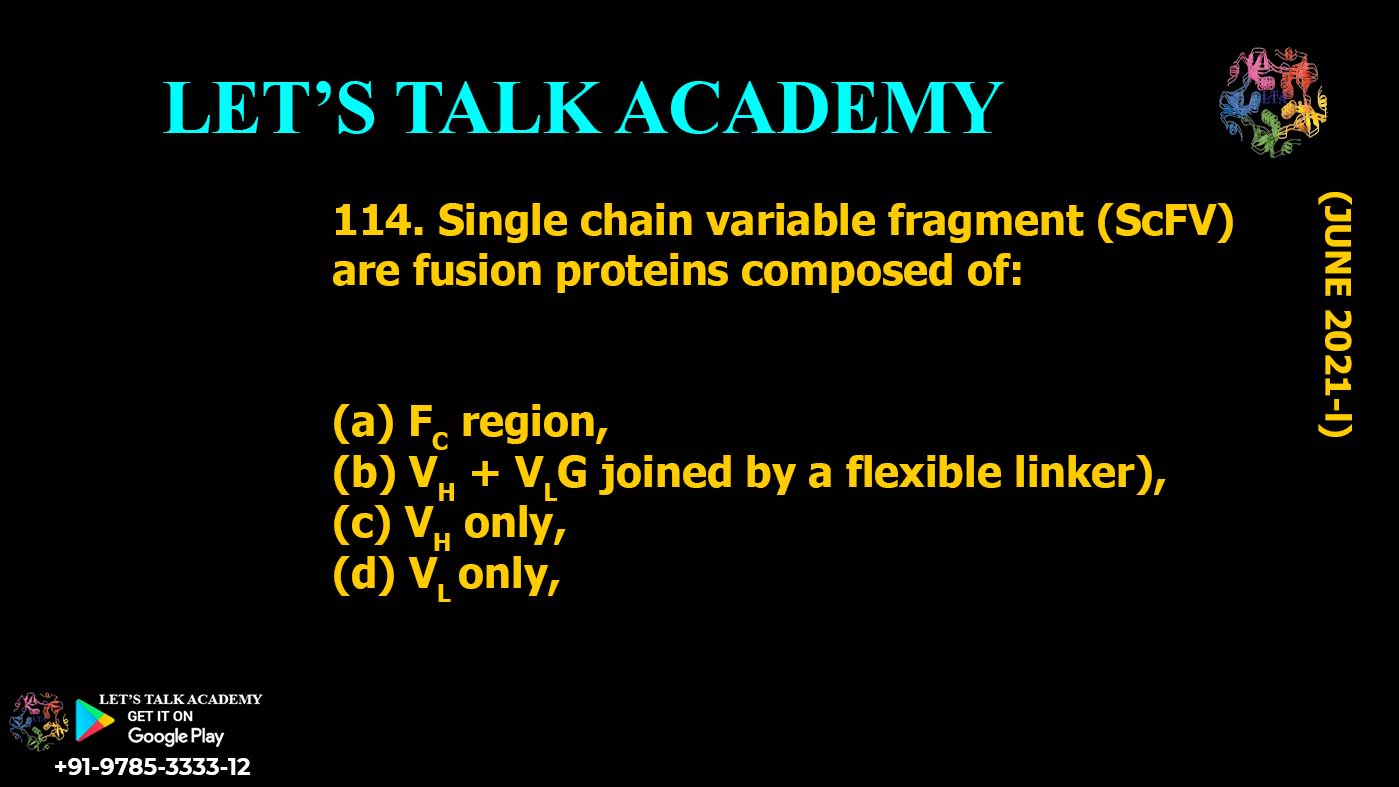
114. Single chain variable fragment (ScFV) are fusion proteins composed of:
(a) FC region,
(b) VH + VLGjoined by a flexible linker),
(c) VH only,
(d) VL only
Understanding Single Chain Variable Fragments (ScFv): A Key Component in Antibody Engineering
Single Chain Variable Fragments (ScFv) have become pivotal in the field of antibody engineering, offering a simplified structure while retaining the functionality of full antibodies. These fusion proteins are an essential tool in various research and therapeutic applications, ranging from diagnostics to targeted therapies.
What are Single Chain Variable Fragments (ScFv)?
An ScFv is a type of fusion protein that consists of the variable regions of the heavy (VH) and light (VL) chains of an antibody. These two regions are connected by a flexible peptide linker, allowing them to function as a smaller, single-chain entity. Despite the compact size of an ScFv, it can still bind to antigens, just like a full-length antibody.
Composition of ScFv:
ScFvs are specifically composed of:
-
VH region (Variable Heavy Chain): This is the part of the antibody that contributes to antigen binding specificity. It contains the unique sequences that determine the specificity of the antibody for its target antigen.
-
VL region (Variable Light Chain): The variable light chain also plays a key role in antigen binding. It pairs with the VH region to form the antigen-binding site of the antibody.
-
Flexible Linker: The VH and VL regions are linked together by a flexible peptide linker that ensures the proper spatial arrangement of the two regions, allowing them to interact effectively with the antigen. This linker is essential for maintaining the stability and functional integrity of the ScFv.
The Correct Answer:
The correct composition of a Single Chain Variable Fragment (ScFv) is: (b) VH + VL joined by a flexible linker.
This fusion allows ScFvs to maintain the specificity and affinity of full antibodies, but with the added advantage of being smaller and more versatile.
Applications of ScFvs:
ScFvs are widely used in various research and medical fields due to their small size and versatility. Some of the key applications include:
-
Therapeutic Antibodies: ScFvs are used as building blocks for creating monoclonal antibodies that are employed in cancer therapies, autoimmune disease treatments, and more.
-
Diagnostic Tools: Due to their ability to specifically bind to antigens, ScFvs are used in diagnostic kits, helping to detect diseases by recognizing specific biomarkers.
-
Immunotherapy: ScFvs are also utilized in immunotherapies that involve targeting and killing cancer cells. These fragments can be engineered into larger therapeutic molecules, such as bispecific antibodies, which are used to target both cancer cells and immune cells simultaneously.
-
Vaccine Development: ScFvs are incorporated into vaccine candidates to enhance the immune system’s ability to recognize and fight pathogens.
Advantages of ScFvs:
-
Smaller Size: ScFvs are significantly smaller than full antibodies, making them easier to produce and more effective for some applications.
-
Customizable: The linker can be modified to optimize the structure of the ScFv for particular applications.
-
High Affinity: Despite their small size, ScFvs retain the antigen-binding affinity of full antibodies, making them highly effective in therapeutic and diagnostic roles.
Conclusion:
Single Chain Variable Fragments (ScFv) are a powerful and versatile tool in biotechnology and medicine. Comprised of the VH and VL regions of an antibody, linked together by a flexible linker, ScFvs retain the specificity and affinity of antibodies while offering the advantage of a smaller, more easily manipulated structure. With applications spanning from cancer therapy to diagnostic tools, ScFvs represent an essential element in the development of next-generation biotherapeutics.
Understanding the structure and function of ScFvs is crucial for researchers and clinicians working in immunology, antibody engineering, and related fields.


2 Comments
Vikram
April 18, 2025Done
yogesh sharma
May 5, 2025अप्रतिम explanation sir 😃