114. When species express a suite of correlated traits (e.g., behavior, morphology, function), within a given context or across contexts, it is referred to as (1) A syndrome (2) Trait flexibility (3) Plasticity (4) Character displacement

Understanding Syndromes: Suites of Correlated Traits in Species

Which of the following is NOT the function of dispersal behaviour in which organisms move away from their natal homes? (1) Tracking resource availability (2) Providing mating opportunities (3) Preventing species extinction (4) Avoiding pathogens

Dispersal Behavior: Which Is NOT a Function of Moving Away from Natal Homes?

Measurement of distance based on counting steps or number of vertical bars by insects for navigation is called (1) Path integration. (2) Allocentric coding. (3) Odometry. (4) Alignment image-matching.

 Odometry: How Insects Measure Distance for Navigation

111. The mechanism by which ants find their way back to the nests after searching and finding food is: (1) Migration (2) Topographical mapping (3) Piloting (4) Path integration

 How Ants Find Their Way Home: The Science of Path Integration in Ant Navigation

Homing pigeons, when released at a place far away from their home, use earth's magnetic field or the sun as navigational cues and choose the right direction to fly. To test the hypotheses, two experiments were conducted. In Experiment l, one group of pigeons (Test) were equipped with Helmholtz coils (which disrupt magnetic field detection), while the second group (Control) were not. Both groups were released on a sunny day. Experiment II used the same Control and Test groups of pigeons, but they were released on a cloudy, overcast day. The expected results, if the hypotheses is true, would be (1) In Experiment l, both Control and Test groups fly in the right direction, but in Expt. II, only Control group does. (2) In both experiments, Test groups fail to choose the right direction. (3) In Experiments I and II; Test groups fly in the right direction. (4) In Experiment I both groups fly in the right direction but in Expt. II both groups fail to choose the right direction

 How Homing Pigeons Navigate: Sun and Magnetic Field Experiments Explained

Starling birds orient themselves by sunlight during migration. If they are kept in captivity with artificial light source form one direction, then (1) They will stop migration (2) They will orient toward light source (3) They will re-orient themselves, 15o per hour from the direction of artificial light (4) Moves all around the artificial light

How Starlings Respond to Artificial Light During Migration: Insights from Orientation Experiments

Which of the following is the major environmental cue for migration of birds during winter? (1) Duration of day length (2) Earth magnetism (3) Falling temperature (4) Land marks

What Triggers Bird Migration in Winter? The Key Role of Day Length

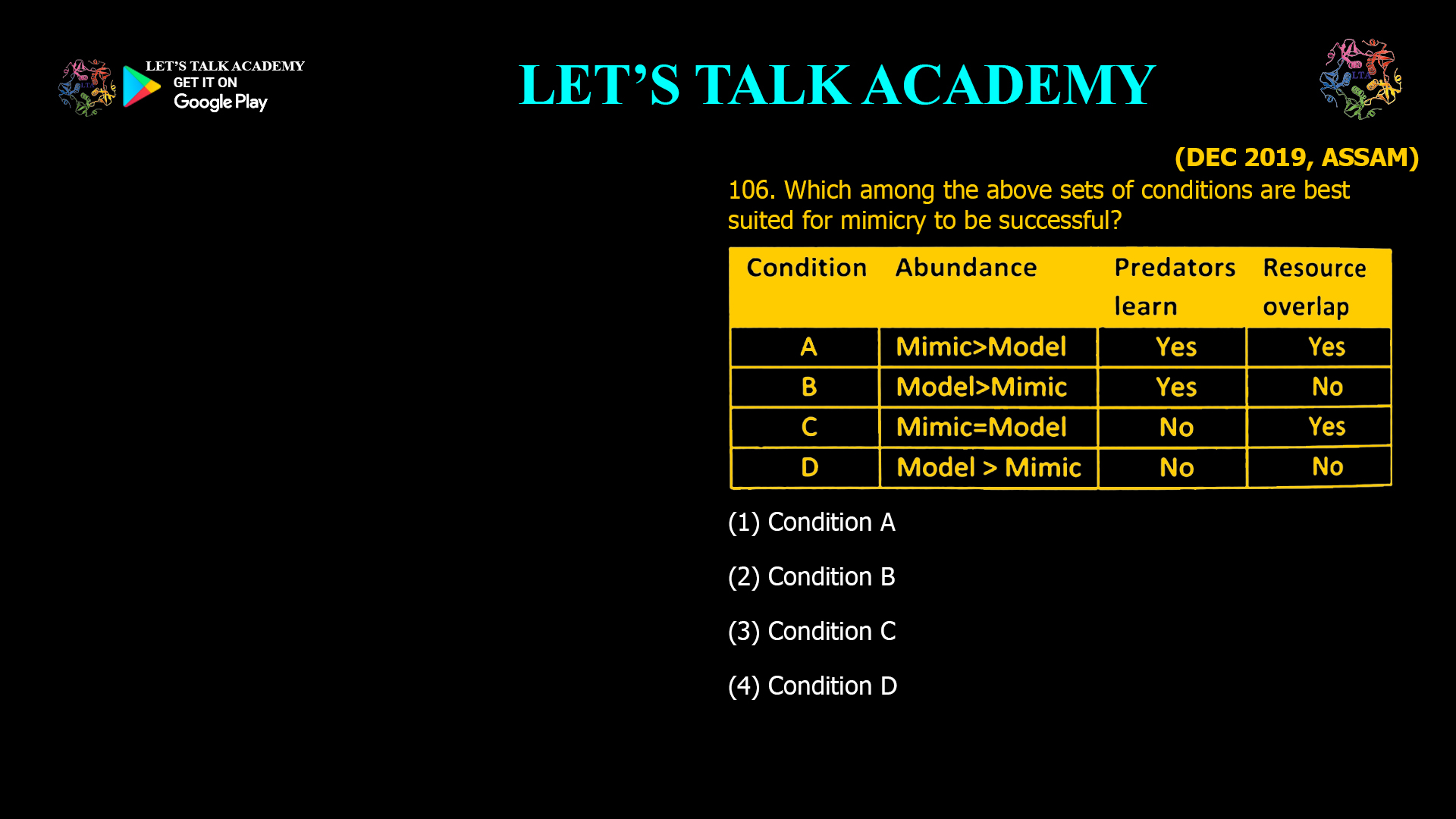
Which among the above sets of conditions are best suited for mimicry to be successful? (1) Condition A (2) Condition B (3) Condition C (4) Condition D

The Ideal Conditions for Successful Mimicry: What Makes Mimicry Evolutionarily Stable?

The Population of the Non-poisonous butterflies have the same the color pattern as some highly poisonous butterflies. Assume that the population of non- poisonous butterflies is higher than the poisonous butterflies. Given this, what will be the impact of this mimicry on the fitness of the population of the poisonous butterflies in the presence of the predator? (1) It will lower the fitness, that is, fitness of the mimic is negatively frequency — dependent (2) It will increase the fitness, that is, fitness of the mimic is positively frequency dependent (3) It will not affect the fitness, that is, fitness of the mimic is frequency independent (4) It will increase fitness, that is, fitness of the mimic is negatively frequency dependent

How Batesian Mimicry Impacts the Fitness of Poisonous Butterflies: The Role of Frequency-Dependent Selection

Mimicry where deceptiveness of the mimic's signal is high and fitness consequences signaled to the receiver by the mimic is also high (and negative) is (1) Batesian mimicry (2) Müllerian mimicry (3) Fisherian mimicry (4) Millerian mimicry

Deceptive Mimicry with High Fitness Costs: Understanding Batesian Mimicry

Batesian Mimicry: When Harmless Species Imitate Harmful Ones for Survival

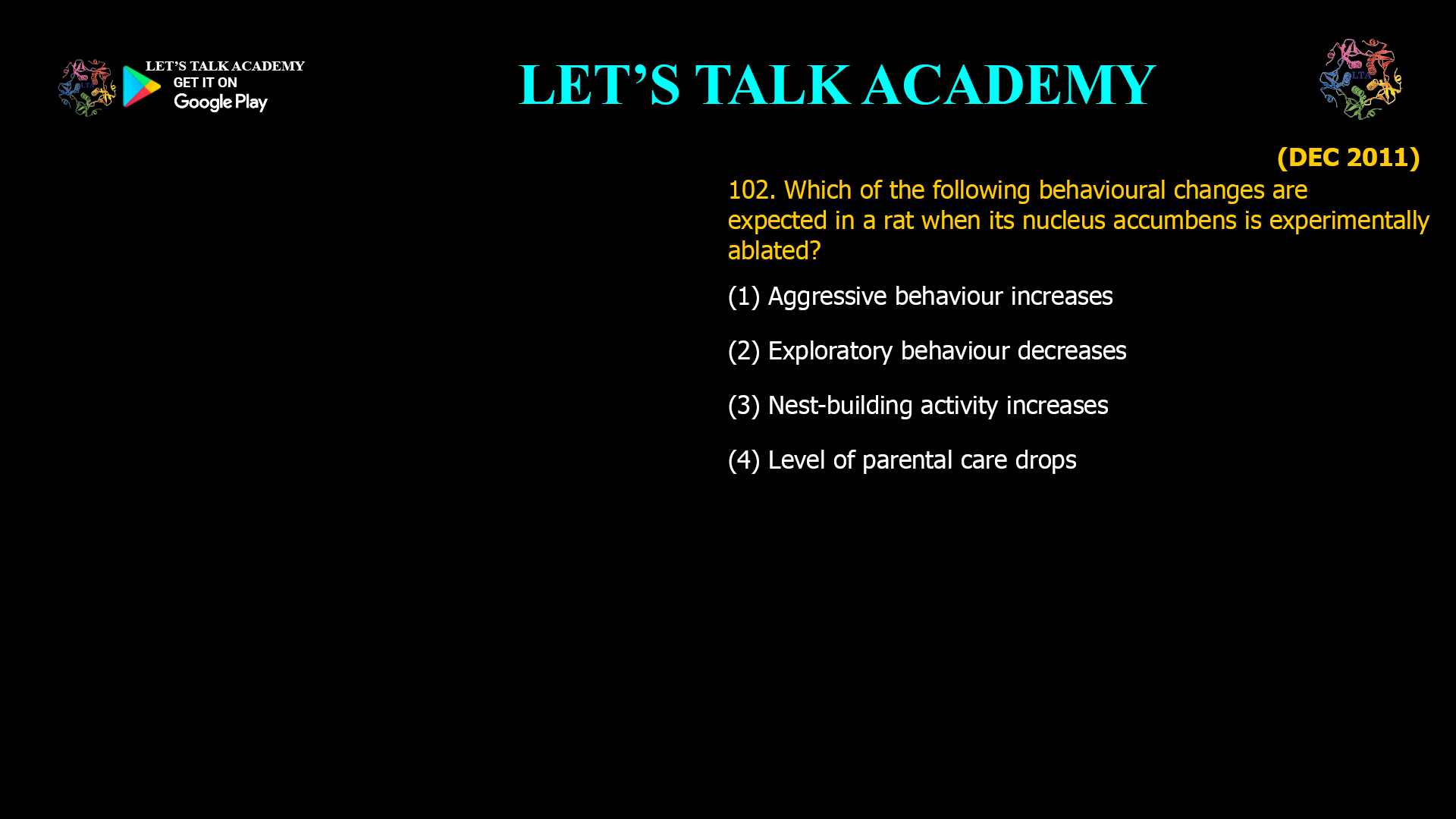
Which of the following behavioural changes are expected in a rat when its nucleus accumbens is experimentally ablated? (1) Aggressive behaviour increases (2) Exploratory behaviour decreases (3) Nest-building activity increases (4) Level of parental care drops

Behavioral Changes in Rats After Nucleus Accumbens Ablation: What to Expect and Why

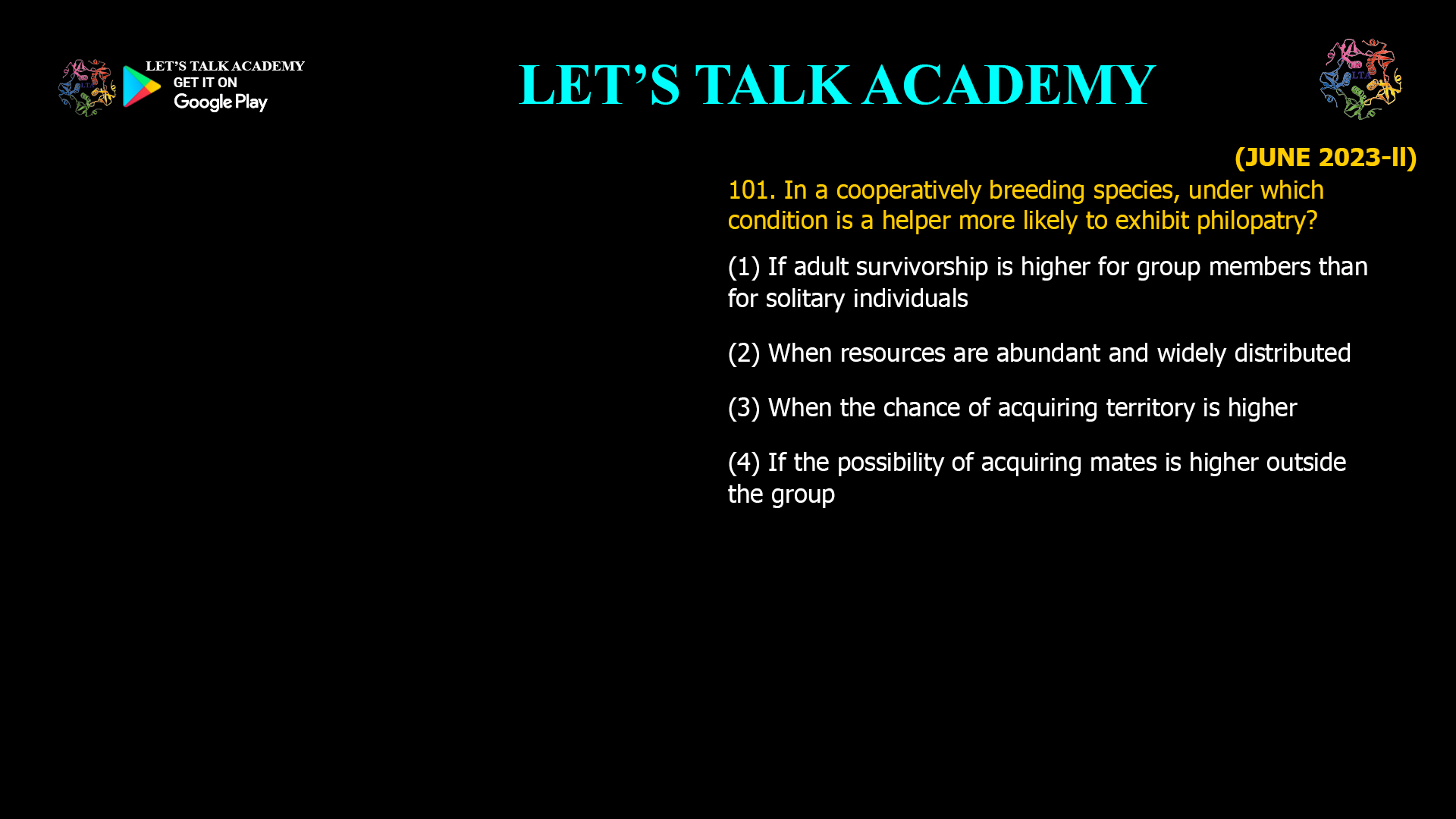
In a cooperatively breeding species, under which condition is a helper more likely to exhibit philopatry? (1) If adult survivorship is higher for group members than for solitary individuals (2) When resources are abundant and widely distributed (3) When the chance of acquiring territory is higher (4) If the possibility of acquiring mates is higher outside the group

Philopatry in Cooperative Breeders: Why Helpers Stay When Group Living Boosts Survival

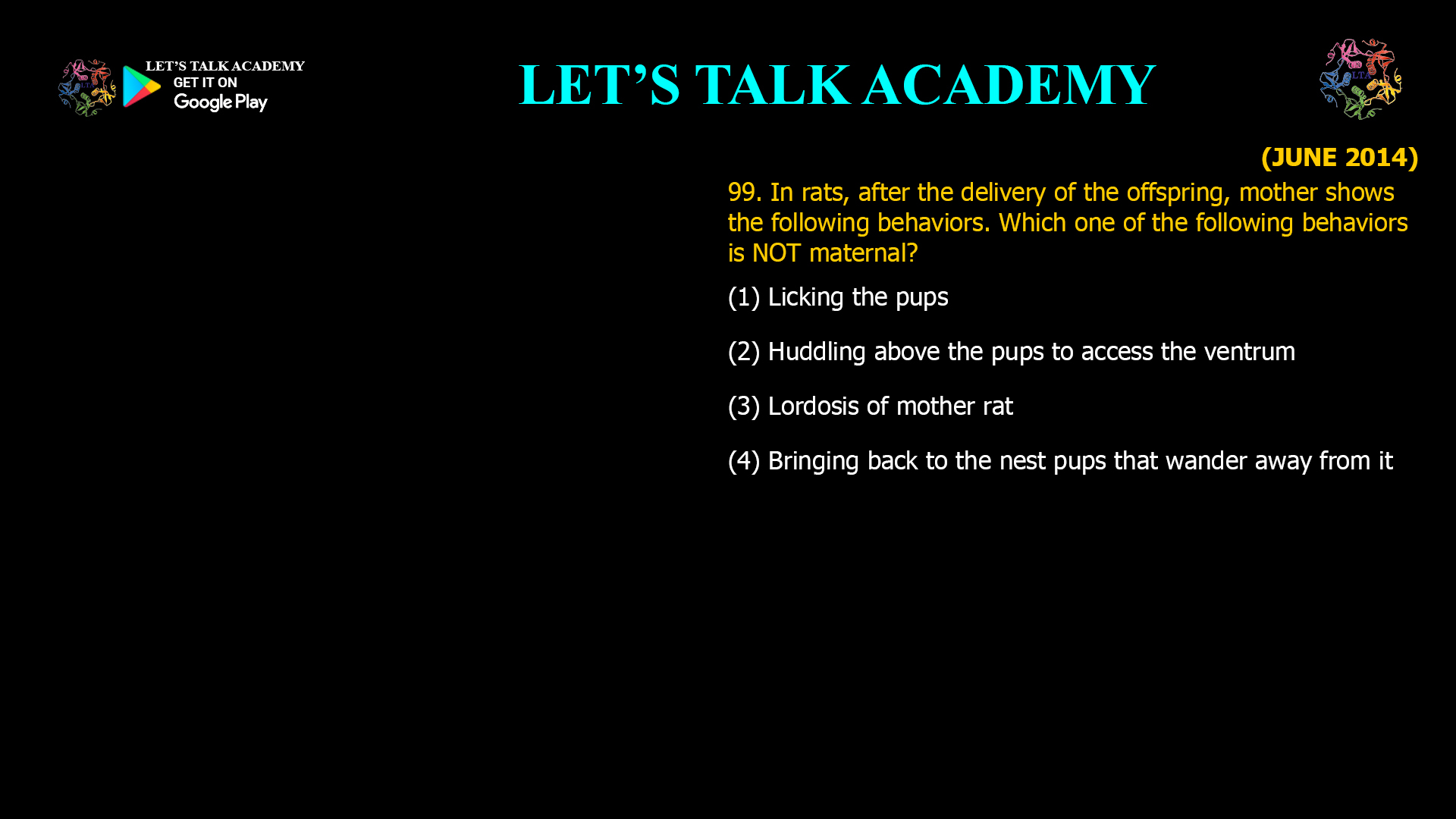
In rats, after the delivery of the offspring, mother shows the following behaviors. Which one of the following behaviors is NOT maternal? (1) Licking the pups (2) Huddling above the pups to access the ventrum (3) Lordosis of mother rat (4) Bringing back to the nest pups that wander away from it

 Maternal and Non-Maternal Behaviors in Rats: Identifying the Exception After Birth

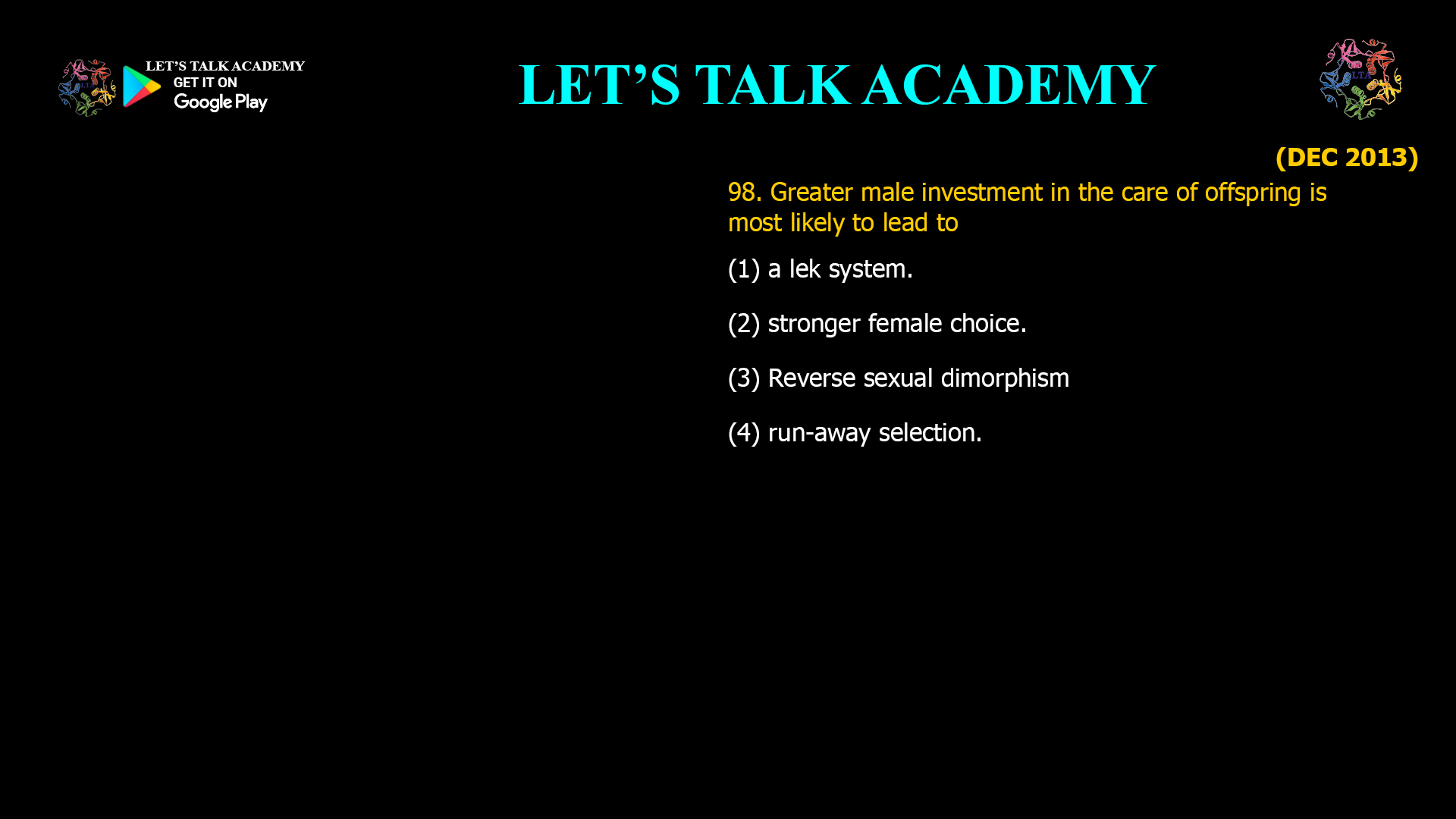
Greater male investment in the care of offspring is most likely to lead to (1) a lek system. (2) stronger female choice. (3) Reverse sexual dimorphism (4) run-away selection.

How Greater Male Parental Investment Shapes Evolution: The Rise of Stronger Female Choice

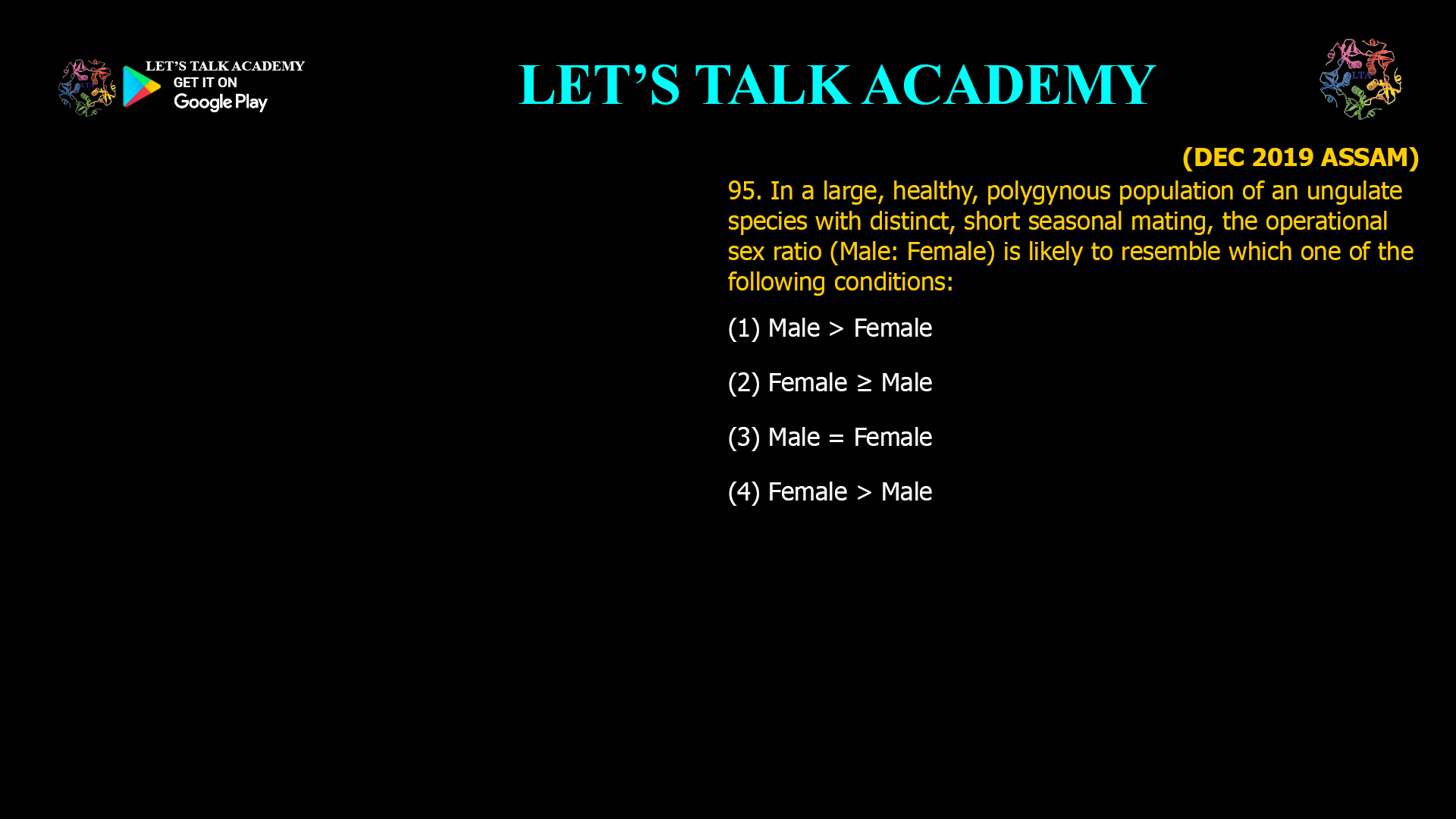
In a large, healthy, polygynous population of an ungulate species with distinct, short seasonal mating, the operational sex ratio (Male: Female) is likely to resemble which one of the following conditions: (1) Male > Female (2) Female ≥ Male (3) Male = Female (4) Female > Male

Operational Sex Ratio in Polygynous Ungulates: Why Females Outnumber Males During the Breeding Season

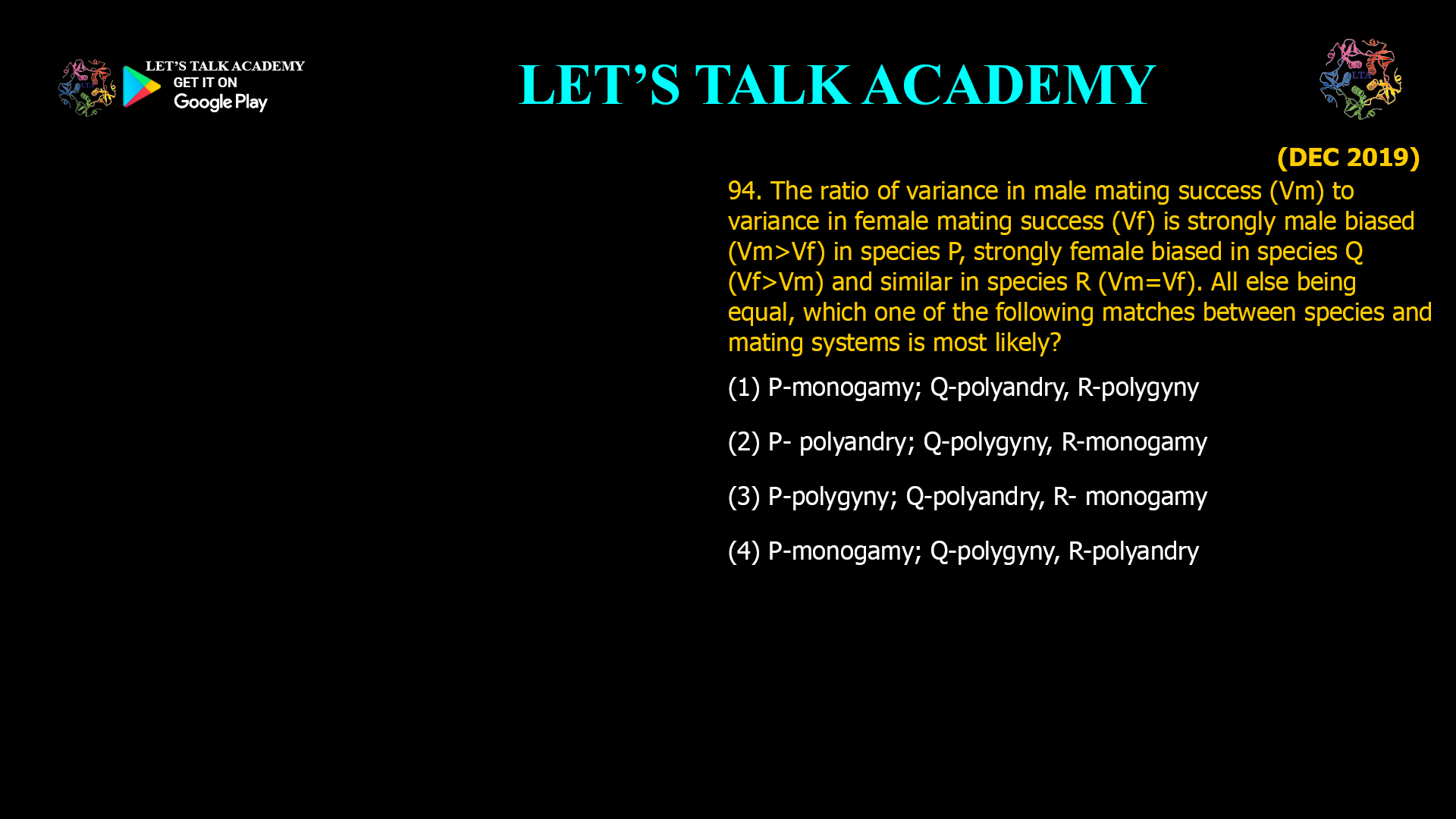
94. The ratio of variance in male mating success (Vm) to variance in female mating success (Vf) is strongly male biased (Vm>Vf) in species P, strongly female biased in species Q (Vf>Vm) and similar in species R (Vm=Vf). All else being equal, which one of the following matches between species and mating systems is most likely? (1) P-monogamy; Q-polyandry, R-polygyny (2) P- polyandry; Q-polygyny, R-monogamy (3) P-polygyny; Q-polyandry, R- monogamy (4) P-monogamy; Q-polygyny, R-polyandry

Linking Variance in Reproductive Success to Animal Mating Systems: Which Match Is Most Likely?

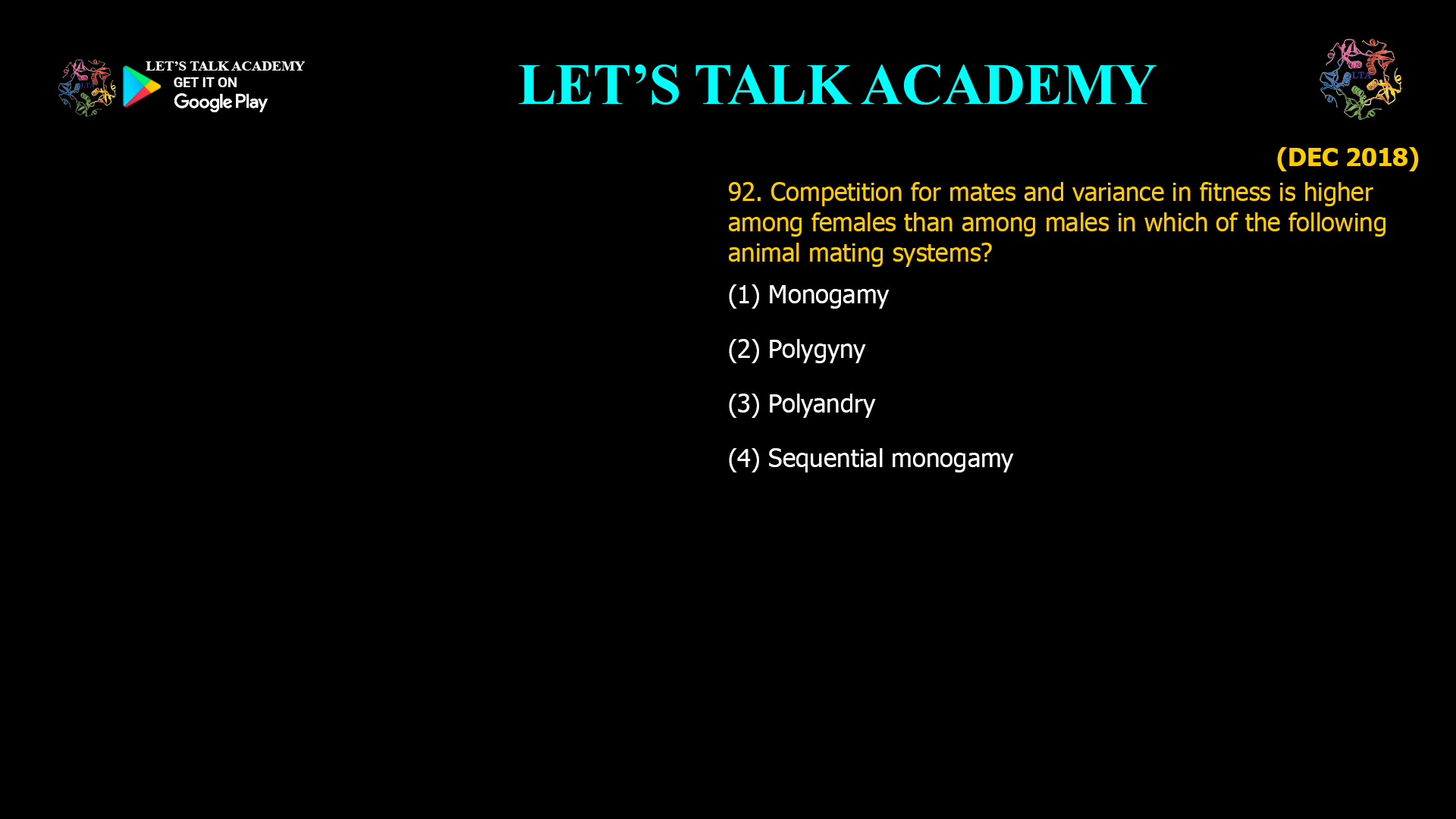
Competition for mates and variance in fitness is higher among females than among males in which of the following animal mating systems? (1) Monogamy (2) Polygyny (3) Polyandry (4) Sequential monogamy

Polyandry and Female Competition: When Females Compete for Mates and Fitness Variance Rises

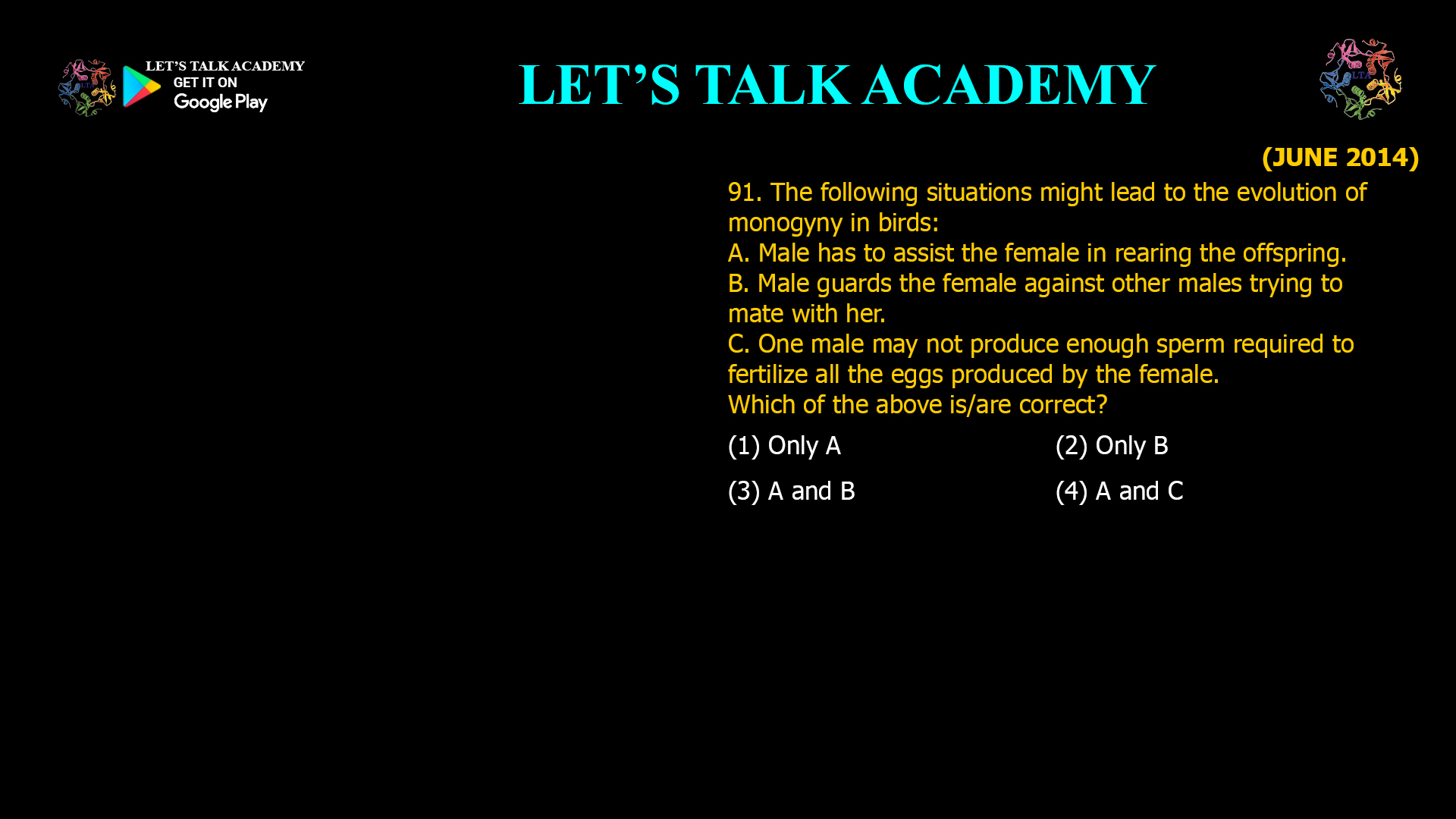
The following situations might lead to the evolution of monogyny in birds: A. Male has to assist the female in rearing the offspring. B. Male guards the female against other males trying to mate with her. C. One male may not produce enough sperm required to fertilize all the eggs produced by the female. Which of the above is/are correct? (1) Only A (2) Only B (3) A and B (4) A and C

What Drives the Evolution of Monogyny in Birds? The Roles of Parental Assistance and Mate Guarding

In a bird species A, the male alone builds the nest, incubates the eggs and feeds the nestling. In bird species B, it is the female that does all that. In bird species C, both sexes contribute equally to the above activities. In species A and B, the uninvolved partner may fly away and mate again. Which sex among A, B and C is most likely to develop colourful plumage during breeding season? (1) Male in species A and B, both sexes in species C. (2) Female in species A, male in species B and C. (3) Female in species A and B, neither in species C. (4) Female in species A, male in species B, neither in species C.

Which Sex Develops Colorful Plumage in Birds? The Link Between Parental Care and Ornamentation

Reproductive success of individuals in a population is likely to be skewed under all the following conditions, EXCEPT when (1) Females are choosy. (2) male-male competition is intense. (3) pair-bonding occurs in the species. (4) Females prefer males with larger territories

 When Is Reproductive Success NOT Skewed? The Role of Pair-Bonding in Animal Populations

In bird species where both parents contribute equally to parental care, generally (1) males are larger than females (2) females are more colorful than males (3) females are larger than males (4) both sexes are morphologically similar

Morphological Similarity in Bird Species with Equal Parental Care: The Evolutionary Link

Which one of the following statements best describes Bateman's principle? (1) Female gametes (eggs) are costlier than male gametes (sperms). (2) Reproductive variance is greater in males than in females. (3) Females are more likely to provide parental care than males. (4) Males use costly displays to advertise their genetic quality.

Understanding Bateman’s Principle: The Foundation of Sexual Selection in Evolutionary Biology

Which of the following is NOT a benefit for the female adopting polyandry? (1) Greater probability of getting all her eggs fertilized. (2) Ability to receive more resources from the males. (3) Ability to produce more offspring than normal. (4) Improved chances of genetic compatibility with her own DNA.

The Limits of Polyandry: Which Benefit Is Least Likely for Females?

Evolutionarily, with which of the following could parental care in animals be associated? (1) Polygamy. (2) Greater longevity. (3) Semelparity.                                              (4) Smaller clutch size.

 Evolutionary Associations of Parental Care in Animals: Why Smaller Clutch Size Is Key

Which one of the following conditions is NOT likely to favour male monogamy? (1) When the male has to guard his mate against mating by another male. (2) When the male wants to spend more time for foraging. (3) When the male has to assist the mate in brood and nestling care. (4) When the female guards her mate against seeking other females to mate

What Does NOT Favor Male Monogamy? Understanding the Key Drivers of Monogamous Behavior in Animals

In which of the following mating systems there is likely to be NO conflict of interest over reproductive success between the sexes? (1) polyandry (2) monogamy (3) promiscuity (4) polygamy

 Monogamy and the Absence of Sexual Conflict: When Males and Females Share Reproductive Interests

82. Male parental care is expected to observed during (1) Polygynous species (2) Small population size (3) Life long bond pairing (4) Reverse sexual dimorphism

When Is Male Parental Care Observed? The Role of Lifelong Pair Bonds in Animal Societies

Reversed sexual dimorphism among animals is expected to be seen when there is (1) Strong female choice (2) Skewed sex ratio (3) Low number of males (4) Change in roles for breeding investment and/or foraging, among males and females.

Reversed Sexual Dimorphism in Animals: When Role Reversal Drives Female Dominance

High Maternal Investment: Why Slow Development and Low Fecundity Define This Life History Strategy

Which statement is least likely to be observed amongst the animals where female showing extensive parental care? (1) Male polygamous (2) Sexual dimorphism (3) Difference in body size of male and female (4) No investment in mate selection by females

Female Parental Care and Mate Choice: What Is Least Likely in Such Animal Societies?

When one of the parent invest more time for parental care on offsprings, here we can find (1) Difference in life span of parents (2) Difference in mental level of parents (3) Difference in metabolic rates (4) Sexual dimorphism

Parental Care and Sexual Dimorphism: Why Unequal Parental Investment Leads to Differences Between the Sexes

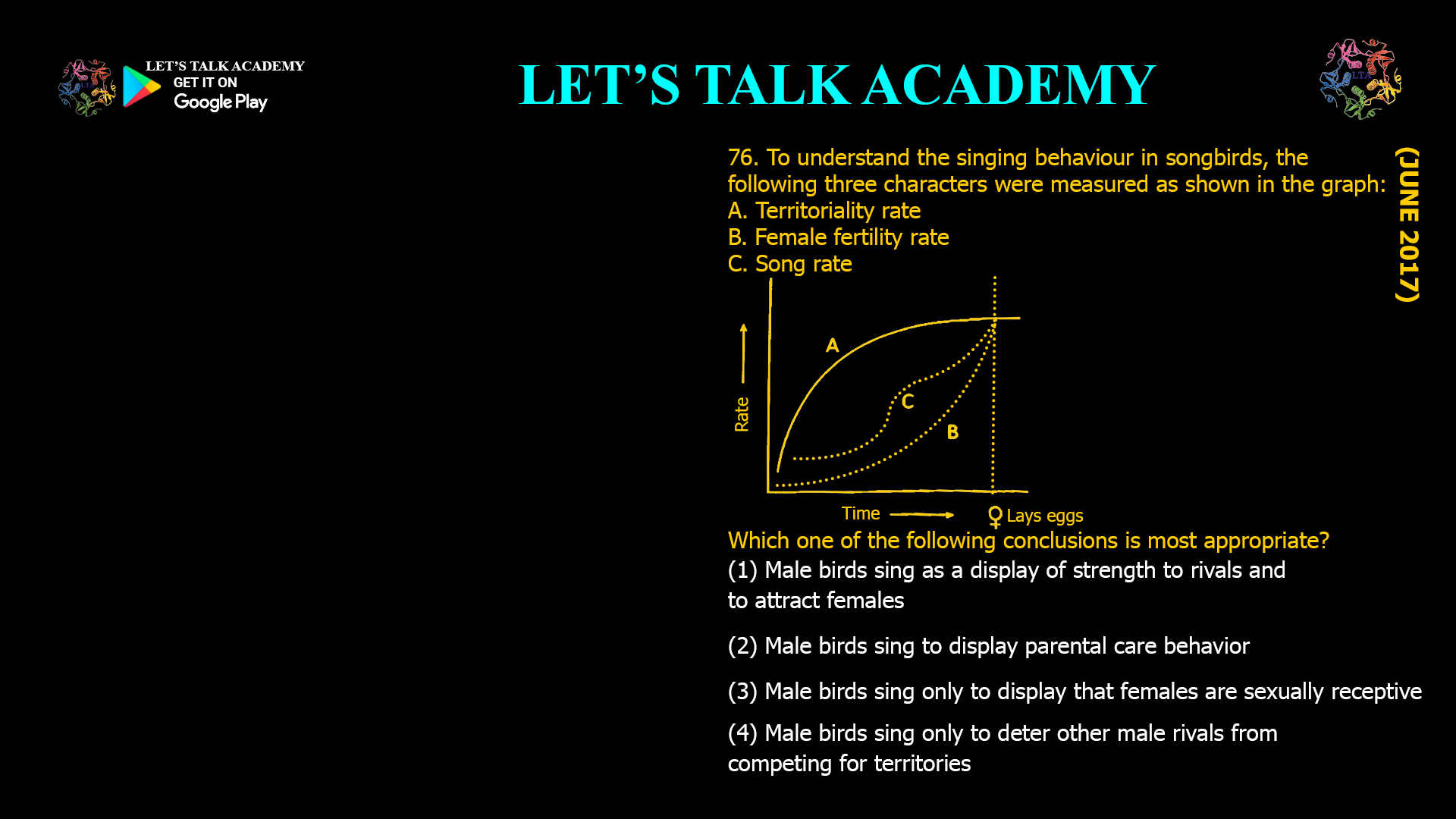
To understand the singing behaviour in songbirds, the following three characters were measured as shown in the graph: A. Territoriality rate B. Female fertility rate C. Song rate Which one of the following conclusions is most appropriate? (1) Male birds sing as a display of strength to rivals and to attract females (2) Male birds sing to display parental care behavior (3) Male birds sing only to display that females are sexually receptive (4) Male birds sing only to deter other male rivals from competing for territories

Why Do Male Songbirds Sing? Insights from Territoriality, Fertility, and Song Rate

With reference to the graph given below, identity the optimal territory size. (1) A (2) B (3) C (4) D

How to Identify the Optimal Territory Size in Animals: Balancing Benefits and Costs

Select the correct statement that best describes animal territories (1) Are always inherited from the parent (2) Are always non-overlapping with neighbours (3) Extent of territories remain constant over generations (4) Are always guarded and defended

What Best Describes Animal Territories? Understanding the Truth About Territorial Behavior

The morphological distinct sexual dimorphism is absent in (1) Peacock, Myena, bulbul (2) Crow, peacock, bulbul (3) Hyena, bulbul, Sparrow (4) Myena, bulbul, Hyena

Understanding Sexual Dimorphism: Why It Is Absent in Myena, Bulbul, and Hyena

An extraordinary sensory ability that elephants possess is. (1) emission and detection of ultra-high frequency sounds. (2) emission and detection of ultra-low frequency sounds. (3) detection of changes in earth's magnetic field. (4) possession of ultraviolet vision.

 The Extraordinary Sensory Power of Elephants: Emission and Detection of Ultra-Low Frequency Sounds

Hanuman languor when occupy Haram starts infanticide because- (1) They does not want child of earlier dominant male to survive (2) For reproductive advantage (3) To remove alleles of dominant gene (4) To maintain the constant population

Why Hanuman Langurs Commit Infanticide After Harem Takeover: The Evolutionary Drive for Reproductive Advantage

High degree of infanticide after takeover of harem by invading male is observed in (1) Lion (2) Tiger (3) Leopard (4) Hanuman Langur

 Infanticide After Harem Takeover: Why Hanuman Langurs Exhibit High Rates

Unsynchronized signals in EEG are generated during (1) Deep Sleep (2) REM sleep (3) Active but quite                              (4) Active and non-quite

 Understanding Unsynchronized EEG Signals: When Do They Occur in Sleep and Wakefulness?

Given below are some examples of biological rhythms in humans: (a) REM and non-REM sleep cycle (b) Menstrual cycle (c) Sleep-wake cycle Which one of the following is a correct representation of the type of biological rhythms given above? (1) (a) Ultradian cycle; (b) Infradian cycle; (c) Circadian cycle (2) (a) Circadian cycle; (b) Ultradian cycle; (c) Infradian cycle (3) (a) Infradian cycle; (b) Ultradian cycle; (c) Circadian cycle (4) (a) Infradian cycle; (b) Circadian cycle; (c) Ultradian cycle

 10 Proven Strategies to Boost Your Website Traffic in 2025

How Light Entrainment Works: Factors Influencing Circadian Rhythm Synchronization

An animal was first maintained in a constant environmental condition for several days until a consistent biological rhythm (B) was established. The animal was then exposed to an experimental physical rhythm (E).which modulates the phase and period of B. However, upon withdrawal of E, the B gradually regained its pattern of pre-exposure condition. From these observations which one or more of the following should be the most logical inference? A) E is a Zeitgeber. B) E is a masking agent. C) E causes entrainment of B. D) B is a conditioned to E. The correct answer is (1) A and C (2) B and D (3) B only (4) D only

Zeitgebers and Entrainment: How Environmental Cues Reset Biological Rhythms

Which one of the following is correct regarding zeitgebers? (1) Have no effect on biological rhythms (2) Sense biological rhythms (3) Synchronize biological rhythms (4) Abolish biological rhythms

What Are Zeitgebers? The Environmental Cues That Synchronize Your Biological Clock

Which one of the following descriptions does NOT apply to circadian rhythmicity? (1) A process that can be found in bacteria, plants, fungi, and animals (2) A process that is rhythmic only in the presence of 24 hour light and dark cycle (3) A process that can be synchronized by environmental cycles (4) A process that can be disrupted by prolonged exposure to constant darkness

What Circadian Rhythmicity Is—and Isn’t: Debunking Common Myths

In mammals, the primary circadian clock is located in which of the following parts of the brain? (1) Occipital lobe of cerebrum (2) Amygdala (3) Suprachiasmatic nucleus (4) Frontal lobe of cerebrum

Suprachiasmatic Nucleus: The Master Circadian Clock in Mammals

The photoreceptor commonly involved in light entrainment of the biological clock in flies, moulds and plants is (1) phytochrome. (2) rhodopsin (3) carotenoid. (4) Cryptochrome.

Cryptochrome: The Key Photoreceptor for Light Entrainment of Biological Clocks in Flies, Moulds, and Plants

If bird is kept is a closed cage such that all external clues are blocked then what would be effect on its biological clock (1) No effect (2) It will lag behind to small level (3) It will be free running (4) It will stop functioning 

What Happens to a Bird’s Biological Clock in Constant Darkness? Understanding Free-Running Rhythms

Circadian rhythms in humans are controlled by (1) Medulla (2) Cortex (3) Pituitary gland (4) Suprachaismatic nucleus

Suprachiasmatic Nucleus: The Master Clock Controlling Human Circadian Rhythms

An interaction where the actor and the recipient both suffer a cost is referred to as (1) Altruism (2) Cooperation (3) Mutualism (4) Spite

What Is Spite? Understanding Costly Interactions in Animal Behavior

Altruism describes a behaviour performed by animals that may be disadvantageous to self while benefitting others. Which one of the following statements is INCORRECT about altruism? (1) It is the net gain of direct fitness when sociality is facultative. (2) It is under positive selection via indirect fitness benefits that exceed direct fitness costs. (3) It generates indirect benefit by enhancing survivorship of kin. (4) It is favoured when rb - c > 0 where c is fitness cost to altruist, b is fitness benefit to recipient; and r is genetic relatedness.

Understanding Altruism in Biology: Which Statement About Altruism Is Incorrect?

55. Individual A performs to another individual a behavioral act which has a fitness consequence. Match the behavioral acts (a to e) with the correct fitness consequence (i) to (iv) (1) a-(iv),; b-(iii); c(ii); d-(ii); e-(i) (2) a-(i); b(ii); c(ii); d(iii); e(iv) (3) a-(i); b(iii); c(ii); d(ii); e(iv) (4) a-(i); b(ii); c(iii); d(i); e(iv)

Behavioral Acts and Fitness Consequences: Understanding How Actions Impact Evolutionary Fitness

In hymenoptera insects, males are haploid and females are diploid. All fertilized eggs give rise to female and unfertilized eggs give rise to males. As a result, if a female mates with a single male, the females in progeny are related to 75 %. But if the mother had mated with males, the mean genetic relatedness of female progeny is correctly represented by

How Multiple Mating Lowers Genetic Relatedness in Hymenoptera: The Case of Honey Bees

The development of advanced social behavior is related to (1) Complex Brain size (2) Genetic relatedness (3) Size of population (4) Size of organism

The Genetic Foundations of Advanced Social Behavior: Why Relatedness Matters More Than Brain Size

Ants and bees social structure include queen, sterile female workers and soldier drones. This is best example of (1) Eusociality (2) Sub-social (3) Group selection (4) Altruism

Eusociality in Ants and Bees: Understanding the Ultimate Social Structure

In honey bee males are developed parthenogenetically while workers are developed as sexual reproduction. The workers exhibits more similarity among themselves as compare to queen. If workers starts giving organisms parthenogenetically then offspring would most likely resemble to (1) Among themselves and with mother (2) Among themselves and slightly differ from mother (3) Among themselves and with queen (4) Among themselves and with father

Parthenogenesis in Honey Bees: Who Would Offspring Resemble If Workers Reproduced Asexually?

In honey bee queen and workers are diploid while male are haploid. If a queen honey bee is fertilized with equal number of sperms from two different males, then genetic relatedness in progeny will be (1) 0.75 (2) 0.5 (3) 0.46                                                         (4) 0.25

Genetic Relatedness in Honey Bees: How Multiple Fathers Shape Colony Diversity

Honey bee shares more its genes with sister (75%) as compare to its daughter (50%) due to (1) Eusocialbilty (2) Kin selection (3) Haploidy diploidy sex determination system (4) Parthenogensis

Why Honey Bees Share More Genes with Sisters Than Daughters: The Role of Haplodiploidy

Eusocial societies are NOT characterized by which of the following? (1) Altruism (2) Kin selection (3) Guarding against intruders                            (4) Equal reproductive opportunities

What Eusocial Societies Are—and Are Not: Understanding Reproductive Roles in Social Insects

In eusocial insects, males develop from unfertilized eggs while females develop from fertilized eggs. The ultimate consequence of this difference is that (1) in any colony there are always more males than females. (2) a female is genetically more closely related to her sister than to her own offspring. (3) females are behaviorally more dominant than the males. (4) in any colony there are always more females than males.

Haplodiploidy and Genetic Relatedness: Why Eusocial Insect Sisters Are Closer Than Offspring

In some species of new world monkeys, only one female reproduces in a group. One or more younger females have suppressed reproduction and assist the reproductive female. This is an example of (1) Sexual selection (2) Group selection (3) Kin selection (4) Reciprocal altruism

Kin Selection in New World Monkeys: Why Some Females Suppress Reproduction to Help Relatives

Worker bees, instead of themselves reproducing, help the queen reproduce. This behaviour is explained as an example of (1) kin selection (2) group selection (3) sexual selection (4) natural selection

Kin Selection in Honey Bees: Why Worker Bees Help the Queen Reproduce

The genetic relatedness (r) of an individual to his nephew is 0.25. The alleles that cause uncles to care for nephews will spread, according to Hamilton's Rule, only if the fitness benefit is (1) equal to cost of care (2) more than the cost of care by 25% (3) double the cost of care (4) four times the cost of care

Hamilton’s Rule and Altruism: How Much Benefit Justifies Uncle-to-Nephew Care?

Honey bee keep variations among the workers by (1) Matting with males many times (2) Parthenogenesis (3) Utilizing different environment conditions (4) Extensive recombination during oogenesis

How Honey Bees Maintain Genetic Variation Among Workers: The Secrets Behind Hive Diversity

Inclusive fitness of an animal can be measured as a sum of direct fitness and indirect fitness. Imagine you have 10 off springs. Through diligent parental care, 5 survive to reproduce. You give your life in a heroic deed to save a total of 5 of your nieces and nephews. What is your inclusive fitness? (1) 15 (2) 12.5 (3) 7.5 (4) 3.75

How to Calculate Inclusive Fitness: A Practical Example Using Offspring and Indirect Kin Benefits

Assume that individual A wants to do an altruistic act to individual B and that benefit and cost of doing this act are, in 'fitness' units, 40 and 12, respectively. According Hamilton's Rule, A should perform the altruistic act only if B is his (1) nephew. (2) grandson or granddaughter. (3) niece. (4) daughter or son

Hamilton’s Rule in Family Altruism: When Should You Help a Relative?

38. For an individual A to help his relative B or C, the fitness benefits and costs are 50 and 20 units, respectively. However, following Hamilton's Rule, A should help B only but not C. How are B and C genetically related to A? (1) B-Son, C-Nephew                                       (2) B- Son, C-Brother (3) B- Sister, C- Nephew                                   (4) B- Father, C-Mother

Hamilton’s Rule in Practice: How Genetic Relatedness Shapes Altruism Toward Family Members

Assume that in terms of 'genetic fitness' the 'benefit' of performing an altruistic act to a relative is 500 units and the 'cost' involved is 150 units. Following Hamilton's Rule the act should be performed if the relative is a (1) only brother. (2) nephew or niece. (3) brother or step-sister. (4) only step-sister.

Hamilton’s Rule in Action: When Should Altruism Be Directed Toward Relatives?

The degree of genetic relatedness between the offspring and their parents is (1) higher than that between sister and brother. (2) lower than that between sister and brother. (3) the same as that between sister and brother. (4) dependent on the number of siblings.

Genetic Relatedness: Comparing Offspring-Parent and Sibling Relationships

Brothers A and B have the same father but different mothers. B wants A to help him, which involves both benefits (b) and costs (c) for A. If A incurs a cost of 30 'Darwinian fitness units' in that act, under what condition, should he help B, following Hamilton's rule? (1) only if b>30 (2) only if b>60 (3) only if b>120 (4) only if b>240

Hamilton’s Rule and Altruism: When Should Half-Siblings Help Each Other?

Individual A can derive fitness benefit of 160 units by helping Individual B, but incurs a fitness cost of 50 units in doing so following Hamilton's rule, A should help B ONLY if B is his (1) brother or Sister. (2) first Cousin only. (3) cousin or uncle. (4) nephew or niece.

Applying Hamilton’s Rule: When Should Altruism Evolve Between Relatives?

Based on the theory of kin selection, choose the correct statement: (1) A gene for altruism will spread in the population if the act of altruism increases the actor's gene in the next gene pool only through direct fitness. (2) A gene for altruism will spread in the population if the act of altruism increases the actor's gene in the next gene pool only through indirect fitness. (3) A gene for altruism will spread in the population if the act of altruism increases the actor's gene in the next gene pool through direct or indirect fitness. (4) Altruistic behaviour reduces the fitness of the trait bearer so a gene responsible for altruism cannot spread in a population and will be maintained at a very low frequency.

Kin Selection Theory: How Altruism Spreads Through Direct and Indirect Fitness

The idea that an altruistic gene will be favored if r>C/B, where r is the coefficient of relatedness, B is the benefit to the recipient of the altriusm, and c is the cost incurred to the donor, is known as (1) red queen hypothesis (2) handicap principle (3) Hamilton rule (4) Competitive exclusion principle

Hamilton’s Rule: The Evolutionary Formula Explaining Altruism in Nature

According to Hamilton's rule, altruistic behaviour can evolve when rb>c, where b is the extra benefit gained by the recipient as a result of the altruistic act, c is the cost to the actor arising from performing the altruistic act and r is the relatedness between the: (1) individual performing the altruistic act and the offspring of the recipient (2) individual performing the altruistic act and the recipient (3) recipient and the offspring of the individual performing the altruistic act (4) individual performing the altruistic act and the member of its population.

Understanding Relatedness in Hamilton’s Rule: Who Benefits from Altruism?

According to Hamilton's rule, 'r' is the coefficient of relatedness between two interacting individuals, 'B' is the benefit to the recipient and 'C' is the cost of the donor. Which of the following relationships will results in an altruistic behavior? (1) rB=C (2) rC - B = 0 (3) r> C/B (4) rC - B > 0

Hamilton’s Rule: The Mathematical Relationship Behind the Evolution of Altruistic Behavior

In an altruistic act, if a donor sacrifices 'C' offspring which helps the recipient to gain 'B' offspring and the donor is related to the recipient by a coefficient γ, under which condition would kin selection favour this altruistic trait? (1) B>C (2) B > γC (3) γB - C = O (4) γB - C > O

Hamilton’s Rule and Kin Selection: The Mathematical Condition for Altruism to Evolve

The correct expression of Hamilton rule for the evaluation of altruism is [C = the cost of a behavioral act to the actor, b = the benefit of that act to a beneficiary, and r = the genetic relatedness between the actor and the beneficiary] (1) C < r.B (2) C> r.B (3) C = r.B (4) C

Hamilton’s Rule: The Mathematical Expression Explaining the Evolution of Altruism

Natural selection is primarily based on fitness, which is dependent on maximum number of offspring laid for next generation. But at present new evolutionary concept is added in animal behaviour where organism help in reproduction of relatives to increase the overall fitness. This concept is termed as (1) Inclusive fitness (2) Evolutionary fitness (3) Relative fitness (4) Kin selection

Kin Selection: The Evolutionary Concept Behind Helping Relatives Reproduce

An individual's ability to pass down their genes—both through their offspring and the offspring of close relatives with shared genes. This is termed as (1) Inclusive fitness (2) Darwinian fitness (3) Survival fitness (4) Reproductive fitness

Inclusive Fitness: How Individuals Pass Down Genes Through Offspring and Relatives

A researcher intends to stimulate neurons via glutamate receptors in medial septum of an experimental animal. The following apparatus/ instruments are available in the laboratory: A. Stereotaxic apparatus B. Slow perfusion pump C. Microcannula D. Radiofrequency lesion maker E. Electrical stimulator F. Nichrome coated bipolar steel electrode Which one of the following options contains all the correct items required for the experiment? (1) A and B only (2) A, B and C (3) D and E only (4) D, E and F

Essential Tools for Stimulating Glutamate Receptors in the Medial Septum: A Practical Guide for Neuroscience Research

The behavior of a leopard killing an antelope or a deer grazing on spring grass for food is referred to as (1) competition (2) interaction (3) predation (4) mutualism

Predation in the Wild: Understanding the Ecological Relationship Between Leopards, Antelopes, and Grazing Deer

Consider a predator species foraging for prey in a habitat, where there are two prey species A and B. Assume the foraging predator can choose from a high-value prey A and low-value prey B. A and B occur at different frequencies in the environment, so it may take different average times to find the next A or B individual. Choose the correct option based on the optimal foraging theory. (1) If it takes too long to search for A, predators may switch to eating B only (2) If it takes too long to search for A, predators may eat both A and B, which ever is encountered. (3) Predators will only feed on B, regardless of search time. (4) Predators will never feed on B, irrespective of its relative frequency.

Optimal Foraging Theory: How Predators Choose Between High-Value and Low-Value Prey

In habitat 'A' pike cichlid fishes preferentially feeds on large adult guppies, while in habitat 'B' killer fish feeds on small, juvenile guppies. What will be effect if experimentally guppies for habitat 'A' are transferred to habitat B? (1) No change would be seen (2) Mature early but large size adults (3) mature late but small size adults (4) mature late but large size adults

How Predator Type Shapes Guppy Life History: What Happens When Guppies Move from Pike Cichlid to Killer Fish Habitats?

A study tested the importance of learning mechanisms in the development of antipredator escape responses in tadpoles of a frog species. Tadpoles hatched from eggs in the lab were kept individually either with predator chemical cues (PRIOR EXPOSURE) or without predator chemical cues (NAIVE) for 1 week. These individuals were tested for their escape response when exposed to a live predator. They were tested either alone or together with 3 older experienced tadpoles. The graph below shows the escape response of the test individuals in the four different treatments. Some of the inferences drawn are given below: A. Prior exposure to predator cues is necessary for the development of escape response. B. Prior exposure to predator cues positively influences the development of escape response. C. The presence of older experienced individuals is necessary for the development of escape response. D. The presence of older experienced individuals positively influences the development of escape response. E. An individual with prior exposure and with older and experienced individuals showed the strongest escape response. Which one of the following combination of statements represents the correct inference from the experiment? (1) A and C (2) B and D (3) A and D (4) A, C and E  

How Learning and Social Cues Shape Tadpole Escape Responses to Predators

Males of a species of grasshopper produce loud calls to attract females. Most energy of these calls lie in the species-specific frequency, while other frequencies have much less energy. This is depicted in a power spectrum (plots with solid line in the figures below). Females find males by listening to and recognizing the species-specific call, and they are most sensitive to the species- specific frequency. This is depicted using hearing threshold curves (plots in dashed lines in the figures below). This allows females to find even the softest calling males of their own species and ignore even the loud callers of other species, resulting in reproductive isolation. Which one of the following figures represents the correct option for the hearing threshold (dashed lines) of females, given the power spectrum (solid lines) of male calls of this grasshopper species?

How Frequency Tuning in Grasshopper Females Drives Reproductive Isolation

A researcher studying a cricket species finds that individuals on either side of a large river have different call-frequencies on average. The following statements were made: A. The different call frequencies may signal incipient speciation B. The change in call frequency can lead to allopatric speciation C. Individuals of one population transplanted to the other population (across the river) may have lower chance of finding mates than residents D. Call frequencies have changed from ultrasound to infrasound across the river If the call helps attract mates which of the above statements are correct? (1) A, B and C (2) A, C and D (3) B, C and D (4) A, B and D

Divergence in Cricket Call Frequencies Across a River: Signals of Speciation and Reproductive Isolation

A particular behavioural variant affects fitness of an organism. The relationship between the frequency of the variant in the population and fitness are plotted below. In which of these cases is the behavioural variant most likely to reach a frequency of 1? (1) only b (2) only c (3) b and d (4) a and d

When Does a Behavioral Variant Reach Fixation? Understanding Fitness and Frequency in Population Genetics

A 20-week old infant was exposed to the following stimuli and the responses were measured. Based on the response patterns shown above to the given stimuli, select the correct theory that best describes the observed responses. (1) Heterogenous summation (2) Gestalt principle (3) Supernormal stimuli (4) Sign stimulus

Understanding Infant Responses: The Role of Sign Stimulus in Early Sensory Development

Many species of birds call at dawn in temperate regions. The phenomenon is referred to as "Dawn Chorus". Several explanations have been proposed for this. Which one of the options is NOT a correct explanation for the occurrence of "Dawn Chorus"? (1) Transmission of sound is better at dawn due to colder temperature at that time. (2) Singing at dawn is costly as the birds are low on energy. This makes singing at dawn a handicap and thereby indicates honest signalling. (3) Dawn chorus allows birds to utilise a time window for singing which does not interfere with their feeding time. (4) The syrinx muscles are unable to move freely after early morning, resulting in poorer control over song production at later times of the day.

Dawn Chorus in Birds: Debunking Myths and Understanding the True Reasons Behind Early Morning Song

If bird song is selected to maximize broadcast range and minimize degradation, then according to the "Acoustic Adaptation Hypothesis" which of the following combination of features is likely to be shown by birds singing in dense forests? (1) Low frequency with narrow bandwidth (2) High frequency with narrow bandwidth (3) Low frequency with wide bandwidth (4) High frequency with wide bandwidth

Acoustic Adaptation Hypothesis: Why Forest Birds Sing Low and Narrow

Assume a male sparrow (species X) is hatched and reared in isolation and allowed a critical imprinting period to hear the song of male of another sparrow (species Y). Now after the isolation, what kind of behavior wills species X show? (1) It will sing the song of species Y that it had heard in the critical period (2) It will sing the song of its own species X (3) It will not sing at all (4) It will sing a song not sung by either X or Y

Imprinting in Songbirds: How Early Experience Shapes Sparrow Song Learning

Number of trials required for rates to learn a task when they were exposed to various conditions were as follows: Which of the following inferences is most appropriate? (1) Continuous light enhanced learning (2) Continuous darkness inhibited learning (3) Physical activity inhibited learning (4) Learning was reduced by sleep loss

How Sleep Loss Reduces Learning in Rats: Insights from Experimental Studies

After gull nestlings hatch, the parents remove the egg- shells from the nest. This behavior is to (1) clean the area. (2) reduce infection (3) make more space in the nest. (4) minimize nest detection by predators.

Why Do Gull Parents Remove Eggshells After Hatching? The Evolutionary Advantage of Predator Avoidance

Given below are examples of animals and their behaviours. A. Elephant: Innate and learnt behavior B. Ant: Innate behaviour only C. Whale: Learnt behaviours only D. Bee: Innate and learnt behaviours Which one of the following options represents a correct combination of true and false? (1) A: True B: False C: False D : True (2) A: True B: True C: True D: False (3) A: False B: True C: True D : False (4) A: True B: True C: True D : True

Innate and Learned Behaviors in Animals: Understanding Elephants, Ants, Whales, and Bees

Pick the statement that includes both a proximate and an ultimate explanation for the evolution of a given behaviour. (1) Elevated heart beat and higher levels of stress hormone (2) Scent marking along boundaries of territories and high aggression (3) Social communication through odours and increased group survival (4) Higher maternal fitness and increased offspring survival

Proximate and Ultimate Explanations in Animal Behavior: Understanding Social Communication and Group Survival

5. The Western honey bee (Apis mellifera) collects nectar and pollen from flowers. The following are few hypotheses proposed to explain this behaviour in A. mellifera: A. In the past, those individuals that fed on nectar and pollen left more descendants than those who preferred only nectar or only pollen B. The sensory stimulus from taste receptors in the honey bees lead to a positive reinforcement to look for more of the same food C. The honey bee’s nervous system is predisposed to like the sweet taste D. The ancestor of honey bee was dependent on some sugar and protein rich diet and the honey bees have inherited the same taste perception Which of the following combination of ultimate hypotheses best explains the bee's feeding behaviour? (1) A and B (2) B and C (3) A and D (4) B and D

Ultimate Hypotheses Behind the Western Honey Bee’s Nectar and Pollen Feeding Behavior

Given that Asian Koel is a brood parasite, which one of the following statements is TRUE for this species? (1) The brood of the bird is usually infested with parasitic wasps. (2) The young ones learn the calls of their foster parents. (3) The bird feeds parasitic wasps to its brood. (4) The call of the species is innate and not learned.

Is the Asian Koel’s Call Innate? Understanding Vocalization in a Brood Parasitic Bird

The common cuckoo, a parasitic bird, lays eggs in the nests of other bird species. Soon after the cuckoo egg hatches, the chick shoves the nest owners' eggs out of the nest. This is an example of: (1) Habituation (2) imprinting (3) innate behavior (4) operant conditioning

Innate Behavior in the Common Cuckoo: How Parasitic Chicks Ensure Their Survival

2. Which one of the following methods is NOT useful for sampling pteridophytes to study their distribution patterns? (1) Ad libitum sampling (2) Quadrat sampling (3) Belt transect sampling (4) Random sampling

Ad Libitum Sampling: Why It’s Not Suitable for Studying Pteridophyte Distribution Patterns

Latest Courses