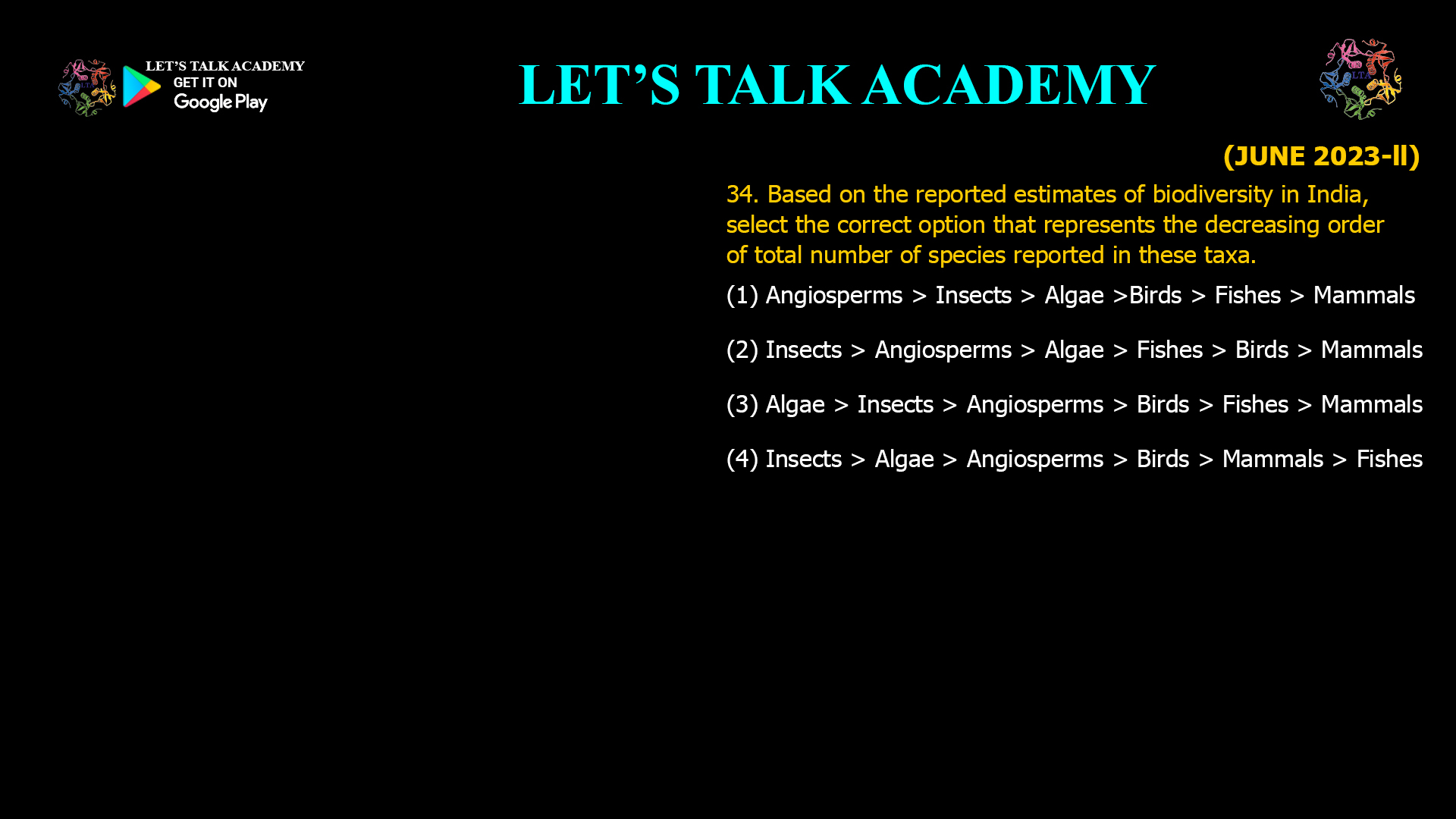





Based on the reported estimates of biodiversity in India, select the correct option that represents the decreasing order of total number of species reported in these taxa. (1) Angiosperms > Insects > Algae >Birds > Fishes > Mammals (2) Insects > Angiosperms > Algae > Fishes > Birds > Mammals (3) Algae > Insects > Angiosperms > Birds > Fishes > Mammals (4) Insects > Algae > Angiosperms > Birds > Mammals > Fishes

Biodiversity in India: Understanding the Decreasing Order of Species Richness Across Major Taxa

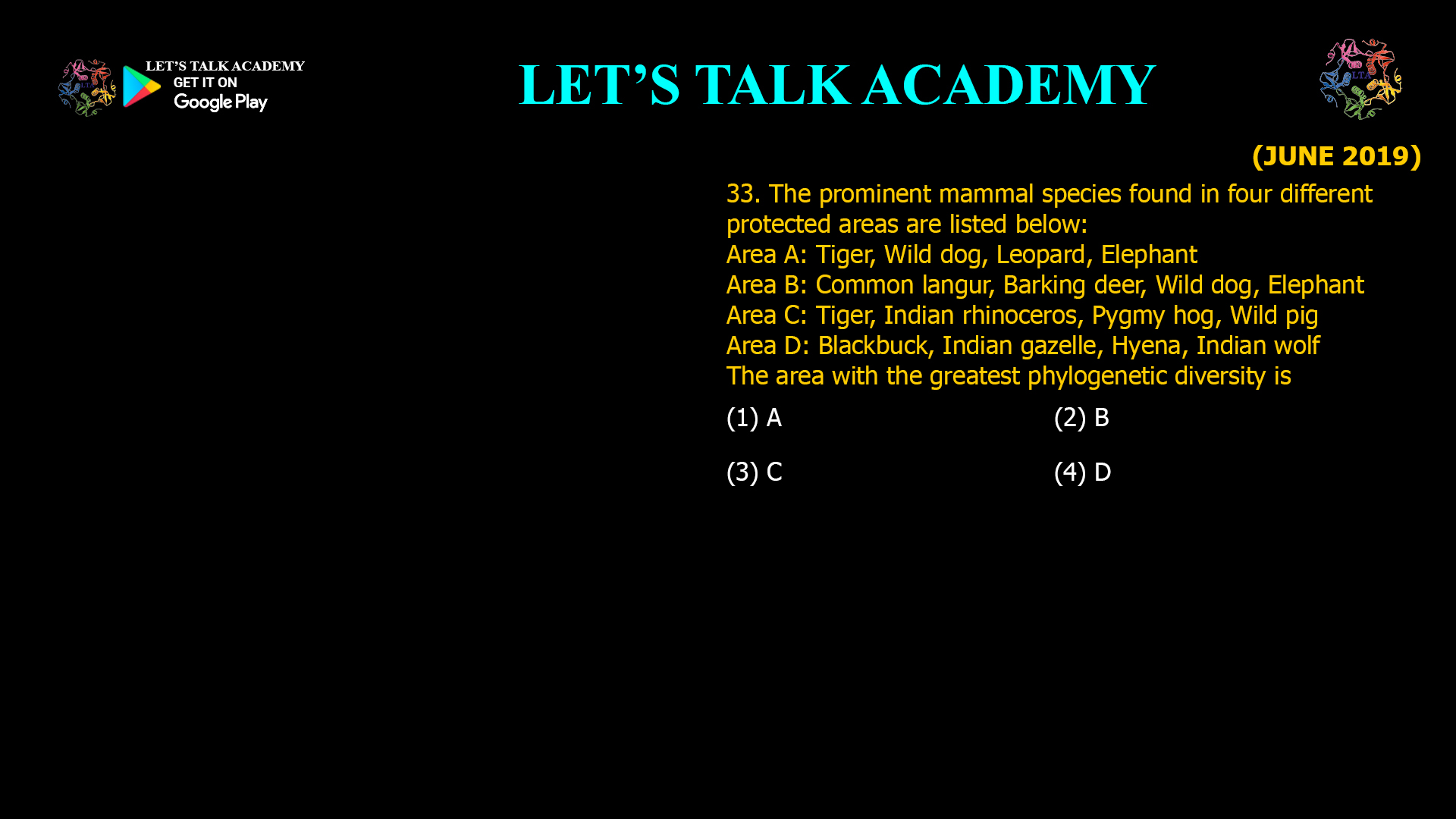
33. The prominent mammal species found in four different protected areas are listed below: Area A: Tiger, Wild dog, Leopard, Elephant Area B: Common langur, Barking deer, Wild dog, Elephant Area C: Tiger, Indian rhinoceros, Pygmy hog, Wild pig Area D: Blackbuck, Indian gazelle, Hyena, Indian wolf The area with the greatest phylogenetic diversity is (1) A                                                   (2) B (3) C                                                   (4) D

Which Protected Area Has the Greatest Phylogenetic Diversity? Understanding Biodiversity Through Evolutionary Distinctness

32. Which one of the options given below is NOT desirable when setting up nature reserves in the tropics? (1) Reserves that are linked to each other by corridors (2) Reserves that are surrounded by a buffer zone of same ecosystem (3) High edge-to-area ratio of the reserve (4) Circular shaped reserve

Why High Edge-to-Area Ratio Is Undesirable When Designing Nature Reserves in the Tropics

31. Which of the following combinations is good for setting up a nature reserves: (1) i, ii, iii (2) ii, iii, iv (3) i, iii, iv (4) i, ii, iv

Best Criteria for Setting Up a Nature Reserve: Key Combinations for Conservation Success

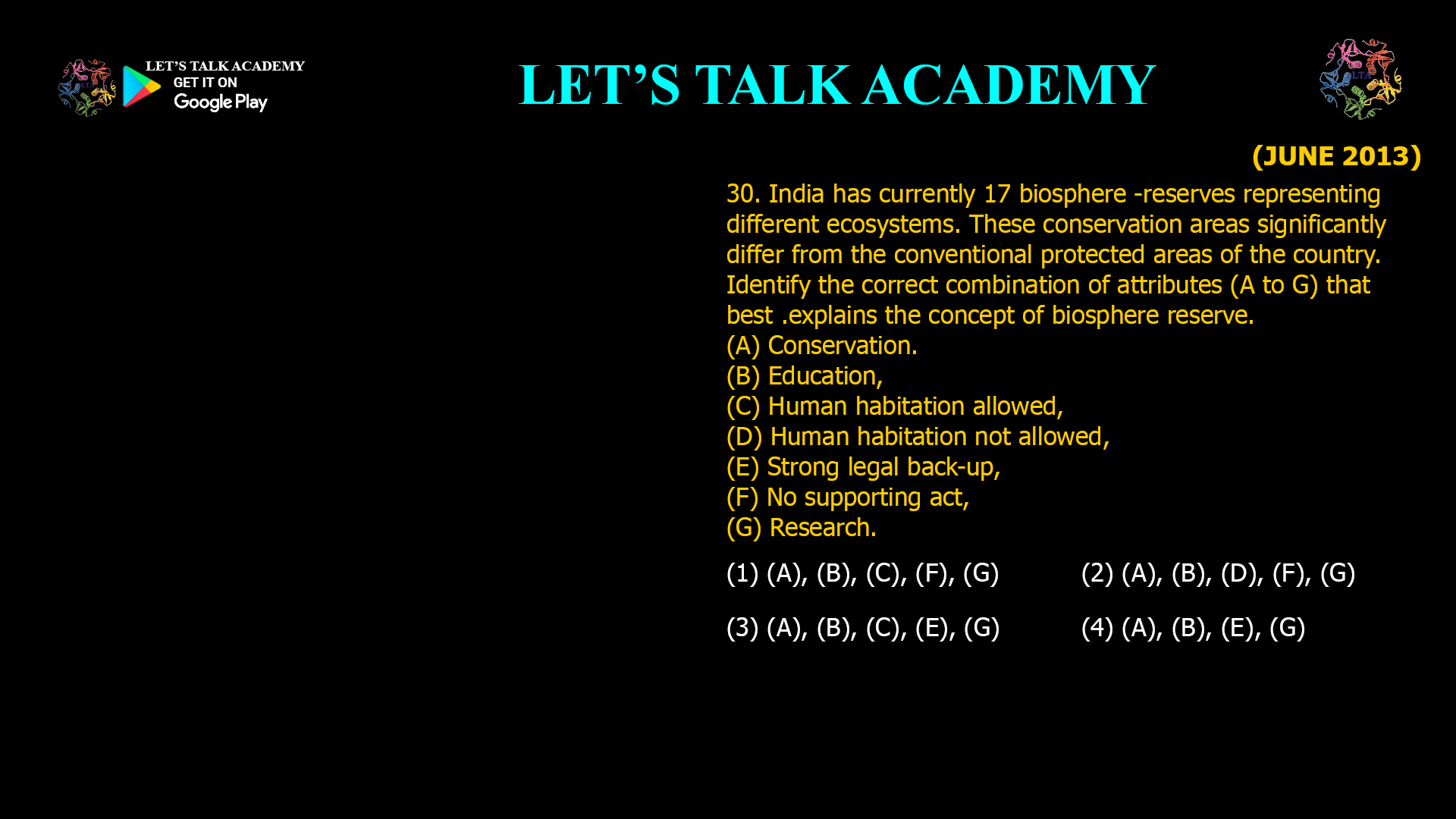
India has currently 17 biosphere -reserves representing different ecosystems. These conservation areas significantly differ from the conventional protected areas of the country. Identify the correct combination of attributes (A to G) that best .explains the concept of biosphere reserve. (A) Conservation. (B) Education, (C) Human habitation allowed, (D) Human habitation not allowed, (E) Strong legal back-up, (F) No supporting act, (G) Research. (1) (A), (B), (C), (F), (G) (2) (A), (B), (D), (F), (G) (3) (A), (B), (C), (E), (G) (4) (A), (B), (E), (G)

Understanding Biosphere Reserves in India: Attributes, Purpose, and How They Differ from Other Protected Areas

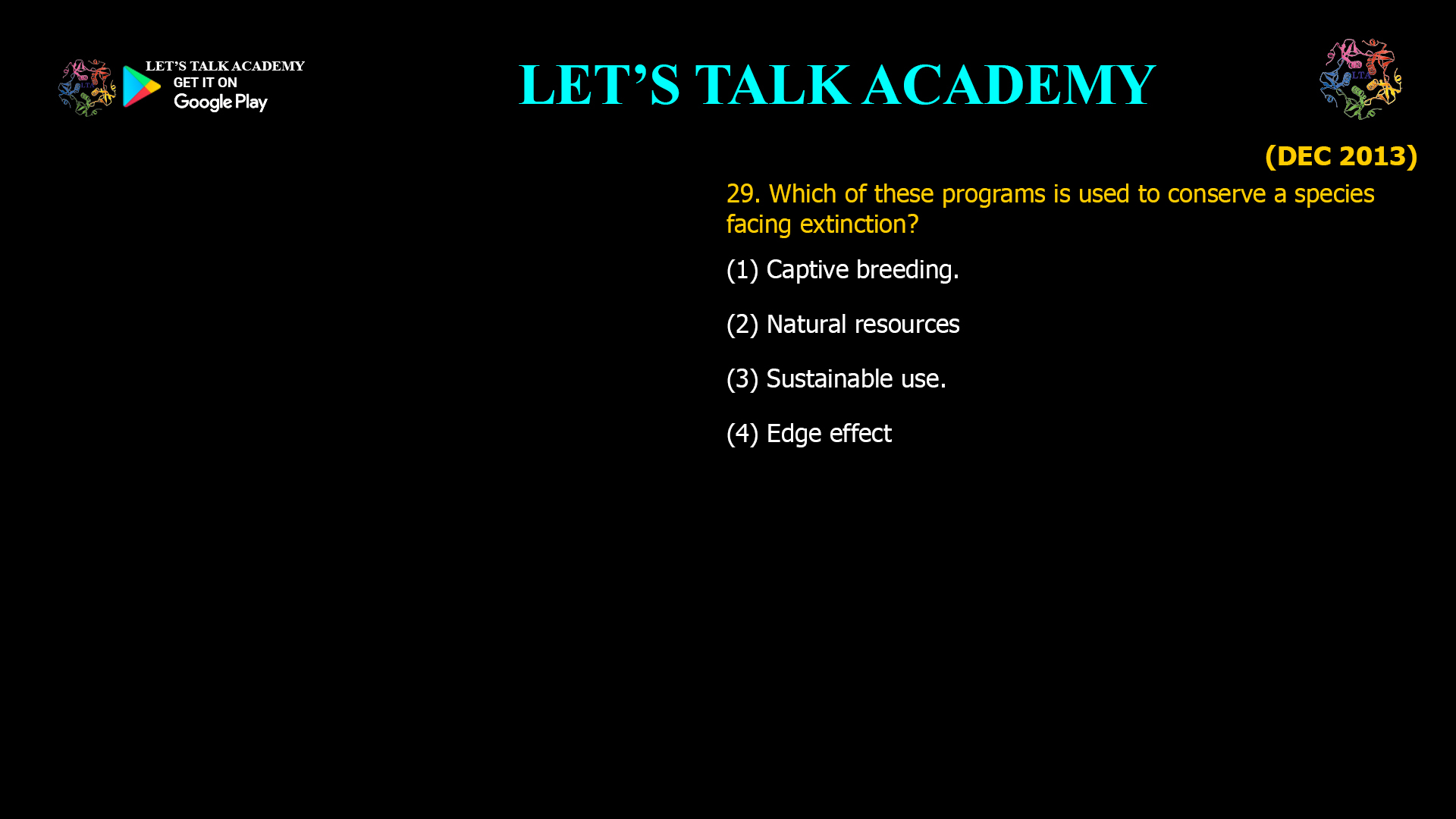
Which of these programs is used to conserve a species facing extinction? (1) Captive breeding. (2) Natural resources (3) Sustainable use. (4) Edge effect

Captive Breeding: The Lifeline for Species Facing Extinction

28. Wetlands are conserved internationally through an,effort called as (1) Basel Convention (2) Rio Convention (3) Montreal Convention (4) Ramsar Convention

Ramsar Convention: The Global Effort to Conserve Wetlands

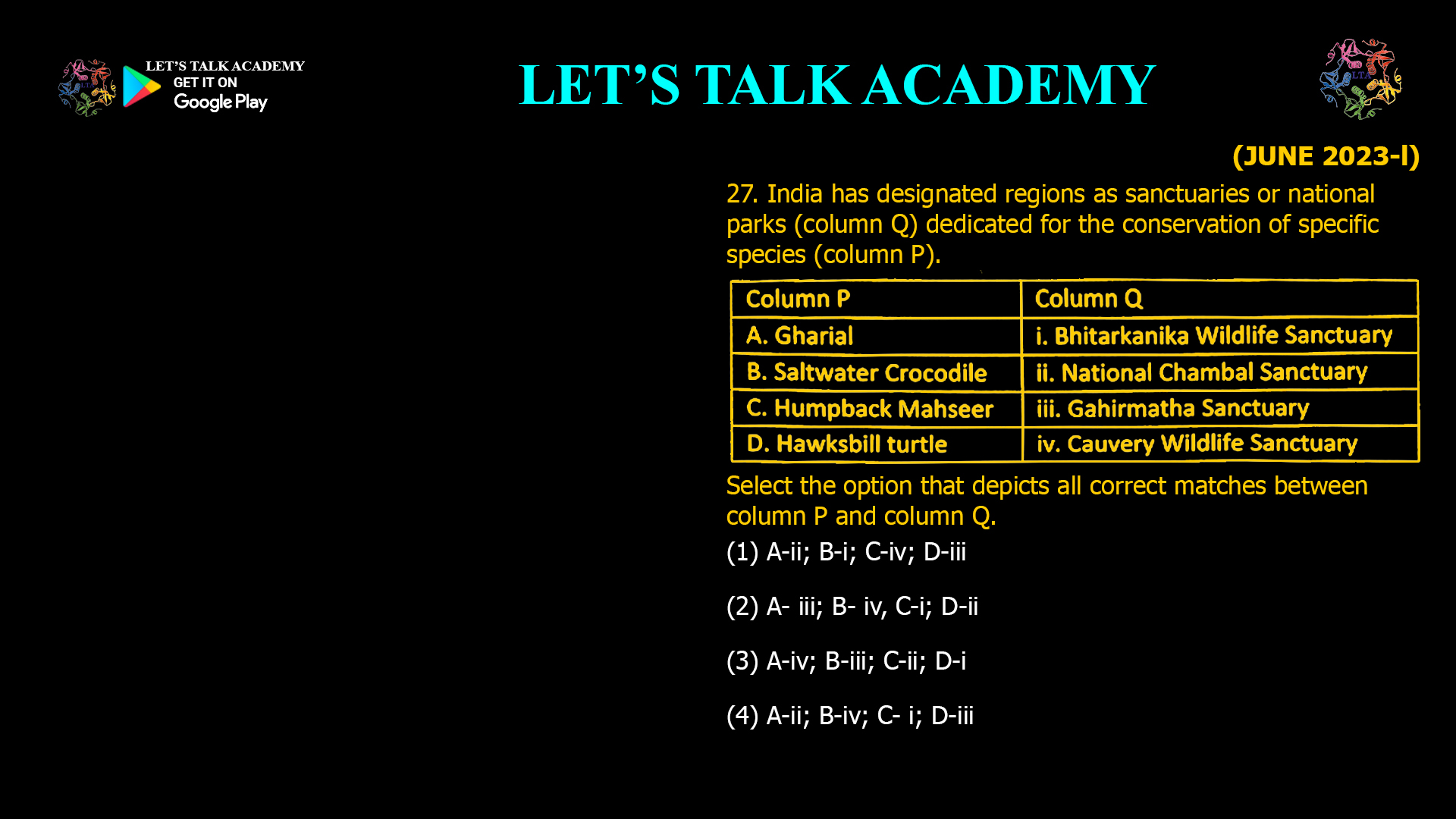
27. India has designated regions as sanctuaries or national parks (column Q) dedicated for the conservation of specific species (column P). Select the option that depicts all correct matches between column P and column Q. (1) A-ii; B-i; C-iv; D-iii (2) A- iii; B- iv, C-i; D-ii (3) A-iv; B-iii; C-ii; D-i (4) A-ii; B-iv; C- i; D-iii

The Importance of National Parks and Wildlife Sanctuaries in India: Protecting Our Natural Heritage

25. Table below shows the protected areas, their description and the protected area types. Select the option that is NOT CORRECT based on the information provided in the Table. (1) Beas Conservation Reserve, D3, T1, :- 1073 (2) Kaziranga National Park, D1, T2 , :- 1074 (3) Keoladeo National Park, D2, T2, :- 1075 (4) Manas Wildlife Sanctuary, D4, T1, :- 1076

Identifying the Incorrect Protected Area Description: A Closer Look

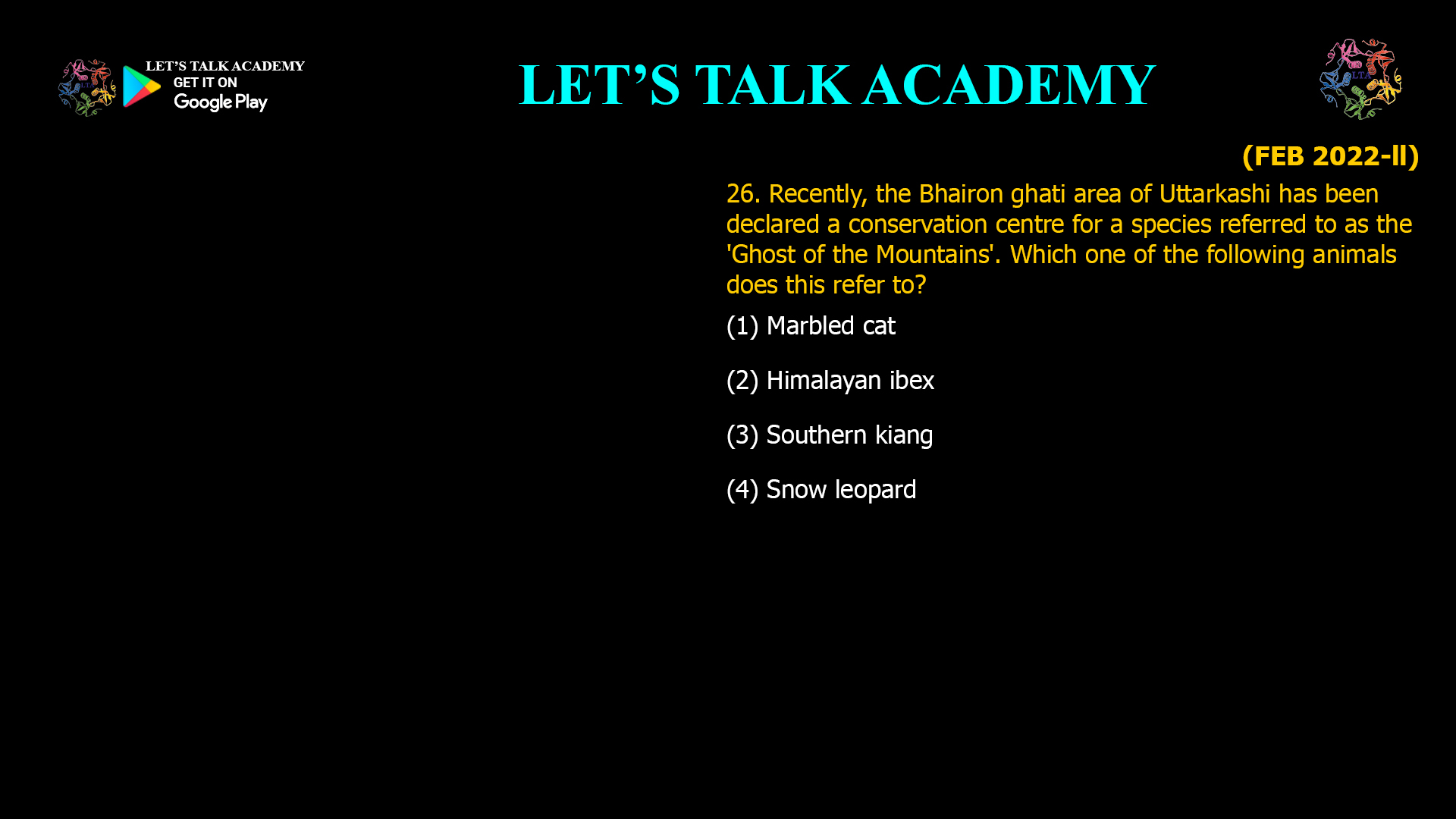
Recently, the Bhairon ghati area of Uttarkashi has been declared a conservation centre for a species referred to as the 'Ghost of the Mountains'. Which one of the following animals does this refer to? (1) Marbled cat (2) Himalayan ibex (3) Southern kiang (4) Snow leopard

Bhairon Ghati: Conservation Centre for the ‘Ghost of the Mountains’—The Snow Leopard

Which of the following National parks has the highest density of tigers among protected area in the world? (1) Jim Corbett (2) Kaziranga (3) Keoladeo Ghana                                        (4) Manas

Which National Park Has the Highest Density of Tigers in the World?

20. Given below are names of some of the National Parks of India and their key protected animals. Based on the table given above, which of the following options represents the correct match? (1) A-(iii); B-(i); C-(iv); D-(ii); E-(v) (2) A-(i); B-(ii); C-(v); D-(iii); E-(iv) (3) A-(i); B-(ii); C-(iii); D-(iv); E-(v) (4) A-(iii); B-(i); C-(v); D-(ii); E-(iv)

Correctly Matching Indian National Parks with Their Iconic Wildlife

19. Which conservation program will help in protection of entire "Tropic ladder"? (1) Project Tiger (2) Project Elephant (3) Protection of Ramsar Sites (4) Protection of Biosphere reserve

Which Conservation Program Protects the Entire “Tropic Ladder”

18. Which national park is not correctly matched with its organism? (1) Ranthambore-Bengal Tiger (2) Rajaji-Hollock gibbon (3) Kanchanjanga-Rhinoceros (4) Bandipur-Elephant

National Parks and Their Iconic Species: Which Pair Is Incorrect?

The bacteria can be best stored under starvation at 40C then at 370C because (1) Membrane freezes (2) Overall metabolic activity is lowered (3) Increases enzyme efficiency (4) Large mortality so low competition

Why Bacteria Are Best Stored Under Starvation at 4°C Rather Than 37°C

The cells of warm blooded animals can be best stored at temperatures for long duration at (1) 37 OC (2) 0 0C (3) -100 OC (4) -196 0C

Optimal Temperature for Long-Term Storage of Warm-Blooded Animal Cells

15. Among the following which has permanent status and is governed by central legislation? (1) National park (2) Gene bank (3) Forests (4) Sport gardens

Which Protected Area Has Permanent Status and Is Governed by Central Legislation?

14. Which chemical is used for cryo-protection? (1) DMSO (2) DCMU (3) PITC (4) Thiourea

DMSO: The Leading Chemical for Cryo-Protection in Biological Preservation

13. Which is in-situ conservation method (1) Biosphere reserve (2) Zoological garden (3) Botanical garden (4) Gene banks

In-Situ Conservation: Which Method Protects Biodiversity in Natural Habitats?

12. Which of the following is not in-situ mode of conservation technique to protect genic biodiversity? (1) Zoological gardens (2) National Parks (3) Sanctuaries (4) Biosphere reserve

In-Situ vs Ex-Situ Conservation: Which Technique Does Not Belong?

Which is not considered as major threat to loss of species diversity (1) Habitat destruction (2) Overexploitation (3) Alien invasion (4) Pollution 

Which Is Not Considered a Major Threat to Loss of Species Diversity?

Common news of conflicts between human and wild animals has happened due to- (1) Habitat destruction (2) Increased poaching (3) Increased conservation (4) Increased Human population

Why Human-Wildlife Conflicts Are Increasing: The Role of Habitat Destruction

How Are Biodiversity Hotspots Characterized? Key Criteria Explained

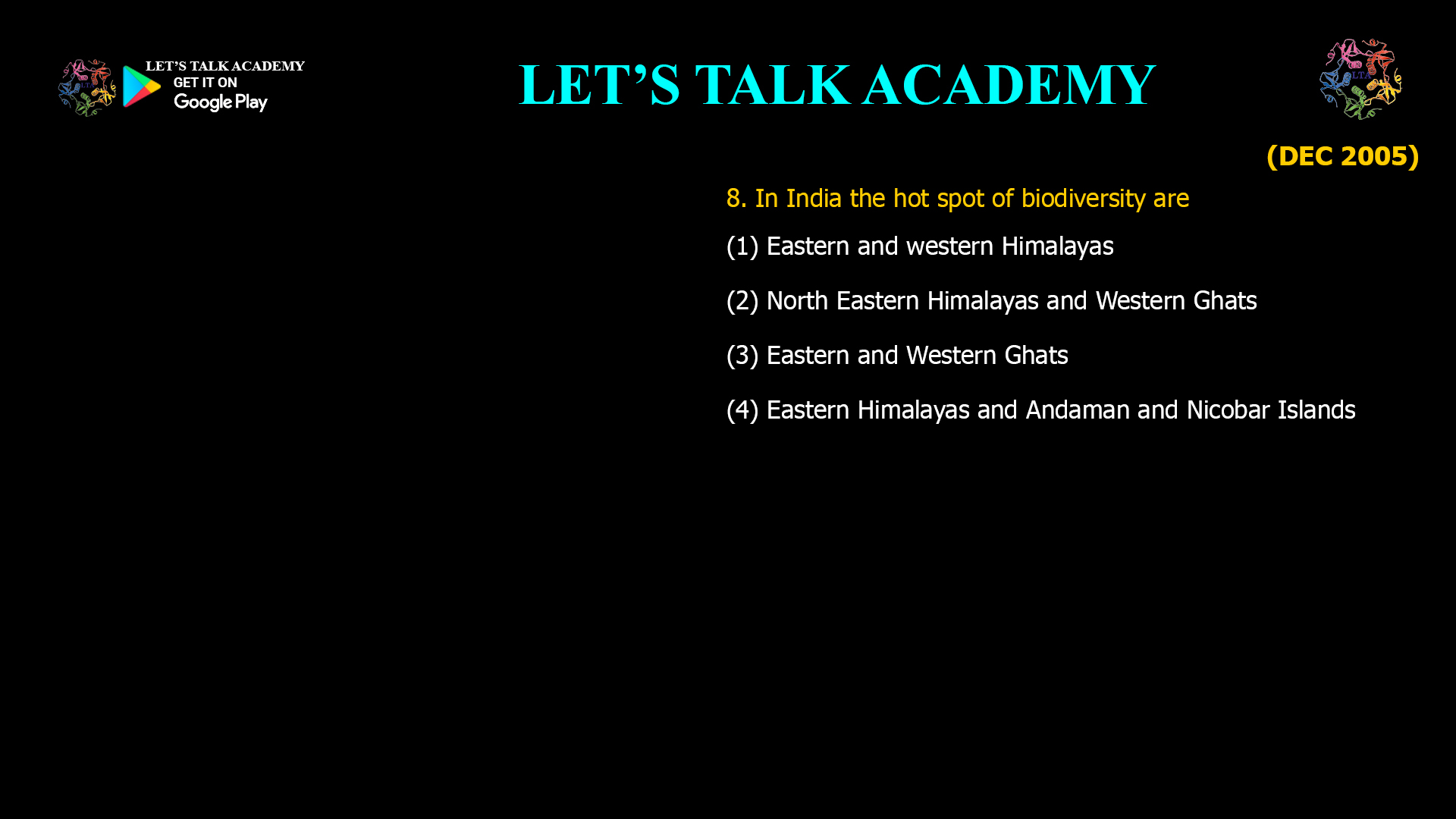
In India the hot spot of biodiversity are (1) Eastern and western Himalayas (2) North Eastern Himalayas and Western Ghats (3) Eastern and Western Ghats (4) Eastern Himalayas and Andaman and Nicobar Islands  

Biodiversity Hotspots in India: North Eastern Himalayas and Western Ghats

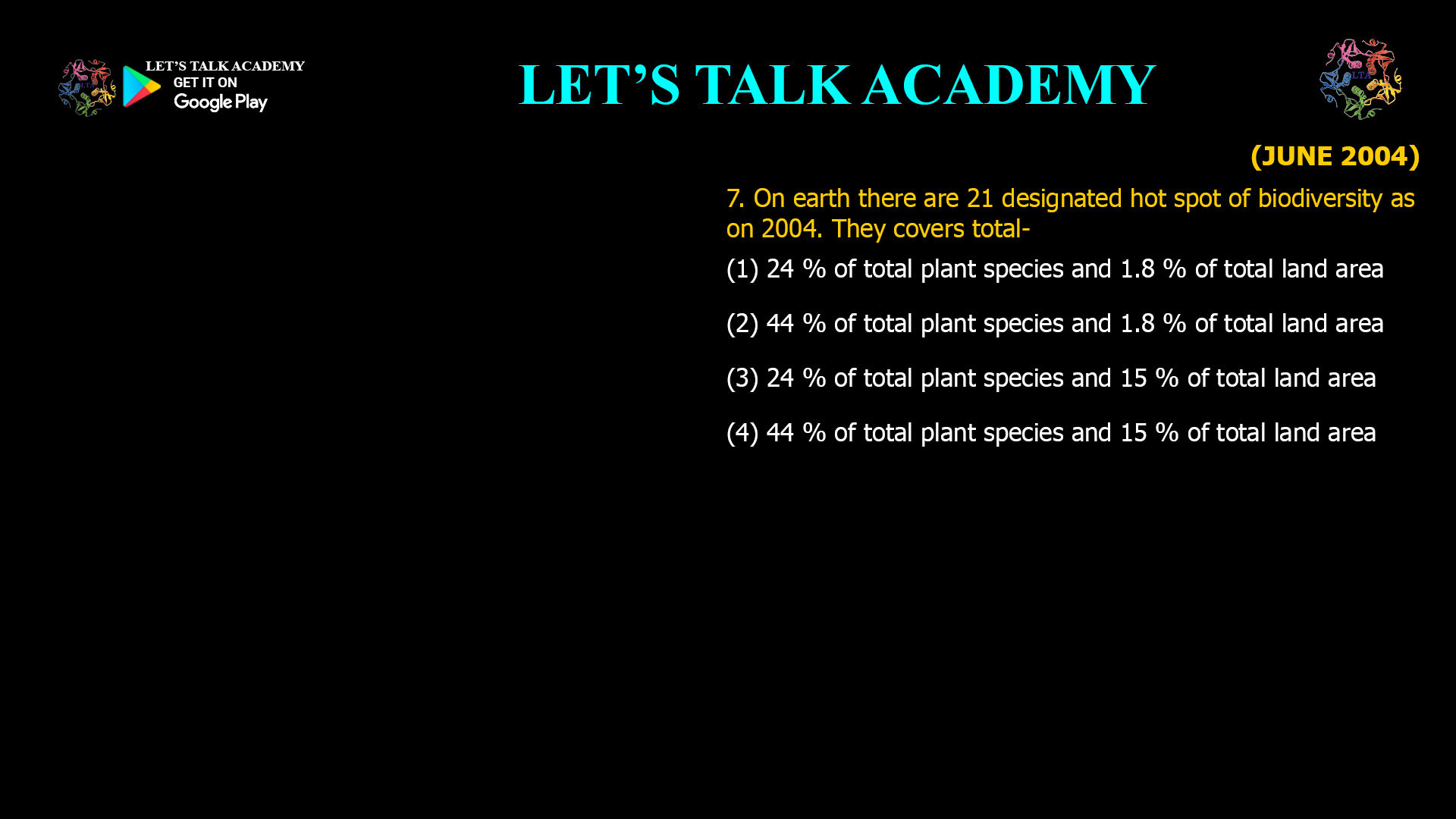
On earth there are 21 designated hot spot of biodiversity as on 2004. They covers total- (1) 24 % of total plant species and 1.8 % of total land area (2) 44 % of total plant species and 1.8 % of total land area (3) 24 % of total plant species and 15 % of total land area (4) 44 % of total plant species and 15 % of total land area

How Much of Earth’s Land and Plant Species Are Covered by Biodiversity Hotspots?

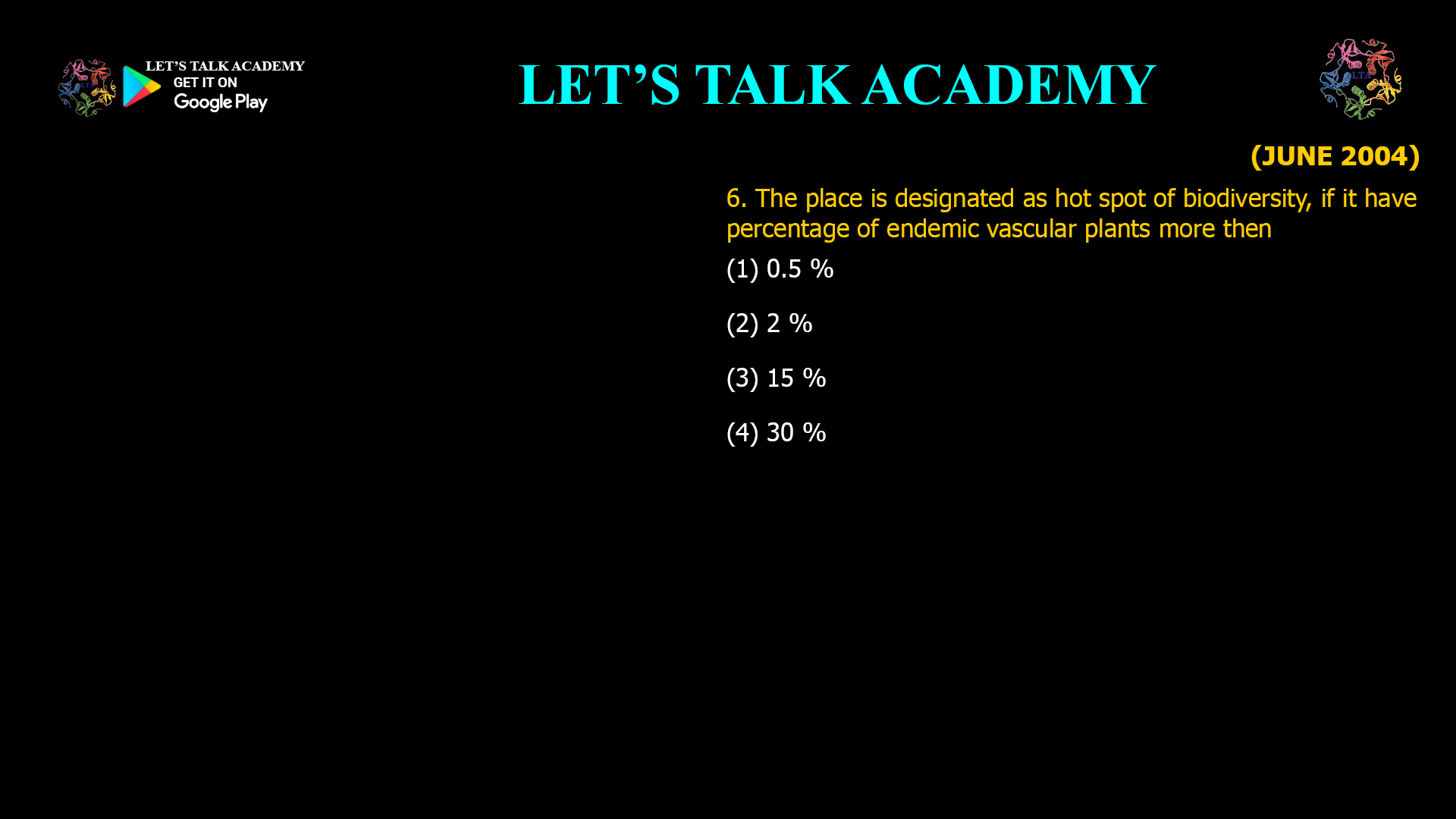
6. The place is designated as hot spot of biodiversity, if it have percentage of endemic vascular plants more then (1) 0.5 % (2) 2 % (3) 15 % (4) 30 %

What Percentage of Endemic Vascular Plants Qualifies a Place as a Biodiversity Hotspot?

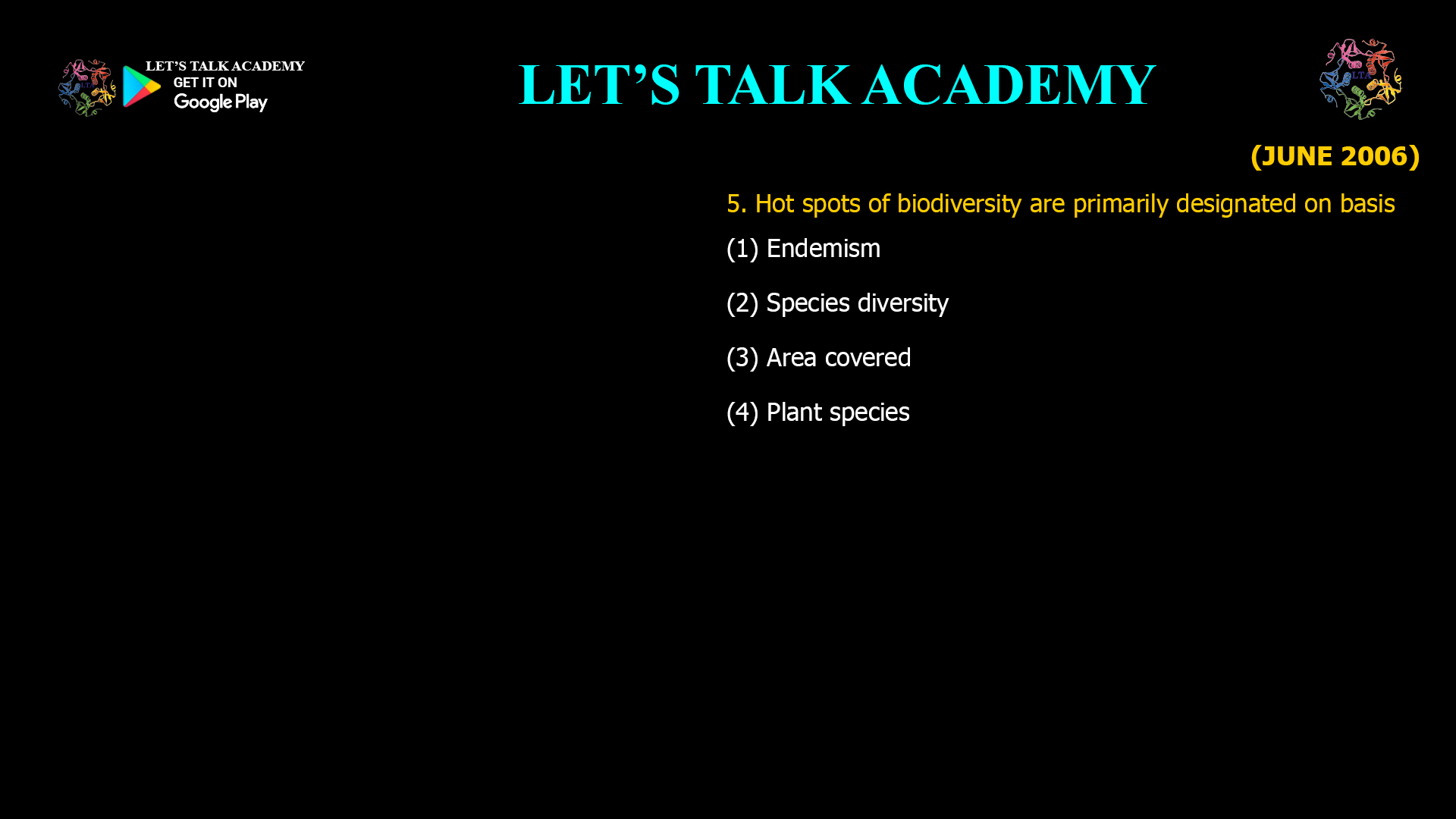
5. Hot spots of biodiversity are primarily designated on basis (1) Endemism (2) Species diversity (3) Area covered (4) Plant species

What Is the Primary Basis for Designating Biodiversity Hotspots?

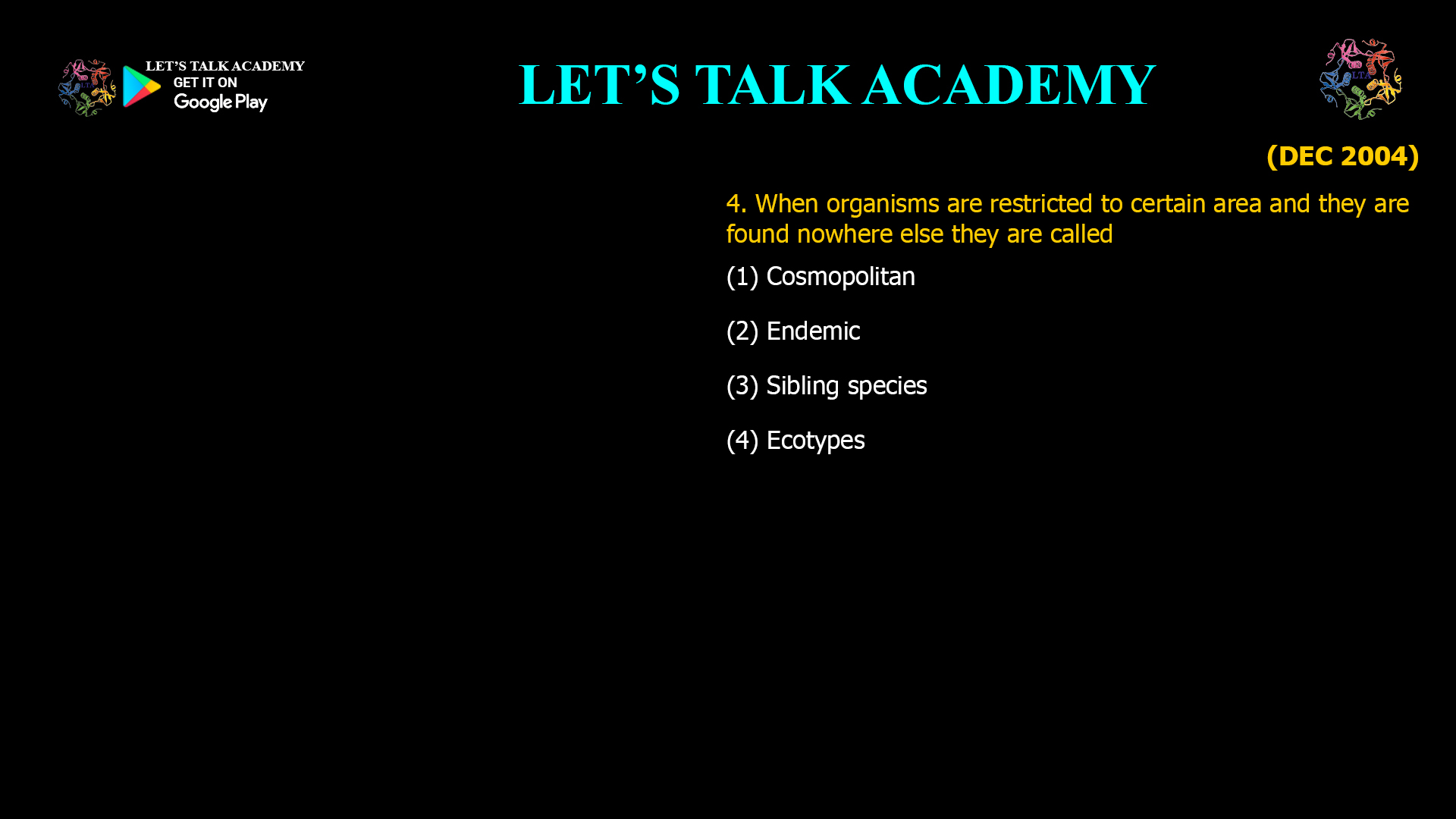
When organisms are restricted to certain area and they are found nowhere else they are called (1) Cosmopolitan (2) Endemic (3) Sibling species (4) Ecotypes

What Are Endemic Species? Understanding Organisms Restricted to Unique Areas

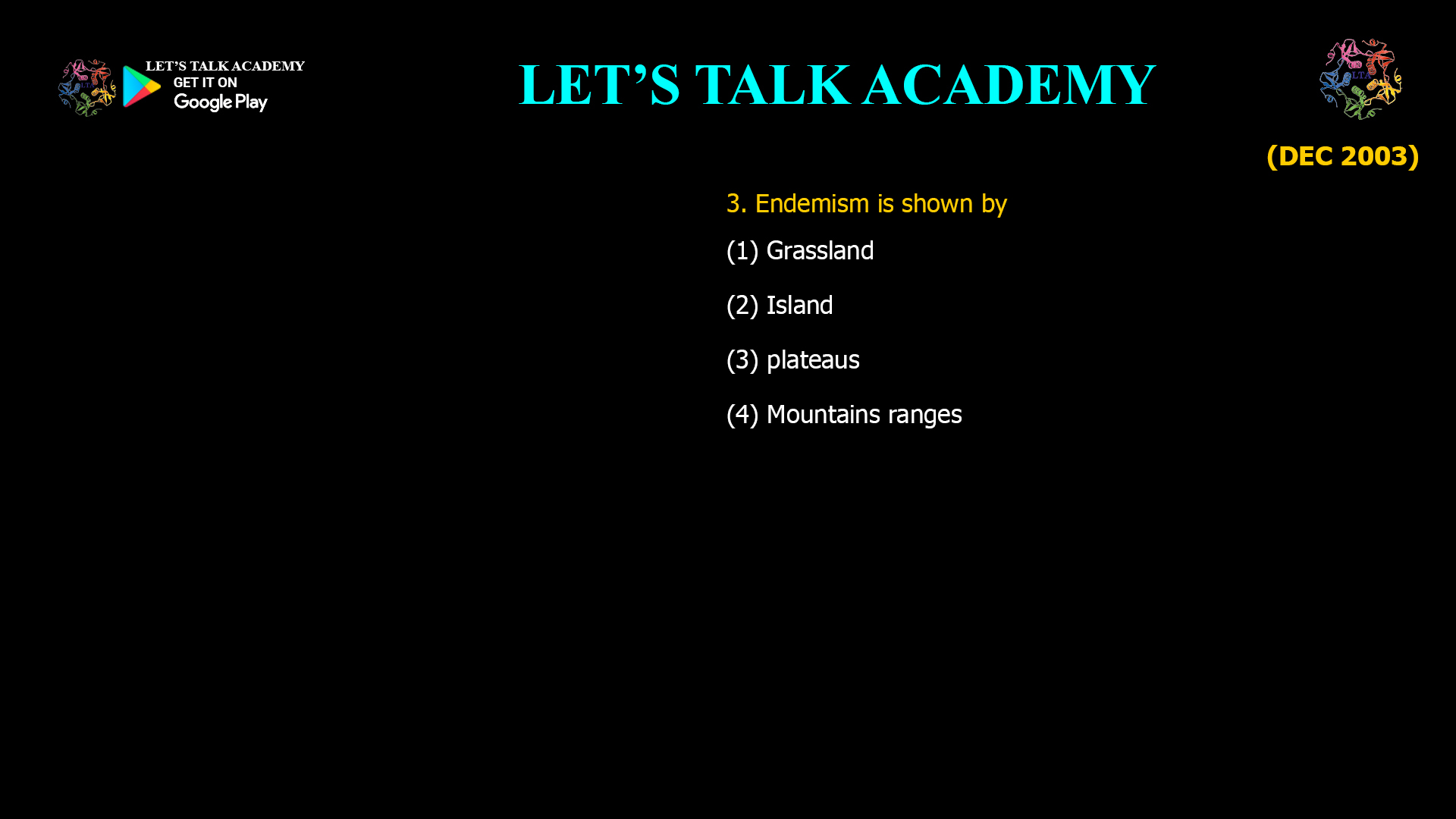
Endemism is shown by (1) Grassland (2) Island (3) plateaus (4) Mountains ranges

Endemism: Why Islands and Mountain Ranges Are Hotspots of Unique Species

Major hot spot of biodiversity in India are- (1) Andaman and Western Ghats (2) Eastern Ghats and Western Himalayas (3) Western Ghats and N.E Himalayas (4) North East and Western Himalayas

Major Biodiversity Hotspots in India: Western Ghats and North-East Himalayas

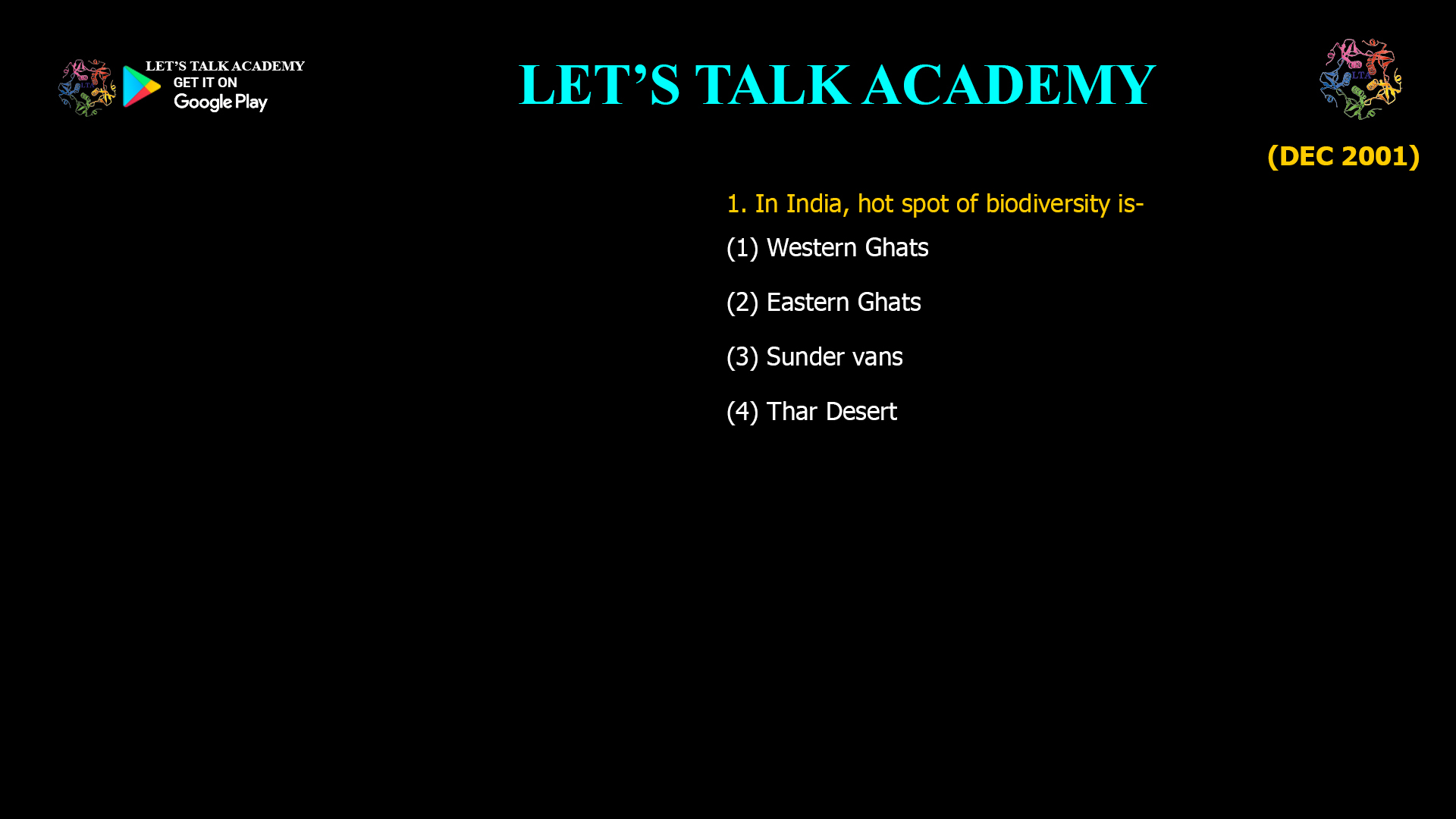
In India, hot spot of biodiversity is- (1) Western Ghats (2) Eastern Ghats (3) Sunder vans (4) Thar Desert

Western Ghats: India’s Biodiversity Hotspot and Ecological Treasure

Latest Courses