Fertilization in sea urchin eggs involves Ca2+ release from the endoplasmic reticulum for cortical granule reactivation. The major molecule responsible for releasing Ca2+ from intracellular stores is (1) zonapellucida glycoproteins (2) protamines (3) inositol 1, 4, 5-trisphosphate (4) N-acetylglucosaminidasev 

Inositol 1,4,5-Trisphosphate (IP3): The Key Molecule Triggering Calcium Release During Sea Urchin Fertilization

During fertilization in mammals proteins lzumo and Juno are required for recognition of sperm and egg. lzumo and Juno are found specifically in sperm and egg, respectively. Which one of the following in vivo experiments will demonstrate that lzumo and Juno interact with each other? (1) If sperms from a male mouse where lzumo has been knocked out is used to fertilize eggs from a normal female and no fertilization occurs. (2) Whole mount immunostaining for lzumo and Juno shows its presence on the sperm and egg respectively (3) If a CFP fused lzumo protein is mixed with YFP fused Juno protein in a tube, FRET occurs, i.e., when CFP is excited, emission of YFP is observed. (4) Two independent kidney cell lines are developed, one expressing lzumo and the other Juno. If the two cells are mixed, they tend to aggregate with each other. 

Demonstrating Izumo-Juno Interaction: Key Experiments in Mammalian Fertilization

1. Homeotic genes are responsible for (1) Development of anatomical structures (2) Homeostasis (3) Cell cycle regulation (4) Adaptation to stress

VE-Cadherin’s Role in Endothelial Cell Survival Through VEGF Signaling: Why N-cadherin Compensation Fails

51. Temporal expression of N-cadherin is extremely important during early development of the mammalian embryos. Accordingly, which one of the following statements about N-cadherin is true? (1) Injection of N-cadherin antibodies just prior to condensation of mesenchymal cells will aid cartilage formation. (2) Presence of N-cadherin just prior to condensation will facilitate nodule formation and development of the limb skeleton. (3) The border between the nervous system and skin will form properly only if epidermal cells are experimentally made to express N-cadherin. (4) Expression of N-cadherin is redundant during separation of neural and epidermal precursor cells.

Role of N-Cadherin in Mesenchymal Condensation and Limb Skeletal Development in Mammalian Embryos

Cadherins mediate Ca2+-dependent cell-cell adhesion and play an important role in embryonic development by changing the adhesive properties of cell. Aggregation of nerve cells to form an epithelium is correlated with the appearance of N-cadherins on cell surface and vice versa. N-CAM (neural cell adhesion molecules) belongs to lg-SF (immunoglobulin super family) and involved in fine tuning of adhesive interaction. In order to see the effect of mutations of N- cadherin and N-CAM, two sets of mice were generated. Set A - mice with mutation in N-cadherin and set B - mice with mutation in N- CAM. Which of the following results is most likely to occur? (1) Mice of both set A and set B will die in early development. (2) Mice of set A will die in early development but mice of set B will develop normally and show mild abnormalities in the development of nervous system. (3) Mice of Set A will show mild abnormalities in the development of nervous system whereas mice of set B will die early in development. (4) Mice of both set A and set B develop normally as other cell adhesion molecules will compensate for the mutations.

Impact of N-Cadherin and N-CAM Mutations on Embryonic Development and Nervous System Formation

Preventing the blocking action of Patched protein leads to activation of Cos-2, which dissociates itself from microtubules, activates Ci/Gli which binds to CBP (CREB- binding protein) and promotes transcription of target genes. Which one of the following treatment of cells will mostly prevent Ci/Gli activated transcription in thecells? (1) Small molecules which target Frizzled. (2) Azepine, an inhibitor of y-secretase. (3) Cyclopamine, which binds to hepta-helical bundle of Smoothened. (4) Cdk blockers, which negatively regulate TGFβ- induced growth.

Cyclopamine Inhibition of Hedgehog Pathway: Blocking Ci/Gli Transcription Activation in Cells

Protein Expression Dynamics in Wnt-Activated Signaling Pathways During Embryo Development

7. Activation of the Wnt signal transduction pathway is extremely important during early development. Of the various pathways, which one of the following is most likely to induce cytoskeletal changes, like cell shape and movement?

Non-Canonical Wnt/PCP Pathway: Key Inducer of Cytoskeletal Changes in Early Development

Signaling Processes NOT Involved in Cellular Movement or Cytoskeletal Changes: Comprehensive Overview

45. Intracellular transport and cytoskeletal organization of a cell is regulated by nucleotide exchange of different small molecular weight GTPases of Ras super family. Overexpression of which of the following GTPase modulates the actin-cytoskeleton of HeLa cells? (1) Ran in GDP bound form (2) Ran in GTP bound form (3) Rho in GTP bound form (4) Rho in GDP bound form

Role of Rho GTPase in Modulating Actin Cytoskeleton in HeLa Cells: Mechanisms and Significance

Which of the following is most likely to be activated in the non-canonical Wnt pathway? (1) Disheveled and GSK-3. (2) RhoA and PLC. (3) GSK-3 and RhoA (4) Disheveled and APC. 

Non-Canonical Wnt Signaling Pathway: Role of RhoA and PLC in Cell Polarity and Calcium Signaling

In response to a Wnt signal, β-catenin enters the nucleus and binds to the LEF1/TCF proteins by displacing which one of the following proteins? (1) CBP (2) GSK3 (3) Groucho  (4) NEMO 

Role of Groucho Displacement in β-Catenin Mediated Wnt Signaling Activation

Which one of the following is a group of signalling molecules that act as morphogens during development of an organism and its effects are mediated through the receptor Patched and its binding partner Smoothened? (1) Hedgehog protein (2) Notch protein (3) Wnt protein (4) β-catenin 

Hedgehog Proteins: Key Morphogens in Development and Signaling Pathways

Collagens are the most abundant component of the extracellular matrix. In order to maintain normal physiological processes like wound healing, bone development, etc., which one of the following type of enzymes is MOST important? (1) Peptidases (2) Proteases (3) Amylase                                       (4) Lipases 

The Crucial Role of Proteases in Collagen Remodeling and Tissue Healing

39. Collagen is the most prevalent extracellular matrix protein. Which of the following is NOT true for collagen? (1) Collagen is composed of triple helix consisting of two α polypeptide chain and one β polypeptide chain wound around one another in a rope-like structure. (2) Glycine accounts for almost one third of the amino acids within collagen molecule. (3) Ascorbate is essential for collagen formation required for hydroxylation of proline. (4) Individual collagen polypeptide chains are synthesized on membrane-bound ribosomes with N-terminal signal sequences for directing them to ER lumen.

Understanding Collagen Structure: Clarifying the Composition of Its Triple Helix

38. A researcher was studying a protein 'X' which has been observed to move across cells when an extracellular electrical stimulus is provided. An artificial peptide 'P' was prepared which resembles the structure of connexins and competitively inhibits connexion formation. Which one of the following statements will best explain the fate of protein 'X' if the cells are treated with peptide 'P' and then electrical stimulus is provided. (1) X fails to move across cells due to improper formation of tight junctions. (2) X fails to move across cells due to improper formation of gap junctions. (3) X moves freely across cells as before. (4) X fails to move across cells due to improper formation of desmosome 

Impact of Connexin Inhibition on Intercellular Protein Movement via Gap Junctions

Physical attachment of cells in a tissue or organ is mediated by different types of junctions, one of which is anchoring junctions. This includes both cell-cell adhesions and cell-extracellular matrix adhesions. The central role of anchoring junctions is played by transmembrane adhesion proteins of which the major ones are cadherin and integrin. Which one of the following statements regarding cadherin and integrin is NOT correct? (1) Generally, cadherin mediates attachment of cell to cell whereas integrin mediates attachment of cells to extracellular matrix (2) Cadherin molecules of a specific subtype on one cell bind to cadherin molecules of the same or closely related subtype on adjacent cells (3) Both cadherin and integrin are composed of two non-covalently attached glycoprotein subunits which span the cell membrane (4) Integrin molecules generally act as extracellular matrix receptor 

Key Differences Between Cadherins and Integrins in Cell Adhesion

Junctions which tether cytoskeletal filaments inside the cell are known as (1) anchoring junctions (2) occluding junctions (3) channel forming junction (4) signal - relay junction 

Understanding Cell Junctions: Correct and Incorrect Characteristics of Tight Junctions, Desmosomes, Gap Junctions, and Hemidesmosomes

In a tissue, cells are bound together by physical attachment between cell to cell or between cell to the extracellular matrix. The following are some of the characteristics of cell junctions: A. Tight junctions are cell-cell junctions connecting the intermediate filament in one cell with that in the adjacent cell. B. Desmosomes are cell-matrix anchoring junctions connecting actin filament in one cell to the extracellular matrix. C. Gap junctions are channel-forming junctions allowing the passage of small water-soluble molecules from cell to cell. D. Tight junctions are occluding junctions that seal the gap between two cells. E. Hemidesmosomes are cell-matrix anchoring junctions connecting intermediate filaments in one cell to the extracellular matrix. Which one of the following options represents the combination of ALL INCORRECT statements? (1) A and B (2) Band D (3) C and E        (4) D and E 

Cell Junctions: Identifying Common Misconceptions in Cell Adhesion and Communication

In a tissue,cells are bound together by physical attatchment between cell to cell oe between cell to extra cellular matrix. Following are some of the characterstics of cell junctions: (A) Aderens junctions are cell-matrix anchoring junctions connecting actin filament in one cell with that of matrix (B) Desmosomes are cell-matrix anchoring junctions connecting actin filament to extra cellular matrix (C) gap junctions are channel forming junctions allowing passage of small water soluble molecules from cell to cell. (D) Tight junctions are occluding junctions,which seal gap between two cells (E) Hemidesmosomes are cell-matrix anchoring junctions connecting intermediate filament in one cell to extra cellular matrix. Which of the following combinations of statements is NOT correct? (1) (A) and (B) (2) (A) and (C) (3) (C) and (D) (4) (D) and (E) 

Understanding Cell Junctions: Correcting Misconceptions About Adherens Junctions and Desmosomes

Physical attachment between cell to cell or between cells to extracellular matrix imparts rigidity to a tissue. Which of the following characteristic is NOT true for cell junction? (1) Desmosomes are cell-cell anchoring junctions connecting intermediate filament in one cell with that in the next cell. (2) Hemi-desmosomes are cell matrix anchoring junctions connecting actin filament in one cell with that in the next cell. (3) Gap junctions in animals and plasmodesmata in plants are channel forming junctions. (4) Occluding junctions seal the gaps between cells to make the cell sheet into an impermeable barrier. 

Clarifying Cell Junction Functions: The Role and Misconceptions About Hemidesmosomes

There are many superfamilies of adhesion proteins, which play a central role in cell-cell adhesion in animal. lg superfamily proteins are one such adhesion proteins. Which one of the following statements about lg superfamily proteins is INCORRECT? (1) The white blood cell proteins recognized by endothelial cell integrins are called ICAM (intercellular cell adhesion molecule) or VCAM (vascular cell adhesion molecules) (2) These are called lg superfamily because they contain one or more extracellular lg-like domains that are characteristic of antibody molecules. (3) ICAM and VCAM mediate heterotrophic binding to integrin, whereas NCAM (neural cell adhesion molecule) mediates homotrophic binding. (4) They contain large quantities of sialic acid which inhibit adhesion by charge-based repulsion contributing to fine tuning of cell-cell adhesion. 

Clarifying Misconceptions About Immunoglobulin Superfamily Proteins in Cell Adhesion

31. Which one of the following statements about cell-cell interactions is NOT true? A. Cadherins are transmembrane linker proteins which carry out Ca2+-mediated adhesion between adjacent cells. B. Integrins are transmembrane adhesion proteins that mediate hemophilic adhesion through actin and intermediate filaments. C. Selectins are cell surface lectins that mediate a variety of transient, cell-cell adhesion interactions in the bloodstream. D. ICAMs (intracellular cell adhesion molecules) and VCAMs (vascular cell adhesion molecules) are members of immunoglobulin (lg) superfamily (1) only A                                              (2) only B (3) Both C and D                                    (4) Both A and D

Understanding Cell-Cell Adhesion Proteins: Correcting Common Misconceptions

Following are a list of extracellular matrix proteins (Column A) along with their functional characteristics (Column B): Which one of the following is the correct match? (1) A- i; B-iv; C-iii; D-ii (2) A- ii; B-iii; C-iv; D-i (3) A-iii; B-iv; C-i; D-ii (4) A- iv; B-i; C-ii; D-iii

Key Extracellular Matrix Proteins and Their Functional Roles Explained

Animal Cell-Cell Adhesion Protein Families and Their Functional Characteristics

Which one of the following is the communicating junction linking adjacent cells in plants, which permits small molecules to pass from cell to cell while blocking the passage of most large molecules? (1) Adherens junction (2) Gap junction (3) Plasmodesmata (4) Hemidesmosome 

Plasmodesmata: The Essential Communicating Junctions in Plants

Which one of the following permits the rapid diffusion of small, water-soluble molecules between the cytoplasm of adjacent cells? (1) Tight junctions (2) Anchoring junctions (3) Adherens junctions (4) Gap junctions

Gap Junctions: Facilitating Rapid Cell-Cell Communication

26. Physical attachment between cells and extracellular matrix is critical in both animals and plants because it imparts rigidity and strength to tissues and organs. However, junctions between cell-cell or between cell-matrix are diverse in structure and play roles beyond providing physical support. Column "X" lists some of the cell junctions and column "Y" lists their characteristic functions (1) A- (i); B- (ii); C- (iv); D- (iii) (2) A-(ii); B - (iii); C- (iv); D- (i) (3) A- (iii); B- (iv); C- (i); D- (ii) (4) A- (iv); B- (i); C- (ii); D- (iii)

Cell Junctions in Animals: Functions and Types Explained

Physical attachment between cells important in imparting strength in tissues. Various physical cell junctions in vertebrate epithelial tissues are classified according to their primary functions. Enlisted below in column A is the major function of a particular junction and column B enlists cell junctions, but the same order. Choose the correct combination: (1) A-(i), B-(ii), C-(iii), D-(iv) (2) A-(ii), B-(iii), C-(iv), D-(i) (3) A-(iii), B-(iv), C-(i), D-(ii) (4) A-(iv), B-(i), C-(ii), D-(iii) 

Understanding Vertebrate Epithelial Cell Junctions and Their Functions

24. Which one of the following glycosaminoglycans is generally NOT covalently attached to protein as proteoglycans? (1) Chondroitin sulphate                         (2) Dermatan sulphate (3) Heparan sulphate                             (4) Hyaluronan 

Hyaluronan: The Unique Glycosaminoglycan Not Forming Proteoglycans

Glycosaminoglycans are usually linked to proteins to form proteoglycans. Which of the following is NOT a proteo-glycan? (1) Hyaluron (2) Aggrecan (3) Betaglycan (4) Syndecan-l 

Hyaluron: A Glycosaminoglycan but Not a Proteoglycan – Key Differences Explained

Which one of the following is a type of intercellular junction in animal cells? (1) Middle lamella (2) Plasmodesmata (3) Desmosomes (4) Glycocalyx 

Desmosomes: Key Intercellular Junctions in Animal Cells

The cylindrical channels in gap junctions are made of (1) connexin. (2) collagen. (3) fibronectin. (4) N-CAM. 

Connexin: The Building Block of Gap Junction Channels

20. Which one of the following is NOT an extracellular matrix protein? (1) Keratin                                            (2) Laminin (3) Collagen                                          (4) Vitronectin 

Why Keratin Is Not an Extracellular Matrix Protein: ECM Protein Functions Explained

(1) Fibronectin (2) Vitronectin (3) Laminin                                          (4) Cyclin

Which Is Not an Extracellular Matrix Protein? Cyclin vs. Fibronectin, Vitronectin, and Laminin

18. Which of the following molecules is involved in Ca2+ - dependent cell-cell adhesion? (1) Calmodulin                      (2) Cadherin (3) N-CAM                            (4) Calpain 

Cadherin: The Key Molecule in Calcium-Dependent Cell-Cell Adhesion

Integrin molecule link extracellular matrix (ECM) to the actin cytoskeleton of cell. Integrin binds to which of the following ECM macromolecules? (1) Laminin (2) Collagen (3) Fibronectin (4) Vitronectin

Integrin Binding Partners: Linking ECM Macromolecules to the Cytoskeleton

Which of the following is an intracellular anchor protein? (1) Vitronectin (2) Integrin (3) Vinculin (4) Elastin 

What Is an Intracellular Anchor Protein? Vinculin’s Essential Role in Cell Adhesion

15. Some cellular and extracellular proteins are enlisted in List I and their typical characteristics are enlisted in List ll Which one of the following is the most appropriate match? (1) A-l, B-ll, C-lll, D-lV         (2) A-ll, B-lll, C-lV, D-l (3) A-lll, B-l, C-lV, D-ll         (4) A-ll, B-lV, C-l, D-lll

Precisely Matching Cellular and Extracellular Proteins to Their Characteristics

14. Given below are a list of some extracellular matrix (ECM) proteins in column A and their characteristics in column B, but not in correct order: Which one of the following is the most appropriate match? (1) A -i, B- ii, C- iii, D –iv (2) A-ii, B-iii, C- iv, D-i (3) A- iii, B - ii, C- iv, D- i (4) A- iv, B- i, C- ii, D- iii

Extracellular Matrix Proteins and Their Functions: The Most Accurate Matching

Which one of the following proteins is NOT related to extracellular matrix? (1) Cadherin (2) Vitronectin (3) Lamin (4) Selectin 

Extracellular Matrix Proteins vs. Cell Adhesion Molecules: Why Cadherin Is Not an ECM Component

The extracellular matrix contains a number of non- collagen proteins that typically have multiple domains, each with specific binding sites for other matrix molecules and cell surface receptors. These proteins therefore contribute to both organizing the matrix and helping cells attach to it. The most well characterized matrix protein of this kind is fibronectin. Which one of the following characteristics is NOT TRUE for fibronectin? (1) It is a large glycoprotein found in all vertebrates and important for many cell-matrix interactions. (2) It is composed of three polypeptides that are disulfide bonded into a crosslink structure. (3) In human genome, there is only one fibronectin gene containing about 50 exons, but the transcripts can be spliced in different ways to produce many different fibronectin isoforms. (4) Fibronectin binds to integrin through an RGD motif. Even very short peptide containing RGD sequence can inhibit attachment of cells to fibronectin matrix.

Fibronectin: Structure, Isoforms, and the Most Common Misconception

Which of the following is NOT a cell adhesion protein? Question (1) Cadherin (2) Selectin (3) Immunoglobulin (lg) superfamily (4) Laminin 

Which is Not a Cell Adhesion Protein? Cadherin, Selectin, Ig Superfamily, and Laminin Explained

Several types of molecules including the transmembrane glycoproteins can function as matrix receptors and co-receptors. However, the principal receptors on animal cells for binding most extracellular matrix proteins are the integrins. Which of the following statements is NOT true for integrins? (1) Integrins are transmembrane linker proteins that link to the cytoskeleton. (2) An integrin molecule is composed of two non- covalently associated glycoprotein subunits α and β. Both subunits span the cell membrane, with short intracellular C-terminal tails and large N-terminal extracellular domains. (3) The extracellular portion of the integrin dimer binds to specific carbohydrate residues in extracellular matrix proteins or to ligands on the surface of other cells. (4) The intracellular portion binds to a complex of proteins that form a linkage to the cytoskeleton. 

Key Facts and Common Misconceptions About Integrins: What Integrins Really Bind

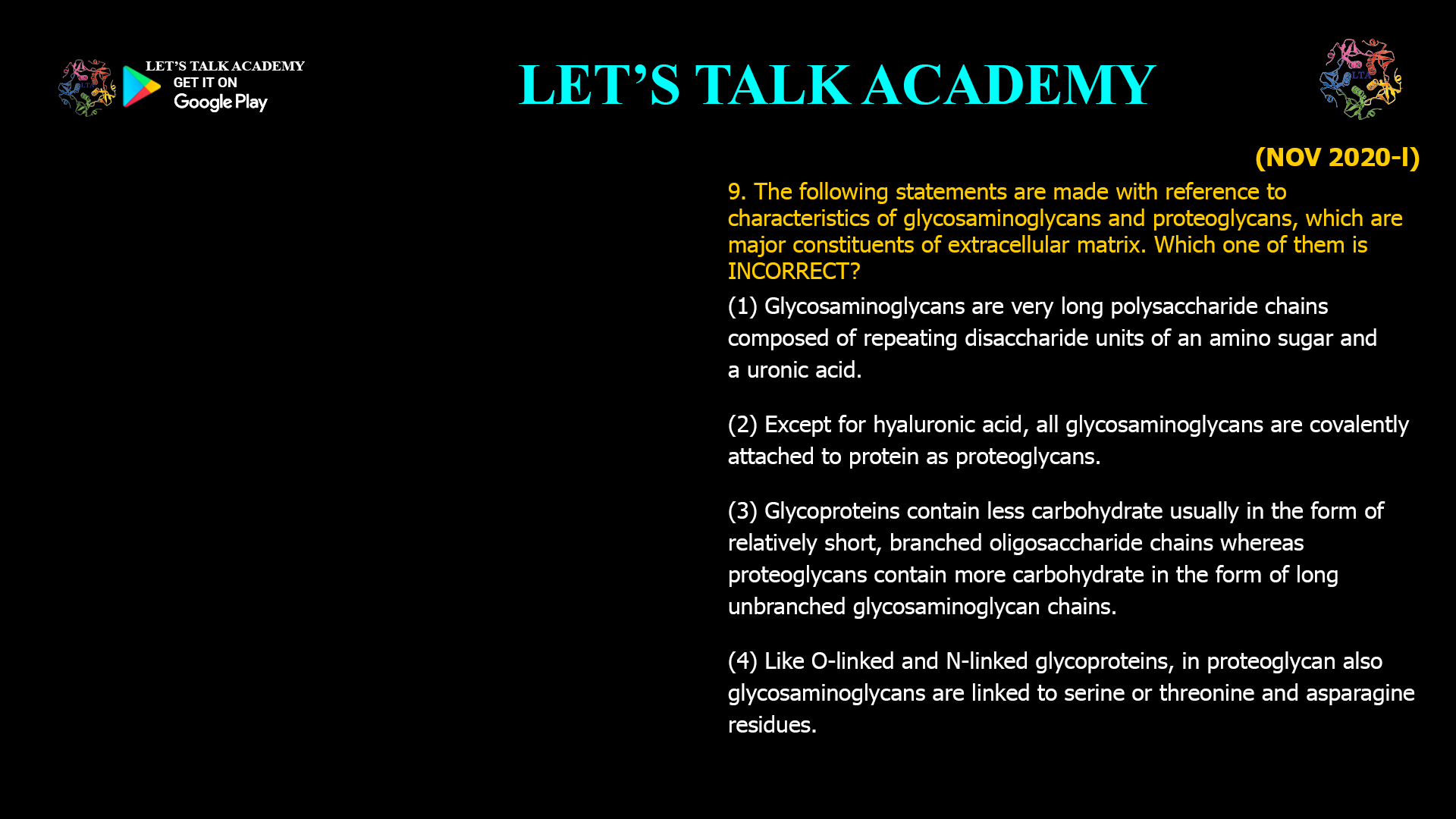
The following statements are made with reference to characteristics of glycosaminoglycans and proteoglycans, which are major constituents of extracellular matrix. Which one of them is INCORRECT? (1) Glycosaminoglycans are very long polysaccharide chains composed of repeating disaccharide units of an amino sugar and a uronic acid. (2) Except for hyaluronic acid, all glycosaminoglycans are covalently attached to protein as proteoglycans. (3) Glycoproteins contain less carbohydrate usually in the form of relatively short, branched oligosaccharide chains whereas proteoglycans contain more carbohydrate in the form of long unbranched glycosaminoglycan chains. (4) Like O-linked and N-linked glycoproteins, in proteoglycan also glycosaminoglycans are linked to serine or threonine and asparagine residues. 

ECM Glycosaminoglycans and Proteoglycans: The Key Incorrect Statement Explained

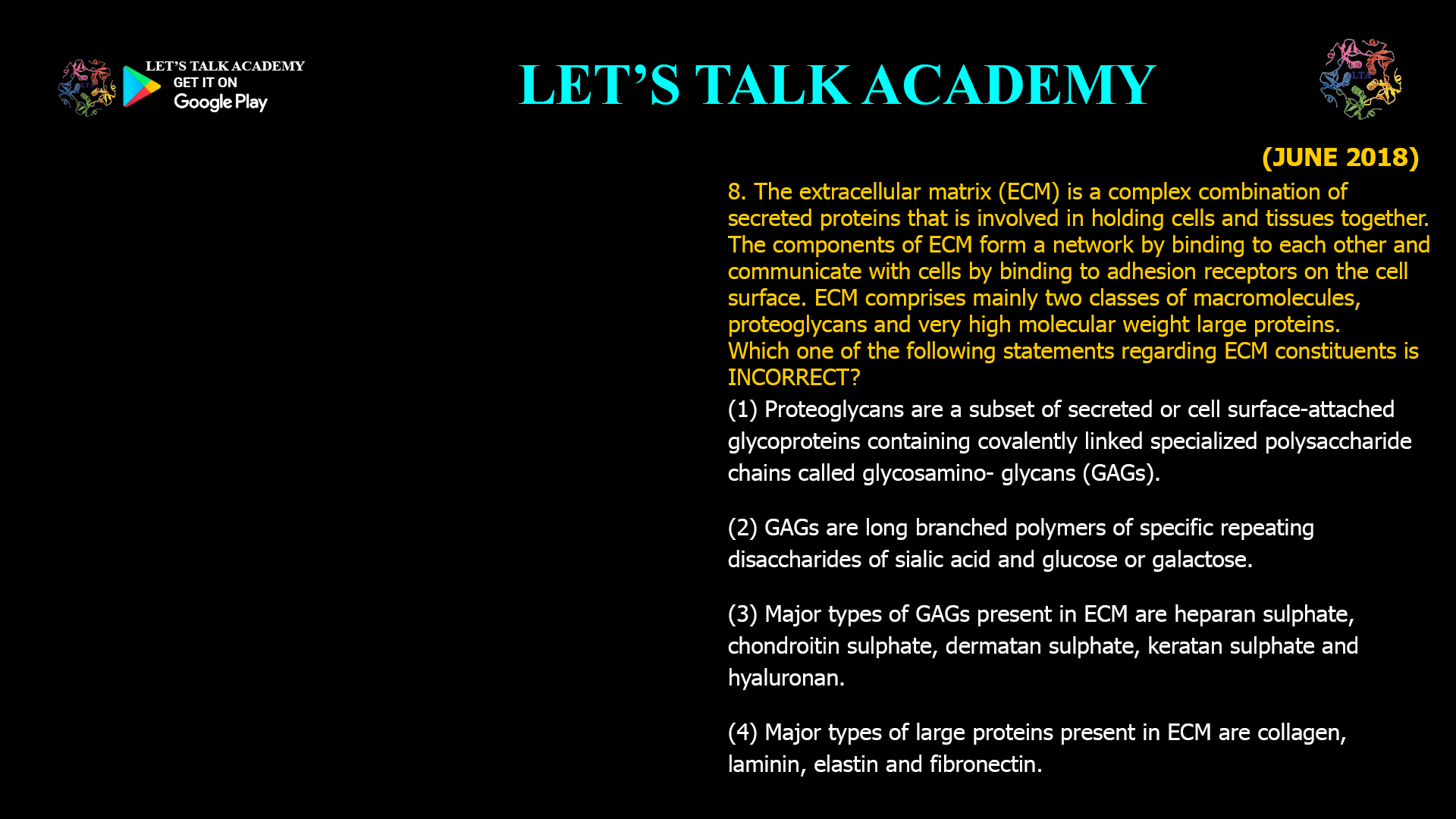
The extracellular matrix (ECM) is a complex combination of secreted proteins that is involved in holding cells and tissues together. The components of ECM form a network by binding to each other and communicate with cells by binding to adhesion receptors on the cell surface. ECM comprises mainly two classes of macromolecules, proteoglycans and very high molecular weight large proteins. Which one of the following statements regarding ECM constituents is INCORRECT? (1) Proteoglycans are a subset of secreted or cell surface-attached glycoproteins containing covalently linked specialized polysaccharide chains called glycosamino- glycans (GAGs). (2) GAGs are long branched polymers of specific repeating disaccharides of sialic acid and glucose or galactose. (3) Major types of GAGs present in ECM are heparan sulphate, chondroitin sulphate, dermatan sulphate, keratan sulphate and hyaluronan. (4) Major types of large proteins present in ECM are collagen, laminin, elastin and fibronectin. 

ECM Constituents and the Key Misconception About Glycosaminoglycans

Which of the following is not an extracellular matrix protein (1) Globin (2) Elastin (3) Collagen (4) Fibronectin

Why Globin Is Not an Extracellular Matrix Protein: ECM Components Explained

During development homing of cell is mediated by (1) Integrin (2) Laminin (3) Cadherin (4) Selectin

How Integrins Mediate Cell Homing During Development

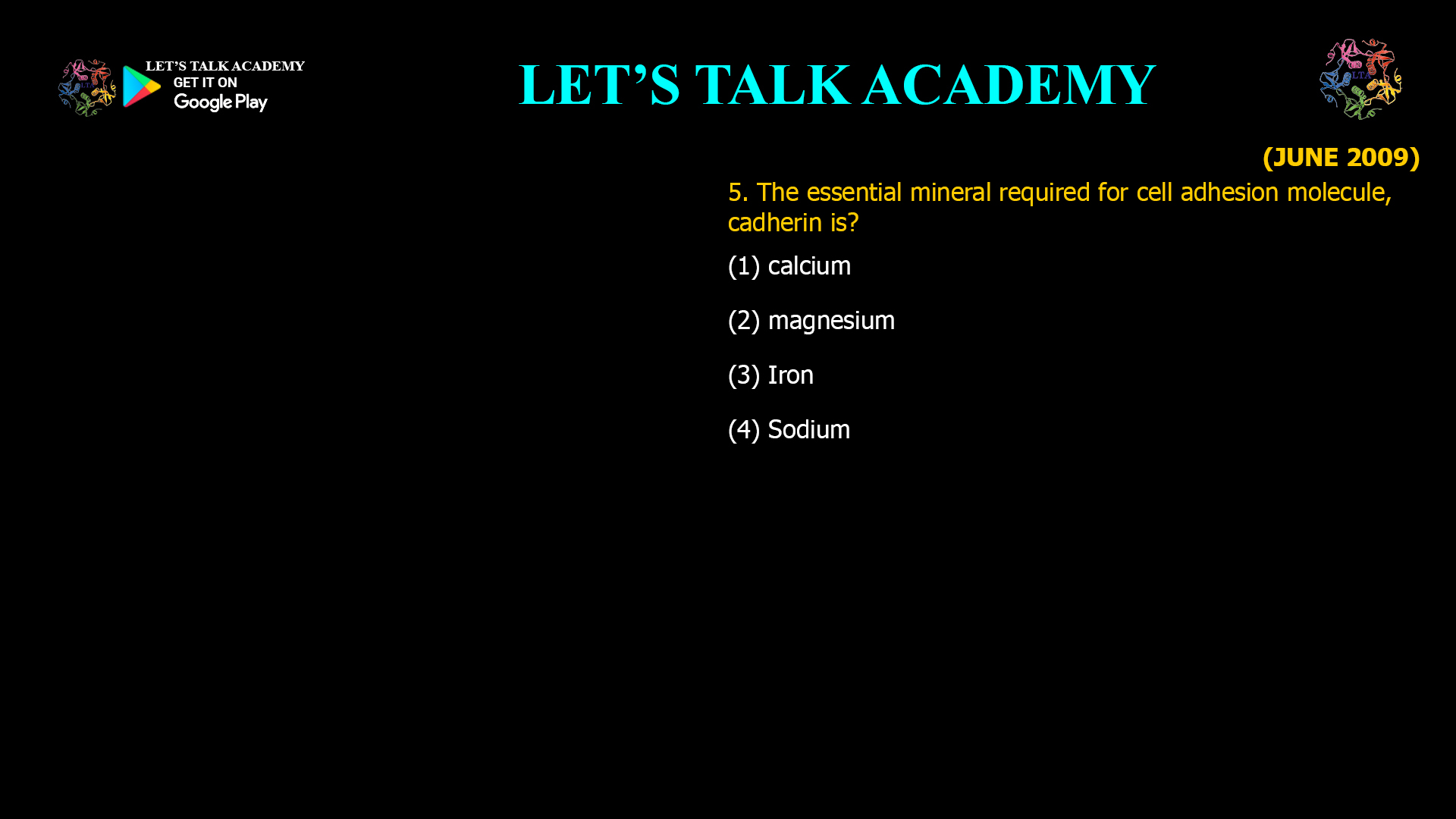
5. The essential mineral required for cell adhesion molecule, cadherin is? (1) calcium                                   (2) magnesium (3) Iron                                        (4) Sodium

Why Calcium Is Essential for Cadherin Cell Adhesion Molecules

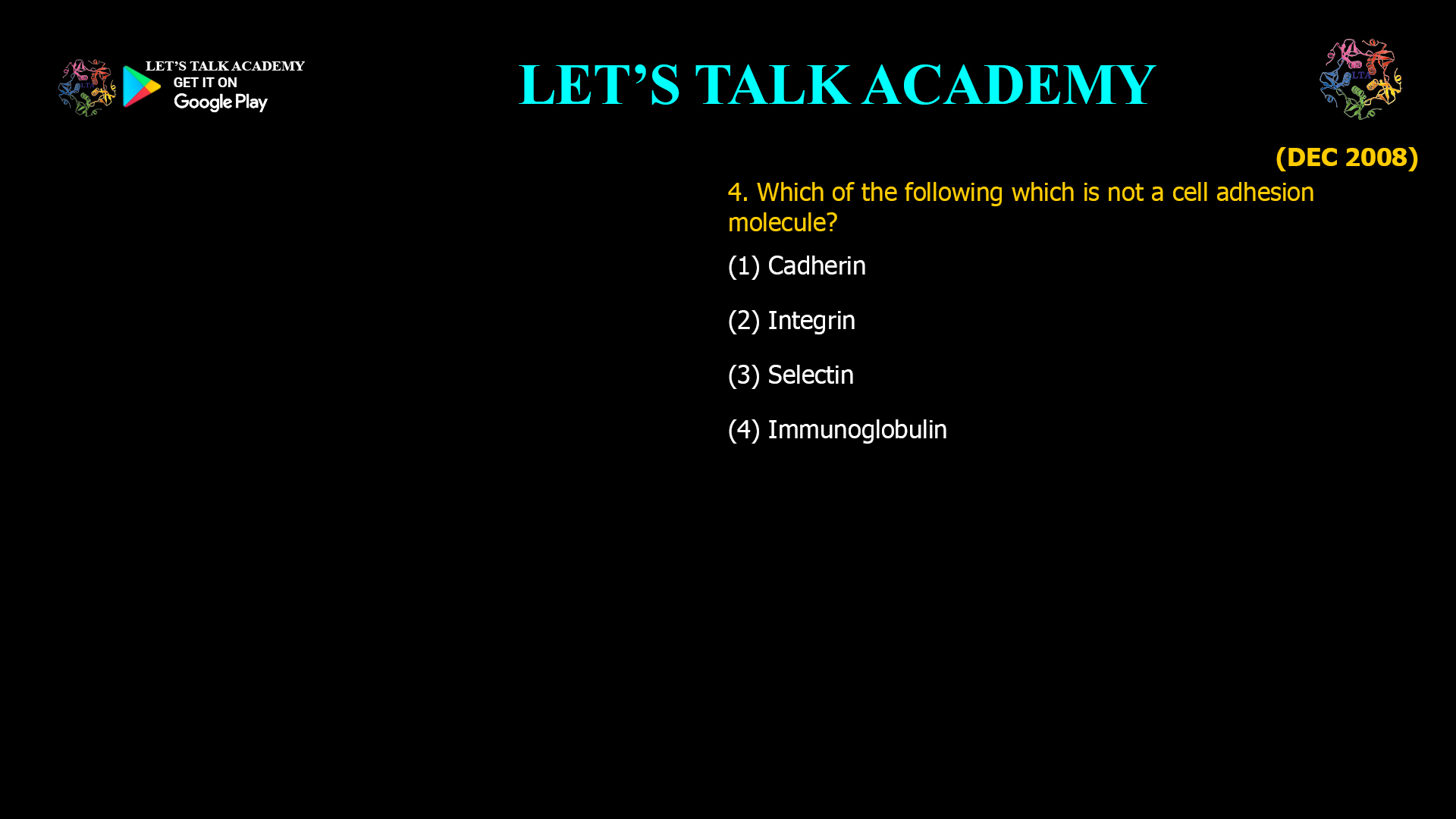
Which of the following which is not a cell adhesion molecule? (1) Cadherin (2) Integrin (3) Selectin                                            (4) Immunoglobulin 

Which Is Not a Cell Adhesion Molecule? Integrins, Cadherins, Selectins, and Immunoglobulin Explained

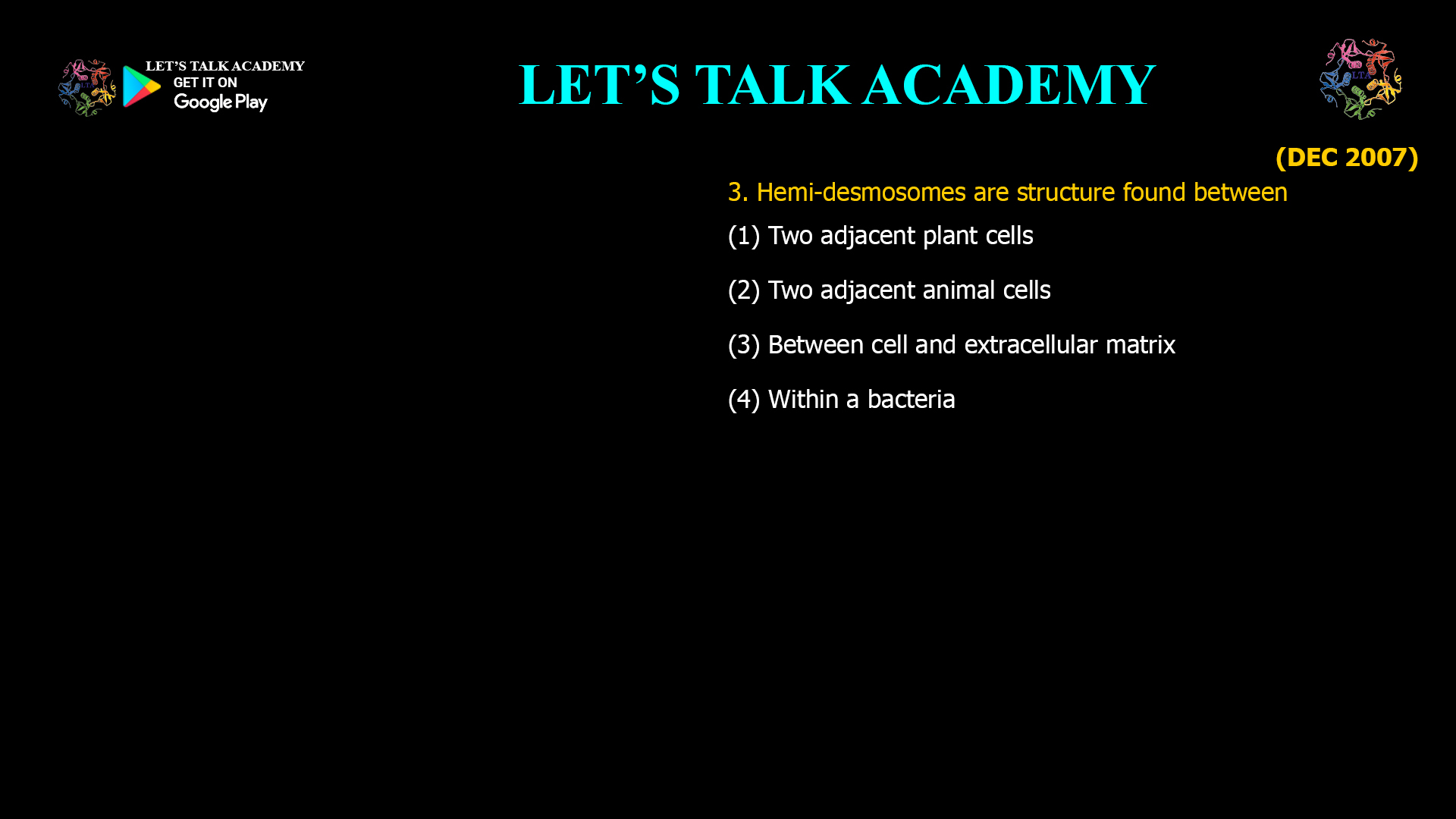
3. Hemi-desmosomes are structure found between (1) Two adjacent plant cells (2) Two adjacent animal cells (3) Between cell and extracellular matrix (4) Within a bacteria

Hemidesmosomes: Anchoring Cells to the Extracellular Matrix

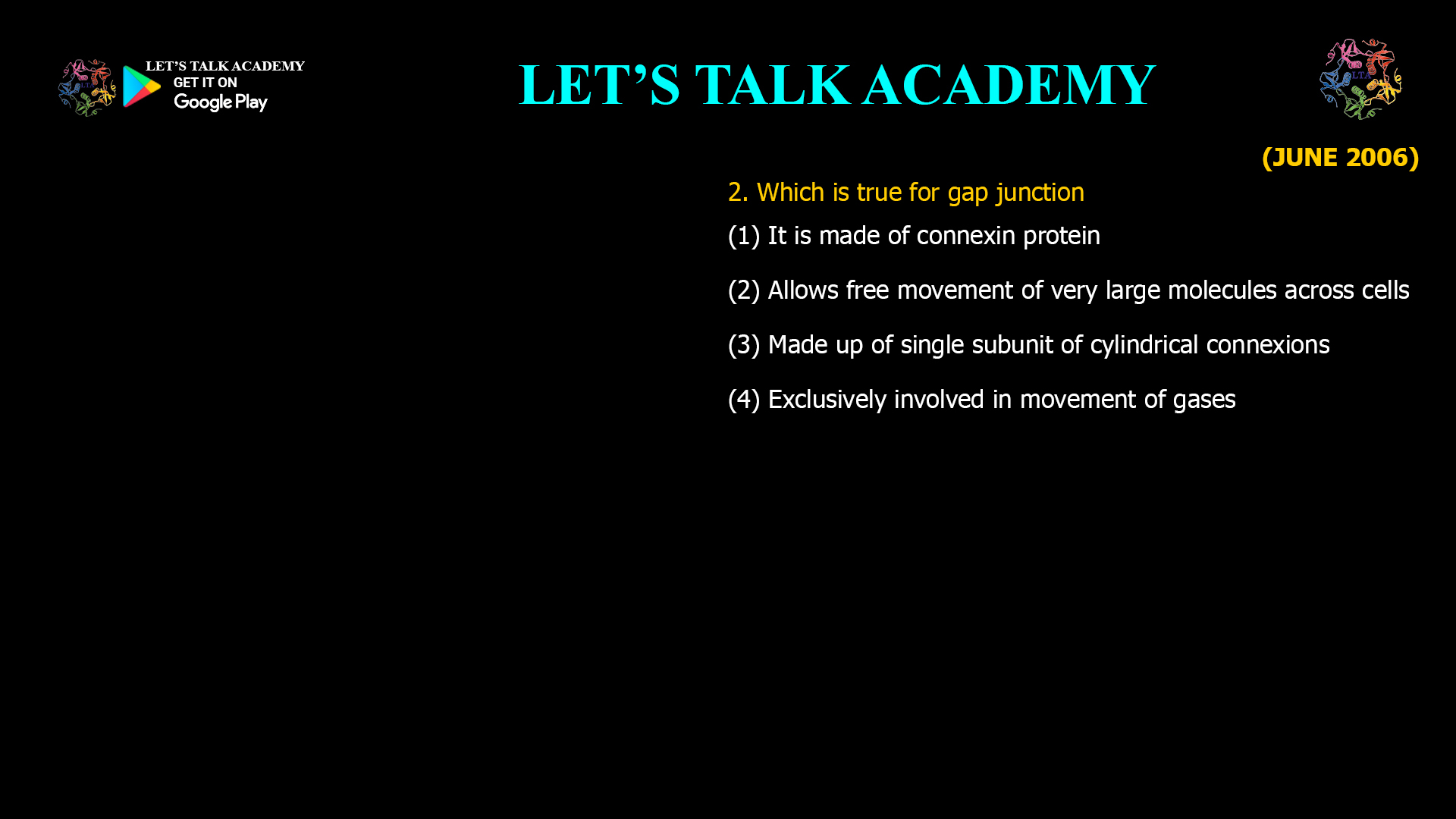
2.Which is true for gap junction (1) It is made of connexin protein (2) Allows free movement of very large molecules across cells (3) Made up of single subunit of cylindrical connexions (4) Exclusively involved in movement of gases

What Is True About Gap Junctions? Structure, Function, and Facts

1. The most abundant protein in human body is (1) Haemoglobin                                (2) Keratin (3) Collagen                                       (4) Globulin 

The Most Abundant Protein in the Human Body: Understanding Collagen and Its Importance

Latest Courses