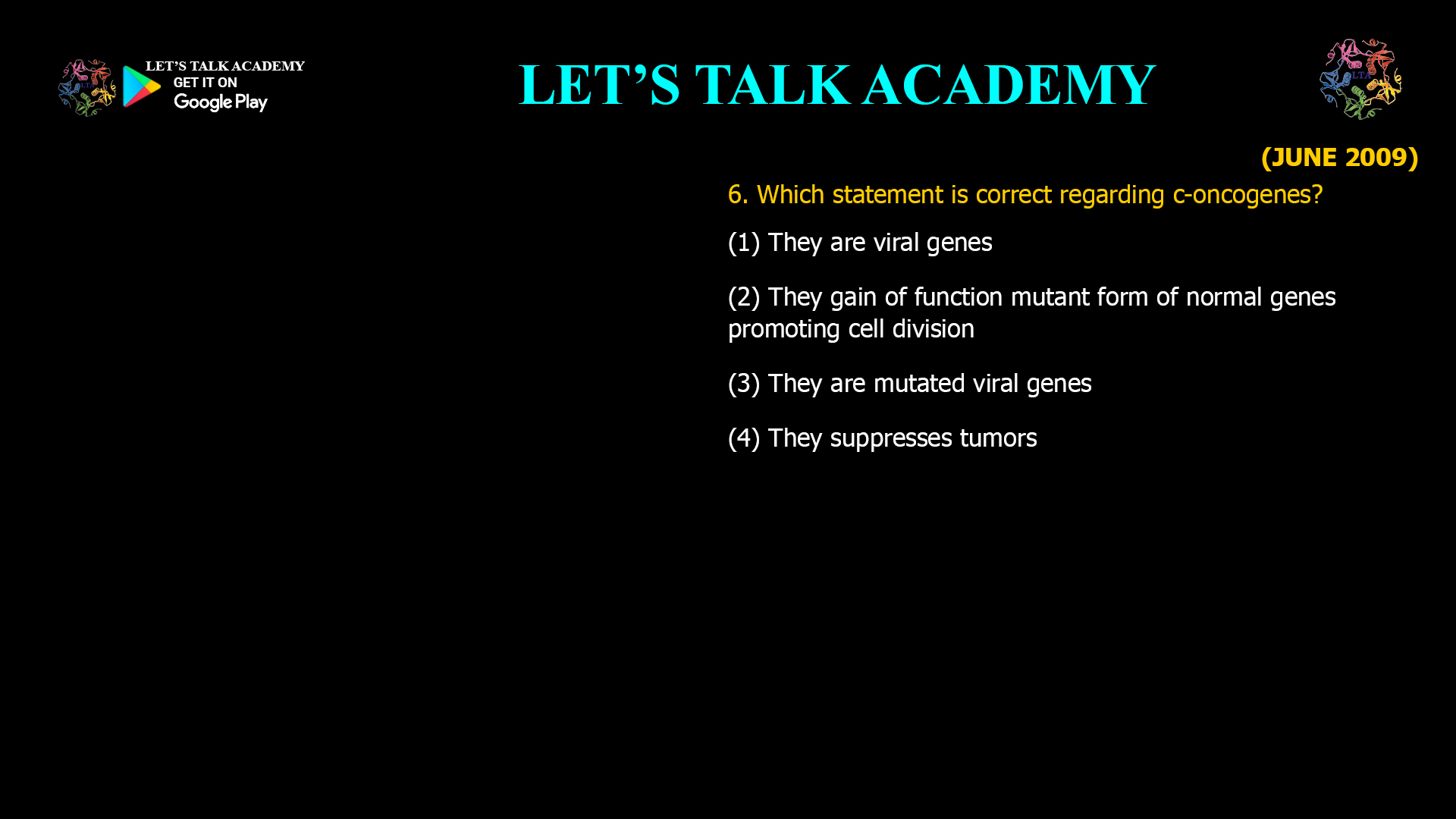
- Which statement is correct regarding c-oncogenes?
(1) They are viral genes
(2) They gain of function mutant form of normal genes promoting cell division
(3) They are mutated viral genes
(4) They suppresses tumors
Final Answer
The correct statement regarding c-oncogenes is:
(2) They are gain of function mutant forms of normal genes promoting cell division.
Explanation:
-
c-oncogenes are cellular proto-oncogenes—normal genes in the cell—that become oncogenes when mutated or abnormally expressed. These mutations result in gain of function, causing the gene product to promote uncontrolled cell growth and division, a hallmark of cancer.
-
They are not viral genes themselves (Option 1), but many oncogenes were first identified in viruses (called v-oncogenes). c-oncogenes are the normal cellular counterparts of these viral oncogenes.
-
They are not mutated viral genes (Option 3); rather, they are normal cellular genes that can mutate to a cancer-promoting form.
-
c-oncogenes do not suppress tumors (Option 4). Tumor suppressor genes perform the function of restraining cell proliferation or promoting apoptosis. Loss of tumor suppressor gene function contributes to cancer but is distinct from oncogene activation.
Summary
c-oncogenes are normal genes involved in regulating cell growth and division. When these genes undergo gain-of-function mutations, they become oncogenes that drive excessive cell proliferation, leading to cancer. Understanding c-oncogenes helps researchers develop targeted therapies for cancer treatment.


7 Comments
Kirti Agarwal
October 27, 2025C- oncogenes are normal genes involved in regulating cell division
Shubhi Gargg
November 1, 2025Option 2 is right.
Abhishek Nirwan
November 5, 2025option 2 correct
Kajal
November 6, 2025Option 2
Sonal Nagar
November 9, 2025They gain of function mutant form of normal genes promoting cell division
Santosh Saini
November 12, 2025They are gain of function mutant form of normal genes promoting cell division.
Sakshi Kanwar
November 17, 2025They gain of function mutant form of normal genes promoting cell division