Self-cross between Aa results in AA, Aa & aa F1 progenies, the force of evolution preserving either AA or aa is- (1) Stabilizing selection (2) Cyclic (3) Disruptive (4) Directional 

 Disruptive Selection: The Evolutionary Force Favoring Extremes Over Intermediates

The morphological modification is transferred to nextgeneration without any present application which mayprove beneficial in changed environment is termed as (1) Exadaptation (2) Pre-adaptation (3) Analogous (4) Paralogous 

Understanding Pre-adaptation: How Morphological Modifications Shape Evolutionary Success

Which one of the following statements regarding 'Endosymbiotic hypothesis of origin of eukaryotes' is INCORRECT? (1) Mitochondria arose from an α-proteobacterium and plastids arose from cyanobacteria. (2) The event of engulfment of a photosynthetic cyanobacterium by a host cell was primitive to engulfment of an α- proteobacterium during the eukaryotic origin. (3) Protists chlorarachniophytes, likely evolved when a heterotrophic eukaryote engulfed green alga, exemplifying secondary endo-symbiosis. (4) One of the membranes of the engulfed double- membraned cyanobacteria was lost in some of the hosts that eventually led to red and green algae descendants. 

Endosymbiotic Hypothesis: Which Statement About the Origin of Eukaryotes Is Incorrect?

Among the following events in history of life a. prokaryotic cell b. eukaryotic cell c. natural selection d. organic molecules e. self replicating molecule Which is the correct chronological order? (1) d→e→c→a→b (2) d→e→a→b→c (3) e→d→a→c→b (4) d→e→a→c→b 

Chronological Order of Key Events in the History of Life: From Molecules to Cells

Recent studies on Archaea suggest that life could haveoriginated (1) extra terrestrially and seeded through meteoriteimpacts. (2) in shallow coastal areas. (3) in deep hydrothermal vents. (4) in hot, terrestrial habitats. 

Where Did Life Originate? Recent Studies on Archaea Point to Deep Hydrothermal Vents

You wanted to conduct Miller-Urey experiment and used a simplified apparatus with Tungsten electrodes. You heated the glassware at 5000C for 3 hours to remove any organic contaminants. Gases NH3, CH4, CO and H2were introduced followed by generating electric spark. Which of the essential ingredients did you forget to add? (1) O2 (2) H2O (3) HCN (4) CHO 

What Was Missing? The Essential Ingredient Forgotten in a Miller-Urey Experiment Replication

The first living beings on earth were anaerobic because (1) There was no oxygen in air (2) oxygen damages proteins (3) oxygen interferes with the action of ribozymes (4) they evolved in deep sea 

Why Were the First Living Beings on Earth Anaerobic? The Role of Oxygen and Early Atmosphere

Complex eukaryotic cells may have evolved fromsimpler prokaryotic cells because complexity oforganization increases the (1) growth rate (2) efficiency of energy utilization (3) tolerance to starvation (4) Ability to attain large size 

Why Did Complex Eukaryotic Cells Evolve? The Role of Energy Efficiency and Cellular Organization

During the early origin of earth oxygen was absent in environment. Later on the oxygen increased and reached to present level. The main source of oxygen was (1) Photosynthesis (2) Released from CaCO3 (3) Escape of CO2to environment (4) Escape of oxygen from internal sources 

The Main Source of Earth’s Oxygen: How Photosynthesis Transformed the Planet’s Atmosphere

To explain origin of life the first biomolecule generated under lab condition were (1) Amino acids (2) Nucleic acids (3) Carbohydrates (4) Lipids

Amino Acids: The First Biomolecules Synthesized in the Lab to Explain the Origin of Life

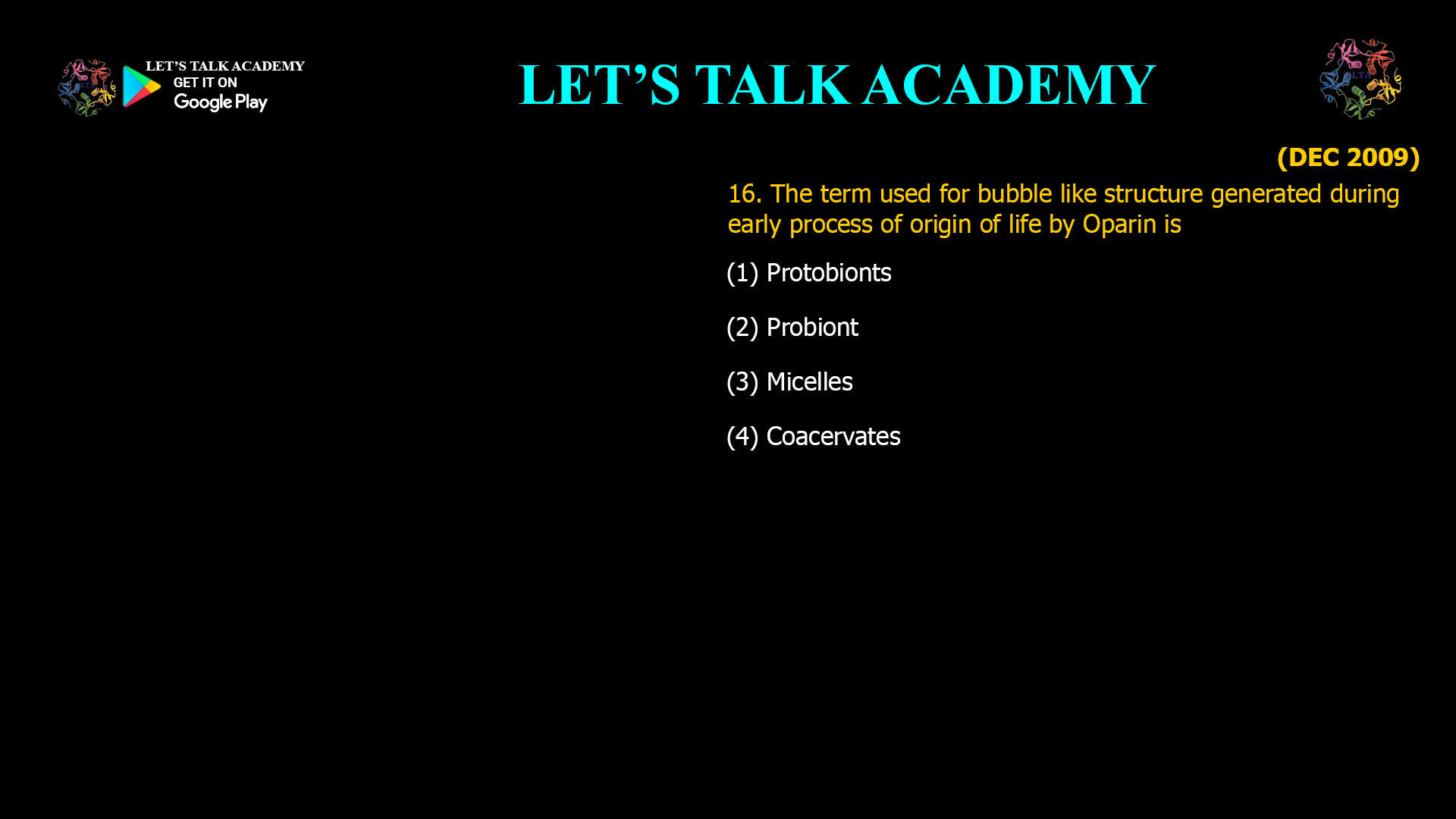
The term used for bubble like structure generatedduring early process of origin of life by Oparin is (1) Protobionts (2) Probiont (3) Micelles (4) Coacervates 

Coacervates: The Bubble-Like Structures Central to Oparin’s Theory of Life’s Origin

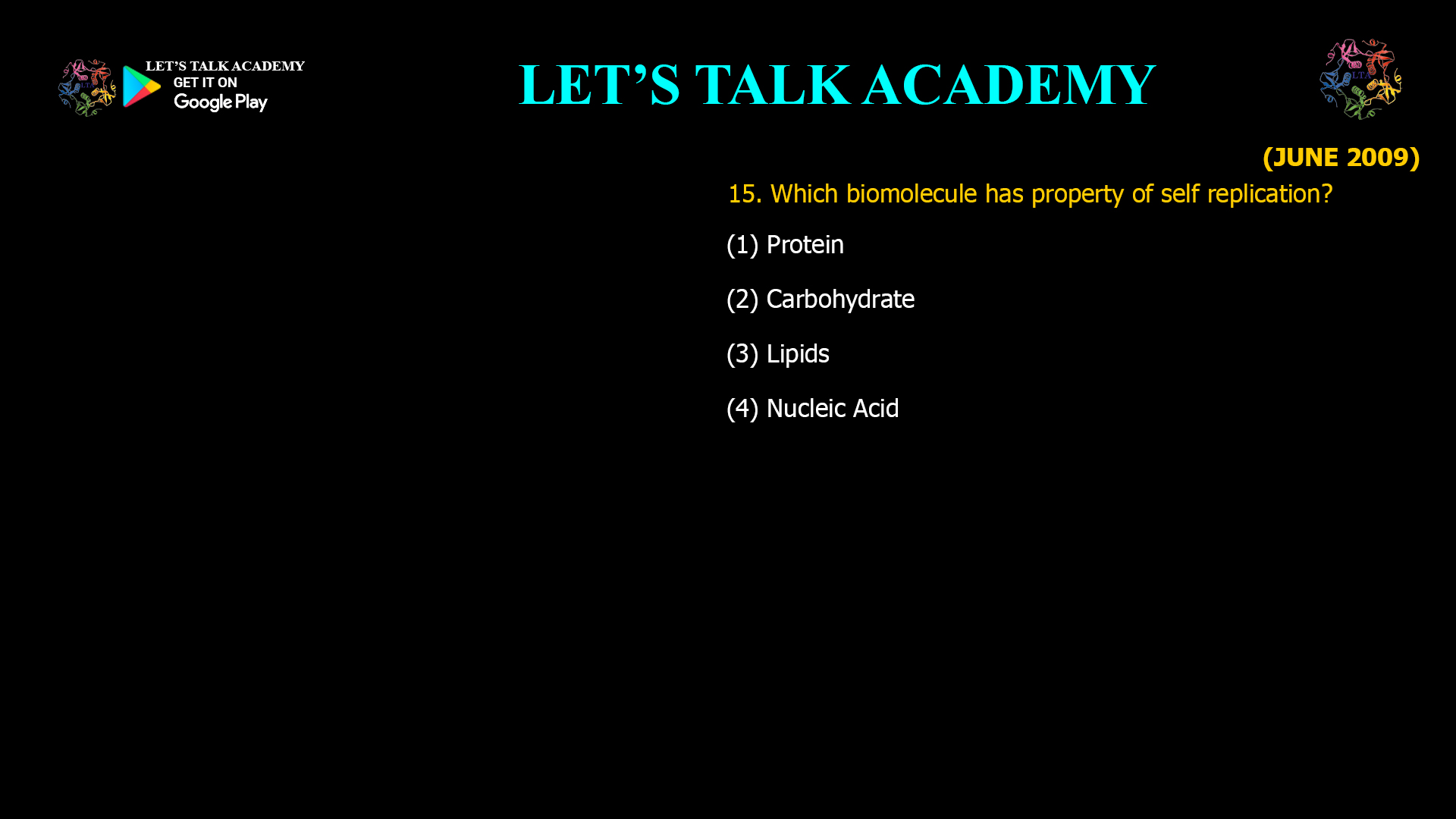
Which biomolecule has property of self replication? (1) Protein (2) Carbohydrate (3) Lipids (4) Nucleic Acid

Which Biomolecule Can Self-Replicate? Exploring the Unique Property of Nucleic Acids

The most probable place where life would have originated (1) Outer space (2) Barren rocks (3) In oceans (4) Deep hydrothermal vents

Where Did Life Begin? Exploring the Most Probable Place for the Origin of Life on Earth

Gases used by Urey and Miller for experimentation support to Oparin and Haldane hypothesis for origin of life was (1) Hydrogen, methane and Ammonia (2) Hydrogen, methane and CO2 (3) Hydrogen, Ammonia, methane and CO2 (4) Hydrogen, Carboxylic acid and Amino acids 

The Gases Used by Urey and Miller: Supporting Oparin and Haldane’s Hypothesis on the Origin of Life

Chemolithotroph obtain their carbon from CO2andenergy from (1) Sunlight (2) Water (3) Inorganic compounds (4) Organic compounds 

How Chemolithotrophs Thrive: Obtaining Carbon and Energy from the Inorganic World

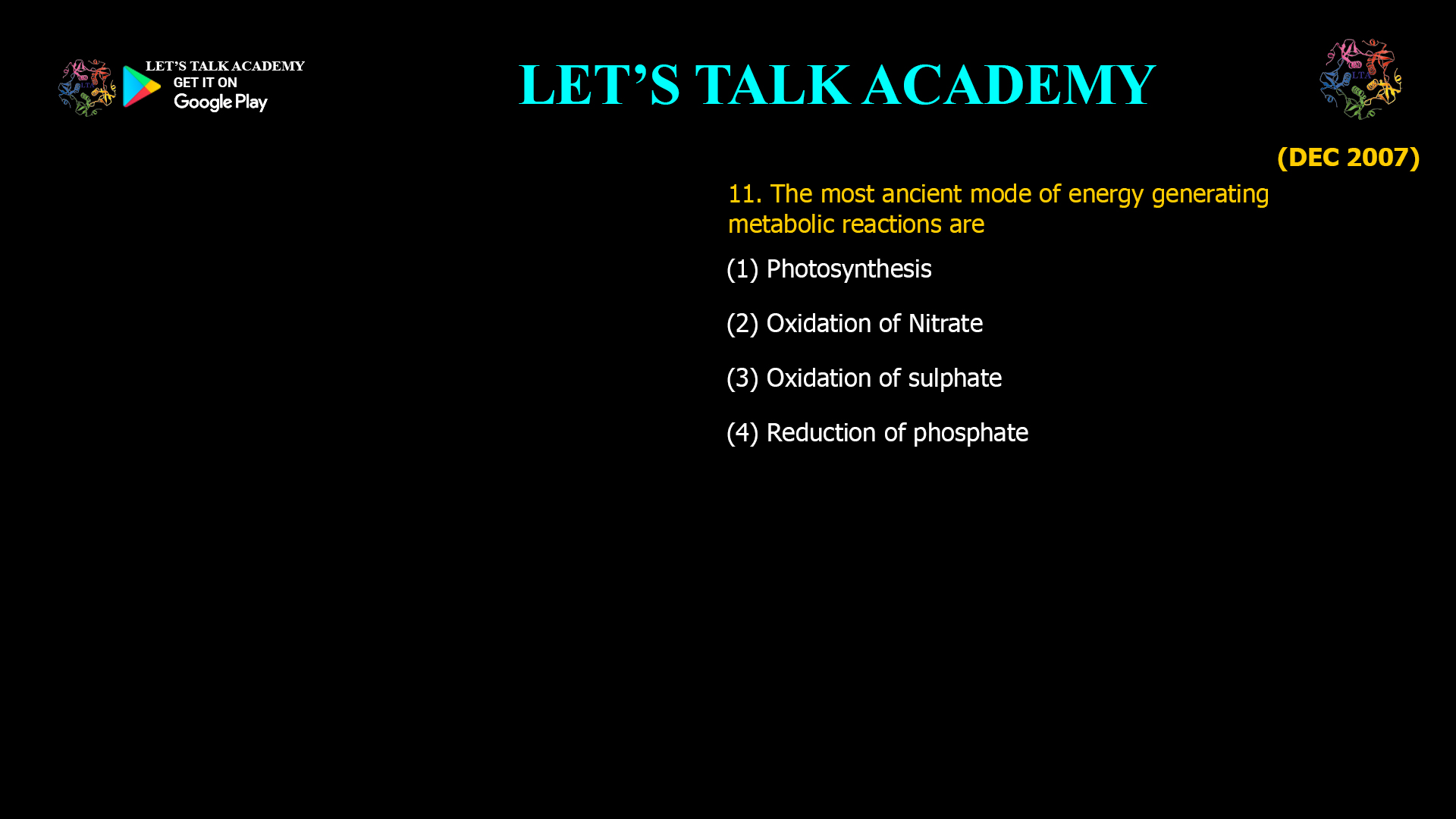
The most ancient mode of energy generating metabolic reactions are (1) Photosynthesis (2) Oxidation of Nitrate (3) Oxidation of sulphate (4) Reduction of phosphate

Unraveling the Most Ancient Mode of Energy-Generating Metabolic Reactions: From Primitive Earth to Modern Life

Prebiotic environment was different from present environment and was devoid of (1) CO2 (2) atmosphere (3) O2 (4) N2 

How the Prebiotic Environment Differed: Why Free Oxygen Was Absent in Earth’s Earliest Atmosphere

Source of energy for Urey and Miller experiment was (1) Electric spark (2) UV (3) Glycine (4) ATP 

Unraveling the Miller-Urey Experiment: The Role of Electric Spark as the Energy Source for Simulating Life’s Origins

Among the following which gas was totally absent during period of primitive origin of life (1) Oxygen (2) Hydrogen (3) Methane (4) Ammonia 

Which Gas Was Absent During the Primitive Origin of Life? Exploring Earth’s Early Atmosphere

According to the present understanding and evidences the most probable site for origin of life was (1) at deep sea hydrothermal vents (2) In open oceans (3) on different planet (4) On terrestrial surface 

Where Did Life Begin? Exploring the Most Probable Site for the Origin of Life on Earth

Among the following most primitive eukaryotes are- (1) Fungi (2) Diatoms (3) Archeozoa (4) Tricomonads 

Identifying the Most Primitive Eukaryotes: Exploring the Earliest Branches of Complex Life

First organism evolved on earth were- (1) aerobic chemoheterotrophs (2) anaerobic chemoheterotrophs (3) aerobic autotrophs (4) anaerobic autotrophs 

What Were the First Organisms on Earth? Decoding the Origins of Life and the Earliest Life Forms

The strongest evidence which suggest that RNA was ancient then DNA (1) RNA can act as template for DNA synthesis (2) RNA can work as catalyst (3) RNA is single stranded (4) RNA is genetic material in certain viruses

Why RNA Preceded DNA: Decoding the Evidence for the Ancient RNA World

Origin of life is not possible under present environmental conditions because- (1) Hydrogen is absent (2) Due to presence of oxygen (3) Lack of source of energy (4) Lack of material for origin 

Why Life Cannot Originate Today: The Role of Oxygen, Energy, and Materials in Earth’s Present Environment

The first oxygen evolving forms among the following were- (1) Anaerobic autotrophs (2) Cyanobacteria (3) Protists (4) Algae 

Which Were the First Oxygen-Evolving Life Forms? Unveiling the Role of Cyanobacteria in Earth’s History

In Present condition origin of life from inorganic molecules is not possible because of- (1) Absence of raw material (2) Presence of molecular oxygen (3) Low enthalpy (4) Presence of ozone layer 

Why Life Cannot Arise from Inorganic Molecules Today: The Role of Oxygen, Ozone, and Modern Earth Conditions

Latest Courses