10. The trait shown in the above pedigree is (1) X-linked recessive trait (2) Autosomal recessive trait (3) Y-linked trait (4) X-linked dominant trait The trait in the given pedigree […]

CSIR NET Life Science Previous Year Questions and Solution on HUMAN GENETICS
10. The trait shown in the above pedigree is (1) X-linked recessive trait (2) Autosomal recessive trait (3) Y-linked trait (4) X-linked dominant trait The trait in the given pedigree […]

9. The inheritance of a given disorder is recorded in three small families shown below: Based on the above limited information, which one of the following inheritance pattern best explain […]

8. The following the inheritance pattern of a trait under observation: (i) The trait often skips a generation (ii) The number of affected males and females is almost equal (iii) […]
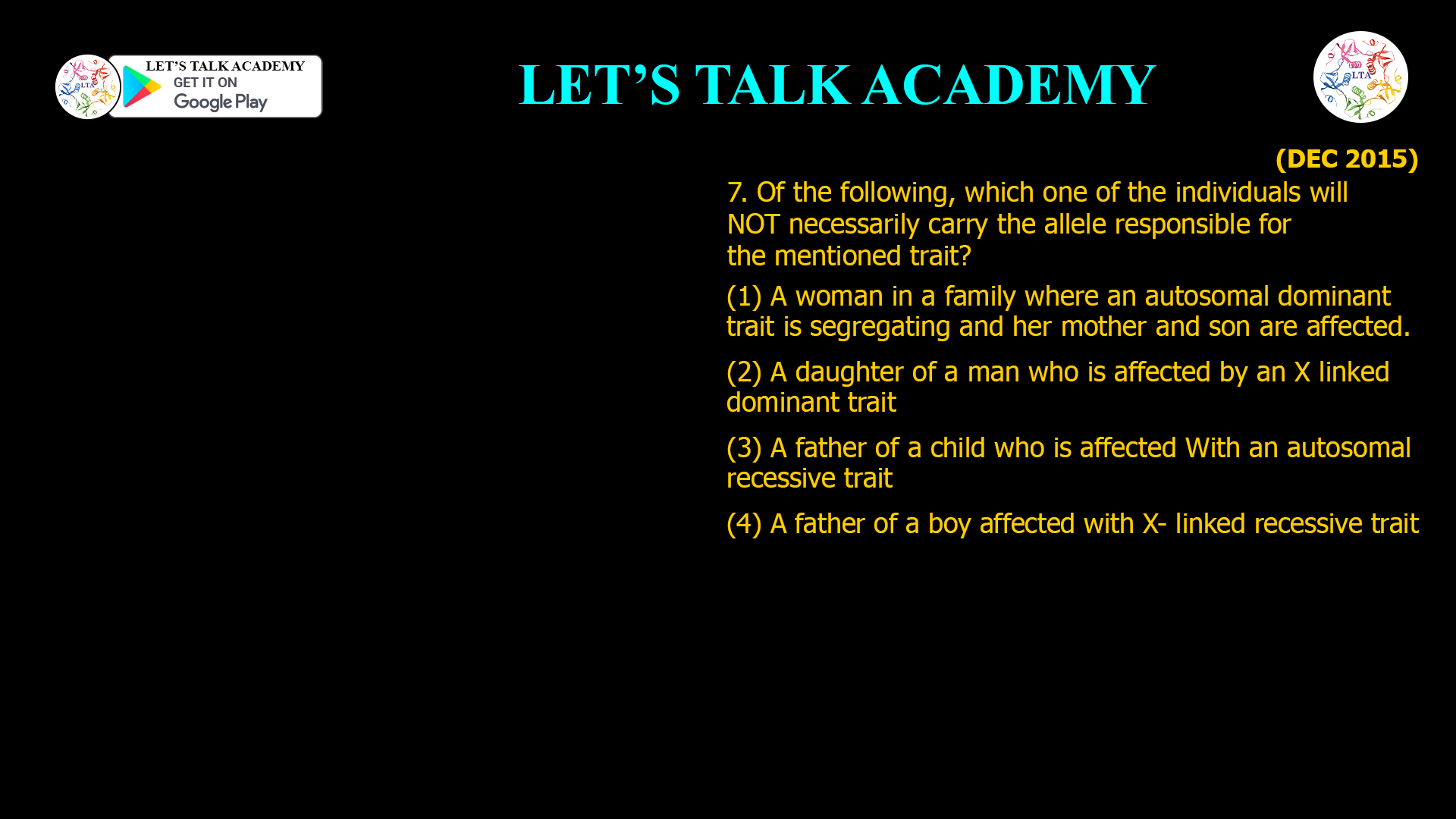
7. Of the following, which one of the individuals will NOT necessarily carry the allele responsible for the mentioned trait? (1) A woman in a family where an autosomal dominant […]

6. The following pedigree represents the inheritance of a rare disorder. Based on the above pedigree. what is the most likely mode of inheritance? (1) Autosomal dominant (2) X-linked recessive […]

5. Given below is a pedigree a pattern of inheritance: The following statements are drawn from the above pedigree towards understanding the pattern of inheritance. A. An affected male does […]

4. Given below is a pedigree indicating a pattern of inheritance: Which one of the following options correctly describes the pattern of inheritance shown in the above pedigree? (1) X-linked […]

3. The following pedigree represents the inheritance of a rare disorder. Based on the above pedigree, what is the most likely mode of inheritance? (1) Autosomal Dominant (2) X-linked recessive […]

2. Consider the following pedigree chart (1) X-linked recessive (2) X-linked dominant (3) Sex limited recessive (4) Autosomal dominant The pedigree chart is most consistent with an X‑linked recessive mode of inheritance, […]

1. The following pedigree tree represents (1) Autosomal Dominant (2) Autosomal Recessive (3) X-linked Dominant (4) X-linked Recessive Introduction Pedigree analysis questions are common in CSIR NET and other life‑science […]


