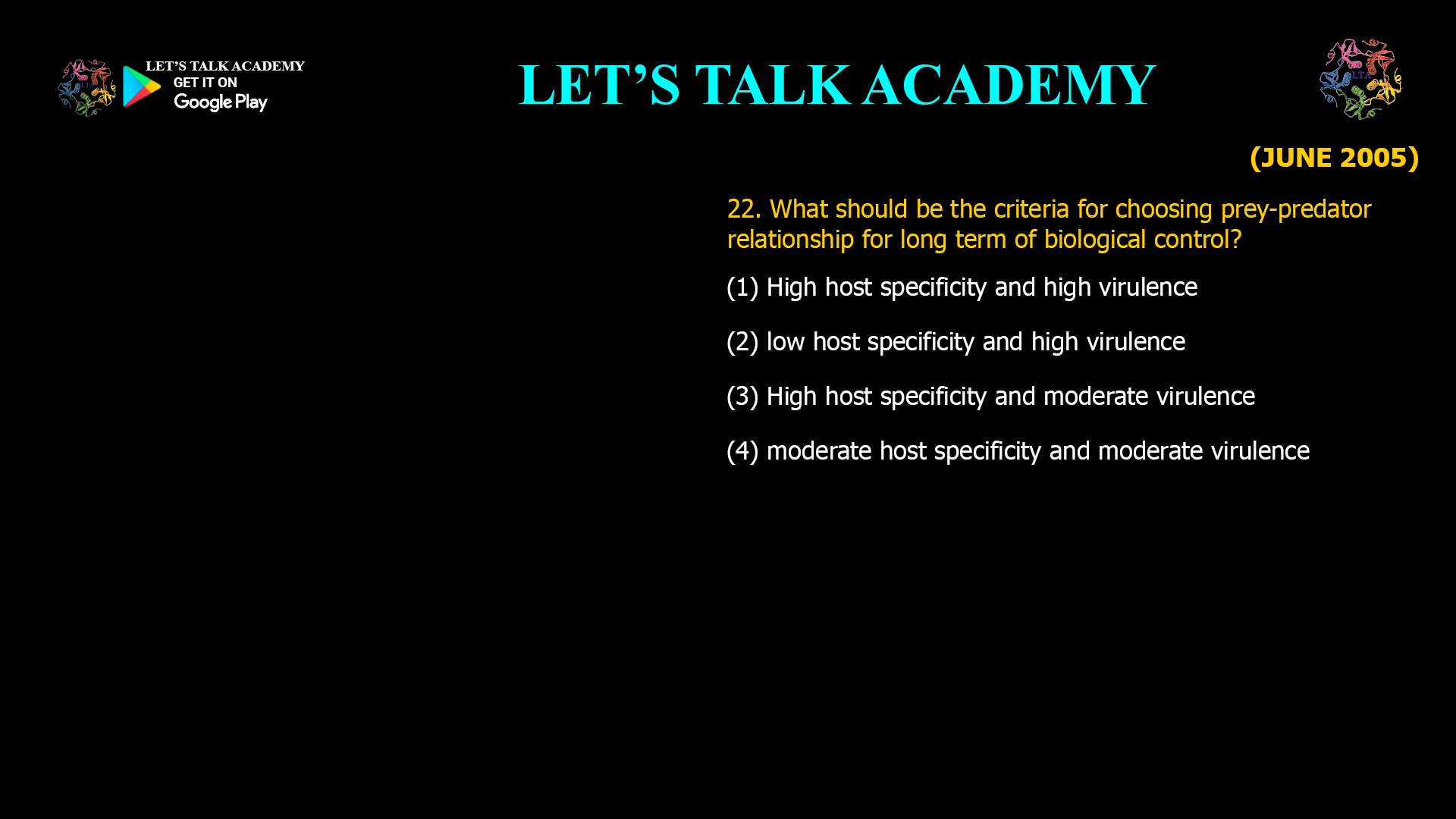
- What should be the criteria for choosing prey-predator relationship for long term of biological control?
(1) High host specificity and high virulence
(2) low host specificity and high virulence
(3) High host specificity and moderate virulence
(4) moderate host specificity and moderate virulence
The Importance of Host Specificity and Virulence
Two key characteristics determine the suitability of a predator or parasite for long-term biological control:
-
Host specificity: The degree to which a predator or parasite targets only the intended pest species.
-
Virulence: The ability of the predator or parasite to suppress or kill the pest population.
1. High Host Specificity
High host specificity is crucial for minimizing unintended ecological consequences. A highly specific predator or parasite will primarily target the pest species, reducing the risk of harming non-target organisms, including beneficial insects, native species, and crops. This specificity ensures that the biological control agent does not disrupt the broader ecosystem or become an invasive problem itself.
2. Moderate Virulence
While it might seem that the most effective control agents are those with the highest virulence, excessively high virulence can actually destabilize the system. If a predator or parasite is too effective, it may drive the pest population to extinction, leading to its own decline due to lack of food or hosts. This can result in boom-and-bust cycles, where both predator and prey populations crash, undermining long-term control. Moderate virulence allows for sustained pest suppression without eliminating the pest entirely, maintaining a stable predator-prey dynamic over time.
Why Not Low Specificity or High Virulence?
-
Low host specificity increases the risk of non-target effects, potentially harming other species and causing ecological imbalance.
-
High virulence may cause rapid pest eradication, but often leads to instability and the eventual collapse of both pest and predator populations, requiring repeated interventions.
Supporting Insights from Research
Scientific models and field studies consistently recommend high host specificity and moderate virulence as the optimal combination for sustainable biological control. This approach ensures that the control agent remains focused on the pest, while maintaining a stable population dynamic that prevents pest resurgence or ecological disruption26.
Evaluating the Options
Given the choices:
-
High host specificity and high virulence
-
Low host specificity and high virulence
-
High host specificity and moderate virulence
-
Moderate host specificity and moderate virulence
The best answer is:
(3) High host specificity and moderate virulence
This combination maximizes the effectiveness of pest suppression while minimizing ecological risks and promoting long-term stability in the ecosystem.
Conclusion
For long-term biological control, the ideal prey-predator relationship is characterized by high host specificity and moderate virulence. This ensures targeted, effective, and sustainable pest management, protecting both agricultural productivity and ecological health.


4 Comments
Manisha choudhary
November 8, 2025Prey-predator relationship= high host specific ( uski maa bta k jaa rhi h use ki kya khana h 😅)
Low virulence
Manisha choudhary
November 8, 2025Sorry glt type ho gya high host specific and moderate virulence
Kajal
November 9, 2025Option 3
Sakshi Kanwar
November 27, 2025High host specificity and moderate virulence