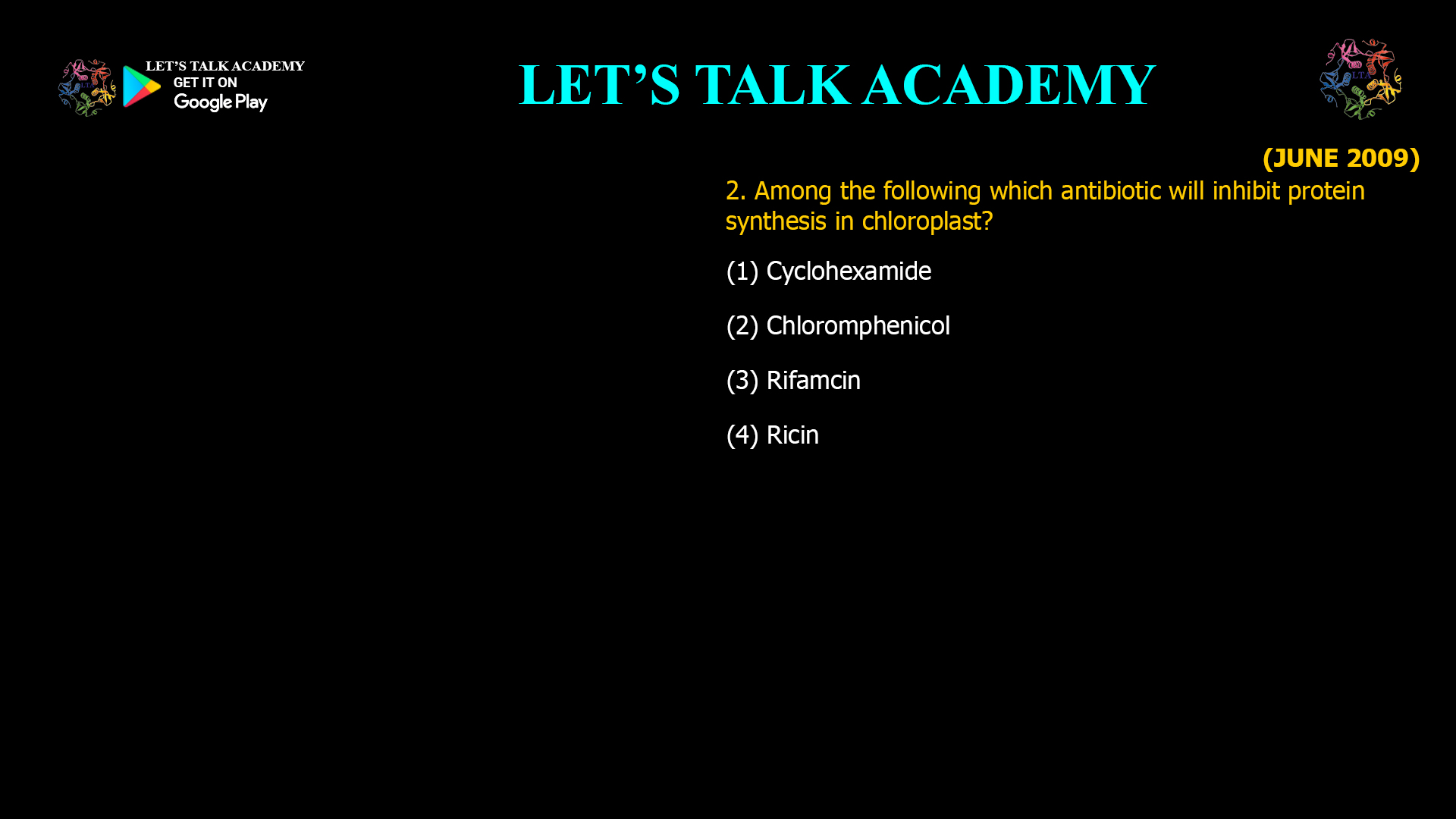
2. Among the following which antibiotic will inhibit protein synthesis in chloroplast?
(1) Cyclohexamide
(2) Chloromphenicol
(3) Rifamcin
(4) Ricin
Chloroplasts, the green energy factories of plant cells, are unique organelles responsible for photosynthesis. They possess their own DNA and ribosomes, which closely resemble those found in prokaryotes (bacteria). This similarity explains why certain antibiotics, originally developed to target bacteria, can also affect chloroplast function. Understanding which antibiotics inhibit protein synthesis in chloroplasts is crucial for plant research, biotechnology, and even agriculture.
Chloroplasts and Protein Synthesis
Chloroplasts synthesize many of their own proteins using ribosomes that are structurally and functionally similar to those of bacteria. This means that antibiotics targeting bacterial protein synthesis may also impact chloroplasts. In contrast, the cytoplasmic ribosomes of eukaryotic cells (including plants) are different and respond to a separate set of inhibitors.
The Antibiotics in Question
Let’s examine the four antibiotics listed in the question:
-
Cycloheximide: This compound is a well-known inhibitor of cytoplasmic (eukaryotic) protein synthesis. Studies show that cycloheximide does not inhibit protein synthesis in chloroplasts, but rather in the cytoplasm of plant cells12458. In fact, researchers often use cycloheximide to block cytoplasmic protein synthesis so they can specifically study protein synthesis in chloroplasts4.
-
Chloramphenicol: This antibiotic targets the 70S ribosomes found in bacteria and chloroplasts, inhibiting their protein synthesis machinery. Chloramphenicol binds to the 50S subunit of the ribosome, blocking peptide bond formation. Because chloroplast ribosomes are similar to bacterial ribosomes, chloramphenicol effectively inhibits protein synthesis in chloroplasts6.
-
Rifampicin: This antibiotic inhibits DNA-dependent RNA polymerase in bacteria, blocking transcription rather than translation. It does not specifically inhibit protein synthesis in chloroplasts.
-
Ricin: Ricin is a potent plant toxin that inactivates ribosomes in all eukaryotic cells by depurinating a specific adenine residue in the 28S rRNA. It is not used as an antibiotic and is not specific to chloroplasts.
Experimental Evidence
Researchers have long used chloramphenicol to study chloroplast protein synthesis. When plant cells are treated with chloramphenicol, the synthesis of chloroplast-encoded proteins is inhibited, while nuclear-encoded proteins (synthesized in the cytoplasm) are unaffected. In contrast, cycloheximide is used to inhibit cytoplasmic protein synthesis, leaving chloroplast protein synthesis intact46.
Why Does Chloramphenicol Work on Chloroplasts?
The evolutionary origin of chloroplasts explains their sensitivity to chloramphenicol. Chloroplasts are believed to have evolved from ancient cyanobacteria through endosymbiosis. Their ribosomes have retained the prokaryotic structure, making them susceptible to antibiotics like chloramphenicol that target bacterial ribosomes.
Summary Table: Antibiotics and Chloroplast Protein Synthesis
| Antibiotic | Inhibits Chloroplast Protein Synthesis? | Target/Mechanism |
|---|---|---|
| Cycloheximide | No | Eukaryotic cytoplasmic ribosomes |
| Chloramphenicol | Yes | Bacterial/chloroplast ribosomes |
| Rifampicin | No | Bacterial RNA polymerase |
| Ricin | No (not specific) | All eukaryotic ribosomes (toxin) |
Correct Answer
(2) Chloramphenicol
Chloramphenicol is the antibiotic that inhibits protein synthesis in chloroplasts by targeting their prokaryotic-type ribosomes


6 Comments
Sakshi yadav
November 3, 2025Chloromphenicol( prokaryotes inhibitor ) and it’s for the bacteriostatic antibiotics it’s inhibit the protein synthesis in chloroplast
Santosh Saini
November 3, 2025Chloramphenicol
Sonal Nagar
November 4, 2025Option 2nd
Sakshi Kanwar
November 7, 2025Chloromphenicol inhibit protein synthesis in chloroplast
Muskan Yadav
November 7, 2025Chloramphenicol is the antibiotic that inhibits protein synthesis in chloroplasts by targeting their prokaryotic-type ribosomes.
Divya rani
November 8, 2025Chloramphenicol is the antibiotic that inhibits translation in chloroplast by targeting their prokaryotic type ribosome.