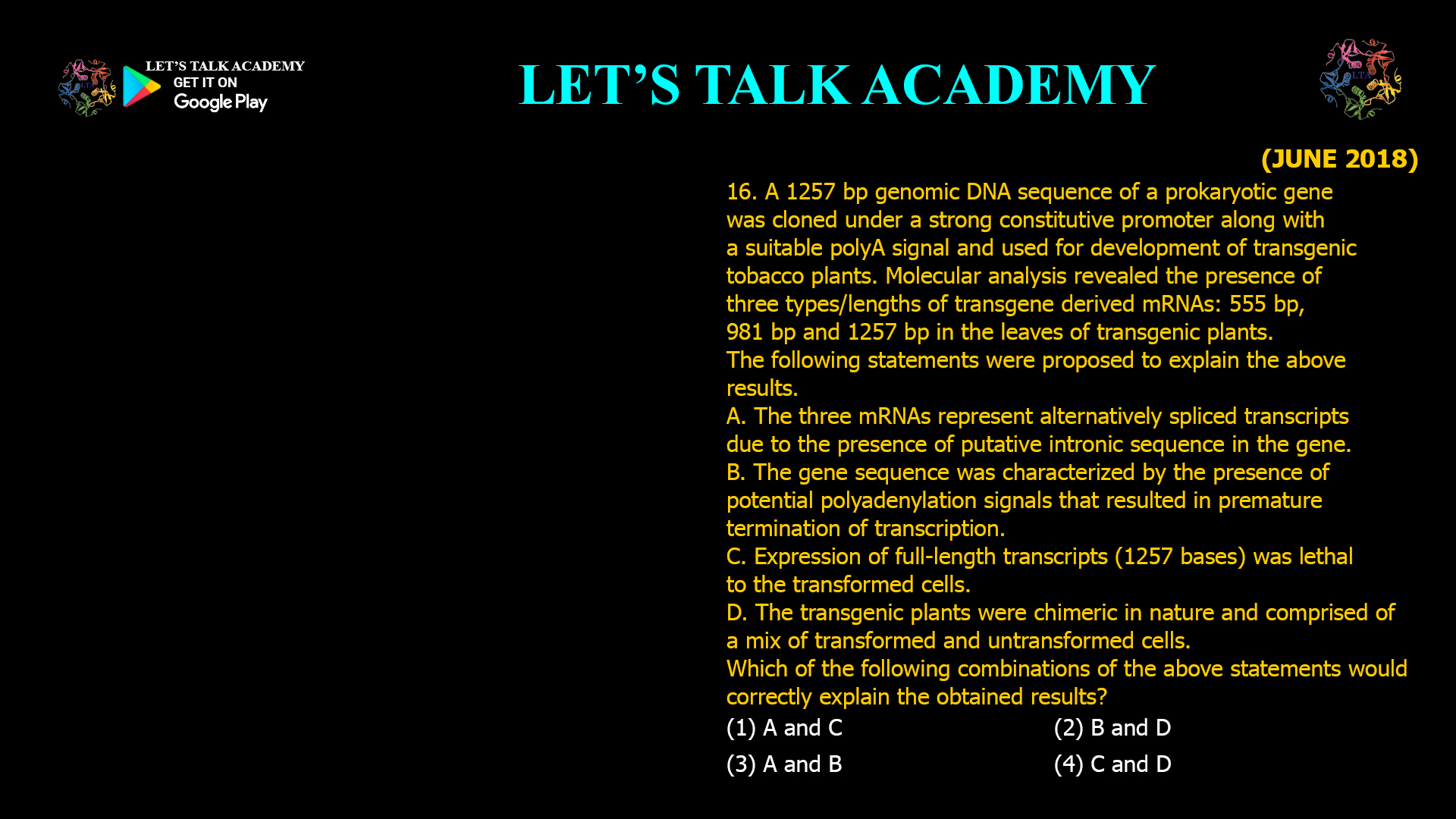
16. A 1257 bp genomic DNA sequence of a prokaryotic gene was cloned under a strong constitutive promoter along with a suitable polyA signal and used for development of transgenic tobacco plants. Molecular analysis revealed the presence of three types/lengths of transgene derived mRNAs: 555 bp, 981 bp and 1257 bp in the leaves of transgenic plants.
The following statements were proposed to explain the above results.
A. The three mRNAs represent alternatively spliced transcripts due to the presence of putative intronic sequence in the gene.
B. The gene sequence was characterized by the presence of potential polyadenylation signals that resulted in premature termination of transcription.
C. Expression of full-length transcripts (1257 bases) was lethal to the transformed cells.
D. The transgenic plants were chimeric in nature and comprised of a mix of transformed and untransformed cells.
Which of the following combinations of the above statements would correctly explain the obtained results?
(1) A and C (2) B and D
(3) A and B (4) C and D
Explanation of Multiple mRNA Sizes from a Prokaryotic Gene in Transgenic Tobacco Plants
When a 1257 bp prokaryotic gene is cloned into tobacco plants under a strong constitutive promoter with a polyadenylation signal, molecular analysis sometimes reveals multiple mRNA transcripts of different lengths—in this case, 555 bp, 981 bp, and 1257 bp. This phenomenon requires careful interpretation, especially since prokaryotic genes typically lack introns and are not naturally processed by eukaryotic splicing machinery.
Possible Explanations for Multiple mRNA Lengths
-
Alternative Splicing (Statement A):
The presence of multiple mRNA sizes might suggest alternative splicing, which occurs when different introns are removed or retained, producing transcripts of varying lengths. However, since the gene is prokaryotic in origin, it usually lacks introns. But if the cloned sequence contains putative intronic sequences or cryptic splice sites, the eukaryotic splicing machinery might recognize and splice these, leading to alternatively spliced transcripts. -
Premature Transcription Termination Due to Polyadenylation Signals (Statement B):
The gene sequence may harbor cryptic or potential polyadenylation signals within the coding region. These signals can cause premature cleavage and polyadenylation, resulting in truncated transcripts of shorter lengths (555 bp and 981 bp) alongside the full-length 1257 bp transcript. -
Lethality of Full-Length Transcript (Statement C):
If the full-length transcript is toxic or lethal to the transformed cells, its expression might be suppressed or selected against. However, the presence of the full-length 1257 bp transcript in the analysis argues against this being the sole explanation. -
Chimeric Transgenic Plants (Statement D):
The plants may be chimeric, containing a mixture of transformed and untransformed cells, which could theoretically contribute to varying transcript profiles. However, this would not explain multiple transcript sizes from the same gene in transformed cells.
Correct Explanation Based on Evidence
-
The presence of multiple transcript sizes strongly supports the idea of alternative splicing due to putative intronic sequences (Statement A) and premature transcription termination caused by internal polyadenylation signals (Statement B). These two mechanisms can coexist, leading to a spectrum of mRNA lengths.
-
Statements C and D are less likely because the full-length transcript is detected, and chimerism does not explain transcript size variation within transformed cells.
Conclusion
The combination that best explains the observed multiple mRNA transcripts in transgenic tobacco plants expressing a prokaryotic gene is:
(3) A and B
Additional Context from Research
-
Prokaryotic genes introduced into eukaryotic systems sometimes contain sequences that mimic eukaryotic splicing signals, leading to unexpected alternative splicing.
-
Cryptic polyadenylation sites within the gene can cause premature termination and polyadenylation of transcripts, producing shorter mRNAs.
-
Overexpression of bacterial genes under strong constitutive promoters like CaMV35S can lead to aberrant expression patterns and transcript heterogeneity in plants.
This explanation highlights the complexity of expressing prokaryotic genes in eukaryotic hosts and the importance of considering eukaryotic RNA processing mechanisms when analyzing transgene expression patterns.


6 Comments
Suman bhakar
June 4, 2025👍👍
Manisha choudhary
November 4, 2025Alternative splicing and premature transcription termination due to polyadenylation
Soniya Shekhawat
June 4, 2025Straight forward question from our theory and notes , thank u Sir for this ….🙏
Lokesh Kumawat
June 9, 2025Done
Roopal Sharma
November 4, 2025A and B
Heena Mahlawat
November 4, 2025A and B