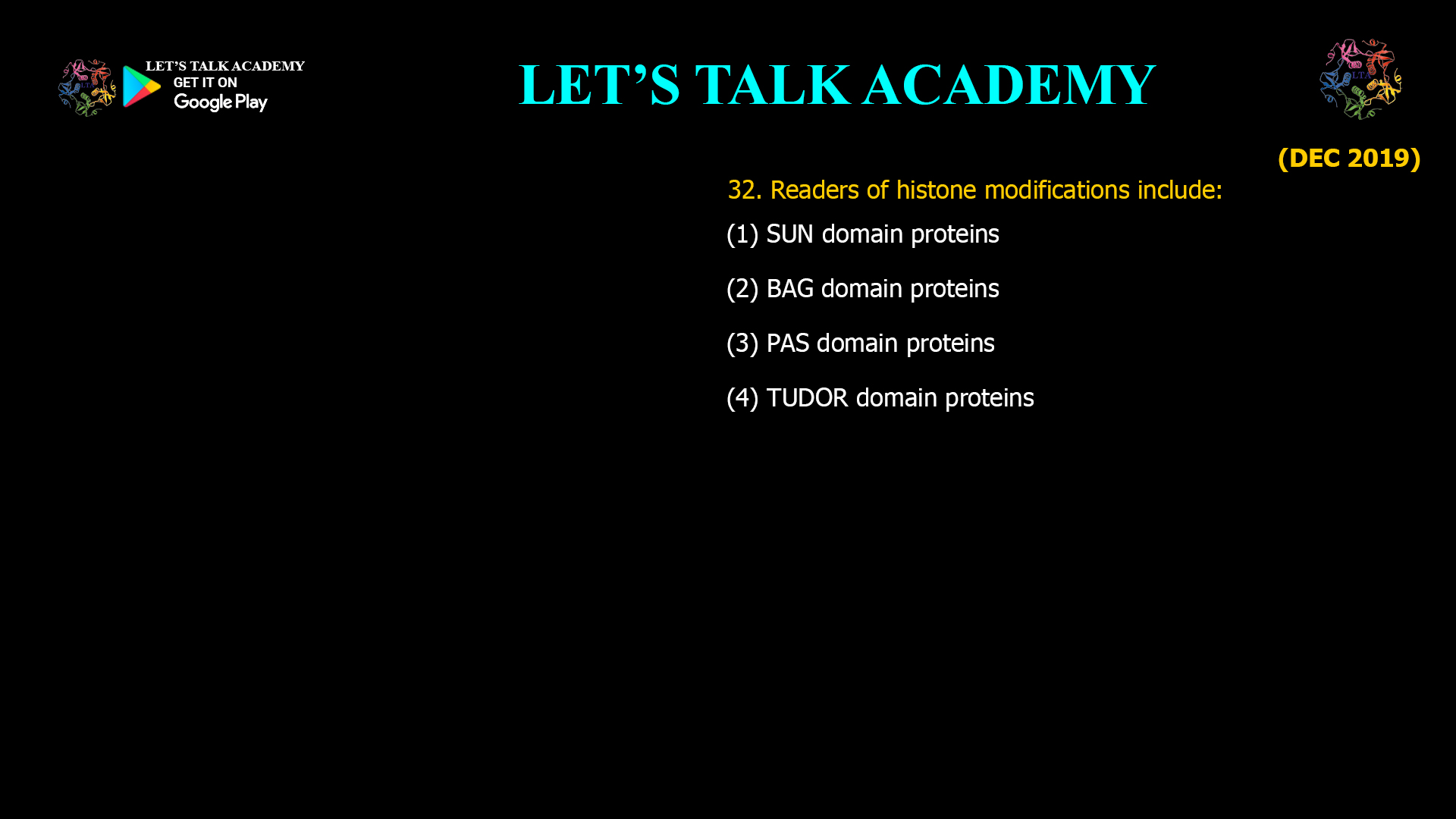
32. Readers of histone modifications include:
(1) SUN domain proteins
(2) BAG domain proteins
(3) PAS domain proteins
(4) TUDOR domain proteins
Introduction
Histone modifications are fundamental to the regulation of chromatin structure and gene expression. These post-translational modifications (PTMs) serve as signals that are interpreted by specialized protein domains known as “readers.” Among these, Tudor domain proteins have emerged as versatile and critical readers of histone methylation marks. This article explores the structure, function, and biological significance of Tudor domain proteins in recognizing histone modifications and orchestrating chromatin-based processes.
What Are Tudor Domain Proteins?
The Tudor domain is a conserved protein module approximately 60 amino acids in length that folds into a barrel-like structure. This domain specifically recognizes methylated lysine and arginine residues on histone tails, enabling proteins containing Tudor domains to bind selectively to modified chromatin regions.
Tudor domains belong to the broader “Royal family” of domains, which also includes chromo, MBT, and PWWP domains. These domains share the ability to interpret methylation marks on histones, a key component of the “histone code” hypothesis that links histone modifications to downstream biological outcomes.
Tudor Domains as Readers of Histone Methylation
Histone methylation, particularly on lysine residues such as H3K4, H3K9, and H3K36, plays a pivotal role in regulating transcription, DNA repair, and chromatin organization. Tudor domains recognize these methyl marks with high specificity:
-
Recognition of Methylated Lysines and Arginines: Tudor domains bind to mono-, di-, or tri-methylated lysines and arginines on histone tails, recruiting effector proteins to chromatin.
-
Multivalent Binding: Some proteins contain tandem Tudor domains or combine Tudor with other histone-binding domains (e.g., PHD fingers), allowing them to read multiple histone marks simultaneously, enhancing specificity and regulatory complexity.
-
Recruitment of Chromatin Modifiers: By binding methylated histones, Tudor domain-containing proteins recruit chromatin remodeling complexes, histone demethylases, or DNA methylation machinery, influencing gene expression and chromatin state.
Biological Functions of Tudor Domain Proteins
Gene Expression Regulation
Tudor domain proteins participate in both gene activation and repression by interpreting histone methylation patterns. For example, they can recruit transcriptional co-repressors or co-activators depending on the histone marks recognized, thereby fine-tuning gene expression programs.
DNA Damage Repair
The recruitment of DNA repair factors to sites of damage often involves Tudor domain proteins. By recognizing methylated histones near DNA breaks, these proteins help localize repair machinery, facilitating efficient and accurate DNA repair.
Epigenetic Inheritance
Tudor domains are involved in maintaining epigenetic marks through cell division. For instance, the tandem Tudor and PHD domains of UHRF1 recognize specific histone methylation patterns to help propagate DNA methylation patterns, ensuring stable gene silencing across generations.
Why Other Domains Are Not Histone Modification Readers
-
SUN Domain Proteins: Primarily involved in nuclear envelope structure and mechanotransduction, not known for reading histone modifications.
-
BAG Domain Proteins: Function mainly as co-chaperones regulating protein folding and apoptosis, unrelated to histone modification recognition.
-
PAS Domain Proteins: Typically serve as sensors for environmental stimuli and are not histone modification readers.
Conclusion
Tudor domain proteins are essential “readers” of histone methylation marks, translating the histone code into functional outcomes such as gene regulation, DNA repair, and epigenetic inheritance. Their ability to recognize specific methylated residues on histones and recruit downstream effectors underscores their critical role in chromatin biology and cellular homeostasis.
Answer:
The correct answer is (4) Tudor domain proteins.
This article highlights the importance of Tudor domains as specialized readers of histone modifications and their diverse roles in chromatin-related processes.


