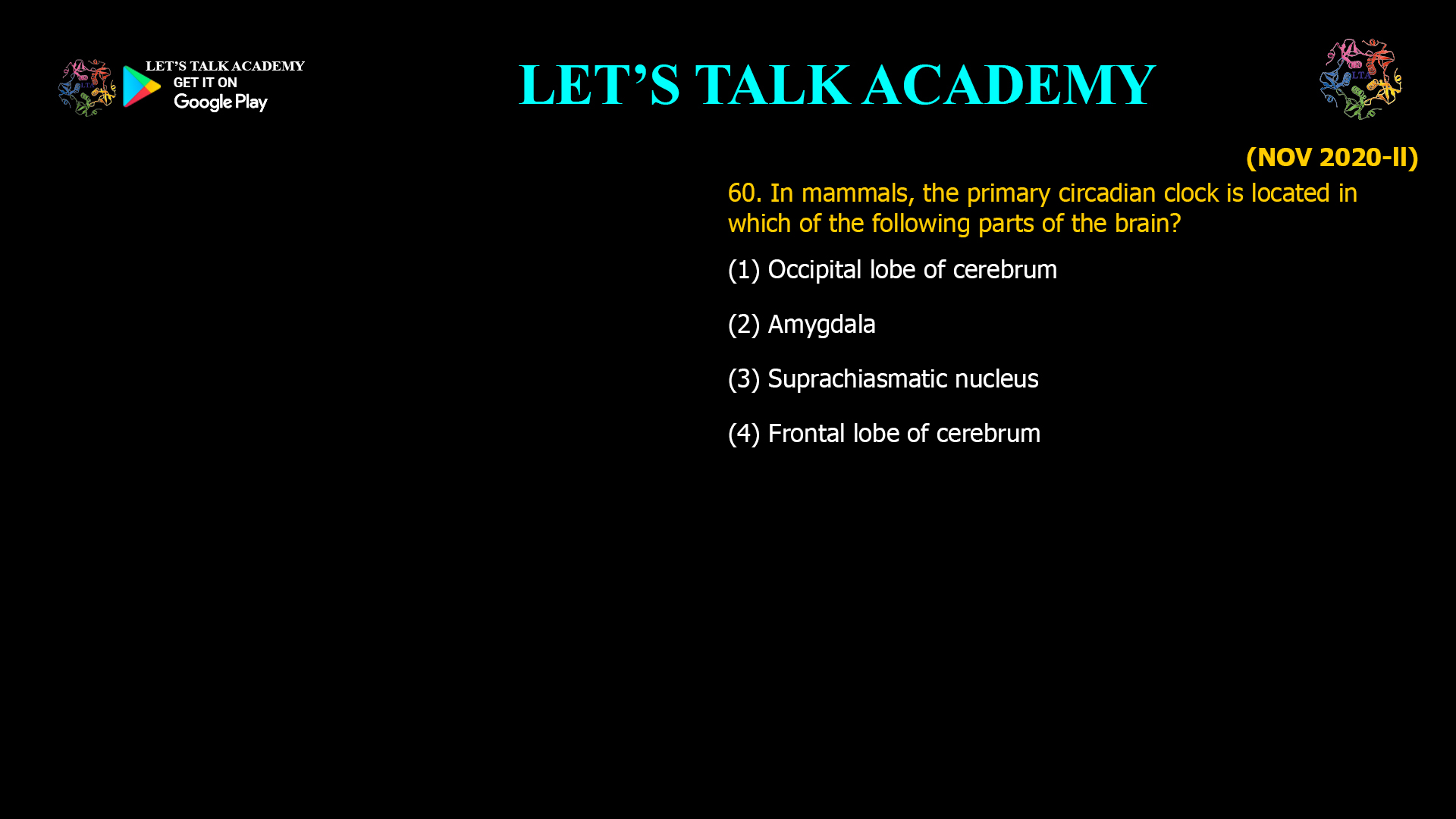
- In mammals, the primary circadian clock is located in which of the following parts of the brain?
(1) Occipital lobe of cerebrum
(2) Amygdala
(3) Suprachiasmatic nucleus
(4) Frontal lobe of cerebrumThe Suprachiasmatic Nucleus: The Central Pacemaker
The suprachiasmatic nucleus (SCN), a small cluster of neurons in the hypothalamus, is recognized as the primary circadian clock in mammals. This tiny but powerful structure is situated just above the optic chiasm and is responsible for generating and synchronizing daily rhythms throughout the body.
How the SCN Works
-
Molecular Clockwork: The SCN contains specialized “clock cells” that generate time through complex feedback loops of gene expression and protein interactions, including core clock genes like Clock, Bmal1, Per, and Cry.
-
Synchronization: The SCN receives direct input from the eyes, allowing it to synchronize internal rhythms with the external light-dark cycle, ensuring that physiological processes are aligned with the environment.
-
Signal Distribution: The SCN sends synchronized nerve impulses to other parts of the brain and body, controlling hormonal release (such as glucocorticoids), body temperature, feeding, and sleep-wake cycles.
Scientific Evidence
-
Lesions or removal of the SCN abolish circadian rhythms in mammals, confirming its role as the master pacemaker.
-
Transplanting SCN tissue into animals with disrupted rhythms can restore normal circadian patterns, and the period of the rhythm matches the genotype of the donor SCN, not the host.
Why Not Other Brain Regions?
-
The occipital lobe and frontal lobe of the cerebrum are involved in vision and higher cognitive functions, respectively, not circadian timing.
-
The amygdala is primarily associated with emotion and memory.
-
Only the suprachiasmatic nucleus is responsible for orchestrating the body’s circadian rhythms.
Conclusion
In mammals, the primary circadian clock is located in the suprachiasmatic nucleus (SCN) of the hypothalamus. This master clock ensures that all daily physiological and behavioral rhythms are precisely coordinated with the environment.
Correct answer: (3) Suprachiasmatic nucleus
-


1 Comment
Kajal
October 15, 2025Suprachiasmatic nucleus