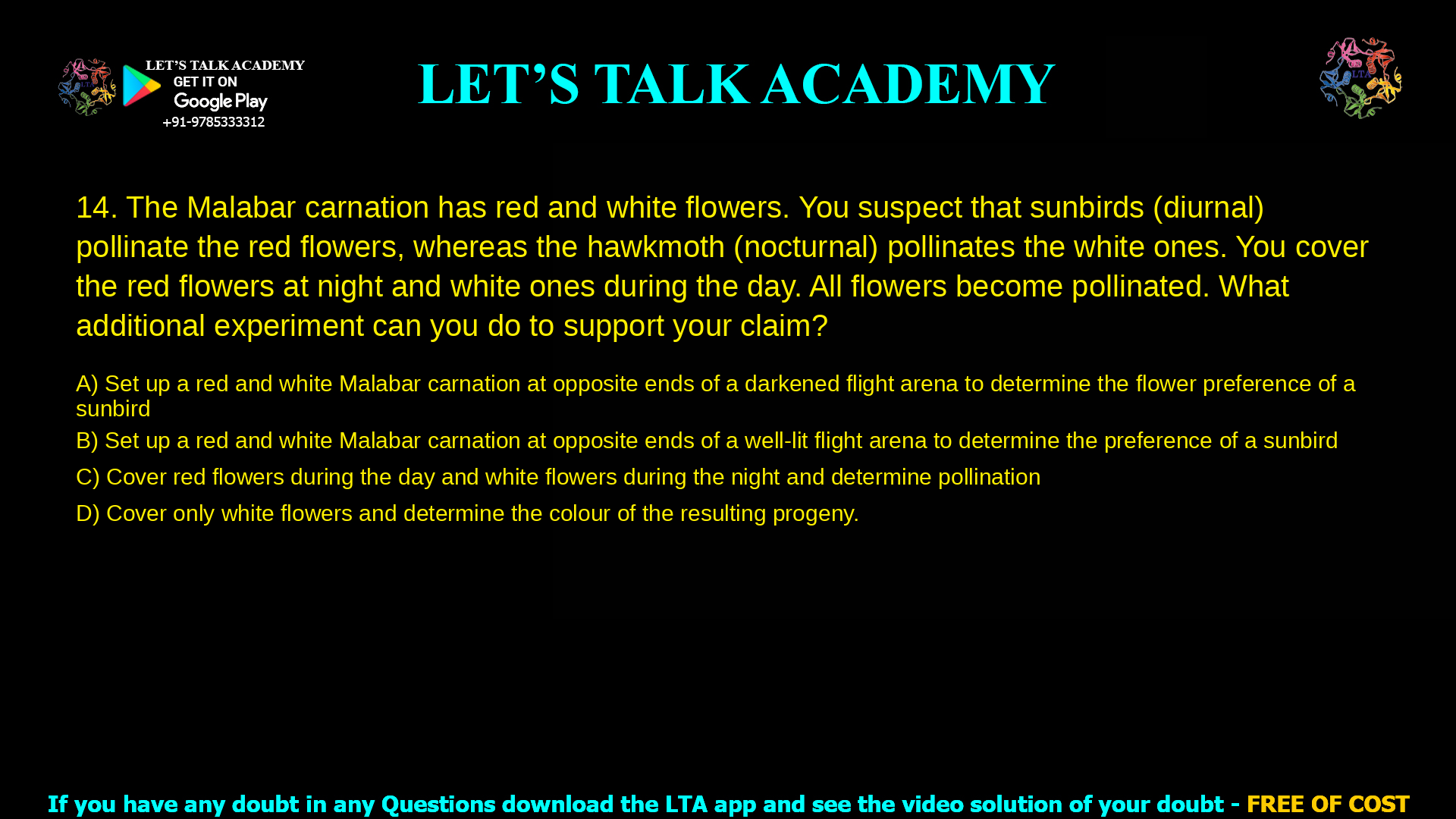
The Malabar carnation has red and white flowers. You suspect that sunbirds,
which are diurnal, pollinate the red flowers, whereas the nocturnal hawkmoth
pollinates the white ones. To show this you cover the red flowers at night and
white ones during the day. All flowers become pollinated. What additional
experiment can you do to support your claim?
Set up a red and white Malabar carnation at opposite ends of a
darkened flight arena to determine the flower preference of a sunbird
Set up a red and white Malabar carnation at opposite ends of a well-lit
flight arena to determine the preference of a sunbird
Cover red flowers during the day and white flowers during the
night and determine pollination
Cover only white flowers and determine the colour of the resulting
progeny.
The initial experiment covered red flowers at night and white ones during the day, yet all flowers pollinated, indicating cross-pollination or other factors beyond timing. The best additional experiment sets up red and white Malabar carnations at opposite ends of a well-lit flight arena to test sunbird preference, as sunbirds are diurnal and visually attracted to red flowers in light conditions.
Why Well-Lit Arena for Sunbirds?
Sunbirds forage by day and favor bright red flowers, matching the hypothesis for red Malabar carnations. A well-lit arena mimics natural daytime, allowing observation of sunbirds choosing red over white, directly supporting the claim without nighttime interference. This isolates diurnal behavior effectively.
Option Analysis
-
Darkened flight arena for sunbird preference: Incorrect, as sunbirds rely on vision in daylight; darkness prevents preference testing and suits nocturnal hawkmoths instead.
-
-
Well-lit flight arena for sunbird preference: Correct, as lighting enables sunbirds to select red flowers, confirming diurnal pollination specificity.
-
-
Cover red during day, white at night: Flips the original setup but repeats timing exclusion without addressing why initial covering failed, likely due to cross-access.
-
-
Cover only white flowers, check progeny color: Fails to test pollinator preference; progeny color assumes genetic links unproven here and ignores red flower dynamics.


