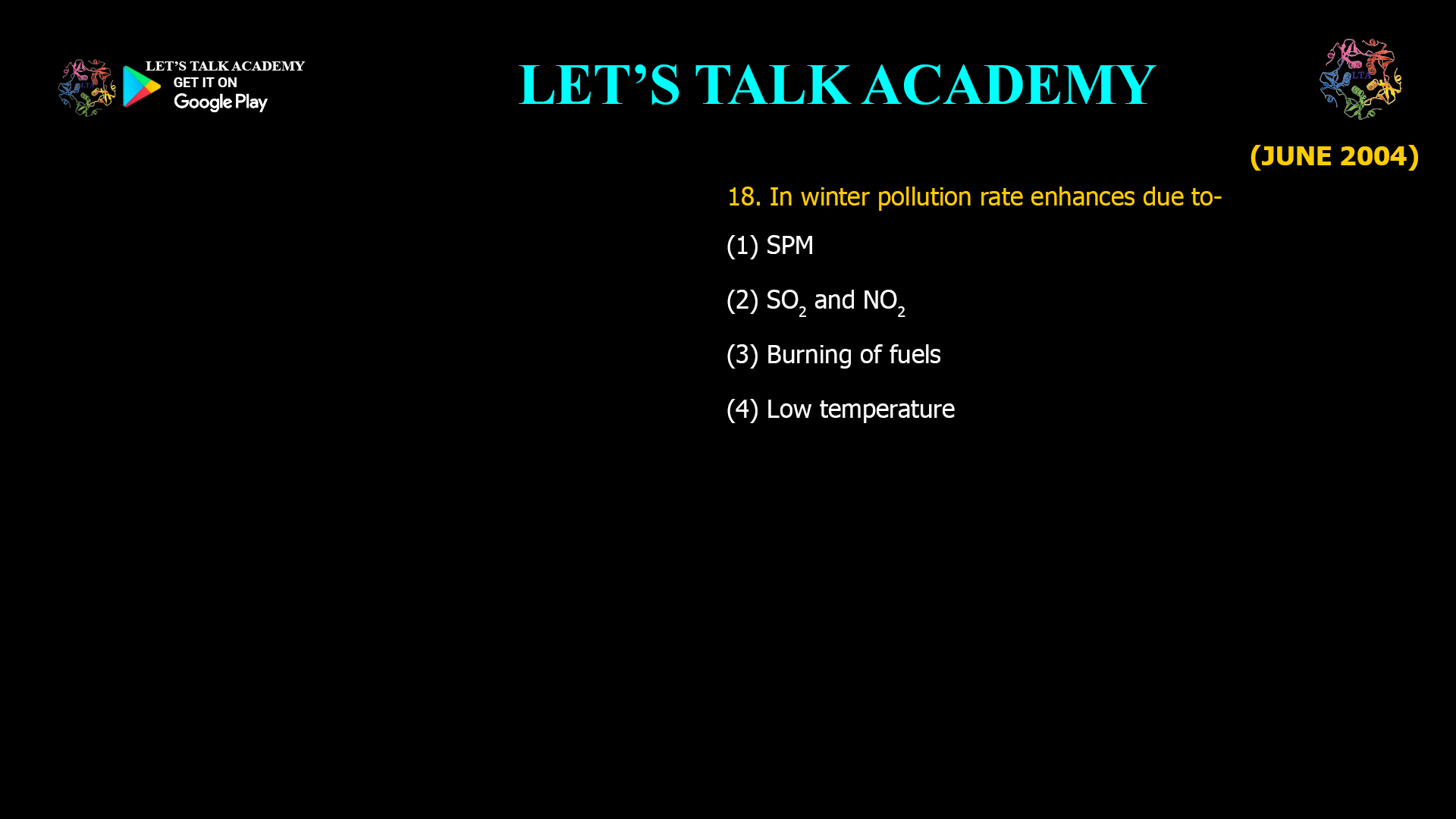
- In winter pollution rate enhances due to-
(1) SPM (2) SO2and NO2
(3) Burning of fuels (4) Low temperature
Winter is often associated with a noticeable decline in air quality and a sharp rise in pollution rates in many regions. This seasonal spike is not due to a single factor but is the result of a complex interplay of weather conditions, increased emissions, and atmospheric phenomena. Among the options—SPM (suspended particulate matter), SO₂ and NO₂ (sulfur dioxide and nitrogen oxides), burning of fuels, and low temperature—the most comprehensive explanation for enhanced winter pollution involves both meteorological conditions like low temperature and increased human activities such as the burning of fuels. This article explores the underlying causes, their combined effects, and the broader implications for air quality and health.
Understanding Winter Pollution
Winter pollution is a significant environmental and public health challenge, especially in urban and industrial areas. The phenomenon is characterized by higher concentrations of pollutants such as particulate matter (PM2.5, PM10), sulfur dioxide (SO₂), nitrogen oxides (NO₂), and carbon monoxide (CO). These pollutants are not only emitted more intensely during winter but are also trapped near the ground due to specific atmospheric conditions.
Key Factors Enhancing Pollution in Winter
1. Low Temperature and Stagnant Air
Cold temperatures play a crucial role in worsening air pollution during winter. Several mechanisms are at work:
-
Temperature Inversion: In winter, the air near the ground is often cooler than the air above it, leading to a phenomenon called temperature inversion. This inversion acts like a lid, trapping pollutants close to the surface and preventing their dispersion into the upper atmosphere.
-
Denser, Slower Air: Cold air is denser and moves more slowly than warm air, which means pollutants are less likely to be blown away or diluted.
-
Reduced Rainfall: Winter is typically drier, with less rainfall to wash pollutants out of the air. This allows pollutants to accumulate over days or even weeks.
2. Increased Burning of Fuels
Human activities contribute significantly to winter pollution:
-
Heating Needs: As temperatures drop, people burn more fossil fuels and biomass (wood, coal, crop residues) for heating homes and workplaces. This increases emissions of particulate matter, SO₂, NO₂, and CO.
-
Stubble Burning: In agricultural regions, post-harvest stubble burning is common in winter, releasing large amounts of smoke and particulate matter into the air.
-
Vehicular Emissions: Cold engines are less efficient and emit more pollutants. Additionally, people tend to idle their cars longer in cold weather, further increasing emissions.
3. Specific Pollutants: SPM, SO₂, and NO₂
While SPM, SO₂, and NO₂ are all major pollutants, their concentrations rise in winter primarily because of the increased burning of fuels and the trapping effect of cold, stagnant air:
-
SPM (Suspended Particulate Matter): Fine particles from combustion, construction, and industrial activities are major contributors to winter smog and haze.
-
SO₂ and NO₂: These gases are released from burning coal, oil, and biomass, and are more concentrated in winter due to increased fuel use and poor dispersion.
4. Reduced Ventilation and Indoor Pollution
Winter habits also contribute to higher pollution levels:
-
Less Ventilation: People keep windows and doors closed to conserve heat, reducing ventilation and allowing indoor pollutants to accumulate.
-
Indoor Burning: The use of fireplaces, wood stoves, and space heaters increases indoor and outdoor pollution, especially in poorly ventilated homes.
Comparing the Options
Let’s evaluate each option in the context of winter pollution:
-
SPM: A major component of winter pollution, but its increase is a result of other factors like burning fuels and low temperatures.
-
SO₂ and NO₂: Significant pollutants, especially from burning fossil fuels and biomass, but their rise is also tied to meteorological conditions and increased emissions.
-
Burning of fuels: A direct cause of increased emissions, but the trapping effect of low temperatures is necessary for pollution to accumulate.
-
Low temperature: Causes temperature inversions and stagnant air, trapping pollutants near the ground. While not a direct source of emissions, it is a critical factor in the accumulation of pollution.
The most complete explanation for enhanced winter pollution is a combination of increased burning of fuels and low temperatures, which together trap and concentrate pollutants in the lower atmosphere.
Health and Environmental Impacts
Winter pollution has serious consequences for public health and the environment:
-
Respiratory Problems: Increased levels of particulate matter and toxic gases cause irritation of the airways, coughing, wheezing, and breathing difficulties. People with asthma, COPD, or bronchitis are especially vulnerable and may experience more frequent and severe symptoms.
-
Cardiovascular Effects: Air pollution is linked to heart disease, strokes, and other cardiovascular problems.
-
Reduced Visibility: High concentrations of pollutants lead to smog and haze, reducing visibility and increasing the risk of accidents.
-
Environmental Damage: Acid rain (from SO₂ and NO₂) and deposition of particulate matter harm ecosystems, soil, and water bodies.
Mitigating Winter Pollution
Addressing winter pollution requires a multifaceted approach:
-
Reducing Emissions: Limiting the burning of fossil fuels and biomass, promoting cleaner heating options, and regulating industrial and vehicular emissions.
-
Improving Ventilation: Ensuring proper ventilation in homes and workplaces to reduce indoor pollution.
-
Public Awareness: Educating the public about the health risks of winter pollution and encouraging behaviors that reduce emissions.
-
Policy Measures: Implementing and enforcing air quality regulations, such as restrictions on stubble burning and vehicle idling.
Key Takeaways
-
Winter pollution rates increase due to a combination of low temperatures (causing temperature inversions and stagnant air) and increased burning of fuels for heating and energy.
-
SPM, SO₂, and NO₂ are major pollutants, but their concentrations rise because of these underlying factors.
-
The health impacts are significant, especially for vulnerable populations with respiratory and cardiovascular conditions.
-
Mitigation requires reducing emissions, improving ventilation, and raising public awareness.
Summary Table
| Factor | Role in Winter Pollution |
|---|---|
| SPM | Major pollutant, increases due to burning fuels and stagnant air |
| SO₂ and NO₂ | Increase from burning fuels, trapped by low temperatures |
| Burning of fuels | Direct source of emissions, increases in winter |
| Low temperature | Causes temperature inversions, traps pollutants near the ground |
Conclusion
Winter pollution is a complex issue driven by both human activities and meteorological conditions. Low temperatures cause pollutants to be trapped near the ground, while increased burning of fuels raises emissions of SPM, SO₂, and NO₂. Together, these factors lead to the enhanced pollution rates observed in winter.
In summary, while all the listed factors contribute, the most pertinent explanation for enhanced winter pollution is the combination of increased burning of fuels and low temperatures.
Understanding this interplay is essential for developing effective strategies to protect air quality and public health during the winter months.


3 Comments
Kirti Agarwal
November 6, 2025Burning of fuels
Kajal
November 15, 2025Option 3
Sakshi Kanwar
November 28, 2025increased burning of fuels